

Muitos proprietários de casas ficam confusos quando comparam guarda-chuvas de mercado com guarda-chuvas de pátio. Ambos proporcionam sombra no exterior, mas os seus designs, funções e cenários de melhor utilização diferem de formas que afectam o conforto, a estabilidade e o estilo em espaços residenciais e comerciais.
Este artigo explica o que define cada tipo de guarda-chuva, destaca as suas principais diferenças e oferece sugestões práticas de seleção e manutenção. Ajuda os proprietários a escolherem a opção correta para o seu pátio, deck ou área da piscina com confiança e uma compreensão clara.
O que é um guarda-chuva de mercado?
Um guarda-chuva de mercado é um estilo de guarda-chuva de pátio com uma haste central reta e uma cobertura octogonal ou redonda com 8 costelas. Utilizado habitualmente em ambientes comerciais como mercados e cafés, oferece estabilidade, durabilidade e uma estética clássica, adequada tanto para áreas exteriores residenciais como comerciais.
Um guarda-chuva de mercado representa um design intemporal amplamente utilizado tanto em ambientes hoteleiros como em pátios domésticos. As secções seguintes explicam as suas caraterísticas definidoras, a construção do material e os melhores casos de utilização em espaços comerciais e residenciais, para que os leitores possam compreender claramente como se diferencia nos guarda-sol de mercado vs guarda-sol de pátio discussão.
Caraterísticas de definição de um Market Umbrella
Os guarda-chuvas de mercado distinguem-se pelas suas proporções equilibradas e estrutura robusta. Na nossa experiência, este estilo proporciona uma sombra fiável e uma função duradoura em diversas condições comerciais.
- Design de vara central com alinhamento reto e vertical para um equilíbrio uniforme da copa.
- Cobertura octogonal ou redonda reforçada por 8 costelas para uma forma estável e tradicional.
- Normalmente, varia entre 6 pés para 3,35 m de diâmetro, com 2,7 m e 3 metros sendo mais comum em cafés ou mercados ao ar livre.
- Pesagem de bases pesadas 30-50 lbs ancoram o guarda-chuva eficazmente, melhorando a resistência ao vento.
- ✅ Inclui aberturas de ventilação que canalizam o fluxo de ar para evitar a queda da copa das árvores em zonas ventosas.
Estes pormenores estruturais fazem dos guarda-chuvas de mercado uma escolha forte para instalações comerciais ao ar livre que exigem durabilidade e simplicidade sem desordem visual.

Materiais, mecanismos e durabilidade
Os materiais de construção são a base de um mercado longevidade do guarda-chuva. Os produtos de qualidade comercial são concebidos com precisão e centram-se no desempenho a longo prazo no terreno.
- Postes feitos de madeira, alumínio, aço ou fibra de vidro, cada um oferecendo uma durabilidade única e resistência às intempéries.
- Funcionamento através de sistemas push-and-pop ou de manivela para facilitar a instalação, muitas vezes sem caraterísticas de inclinação para maior simplicidade e menos peças móveis.
- Tecidos e armações revestidos para serem resistentes aos raios UV e repelentes à água, preparados para exposição durante todo o ano.
- Os componentes de substituição estão facilmente disponíveis e são normalizados por muitos fabricantes, simplificando a troca de peças e a manutenção da vida útil.
Estes factores garantem que os guarda-chuvas do mercado resistem a cargas de trabalho comerciais em que a fiabilidade é mais importante do que a complexidade decorativa.
Casos de utilização comercial e residencial
Os guarda-chuvas de mercado adaptam-se facilmente a áreas exteriores públicas e privadas. Quer seja para dar sombra às mesas de um café de rua ou para proteger as espreguiçadeiras em casa, proporcionam um desempenho consistente.
- Popular entre restaurantes, cafés ao ar livre, mercados, resorts e feiras pela sua robustez e ciclo de substituição fácil.
- Preferido pelos proprietários que pretendem um desempenho de nível comercial em pátios, quintais ou decks de piscina.
- As armações robustas gerem a utilização frequente em zonas comerciais de elevado tráfego, mantendo o equilíbrio com o vento e a chuva.
- Ideal para compradores que procuram uma vida útil longa, manutenção reduzida e continuidade de estilo em ambientes exteriores de utilização mista.
Em ambientes de fabrico direto, como o da Patiofurnituresco, estes os guarda-chuvas são produzidos de acordo com as mesmas normas quer sejam encomendados para contratos B2B ou actualizações privadas.
Perspectivas críticas e considerações do comprador
Escolher entre guarda-sol de mercado vs guarda-sol de pátio A conceção depende da utilização prevista e das expectativas do comprador. Eis alguns pontos práticos frequentemente avaliados durante as decisões de aquisição ou de compra do consumidor.
- Nem todos os guarda-chuvas de pátio se qualificam como guarda-chuvas de mercado; os modelos de mercado dão ênfase à estabilidade e aos componentes de nível comercial.
- ⚠️ A falta de função de inclinação minimiza o desgaste mecânico mas restringe o movimento direcional da sombra.
- ⚠️ As bases mais pesadas podem ter custos iniciais mais elevados e requerem mais esforço para serem instaladas, mas oferecem uma maior segurança contra o vento.
- Recomendado para clientes B2B que procuram durabilidade certificada e desempenho consistente alinhado com os padrões de qualidade de contrato (UL4041, EN581).
Esta perspetiva ajuda tanto os operadores comerciais como os proprietários de casas a compreender quando é que um guarda-chuva de mercado faz mais sentido - para ambientes onde a fiabilidade supera a ajustabilidade.
O que é um guarda-sol de pátio?
Um guarda-sol de pátio é um guarda-sol de exterior concebido para proporcionar sombra em espaços exteriores residenciais ou comerciais. Inclui vários estilos, sendo o mais comum o guarda-chuva de mercado - com uma cobertura octogonal e um poste central.
Os guarda-chuvas de pátio são um elemento básico no quintal, no terraço e nas estâncias. Desempenham um papel fundamental na definição de áreas exteriores confortáveis, servindo também objectivos práticos e de design. Ao comparar guarda-sol de mercado vs guarda-sol de pátio A distinção entre os tipos de produtos, muitas vezes, resume-se à forma, à estrutura e ao ambiente de utilização.
Definição e principais caraterísticas
Um guarda-sol de pátio é uma categoria alargada que inclui muitas soluções de sombra para exterior concebidas para ambientes residenciais e comerciais. Na nossa experiência fabricação ao ar livre mobiliário para mais de 16 anos, No entanto, vimos o estilo guarda-chuva de mercado dominar esta categoria.
- O guarda-chuva de mercado é o tipo mais comum, apresentando um dossel octogonal com 8 costelas e um pólo central reto.
- Os materiais da estrutura incluem alumínio, madeira e fibra de vidro para maior força e resistência às intempéries.
- As formas do dossel variam - redondo, quadrado ou octogonal - para se adaptarem a diferentes disposições exteriores e estéticas de design.
Esta versatilidade torna os guarda-chuvas de pátio adequados para diversas utilizações - desde áreas junto à piscina a espaços de refeições ao ar livre.
Caraterísticas de design e funcionalidade
Os guarda-chuvas de pátio são concebidos para durabilidade e comodidade do utilizador, equilibrando a resistência com a facilidade de utilização. O design da haste central é comum porque assegura um suporte estável quando ancorado numa base de mesa ou num suporte ponderado.
- Muitos utilizam tecidos resistentes aos raios UV e repelentes de água com aberturas de ventilação para lidar com o vento e a humidade.
- Dossel comum os tamanhos são maiores do que os guarda-chuvas pessoais, Concebido para cobrir as zonas de refeições ou de estar.
- ⚙️ Os mecanismos de abertura típicos incluem sistemas push-and-pop, com funções de inclinação encontradas em muitos modelos de uso doméstico.
Estas caraterísticas de design tornam o guarda-sol de pátio fiável e flexível para ambientes casuais e de utilização intensiva.
Aplicações e estabilidade do vento
Os guarda-sóis de pátio servem uma vasta gama de aplicações, tornando-os populares entre os proprietários de casas, restaurantes e gestores de estâncias. Podem ser facilmente integrados em instalações comerciais devido à sua estrutura equilibrada.
- Ideal para mesas de jantar ao ar livre, lounges, cafés, resorts e áreas de mercado que necessitem de sombra duradoura.
- Os locais comerciais preferem frequentemente os guarda-chuvas do tipo mercado devido à sua posição estável e ao reduzido desgaste mecânico.
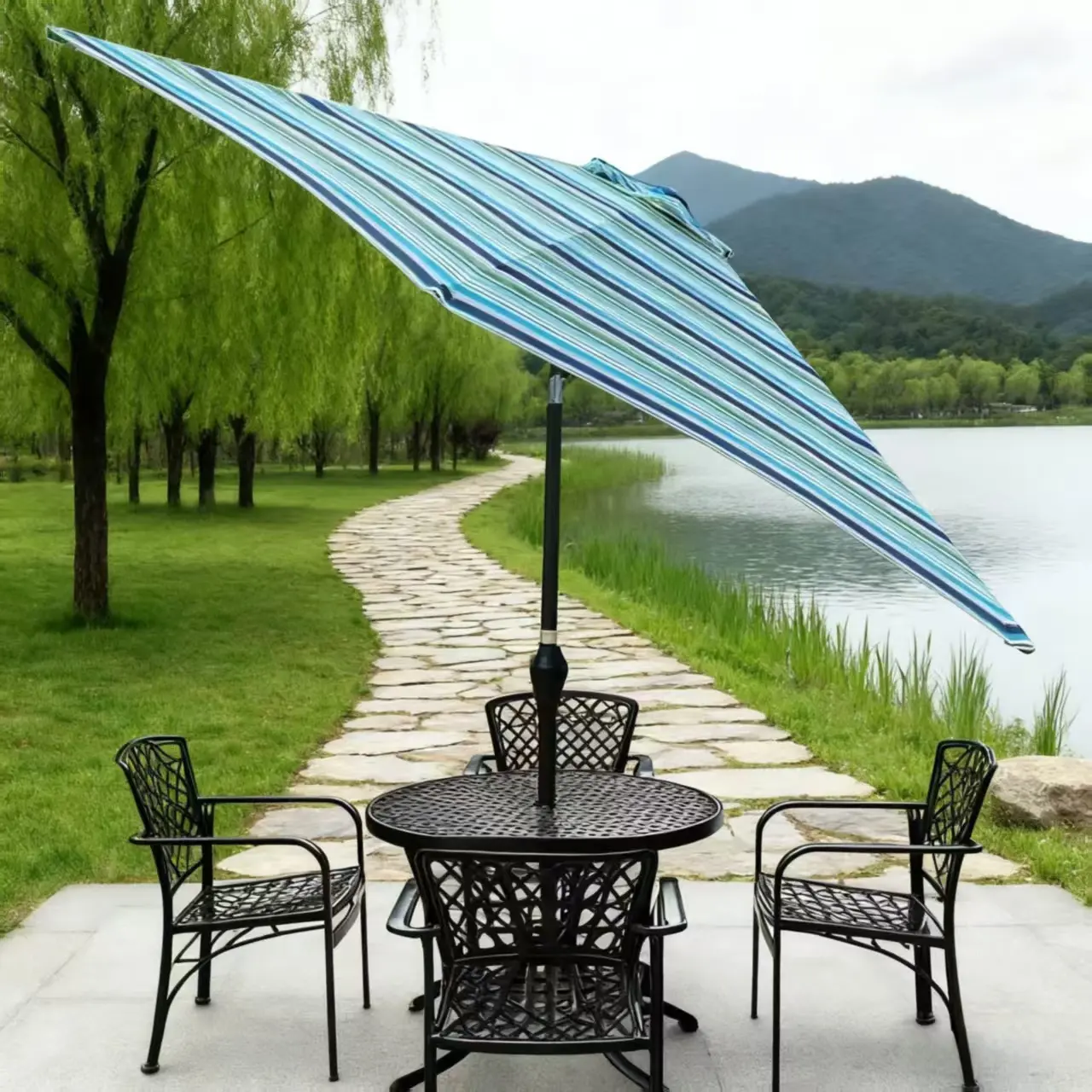
- O design do poste central distribui uniformemente as cargas de vento, melhorando estabilidade em comparação com o cantilever modelos.
- ⚠️ As aberturas de ventilação no topo da cobertura reduzem a pressão do vento, evitando danos e riscos de queda.
Em regiões de ventos fortes, recomendamos frequentemente armações reforçadas e pesos de base mais pesados para maior segurança e desempenho.
Manutenção e peças de substituição
A facilidade de manutenção é uma das razões pelas quais os guarda-sóis de pátio continuam a ser uma solução prática de sombra a longo prazo. Os modelos de estilo comercial, em particular, beneficiam de acessórios e peças normalizados.
- ✅ Peças de substituição como toldos de tecido, As secções de madeira, nervuras e postes estão amplamente disponíveis.
- Materiais como o alumínio e a fibra de vidro resistem à ferrugem e à deterioração, prolongando a vida útil.
- Esta normalização garante que os guarda-sóis permaneçam económicos para clientes residenciais e comerciais.
Com os cuidados adequados, podem proporcionar uma sombra fiável durante muitos anos, minimizando as despesas de manutenção.
Principais diferenças entre os guarda-chuvas de mercado e os guarda-chuvas de pátio
Os guarda-chuvas de mercado e os guarda-chuvas de pátio diferem principalmente no design, flexibilidade e utilização pretendida. Os guarda-chuvas de mercado apresentam um poste central e uma cobertura fixa, ideal para espaços pequenos e utilização comercial, enquanto os guarda-chuvas de pátio oferecem caraterísticas de inclinação e rotação, adequadas para áreas exteriores residenciais maiores ou flexíveis.
Compreender a diferença entre os guarda-chuvas de mercado e os guarda-chuvas de pátio ajuda os proprietários a escolher a solução de sombra correta para o seu espaço. Ambos servem objectivos de sombreamento no exterior, mas a sua construção, funcionalidade e ambientes ideais variam muito.
Comparação das principais caraterísticas (tabela)
| Recurso | Guarda-chuva de mercado | Guarda-sol de pátio |
| Pole Position | Apenas central | Central ou deslocado (cantilever) |
| Forma do dossel | Tipicamente octogonal | Redondo, quadrado ou retangular |
| Ajustabilidade | Fixo (não inclinado/não rotativo) | Muitas vezes inclina-se, roda ou é motorizado |
| Ventilação | Caraterística padrão | ⚠️ Por vezes incluído |
| Gama de tamanhos típicos | 6-16 pés diâmetro | 6-13 pés diâmetro |
| Utilização típica | Cafés, restaurantes, pequenos pátios | Quintais, decks, piscinas, pátios maiores |
| Estabilidade | Alto (poste central + base pesada) | ⚠️ Moderado (depende da base e da conceção) |
| Opções de tecido | Resistente aos raios UV, repelente à água | Resistente aos raios UV, repelente à água |
| Peças de substituição | Universal e fácil de substituir | ⚠️ Pode necessitar de peças especializadas |
| Durabilidade comercial | Construído para utilização comercial pesada | Durabilidade moderada a elevada |
| Gama de preços (retalho) | $50-$200 | $100-$500 |
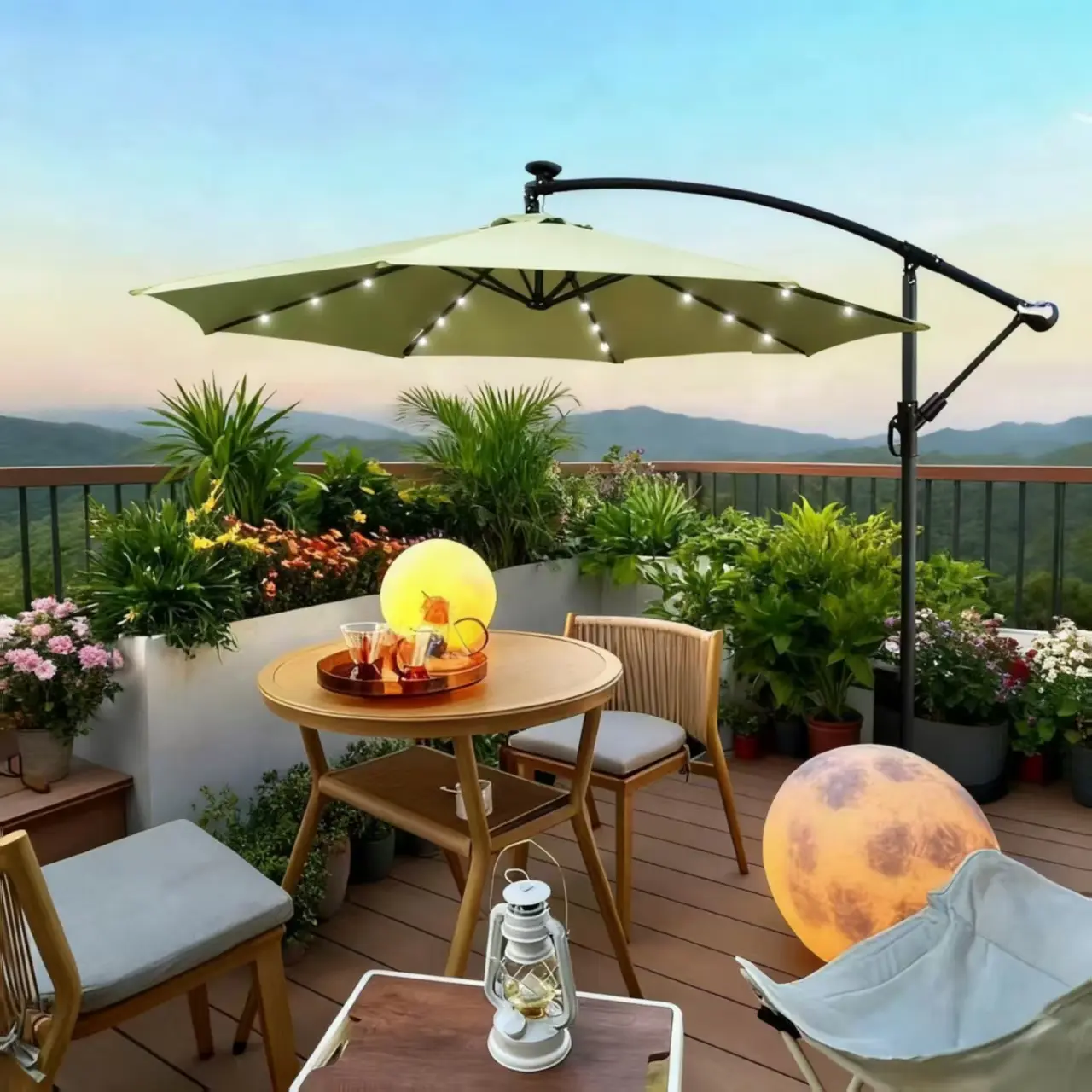
Esta tabela descreve as principais especificações e distinções de desempenho entre ambos os tipos de guarda-chuvas. De acordo com a nossa experiência no fabrico de guarda-chuvas para contratos, os modelos de estilo de mercado são a escolha preferida para locais comerciais devido à sua simplicidade e resistência, enquanto os guarda-chuvas de pátio são adequados para proprietários de casas que procuram flexibilidade e estilo.
Ideias sobre a conceção e a utilização
Os guarda-chuvas de mercado foram concebidos para garantir fiabilidade e uma cobertura consistente. O seu pólo central e a sua estrutura simétrica A cobertura proporciona um sombreamento uniforme para áreas compactas, como pátios de restaurantes ou esplanadas de cafés. Este enfoque na simplicidade garante uma longa vida útil e uma fácil substituição de peças padrão.
Os guarda-sóis de pátio, por outro lado, dão prioridade ao conforto e à adaptabilidade. Caraterísticas como a inclinação, a rotação e até o funcionamento motorizado tornam-nos ideais para ambientes residenciais onde o ângulo do sol muda ao longo do dia. As suas formas variadas de cobertura e as opções de varão deslocado permitem a cobertura de áreas lounge, zonas junto à piscina ou espaços com formas irregulares.
Ao escolher entre eles, o espaço e a funcionalidade são factores-chave. Os guarda-chuvas de mercado fazem sentido para espaços estáveis e com muito tráfego, enquanto os guarda-chuvas de pátio oferecem uma sombra mais personalizada para ambientes maiores e ao ar livre.
Eleve os seus espaços exteriores com guarda-chuvas de pátio duradouros e personalizados
Faça parceria diretamente com um fabricante de confiança que oferece preços diretos da fábrica, iluminação solar inovadora e baixo MOQ para lançar produtos de alta qualidade guarda-chuvas comerciais adaptados à sua marca. Experimente uma logística global fiável e uma vida útil de mais de 5 anos, concebida para ambientes exteriores exigentes.

Como escolher o guarda-chuva certo para o seu espaço
Para escolher o guarda-chuva certo para o seu espaço, avalie a utilização pretendida (sombra, proteção contra as intempéries), a área disponível e as opções de montagem e, em seguida, compare os tipos de guarda-chuva - como guarda-chuvas de mercado versus guarda-chuvas de pátio - com base no tamanho, durabilidade e ajustabilidade para garantir uma cobertura e adaptação ideais para o seu quintal, deck ou área da piscina.
Escolher o exterior correto o guarda-chuva começa por corresponder à sua forma, O material e o design são adequados à utilização pretendida. Quer se trate de sombrear um sala de estar junto à piscina, Seja numa esplanada de um café ou num terraço em casa, o guarda-chuva certo proporciona conforto e equilíbrio visual ao seu espaço.
Principais critérios de seleção: Tamanho, material e montagem
O tamanho e a proporção são cruciais para uma cobertura eficaz. Meça cuidadosamente a área do assento para alinhar o diâmetro do guarda-chuva com a utilização prevista.
- Para conjuntos de bistrô, escolha guarda-chuvas entre 5-7 pés de diâmetro.
- Para zonas de jantar ou de estar, opte por modelos maiores entre 9-11 pés.
- Selecione materiais de estrutura como o alumínio para proteção contra a corrosão ou a teca certificada pelo FSC para um acabamento premium e duradouro.
- Escolher o dossel tecidos como o PEAD ou tingidos em solução acrílico para proteção contra os raios UV e resistência às intempéries.
- ⚙️ As opções de montagem incluem bases independentes para flexibilidade ou instalações no solo para configurações fixas, cada uma afectando a estabilidade e a disposição.
Guarda-chuvas de mercado vs guarda-chuvas de pátio: Compreender os tipos
De acordo com a nossa experiência, compreender a distinção entre estes dois tipos pode simplificar o seu processo de seleção.
| Tipo | Design e caraterísticas | Ideal para |
|---|---|---|
| Guarda-chuva de mercado | Design de poste central, encaixa nos orifícios centrais da mesa. Oferece uma cobertura direta. | Quintais, cafés e pátios compactos. |
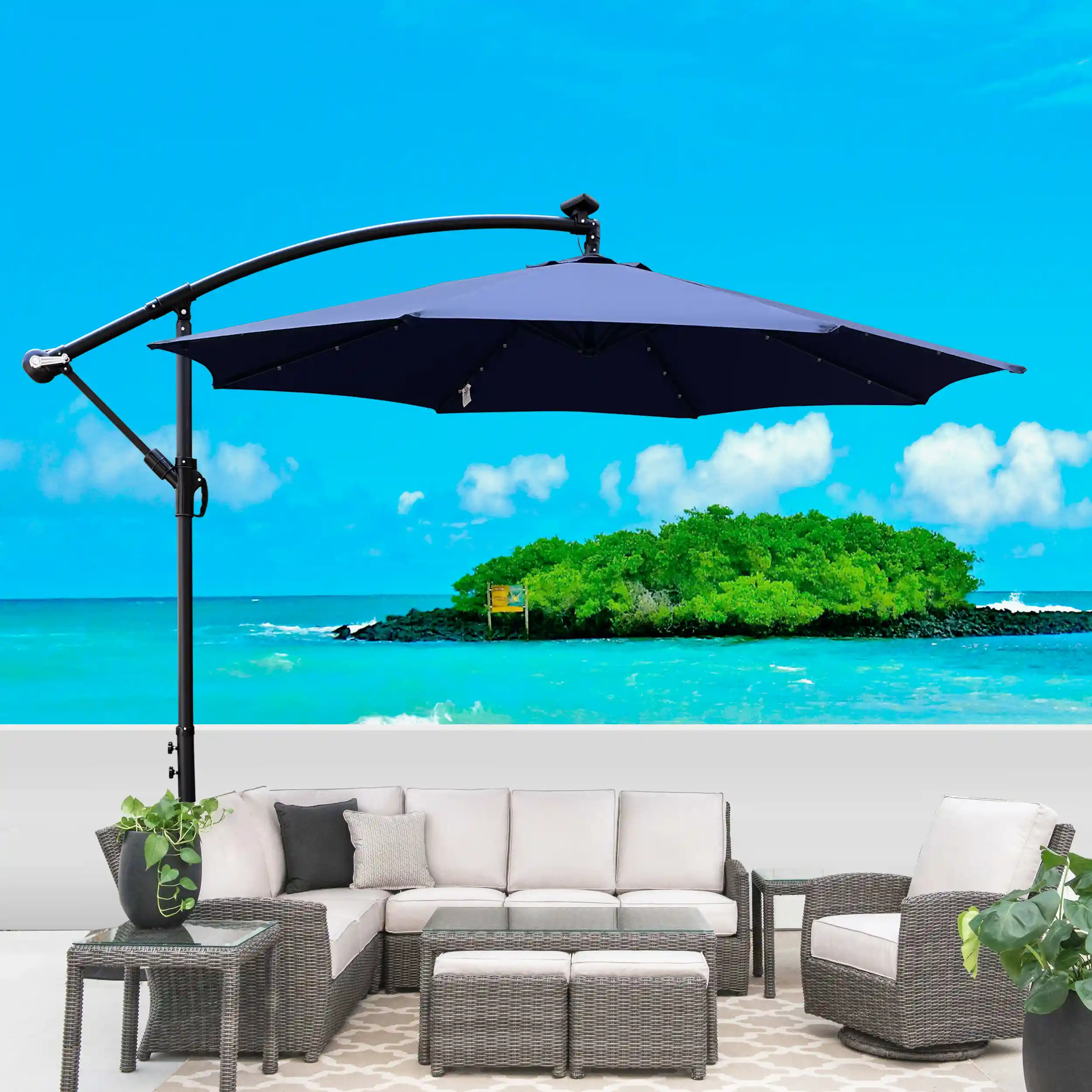
| Guarda-chuva de pátio (Cantilever) | Design de poste deslocado para assentos desobstruídos. Muitas vezes inclina-se ou roda para uma sombra flexível. | Decks de piscina, áreas de repouso e terraços abertos. |
A escolha final deve refletir a sua disposição e as suas necessidades operacionais - opte por produtos do mercado guarda-chuvas se forem utilizadas mesas de jantar, ou guarda-chuvas de pátio para uma sombra independente e direcional.
Certificações de durabilidade e segurança
Ao selecionar guarda-chuvas de qualidade comercial, a durabilidade não é negociável. Os modelos certificados cumprem as normas internacionais, tais como UL4041 (América do Norte), EN581 (Europa), e AFRDI (Ásia-Pacífico).
- A certificação ✅ garante uma conceção estrutural segura e durabilidade para ambientes de tráfego intenso.
- A construção testada contra o vento oferece um melhor desempenho em condições climatéricas difíceis.
- ⚙️ Procure classificações de vento documentadas e cobertura de garantia abrangente como prova de segurança e fiabilidade.
Dicas de compras comerciais: Encomendas em massa e prazos de entrega
Para os compradores B2B que planeiam projectos de maior dimensão, a coordenação antecipada ajuda a fazer corresponder a disponibilidade dos produtos aos calendários de instalação.
- 🚀 Produção típica prazo de entrega: 30 a 50 dias após o depósito, permitindo a personalização e o controlo de qualidade.
- Os descontos a granel atingem frequentemente até 20%, com quantidades mínimas de encomenda começando por aí 10-50 unidades.
- Discutir antecipadamente as necessidades de montagem da base e as condições de entrega para evitar atrasos no projeto.
Equívocos comuns e conselhos de especialistas
Muitos compradores subestimam as necessidades de cobertura ou ignoram as certificações de desempenho. Estes esquecimentos podem reduzir o conforto e a durabilidade.
- ⚠️ Dimensionamento inadequado que conduz a um sombreamento deficiente - permitir sempre pelo menos um 2 pés saliência para além dos bordos dos assentos.
- Ignorar as normas de segurança pode resultar em guarda-chuvas inadequados para utilização intensiva ou zonas de vento forte.
- Prioridade verificada classificações de vento e garantia do fabricante para proteger o seu investimento e garantir uma utilização segura.
Conselhos de manutenção para ambos os tipos de guarda-chuvas
Tanto os guarda-chuvas de mercado como os guarda-chuvas de pátio requerem uma limpeza regular, uma secagem completa antes de serem guardados e uma inspeção periódica para detetar danos, a fim de maximizar a sua vida útil e manter a sua aparência. A utilização de coberturas respiráveis e o armazenamento em áreas secas e à sombra são essenciais para ambos os tipos.
A longevidade de um guarda-chuva depende de cuidados consistentes. Quer se trate de um guarda-chuva de mercado ou de pátio, pequenos passos como a limpeza regular do tecido e a proteção da estrutura contra a corrosão são muito úteis. Na nossa experiência de trabalho com produtos comerciais de exterior, a manutenção planeada reduz sempre os custos de substituição e mantém os espaços visualmente apelativos.
Limpeza e secagem de rotina
A limpeza mantém os guarda-chuvas com um aspeto fresco e evita o desgaste precoce do material. A manutenção frequente também protege o acabamento à prova de água e evita a acumulação de manchas ou bolor, especialmente após a exposição à chuva ou ao pó.
- Limpe os guarda-chuvas pelo menos uma vez por mês, ou semanalmente em ambientes com muita utilização ou pó.
- Usar sabão suave como Woolite® ou Amanhecer diluído em água; esfregar suavemente com uma escova ou um pano macio.
- ⚠️ Evite lixívia ou amoníaco - estes produtos químicos degradam os revestimentos à prova de água e desbotam a cor.
- Secar sempre completamente ao ar antes de fechar ou armazenar, o que normalmente demora 2-4 horas em tempo seco.
Manter a cobertura limpa e totalmente seca evita o crescimento de bolor e prolonga o aspeto e a resistência à tração do tecido.
Inspeção e manutenção da estrutura
Armações de guarda-chuvas, As portas de alumínio ou de madeira enfrentam diariamente o stress mecânico da abertura, do fecho e da exposição ao vento. Uma inspeção rápida pode impedir que o desgaste precoce se transforme em danos estruturais.
- Verificar se os toldos têm buracos ou rasgões e remendar os pequenos com um kit de reparação de tecidos.
- ⚠️ Inspeccione as juntas e as nervuras da armação quanto a folgas, dobras ou ferrugem. Substitua as peças danificadas antes da época seguinte.
- Aperte regularmente os parafusos e as cavilhas para evitar oscilações e problemas de alinhamento.
- No caso de estruturas metálicas, lixar e repintar rapidamente os pontos de ferrugem para travar a corrosão.
A inspeção de rotina ajuda a prolongar a vida operacional - especialmente vital para cafés, resorts ou decks de piscina que dependem de uma apresentação profissional.
Armazenamento correto e prevenção de bolor
O armazenamento é muitas vezes o fator menosprezado nos cuidados com os guarda-chuvas. O armazenamento inadequado, especialmente quando o guarda-chuva está molhado ou é mantido em áreas pouco ventiladas, leva a danos causados pela humidade e à deterioração do tecido.
- Guarde os guarda-chuvas numa área fresca, seca e bem ventilada, longe da luz solar direta.
- Utilize coberturas resistentes à água, mas respiráveis, para proteger e evitar a acumulação de humidade.
- ⚠️ Nunca guarde os guarda-chuvas ainda molhados - esta é a principal fonte de bolor e corrosão do metal.
- Em regiões húmidas, aplicar sprays antimofo ou de impregnação após a limpeza para maior proteção.
Um bom fluxo de ar combinado com coberturas respiráveis mantém a resistência do tecido e evita odores desagradáveis ou descoloração.
Perspetiva crítica sobre a manutenção do guarda-chuva
Cuidar de um guarda-chuva não é uma tarefa que se faz de uma só vez. Mesmo os guarda-chuvas comerciais duráveis enfrentam o stress constante do sol, do vento e da humidade. Com o tempo, a negligência pode reduzir a vida útil e aumentar os custos operacionais.
- ⚠️ Os guarda-chuvas de exterior necessitam de cuidados de rotina - a negligência leva rapidamente ao desvanecimento ou a danos na estrutura.
- Uma limpeza mensal ligeira e inspecções sazonais podem evitar substituições dispendiosas.
- Evitar produtos químicos agressivos; estes enfraquecem os revestimentos resistentes aos raios UV e degradam as fibras dos tecidos.
- Para locais comerciais, estabelecer uma lista de verificação de cuidados básicos e formar o pessoal - mantém os guarda-chuvas prontos para os hóspedes e reduz as despesas de aquisição.
Acções simples e regulares mantêm os guarda-chuvas de mercado e de pátio com um aspeto elegante, preservando a sua função em instalações exteriores de longa duração.
Perguntas frequentes sobre guarda-chuvas de mercado vs. guarda-chuvas de pátio
Qual é a principal diferença entre um guarda-sol de mercado e um guarda-sol de pátio?
A principal diferença reside na estrutura e no design. Um guarda-chuva de mercado tem normalmente uma haste reta e uma cobertura ventilada, que foram originalmente concebidos para mercados ao ar livre para oferecer sombra e libertar o vento.
Um guarda-chuva de pátio é um termo mais abrangente para guarda-chuvas de exterior utilizados em pátios residenciais ou comerciais. Embora todos os guarda-chuvas de mercado possam ser considerados guarda-chuvas de pátio, nem todos os guarda-chuvas de pátio são construídos com o design vertical e ventilado do estilo de mercado.
O mercado guarda-chuvas melhores para o vento?
Sim, os guarda-chuvas de mercado têm normalmente um melhor desempenho em zonas ventosas devido às suas partes superiores ventiladas que permitem a passagem do ar. Este design ajuda a reduzir a elevação e a pressão sobre a estrutura.
Para um desempenho de nível comercial, a Patiofurnituresco utiliza caixilhos de alumínio T6 reforçados e coberturas ventiladas certificadas ao abrigo das normas UL4041 e EN581, que mantêm a estabilidade mesmo sob fortes ventos costeiros ou de estância.
Posso utilizar um guarda-sol de mercado no meu quintal?
Absolutamente. Mercado os guarda-chuvas são ideais para pátios domésticos, decks e espaços junto à piscina. Oferecem um aspeto profissional com materiais duradouros adequados para exposição durante todo o ano.
De acordo com a nossa experiência, os proprietários preferem o design do mercado porque equilibra estilo e estabilidade - especialmente para as instalações de refeições ao ar livre ou áreas de lazer que necessitam de uma cobertura de sombra consistente de cerca de 6-11 pés de diâmetro.
Fazer mercado os guarda-chuvas têm uma inclinação caraterística?
Muitos mercados modernos os guarda-chuvas incluem um mecanismo de inclinação para ajustar a sombra ao longo do dia. Esta caraterística é comum tanto em modelos residenciais como comerciais.
As capacidades OEM e ODM da Patiofurnituresco permitem a personalização total dos tipos de inclinação - manual, botão de pressão ou manivela automática - dependendo dos requisitos do projeto ou das preferências de marca.
Porque é que se chamam guarda-chuvas ‘de mercado’?
O termo “guarda-chuva de mercado” teve origem na sua utilização inicial em mercados ao ar livre, onde os vendedores precisavam de sombra portátil durante exposições comerciais ou alimentares ao ar livre. A haste reta e a parte superior ventilada tornaram-nas práticas para ambientes com muita gente e com muita brisa.
Atualmente, o nome reflecte esse mesmo equilíbrio entre robustez e portabilidade, tornando-o popular entre hotéis, restaurantes e proprietários de quintais.



 English
  Spanish
  French
  German
  Portuguese