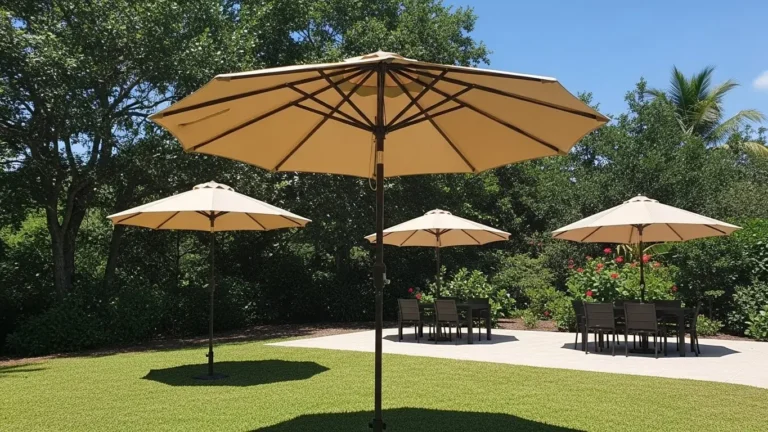



Adding evening lighting to an existing patio umbrella can quickly upgrade outdoor comfort without replacing your setup. Many homeowners want better light for dining or relaxing but prefer low-cost, electricity-free options that don’t require new wiring.
This guide compares the best solar umbrella lights of 2026, explains how to choose the right clamp-on or string style, and shares installation and maintenance tips to help homeowners create bright, inviting patios powered entirely by the sun.
Top Rated Solar Umbrella Lights for 2026
Exploring the best solar umbrella lights of 2026, this selection highlights top manufacturers and their signature models. These options vary across budgets and designs to suit different outdoor needs and business priorities.
1. Patiofurnituresco
Location: Linhai, China
Main Products: Patio umbrellas, outdoor seating, outdoor structures
Main Markets: Startups, Private Label Brands, E-Commerce
Patiofurnituresco is a China-based manufacturer with 16 years of expertise in commercial outdoor furniture, offering contract-grade patio umbrellas engineered for durability and elegant shade. Operating since 2009, the company serves over 30 countries with a direct-from-factory model that eliminates middlemen for better pricing and faster lead times.
The company’s core strengths include low minimum order quantities suitable for pilot projects, scalable production for large volume needs, and extensive customization options through OEM/ODM services. Certified to UL4041 and EN581 standards among others, Patiofurnituresco provides high-quality, durable products that meet global commercial requirements.
| ✅ What We Love | ❌ Things to Consider |
|
|
2. EliteShade Sunumbrella
Location: United States
Main Products: Solar patio umbrellas, market umbrellas, cantilever umbrellas, solar-powered lighting systems
Main Markets: Homeowners, premium outdoor furniture buyers
EliteShade is a leading innovator in solar umbrella lighting with a flagship Sunumbrella model that delivers double the lighting power of competitors. It integrates 80 rib lights plus a central hub light in a rust-resistant steel frame with a double-vented canopy. Rated 4.4 out of 5 stars from over 1,300 Amazon reviews, it includes an umbrella base and multiple color options.
This model suits users seeking durability and visual appeal with bright, reliable illumination, though its larger 15-foot size and higher price may not fit every space.
| ✅ What We Love | ❌ Things to Consider |
|
|
3. Phi Villa Large Patio Umbrella
Location: United States
Main Products: Large patio umbrellas, cantilever umbrellas, solar-lighted umbrellas, outdoor furniture
Main Markets: Homeowners with large outdoor spaces
Phi Villa focuses on extra-wide solar patio umbrellas combining expansive shade coverage with integrated solar lighting. The Large Patio Umbrella features a simple solar panel attachment and wide canopy design for practical lighting and visual appeal. Popular for reliability and ease of setup, it delivers balanced solar performance across large outdoor settings.
It’s ideal for customers seeking broad shade coverage and effortless solar use, though color choices are limited and the large canopy can be more wind-sensitive.
| ✅ What We Love | ❌ Things to Consider |
|
|
4. Purple Leaf Double-Top Solar Patio Umbrella
Location: United States
Main Products: Double-top cantilever umbrellas, solar patio umbrellas, hanging umbrellas, premium outdoor shade structures
Main Markets: Luxury outdoor furniture buyers, design-conscious customers
Purple Leaf offers a high-end solar umbrella with a standout square cantilever design and 360-degree rotation. The Double-Top Solar Patio Umbrella integrates LED tube lights along each rib for even light distribution and strong nighttime visibility. Rated 4.7 stars, this model stands out for its elegant engineering and multiple angle adjustments.
While installation can be complex and a separate base is required, the premium materials and visual sophistication make it a favorite for upscale residential or commercial spaces.
| ✅ What We Love | ❌ Things to Consider |
|
|
5. Blissun Solar Umbrella
Location: United States
Main Products: Budget solar umbrellas, 9-foot patio umbrellas, solar LED lighting systems, outdoor shade solutions
Main Markets: Budget-conscious homeowners, first-time solar umbrella buyers
Blissun is a budget-friendly brand known for its 9-foot solar umbrella equipped with 32 LED lights and a weather-resistant canopy. With over 10,000 Amazon reviews and an average rating of 4.5 stars, it combines affordability with functional lighting and adjustable tilt for better shading throughout the day.
Although compact and less durable than premium versions, it provides up to 8 hours of light per charge—ideal for those seeking value and functionality under $100.
| ✅ What We Love | ❌ Things to Consider |
|
|
6. Best Choice Products Solar LED Lighted Patio Umbrella
Location: United States
Main Products: Budget patio umbrellas, solar-lighted umbrellas, outdoor furniture, garden accessories
Main Markets: Affordable outdoor lighting shoppers
Best Choice Products provides a 10-foot solar LED patio umbrella equipped with 24 LEDs lasting around 7 hours. The wind-resistant structure and simple battery setup appeal to homeowners seeking convenient illumination at an entry-level price point. Its wide color range enhances backyard décor flexibility.
Durability issues with the tilt feature and lower LED count may affect long-term use, yet the light’s simplicity and pricing make it a strong option for affordable outdoor ambience.
| ✅ What We Love | ❌ Things to Consider |
|
|
How to Choose the Best Solar Umbrella Light for Your Patio
Focus on runtime duration (6–7 hours minimum), LED count and brightness, charging time (6–7 hours of direct sunlight), and installation type (clip-on vs integrated). Match your umbrella type, desired lighting ambiance, and need for adjustable brightness or modes.
Choosing the best solar umbrella lights depends on how you balance performance, installation, and durability. The right choice can transform your patio into a cozy evening spot without running wires or relying on electricity.

Key Selection Criteria and Specifications
When comparing solar umbrella lights, key data like LED count, charging time, and materials determine overall performance and lifespan. The table below outlines common specifications across market tiers.
| Specification | Details | Notes |
| 💡 Light Count Options | 24 LEDs (basic), 32 LEDs (mid-range), 72–104 LEDs (premium) | ✅ Higher counts produce stronger area coverage |
| ⏱ Runtime | 6–7 hours of illumination | ✅ Consistent across most top models |
| ☀️ Charge Time | 6–7 hours under direct sunlight | ⚠️ Clouds or shade can reduce charge efficiency |
| 🔆 Brightness Levels | Up to 4 adjustable levels | ✅ Available on select mid and high-end models |
| 🌙 Operating Modes | Up to 8 lighting modes | 🚀 Customizable ambiance control for different occasions |
| 🧱 Material Durability | ABS plastic and aluminum construction | ✅ Waterproof housing with solid frame integrity |
| 🔩 Installation Types | Clip-on or integrated into ribs | 💡 Clip-on lights fit existing umbrellas; integrated units suit new purchases |
| 🔋 Power Options | Solar-powered (some with USB charging) | ✅ Hybrid models extend usability during cloudy days |
Installation Methods and Compatibility Considerations
Installation affects both visual appearance and performance. You can choose between integrated lighting (built into umbrella ribs) or clip-on types suitable for existing setups.
- ✅ Integrated lights require a purpose-built umbrella but provide seamless design and even illumination.
- 💡 Clip-on models are flexible options for upgrades, although they need steady clipping for windy environments.
- ⚠️ String-style designs may appear uneven if not spaced carefully across umbrella ribs.
- ✅ Always consider your umbrella structure and local wind exposure when determining which format fits best.
Brightness, Ambiance, and Lighting Control
Your lighting choice directly shapes the patio atmosphere. Smaller LED counts such as 24 LEDs create a warm, intimate tone, while larger arrays of up to 104 LEDs brighten wide seating areas.
- 💡 24 LEDs provide gentle background illumination for relaxed dining.
- ✅ Higher counts like 72–104 LEDs work better for large or commercial patios.
- 🚀 Multiple light settings—steady, flashing, or fade—let users match lighting to different events.
- ✅ Premium models often include a remote control for simple adjustment.
Durability and Weather Resistance Factors
Outdoor lighting endures constant exposure, so material and construction quality matter. Durable solar umbrella lights minimize maintenance and enhance reliability.
- ✅ Waterproof casings keep electronic parts safe from rain and moisture.
- 🧱 ABS plastic and aluminum frames improve strength and fire resistance for long-term use.
- 💡 Vent openings in the umbrella canopy help reduce stress under windy conditions.
- 🚀 Manufacturer warranties typically extend to 1 year, though well-built LEDs can last longer.
Critical Perspective and Common User Misconceptions
Real-world performance depends heavily on sunlight exposure and proper charging. Many first-time users underestimate how location affects results.
- ⚠️ A full charge requires at least 6–7 hours of direct sunlight. Shaded patios may see reduced lighting time and brightness.
- 💡 New solar lights should receive one full charge before use for optimum output.
- ✅ Integrated umbrellas cost more but provide balanced lighting, while clip-on solutions remain affordable and upgrade-friendly.
- ⚠️ Always evaluate sunlight availability in your patio area before purchase to maximize solar efficiency.
In our experience with commercial-grade outdoor furniture and accessories, these considerations ensure that solar umbrella lights match both your design goals and environmental conditions for long-term satisfaction.

Benefits of Adding Solar Lights to Your Existing Umbrella
Adding solar lights to an existing umbrella provides cost savings over time, minimal maintenance, environmental benefits, and extended outdoor usability without the need for replacing the umbrella or wiring. Solar lights offer ambient nighttime lighting powered by renewable energy with no ongoing electricity costs.
Adding solar-powered lighting to your patio umbrella is an easy way to turn daytime shade into an inviting evening space. In our experience, this small upgrade delivers major value for both homeowners and businesses looking to enhance outdoor comfort without running new electrical lines.
Cost and Maintenance Comparison
When deciding between solar and electric umbrella lights, it helps to look at both upfront and long-term costs. The table below highlights the key differences in pricing and upkeep.
| Aspect | Solar Lights ✅ | Electric Lights ❌ |
| Initial Cost | Higher cost due to integrated solar panel and battery design. | Lower upfront price but requires additional wiring or adapters. |
| Operating Cost | Free to operate — powered entirely by sunlight. 💡 | Continuous electricity consumption from a wall outlet. |
| Maintenance | Minimal — durable build and long-lasting LED bulbs. | Frequent battery changes and potential wiring repairs. |
While the upfront cost of solar is slightly higher, the long-term advantage is clear. With no ongoing electricity costs and less maintenance, homeowners often recover their investment within the first year of use.
Durability and Installation Benefits
Solar umbrella lights are built to endure outdoor conditions with minimal attention. Their compact, sealed components are resistant to rain, wind, and UV exposure, allowing for reliable use through multiple seasons.
- ✅ Weather-resistant design ensures dependable lighting even in harsh environments.
- 💡 Easy installation with zero wiring — simply clamp, attach, or strap onto existing umbrella frames.
- 🚀 Powered by solar panels and rechargeable lithium batteries for 6–8 hours of light per full charge.
Because installation is tool-free and reversible, users can reposition or remove the lights anytime without permanent alterations. This flexibility makes it ideal for rental properties, restaurants, and homeowners upgrading their current setup.

Environmental and Functional Advantages
Solar lighting offers more than convenience — it supports sustainable living. Each setup reduces electricity use, helping lower a household’s carbon footprint while cutting monthly energy bills.
- ✅ Uses renewable solar power instead of grid electricity, reducing non-renewable energy dependence.
- 🌿 Provides gentle ambient light for evening dining or relaxation without drawing any power from the home.
- 💡 Modern solar panels operate efficiently even on cloudy days and only need occasional cleaning to stay effective.
With no cords, switches, or outlets required, the best solar umbrella lights combine eco-efficiency with seamless functionality. In our experience, this upgrade transforms outdoor areas into comfortable nighttime retreats while keeping long-term ownership simple and sustainable.
Unlock Custom Outdoor Solutions with Factory-Direct Expertise
Partner with Patiofurnituresco for durable, innovative patio umbrellas tailored to your commercial needs. Benefit from low MOQs, global logistics, and cutting-edge R&D to elevate your outdoor spaces effortlessly.

Installation Tips for Clamp-on and String Solar Lights
Clamp-on and string solar lights require securing the solar panel to a sturdy spot with at least 8 hours of direct sunlight daily, connecting the light strings properly via keyed prong connectors, and using zip ties or cable clips to attach the lights evenly along umbrella frames or support wires for durability and weather resistance.
Adding clamp-on and string solar lights to a patio umbrella is one of the simplest ways to create evening ambiance. In our experience working with outdoor products, clear installation steps can make a big difference in both performance and longevity. The following guide walks you through placement, connections, and cable management to ensure your lights perform reliably.
Solar Panel Placement and Mounting Options
Solar panels are the power source for your lights, so their position directly determines brightness and runtime. Make sure each panel receives at least 8 hours of unobstructed sunlight per day for optimal charging, which can provide up to 12 hours of illumination after dark.
- 💡 Panels work best in open areas without shade from walls, trees, or roof edges.
- ⚙️ Mounting choices include ground stakes, screw-in surface mounts, or adjustable clamps for flexible placement.
- ✅ On umbrellas, fix the solar panel on the top cap or nearby ground stake to avoid shadows from overhead structures.
Secure Connection of Light Strings
To ensure consistent performance, connect your light strings using the provided keyed prong connectors. Insert them in the correct orientation to prevent polarity reversal, which can cause the lights to malfunction.
- 💡 A proper connector attachment takes roughly 20 seconds; verify it’s fully seated and tightened before powering on.
- 🔧 For longer setups, support cables using zip ties or clips every 3–4 feet to keep them neat and prevent sagging.
- ✅ Secure connections enhance the durability of your lighting setup, especially during windy or wet weather.
Cable Management and Weather Protection
Good cable routing improves both appearance and reliability. Always run cables along the umbrella frame rather than across fabric panels to avoid wear and strain.
- 💡 Use exterior-grade clamps and cable glands when passing through any frame or support structure.
- ⚙️ Protection against UV light and moisture extends the service life of your system.
- ⚠️ Avoid sharp bends to prevent cracking of internal wiring over time.
Initial Charge and Power On Protocol
Proper initial charging extends the battery lifespan right from day one. Keep the solar panel’s power switch in the OFF position during the first 8-hour sunlight exposure. This allows the built-in battery to reach full capacity before use.
- 💡 After the first full charge, turn the switch ON to enable automatic dusk activation if your model includes a photocell sensor.
- ✅ This step ensures balanced charging cycles and consistent evening brightness across the entire light string.
Common Installation Pitfalls and How to Avoid Them
Even the best solar umbrella lights can underperform when certain details are missed. Here are frequent installation issues to watch for and how to prevent them.
- ⚠️ Inadequate sunlight exposure reduces runtime—always place panels in direct light without obstruction.
- ❌ Loose or reversed connector prongs can interrupt the power supply, so double-check all fittings before final mounting.
- ⚙️ Insufficient cable support may cause sagging and water pooling, leading to early system failure.
- ⚠️ Avoid attaching lights to moving or flexible umbrella parts that may twist or bend under wind pressure.
Battery Life and Weather Resistance Features
Solar batteries generally last between 5 and 10 years, while lithium-ion types can reach 15–20 years with proper care. Weather resistance depends on battery chemistry, depth of discharge, and temperature, with lithium iron phosphate variants offering better stability and longevity.
Longevity and reliability in solar storage systems depend on many factors, from the chemistry of the battery to its exposure to climate conditions. In our experience, understanding these differences helps homeowners and commercial users choose the most weather-resilient and cost-effective system.

Key Battery Types and Lifespan Comparison
Different solar battery chemistries deliver unique balances between cycle life, usable capacity, and environmental tolerance. Below is a side-by-side comparison of the most common types used today.
| Battery Type | Typical Lifespan | Cycle Life | Depth of Discharge | Temperature Sensitivity |
| Lead-Acid | 3–5 years | 1,500–3,000 cycles | 50% | ⚠️ Degrades rapidly above 25°C |
| Lithium-Ion (LFP) | 10–20 years | 6,000–10,000 cycles | 80–95% | ✅ Moderate sensitivity |
| Flow Battery | 15–25 years | 12,000+ cycles | 100% | ✅ Performs best under stress |
At end-of-life, capacity retention typically remains around 70–80%. These metrics help users determine replacement schedules and total cost of ownership when sizing systems for long-term reliability.
Impact of Battery Chemistry on Weather Resistance
Battery composition strongly affects how a system handles environmental stressors such as heat, humidity, and temperature swings. Lithium iron phosphate (LFP) batteries, a type of lithium-ion chemistry, show superior performance under aggressive weather conditions.
- ✅ LFP batteries feature strong thermal stability, minimizing risk of overheating or fire in hot climates.
- ⚠️ Lead-acid models degrade faster in high heat, often losing nearly twice the performance per year compared to installations in cooler zones.
- ✅ Flow batteries offer high weather resilience thanks to stable liquid electrolytes and support for 100% depth of discharge, though they are less common in small-scale applications.
- 💡 The chosen chemistry directly affects maintenance needs, life expectancy, and how safely a solar lighting system can remain outdoors year-round.
Depth of Discharge and Maintenance Considerations
Depth of discharge (DoD) measures how much stored energy is used before recharging. It directly influences performance, lifespan, and required maintenance routines.
- ✅ Lithium-ion batteries handle 80–90% DoD comfortably, offering more usable power without harming lifespan.
- ⚠️ Lead-acid models should stay under 50% discharge to prevent sulfate buildup and premature failure.
- ✅ Flow batteries allow full 100% discharge with no degradation, which contributes to their extended life cycle.
- 💡 Lithium-ion units usually require little to no maintenance, while lead-acid models need regular watering and checks for terminal corrosion.
- 🚀 Consistent, moderate cycling—around 6–7 hours of use per day—maximizes durability compared to deep, irregular draining patterns.
Environmental Stressors and Real-World Performance
External conditions can make or break solar battery performance in ways lab data cannot fully capture. Homeowners testing the best solar umbrella lights experience firsthand how temperature and usage cycles determine light duration and reliability.
- ⚠️ Extreme heat or frequent deep discharges cut expected life by several years, especially in lead-acid systems.
- ✅ Maintaining stable operating temperatures improves lithium-ion performance and helps preserve capacity.
- ✅ Flow batteries resist seasonal fluctuations far better but demand higher upfront investment and installation space.
- 💡 Pairing the right battery chemistry with good design, proper ventilation, and usage habits ensures steady lighting even under changing weather.
Overall, balancing battery type, DoD, and temperature control gives users dependable performance in both sunny and storm-prone conditions—essential for outdoor applications like solar umbrellas and patio lighting systems.
Frequently Asked Questions About Solar Umbrella Lights
Do solar umbrella lights work on cloudy days?
Yes, solar umbrella lights still collect energy on cloudy days, but charging efficiency decreases when sunlight is filtered through thick clouds. The panels still store energy, just at a slower rate.
On average, expect around 50–70% of normal charging capacity under overcast conditions. Choosing a model with a high-efficiency panel and large battery ensures longer light output, even during long stretches of less sunny weather.
How do I attach lights to my patio umbrella?
The simplest way is to use clamp-on or string-style solar lights designed for umbrella ribs. These options require no wiring or drilling.
- ✅ Clamp-style lights: Snap directly onto the umbrella pole and are ideal for center illumination.
- ✅ String-style lights: Wrap around umbrella ribs to provide soft, ambient lighting.
- 💡 Pro tip: Make sure the solar panel on top faces the sky without shade from nearby trees or buildings.
Are clamp-on umbrella lights bright enough to eat by?
Yes, most clamp-on solar lights produce between 150–300 lumens, providing enough brightness for dining or small gatherings in the evening. The exact brightness depends on the number and quality of LED bulbs.
Some advanced models have multiple brightness settings, letting you switch from a soft glow for ambiance to a brighter mode for meals.
How long do the batteries last?
Fully charged solar umbrella lights generally run for 6–10 hours after a full day of sun. Battery capacity and LED efficiency both affect runtime.
With normal use, rechargeable batteries maintain performance for around 1–2 years before needing replacement. Patiofurnituresco recommends replacing them annually for consistent lighting during long summer nights.
Can I leave solar lights out in the rain?
Yes, outdoor-rated solar umbrella lights are built to handle normal rain and humidity. Look for models with at least an IP65 waterproof rating.
⚠️ Avoid submerging the solar panel or battery housing in water, and occasionally wipe the panel clean so it can recharge efficiently after rainfall.
Conclusion: Brighten Your Patio Without Breaking the Bank
Choosing the right solar umbrella lights blends practicality with sustainability. The most effective models balance lighting power, battery life, and weather resistance to create lasting outdoor ambiance with little maintenance or energy cost. By focusing on LED efficiency, reliable solar charging, and strong materials, homeowners can enjoy extended evening use without rewiring or high electricity bills.
Investing in high-quality solar lighting transforms patios into functional nighttime spaces while aligning with long-term cost savings and environmental goals. For homeowners or businesses aiming to enhance outdoor appeal, sourcing from trusted, certified suppliers ensures dependable performance that adds both comfort and enduring value to any outdoor setting.