


Homeowners often face a practical choice when planning outdoor shade — whether to invest in a fixed shade sail or rely on a flexible patio umbrella. Both solutions offer protection from the sun, but they differ in permanence, aesthetics, and how they handle weather over time.
This guide compares shade sails and umbrellas through their installation needs, durability, and cost performance. It helps homeowners choose the best shade structure for their yard’s size, budget, and long-term comfort goals.
What Is a Shade Sail?
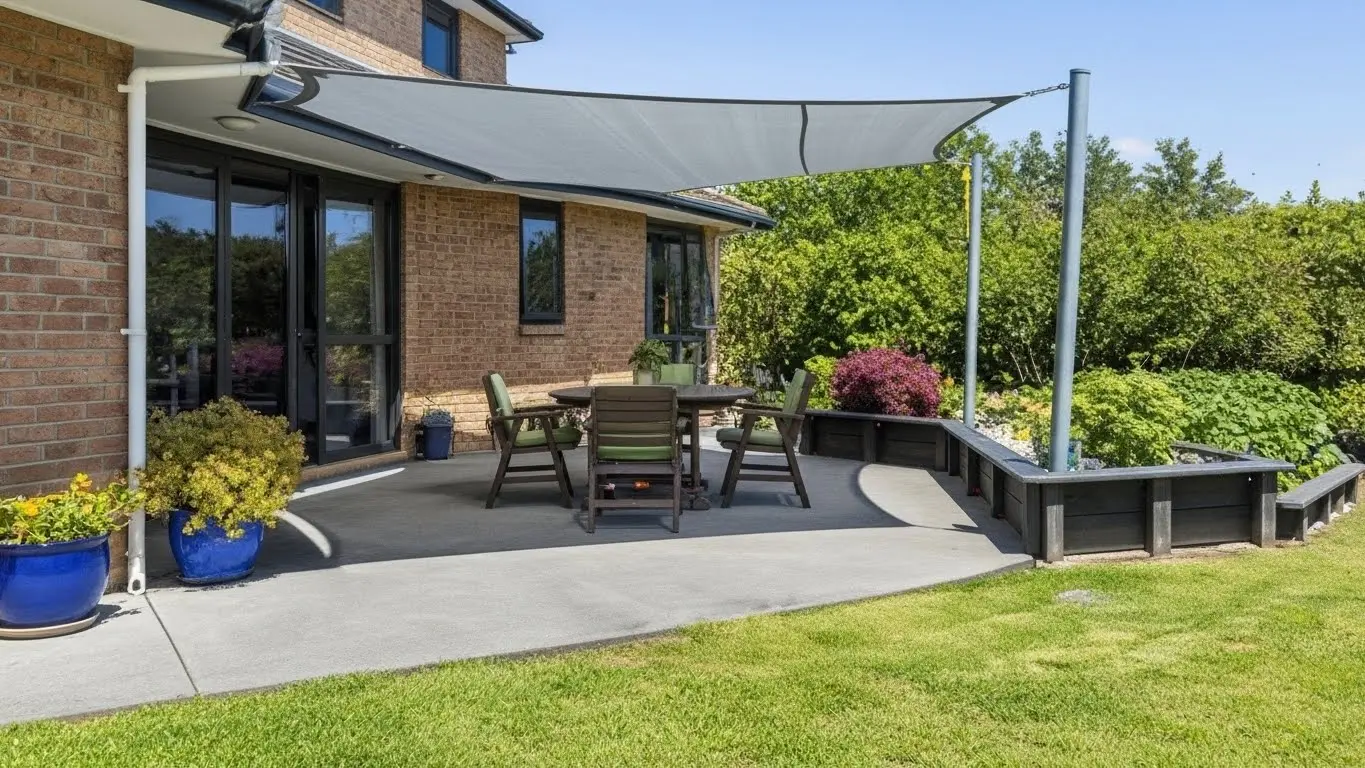
A shade sail is a fixed, tensioned fabric structure designed to provide large-area sun protection for outdoor spaces. It uses durable, breathable HDPE fabric anchored to posts or buildings, offering customizable coverage with low maintenance and modern aesthetics.
Shade sails are a popular alternative for homeowners comparing shade sail vs umbrella solutions. They bring permanent or semi-permanent coverage to outdoor areas, delivering a cleaner look and larger shaded zones without central poles or movable frames.
Definition and Basic Function
Shade sails are tensioned fabric canopies fixed between anchor points such as posts or building structures. They create protective shade over spaces like patios, driveways, playgrounds, and pool decks. Unlike portable umbrellas, which offer limited coverage, shade sails form a more stable overhead barrier that withstands exposure for long durations.
- ✅ Provide UV protection across large or irregular outdoor zones.
- ✅ Stay fixed in place as a permanent or semi-permanent feature.
- ❌ Do not fold or move like conventional umbrellas.
Materials and Construction
In our experience, the long lifespan of a shade sail depends on material quality and proper tensioning. Commercial-grade sails are made from high-density polyethylene (HDPE) fabric that blocks up to 95% of harmful UV rays while allowing airflow to keep the space cooler. The material is waterproof and heat-resistant, which helps maintain comfort during summer months.
- ⚙️ Fabric: Heavy-duty HDPE mesh, resistant to mold and tearing.
- ⚙️ Framework: Steel or aluminum posts ensure structural strength.
- ⚙️ Hardware: Stainless steel turnbuckles and D-rings maintain even tension.
The tensioning system is the core of each installation. It secures the sail’s edges tightly, preventing sagging and improving its aerodynamic performance in wind. Professional installation is recommended for safety and longevity.
Coverage and Installation
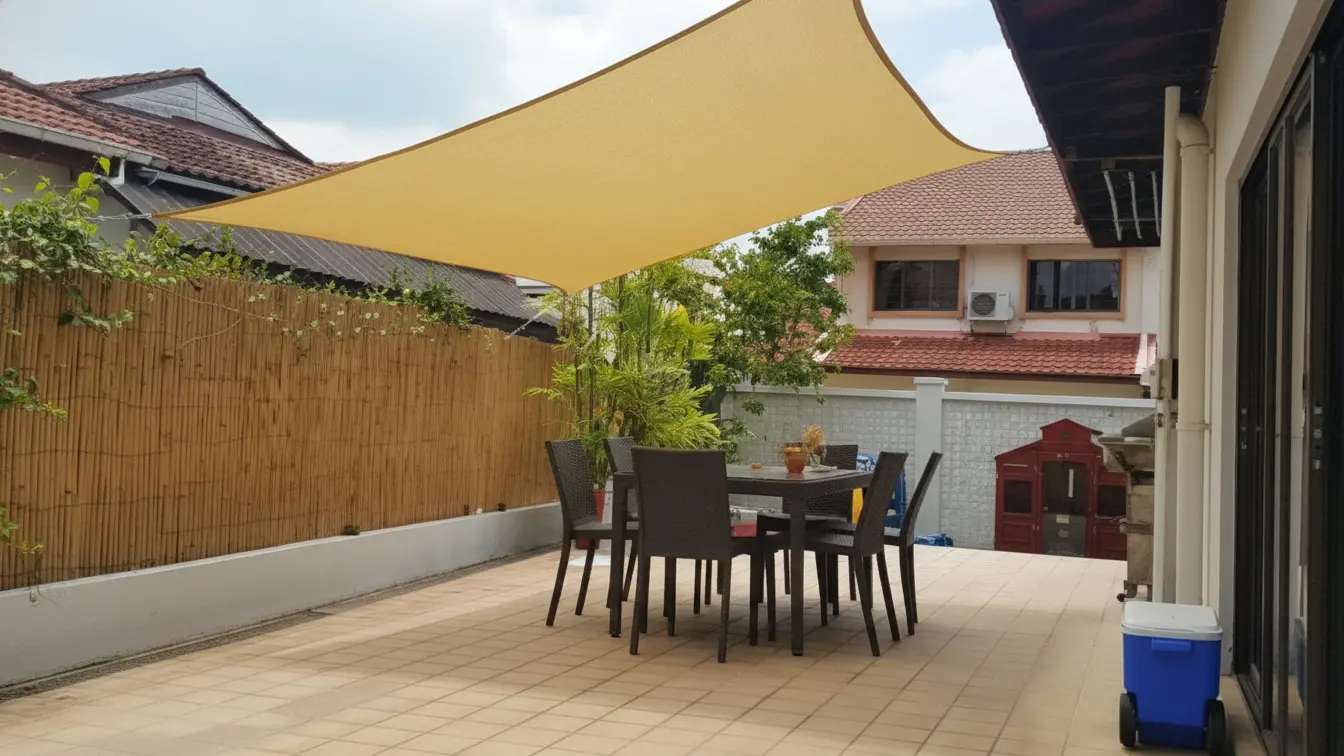
Shade sails can be tailored in different shapes, such as triangles, squares, or rectangles, to fit any outdoor layout. They are scalable—ideal for both small residential yards and large commercial courtyards. By adjusting height and angle, users can optimize sun protection and rain run-off.
- ✅ Customizable in size, shape, height, and angle for specific layouts.
- ✅ Designed to cover broad or uneven zones without a central obstruction.
- 💡 Anchoring points include building walls, steel posts, or pergola beams.
Proper installation involves marking anchor points, setting posts in concrete for stability, and tensioning the fabric evenly. This ensures optimal coverage and long-term performance with minimal maintenance.
Durability and Maintenance
Shade sails are built for consistent exposure to outdoor elements. The HDPE fabric resists fading, tearing, and mold growth, while the metal framework holds firm against wind and moisture. Once installed, the structure remains secure throughout the year unless removed during extreme weather like hurricanes or snowstorms.
- ✅ UV-stabilized material prevents color fading over 5–10 years of use.
- ✅ Minimal cleaning using mild soap and water maintains appearance.
- 💡 Less frequent replacement compared to traditional umbrellas, improving cost efficiency over time.
This durability makes shade sails more economical in the long run than portable options, especially in high-sun or high-wind areas.
Customization and Aesthetic Advantages
Beyond function, shade sails elevate outdoor visuals with tailored geometry and color coordination. Homeowners and businesses can select shades that align with their décor or branding, from neutral beige tones to bold modern hues. In our manufacturing experience, creative arrangements—like overlapping sails at different angles—produce dynamic light patterns throughout the day.
- ✅ Available in multiple colors, shapes, and tension styles.
- ✅ Enhances outdoor atmosphere with a sleek, architectural look.
- 🚀 Suitable for residential patios, resorts, cafes, and public facilities.
For property developers and resort managers sourcing B2B outdoor shade structures, working directly with experienced manufacturers like Patiofurnituresco ensures access to OEM and ODM customization. This means every sail can match brand specifications while maintaining international durability standards.
What Is a Patio Umbrella?
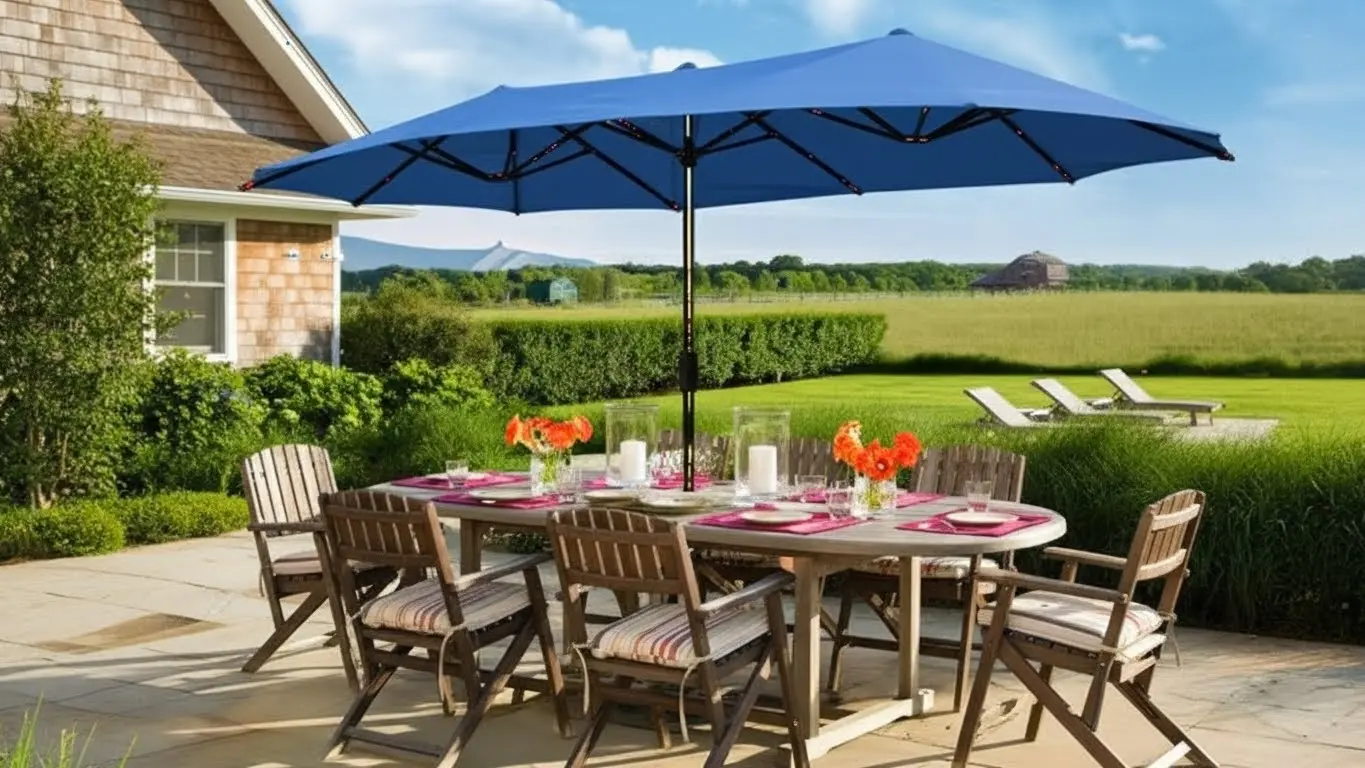
A patio umbrella is a large outdoor shade structure featuring three core components: a canopy, a supporting pole or arm, and a base. Designed mainly to provide UV protection and shade, it comes in various styles from simple center-post market umbrellas to advanced cantilever models with tilt and rotation features.
Patio umbrellas play a key role in creating outdoor comfort for homes, cafes, and resort patios. They balance form and functionality—providing vital shade while complementing the aesthetics of surrounding furniture. When comparing shade sail vs umbrella options, umbrellas are portable, flexible, and generally easier to reposition throughout different seasons.
Definition and Core Components
At its core, a patio umbrella consists of three main parts that work together to deliver shade and protection. These include the fabric canopy, the supporting pole or arm, and a stabilizing base.
- ✅ Canopy: Offers UV defense and defines the shaded area.
- ✅ Pole or Arm Support: Holds the canopy upright or offset, depending on design.
- ✅ Base: Anchors the umbrella for balance and wind stability.
Common canopy diameters range from 6 to 16 feet and come in shapes such as round, square, or rectangular. These components make patio umbrellas versatile for dining, lounging, or recreation setups both in private homes and commercial venues.
Types of Patio Umbrellas
Different umbrella designs suit different outdoor environments. The two primary categories—market and cantilever umbrellas—serve distinct seating and layout requirements.
- ✅ Market Umbrella: Uses a center-post structure that usually passes through a table opening. It provides balanced shade and a compact setup that fits classic patio layouts.
- ✅ Cantilever Umbrella: Features an offset side pole that frees up the area beneath the canopy. This design offers up to 360° rotation and adjustable angles for optimal sun tracking.
Market umbrellas complement traditional patios and restaurant dining areas, while cantilever models work best near pools, lounge sets, or contemporary open spaces where flexibility and unobstructed shade coverage are priorities.

Canopy Shapes and Coverage Options
Choosing the right canopy shape affects how effectively a patio umbrella shades the intended area. It also contributes to the overall symmetry and design of the outdoor space.
- ✅ Round Canopies: Provide balanced, central coverage ideal for compact, round tables and casual seating areas.
- ✅ Square Canopies: Deliver efficient corner-to-corner shade, blending well with modern patios and sectional furniture configurations.
- ✅ Rectangular Canopies: Offer extended coverage for long dining tables or elongated layouts, perfect for larger gatherings or shaded walkways.
Key Features and Innovations
Modern patio umbrellas integrate user-friendly mechanisms and weather-adaptive technologies for comfort, ease of use, and longevity. In our experience as outdoor furniture manufacturers, clients often prioritize the following upgrades:
- 💡 Tilt Hinges: Adjust the canopy angle throughout the day without moving furniture.
- 💡 Crank Lift Systems: Simplify opening and closing actions, replacing traditional pulley systems.
- 💡 Double-Vented Canopies: Relieve air pressure and improve heat ventilation in windy conditions.
- 💡 LED Lighting Integration: Extends usability into evening hours, enhancing ambiance and practicality.
Common Misconceptions and Commercial Grade Differences
Not every patio umbrella is equally suited for heavy or portable use. The distinction between consumer and commercial-grade umbrellas lies largely in material strength, weather resistance, and installation methods.
- ⚙️ Portability: Consumer umbrellas are lightweight and easy to move, but durability may be limited under high traffic or strong wind conditions.
- ✅ Commercial Strength: Built using reinforced frames and dense fabric, they withstand daily use in hospitality or retail environments.
- ⚠️ Setup Requirements: Commercial units often require heavier bases or permanent anchoring but deliver a significantly longer service life.
Patiofurnituresco manufactures contract-grade umbrellas engineered to meet international standards such as EN581 and UL4041. This ensures dependable performance for hotels, resorts, and property developers seeking weatherproof, professional shading solutions.
Installation Requirements and Ease of Use
Shade sails require significantly more complex installation than umbrellas, involving professional-grade foundation work, concrete footings, and precise structural engineering. Umbrellas, by contrast, offer plug-and-play setup requiring minimal site preparation, making them substantially easier for homeowners to deploy independently.
When comparing a shade sail vs umbrella, installation complexity and user control greatly differ. Shade sails act as permanent structures that demand groundwork and engineering, while umbrellas are mobile, flexible, and designed for quick setup.
Key Installation Differences
| Aspect | Shade Sail | Umbrella |
| Foundation | Requires deep post embedment — at least 33% burial with 20 MPa concrete ⚠️ | Freestanding or weighted bases; no foundation needed ✅ |
| Setup Time | Approx. 2–7 days including curing ⏳ | Takes only 15–30 minutes for setup 🚀 |
| Permits & Skills | Usually requires permits and professional installers ⚠️ | DIY‑friendly and does not require permits ✅ |
Installation Process and Structural Considerations
Installing a shade sail involves several technical stages to ensure longevity and safety. Before digging, a site inspection and underground utility check are mandatory to prevent damage during foundation work.
- ⚠️ Posts are embedded with a slight outward lean to maintain proper tension distribution.
- 💡 Steel posts add structural stability but demand heavy machinery for placement.
- ⚠️ Timber posts are easier to handle but more prone to deflect under wind load.
- ⏳ Concrete must cure for at least 48 hours before tensioning the fabric.
This process contrasts sharply with umbrellas, which can be secured within minutes using a weighted or in-ground base.
Ease of Use and Flexibility
Umbrellas are built for everyday flexibility. They can be opened, relocated, or stored anytime, making them ideal for seasonal or rented spaces.
- ✅ Provide adjustable, movable shade for patios, cafes, or rental properties.
- ❌ Offer limited coverage width compared to sails.
- ⚠️ Not suited for heavy wind exposure or permanent installations.
Shade sails, in contrast, serve as semi‑permanent fixtures designed for large patios or pool areas. Once installed, repositioning them is difficult but they deliver stronger aesthetics and higher wind resistance.
Critical Perspective for Homeowners
Many homeowners underestimate the permanence and structural load requirements of shade sails. Without proper anchoring, sails can fail prematurely or cause tension imbalances under stress.
- ⚠️ Misjudging foundation depth or concrete strength can compromise safety.
- ✅ Umbrellas offer a simple, economical alternative requiring no permits or technical knowledge.
- 💡 Factor in local permit timelines and additional costs when planning a sail installation.
Budget, mobility expectations, and long‑term use should guide the choice between a shade sail and an umbrella. In our experience, homeowners seeking a lasting architectural feature tend to favor sails, while those valuing versatility and convenience opt for umbrellas.
Launch Durable, Custom Outdoor Shade Solutions with Confidence
Partner directly with Patiofurnituresco to access premium, factory-direct umbrellas engineered for longevity and customization, backed by global certifications and a low-risk MOQ. Elevate your commercial outdoor spaces with cutting-edge designs and reliable worldwide logistics.

Adjustability and Shade Coverage Flexibility
Shade sails provide fixed, mostly permanent coverage with limited adjustability, while umbrellas offer full 360° rotation and height adjustment. Shade sails are ideal for consistent, large-area shade, but umbrellas excel in flexibility and dynamic repositioning to meet changing sun angles and seasonal needs.
When businesses compare a shade sail vs umbrella, the main considerations are coverage flexibility, adjustability, and how each adapts to weather and seasonal conditions. The best choice depends on whether a space needs permanent protection or frequent reconfiguration options for guests and events.
Key Adjustability Features Compared
| Feature | Shade Sails | Umbrellas |
|---|---|---|
| Adjustability Range | ❌ Fixed or up to 15° tilt on high-end models | ✅ Full 360° rotation with height adjustment |
| Coverage Area | ✅ Covers 100–500+ sq ft permanently | ⚙️ Covers 50–200 sq ft, portable |
| Seasonal Adjustment | ⚠️ Requires professional removal/reinstall | ✅ Manual repositioning or storage in minutes |
| UV Protection | ☀️ Blocks 95–99% UV | ☀️ Blocks 90–99% UV |
| Wind Tolerance | 💪 Withstands 40–60+ mph | 🌬️ Withstands 25–35 mph |
| Installation Time | ⚙️ Professional setup: 4–8 hours | 🚀 Manual setup: 5–15 minutes |
| Repositioning | ❌ None after installation | ✅ Unlimited instant adjustment |
| Cost for Adjustability | 💲 15–25% premium on adjustable models | ✅ Included at no added cost |
In our experience designing commercial-grade outdoor systems, umbrellas remain the preferred choice for clients needing flexible control and fast setup, while shade sails provide a more architectural, long-term installation with higher wind resistance.
Adjustability Trade-Offs and Practical Perspectives
Shade sails are built as permanent architectural solutions with tensioned fabric engineered for strength and year-round use. They prioritize durability and wide, consistent shade coverage over adjustability.
Motorized retractable or tilting sails do exist, but they add around 20–30% in extra cost and require electrical wiring, which can limit placement. Once installed, repositioning a sail demands professional removal and reinstall, involving both labor and downtime.
Umbrellas, on the other hand, bring on-demand adaptability. Features like tilt, rotation, and height control allow easy repositioning without tools or added expense. In active spaces such as outdoor cafés, resort dining zones, or rental venues, this flexibility supports changing sun angles and shifting guest layouts throughout the day.
- ✅ Dynamic areas such as event courtyards and seasonal patios benefit from umbrella adjustability.
- ✅ Fixed-use locations like poolsides or resort walkways suit shade sails for their long-term coverage.
- ⚙️ Repositioning impact: Professional sail adjustment adds cost, while umbrellas adapt instantly.
Both structures provide excellent UV protection, but the decision often comes down to whether your business values permanence and low maintenance or prefers movable, responsive shading. Patiofurnituresco supports both systems, offering OEM customization for sails and umbrellas designed to match brand aesthetics and site requirements.
Durability and Weather Resistance
Shade sails use commercial-grade materials designed to withstand harsh weather conditions year-round, offering better durability and UV resistance than umbrellas, which require seasonal removal and are prone to damage from strong winds.
When comparing shade sail vs umbrella for long-term use, it becomes clear that material grade, construction, and resistance to environmental stress play major roles in product lifespan. In our experience manufacturing outdoor structures for commercial spaces worldwide, consistent performance under tough weather is directly tied to engineering and materials.
Material Composition and UV Resistance
Shade sails rely on high-density polyethylene (HDPE) fabrics supported by galvanized or stainless-steel fittings. This combination blocks up to 95% of harmful UV rays while maintaining airflow for cooler shaded areas.
Umbrellas, by contrast, often use standard polyester or olefin fabrics stretched over aluminum or wooden frames. These materials offer limited UV shielding and tend to fade faster under direct sunlight, especially after frequent folding or exposure to moisture.
- ✅ Shade sails: HDPE fabric, UV-blocking performance around 90–95%
- ❌ Umbrellas: Polyester or olefin, UV protection around 60–80%
- 💡 Tip: For commercial or resort applications, HDPE shade sails yield greater long-term reliability and color retention.
Weather Durability and Maintenance Requirements
Shade sails are engineered to remain in place through much of the year, even under substantial wind loads. Their tensioned design and robust anchors help them resist common issues such as sagging or tearing.
Umbrellas, although portable, need to be closed or removed during strong winds above 25–30 mph to avoid breakage. They also tend to trap moisture, encouraging mold growth if not properly dried and stored.
- ✅ Shade sails: Resist mold and mildew; require minimal post-installation maintenance.
- ❌ Umbrellas: Require periodic washing, seasonal storage, and inspection of pole joints.
- ⚠️ Maintenance Tip: Always check tension and fixings of sails annually for optimal longevity.
Lifespan and Cost-Effectiveness Over Time
Although shade sails involve a higher setup cost, their average service life of 8–12 years with minimal maintenance makes them a cost-efficient investment. For commercial venues, this translates to fewer replacements and less downtime.
Umbrellas typically last between 2–5 years depending on usage intensity and fabric quality. Over time, the repeated purchase and upkeep costs increase total ownership expenses for high-traffic settings such as cafés or resorts.
| Feature | Shade Sail | Umbrella |
|---|---|---|
| Average Lifespan | ✅ 8–12 years | ❌ 2–5 years |
| Maintenance Frequency | ✅ Annual tension and anchor check | ❌ Seasonal cleaning and storage |
| Cost Efficiency Over Time | 🚀 High ROI for permanent use | ⚠️ Increasing cost with frequent replacements |
Critical Perspective on Use Case Suitability
Shade sails are best suited for permanent outdoor environments exposed to harsh sun, heavy rain, or regular wind gusts. They provide stable protection and reduce maintenance downtime for commercial properties, resorts, and public areas.
Umbrellas, while convenient, align more with flexible setups. They work well for mild climates, residential patios, or cafés that rearrange seating layouts often, though they require storage during off-season periods.
- ✅ Shade sails: Ideal for year-round use, strong wind zones, and fixed installations.
- ❌ Umbrellas: Better for temporary, movable applications in calm climates.
- 💡 Expert Insight: Selecting between a sail or umbrella should depend on local climate and the desired permanence of your outdoor design.
Cost Comparison
Shade sails have a higher upfront cost but offer superior long-term value for larger spaces, while umbrellas are more budget-friendly for small areas with lower initial investment but higher replacement costs over time. The cost-effectiveness depends on space size, weather conditions, and durability requirements.
When deciding between a shade sail and an umbrella, understanding the overall cost structure helps determine which one offers better value. The overview below breaks down installation, maintenance, and lifetime costs to help buyers select the best fit for their space and budget.
Cost Comparison Table
| Factor | Shade Sails | Umbrellas |
|---|---|---|
| Initial Cost | ⚠️ Higher upfront investment | ✅ 30–50% cheaper initially |
| Coverage Area | 🚀 Covers 3–5x more space per unit | ❌ Limited circular or square range |
| Installation Costs | ⚠️ Requires posts and professional setup ($500–$2,000+) | ✅ Simple setup, no construction costs |
| Durability | ✅ Lasts 10–15+ years with care | ❌ Lasts 3–7 years |
| Weather Resistance | ✅ Handles high winds; stays up year-round | ❌ Must be removed during storms |
| Long-Term Cost (10 years) | 💡 Lower total cost for large spaces | ⚠️ May cost 2x more due to replacements |
| Space Efficiency | ✅ Ideal for >200 sq ft | 💡 Performs well under 100 sq ft |
| Maintenance | ✅ About 50% less maintenance | ⚠️ Regular cleaning and storage needed |
| Customization | 🚀 Custom sizing adds 15–25% cost | ❌ Limited standard size options |
Critical Perspective on Cost-Effectiveness
In our experience, the size of the shaded area is the first deciding factor. For small spaces under 100 sq ft, umbrellas are clearly more economical, costing around $300–$800. Shade sails in the same range can cost $1,500–$3,500 including installation, which suits only permanent setups.
Between 100–300 sq ft, multiple umbrellas often approach the cost of a single shade sail. Yet they create scattered coverage and less visual harmony in outdoor layouts. Larger installations exceeding 300 sq ft clearly favor shade sails financially, saving around 40–60% in total ownership costs over a decade.
Weather conditions also shift the long-term value. In high-wind or coastal environments, umbrellas often sustain damage and need replacement, while shade sails endure year-round with minimal upkeep. Umbrellas also bring hidden expenses: storage, repositioning, and hardware replacements can add $200–$500 per year.
The real ROI inflection point appears near 150 sq ft. At that coverage area, the cumulative cost of replacing umbrellas every few years equals a shade sail investment that lasts over a decade—making sails the smarter choice for commercial patios, cafés, and high-traffic spaces.
Maintenance and Storage Considerations
Shade sails require seasonal tension checks and routine cleaning but can be removed for storage, reducing weather exposure. Pergolas need periodic staining, recoating, and inspections as permanent structures, requiring less frequent but more intensive upkeep.
For anyone comparing shade sail vs umbrella options, the long-term maintenance and storage factors often define cost-effectiveness and convenience. Shade sails are semi-permanent while pergolas are structurally permanent, leading to naturally different upkeep rhythms and material care expectations over time.
Maintenance Requirements Comparison
Shade sails and pergolas follow distinct care patterns based on their materials and installation methods. Shade sails need occasional cleaning and tension adjustments, while pergolas demand slower but more permanent maintenance like recoating or inspection.
| Aspect | Shade Sails | Pergolas |
| Cleaning | ✅ Mild detergent wash a few times per year | ✅ Spring cleaning plus recoating every 2–3 years |
| Seasonal Checks | ⚠️ Tension adjustment at start of warm seasons; remove before storms | ⚠️ Inspect fasteners and prune vines to avoid trapped moisture |
| Typical Lifespan | 💡 Fabric lifespan: several years with care | 💡 Wood or metal frame lifespan: many years with routine staining |
Storage and Seasonal Considerations
Storage flexibility is one of the most practical differences between these two outdoor solutions. Shade sails can be removed completely, cleaned, dried, and stored away when not in use.
- ✅ Shade sails can be taken down before harsh weather or during the off-season to prevent UV and wind damage, extending fabric life.
- ⚠️ Pergolas remain exposed year-round, so they need protective coatings and periodic surface care.
- 💡 In colder or storm-heavy climates, the ability to store shade sails reduces long-term wear significantly.
Pergolas, by contrast, become permanent elements of an outdoor space and continue to age with exposure. With proper materials and coatings, they offer reliable durability even in constant sun and rain.
Material Durability and Maintenance Costs
From a business or homeowner’s view, material selection influences both appearance and recurring expenses. Shade sails rely on high-density polyethylene (HDPE) fabrics, while pergolas are built from long-lasting structural materials such as aluminum, cedar, or steel.
| Factor | Shade Sails | Pergolas |
| Material Longevity | 💡 HDPE lasts several years, may need periodic replacement | ✅ Cedar or aluminum lasts decades with staining every 2–3 years |
| Corrosion / Decay Risk | ❌ Minimal rust exposure due to removability | ⚠️ Check for rust on fasteners and wood decay, especially if vines are present |
| Typical Maintenance Costs | 💡 Owner-managed, low recurring expense | ❌ Professional recoating or inspection often needed, adding labor cost |
In our experience manufacturing commercial outdoor structures, pergolas often carry a higher ongoing cost due to their permanence, but their visual and structural impact justifies the investment for long-term installations like hotel patios or garden lounges.
Maintenance Approaches: DIY vs Professional
The level of self-maintenance possible greatly affects total cost of ownership. Shade sails enable a flexible, do-it-yourself approach, while pergolas lean toward professional upkeep due to size and materials.
- ✅ Shade sail cleaning, tensioning, and seasonal setup are manageable without specialized tools.
- ❌ Pergola upkeep such as staining or wood refinishing usually requires skilled labor.
- 💡 For commercial spaces, listing realistic maintenance costs upfront helps in balancing project budgets and durability expectations.
Businesses comparing shade sail vs umbrella setups should weigh ease of care, material lifespan, and ongoing cost. For large properties or hospitality environments, a pergola may fit better as a fixed asset, whereas shade sails provide adaptable coverage with minimal maintenance involvement.
Which Is Better for Your Yard?
Shade sails are better for large, permanent installations requiring minimal maintenance and superior weather resistance, while patio umbrellas fit smaller spaces prioritizing portability and flexibility.
Choosing between a shade sail and an umbrella depends on your yard size, your preferred level of maintenance, and how you intend to use the shaded space. Each option offers unique benefits in terms of cost, weather resistance, and installation ease.
Coverage and Installation
| Feature | Shade Sails | Patio Umbrellas |
|---|---|---|
| Coverage | ✅ Expansive, unobstructed coverage ideal for patios, pools, and large gardens. | ❌ Limited circular or square shade pockets; central pole may block movement. |
| Installation | ⚠️ Requires professional, permanent setup; less portable. | ✅ Quick, DIY-friendly setup; easy to move or store seasonally. |
Durability and Weather Resistance
| Aspect | Shade Sails | Patio Umbrellas |
|---|---|---|
| Weather Performance | ✅ Made from high-density polyethylene; resists UV rays, rain, and strong winds. | ❌ Prone to wind damage; must be retracted during bad weather. |
| Maintenance | ✅ Needs minimal care; usually just occasional cleaning. | ⚠️ Requires regular maintenance and seasonal storage. |
Cost Considerations
| Cost Factor | Shade Sails | Patio Umbrellas |
|---|---|---|
| Initial Investment | ⚠️ Higher upfront cost due to professional installation and size. | ✅ Lower upfront cost; no installation required. |
| Long-Term Value | ✅ Lower cost per sq. ft. over time with minimal replacements, ideal for large areas. | ❌ May need several units and frequent replacements for large spaces. |
Customization and Aesthetic Impact
- ✅ Shade Sails can be tailored in size, shape, and color to fit irregular yard layouts and enhance property appeal.
- ✅ Modern color options complement contemporary outdoor spaces.
- ❌ Patio Umbrellas typically come in standard shapes with limited customization.
- ⚠️ Umbrellas add minimal upgrade to property appearance compared to sails.
UV Protection Effectiveness
Both options offer sun protection, but their effectiveness varies greatly. Shade sails use tightly woven, breathable materials that block a significant percentage of harmful UV rays while keeping the area cooler.
Patio umbrellas protect smaller areas and generally offer lower UV-blocking capacity. Specialized beach umbrellas may still allow UV penetration, so the coverage they provide is limited. Opting for a sail structure is a more effective way to reduce long-term sun exposure in your yard.
Which One Should You Choose?
- ✅ Choose Shade Sails for large yards (over 200 sq. ft.), stable permanent setups, minimal upkeep, and aesthetic enhancement.
- ✅ Choose Patio Umbrellas for small spaces, flexible use, budget limits, or portable, DIY-friendly shading needs.
In our experience, homeowners with expansive outdoor areas and frequent sun exposure benefit most from shade sails, while those with compact patios or seasonal setups may find umbrellas more practical.
Frequently Asked Questions
Is a shade sail cheaper than a patio umbrella?
A shade sail is usually larger and built for semi-permanent installation, while a patio umbrella is portable and easier to replace. In most cases, a standard umbrella costs less upfront, but long-term value depends on durability and coverage.
Commercial shade sails require more material and structural support, which increases cost. In our experience with B2B clients, shade sails offer better cost efficiency over time when used in high-traffic or permanent outdoor areas.
| Option | Average Initial Cost | Longevity |
| Patio Umbrella | $150–$400 | ✅ Short-term (replace every 2–3 years) |
| Shade Sail | $400–$1,000+ | ✅ Long-term (lasts 8–10 years) |
Do shade sails block rain?
Not all shade sails are waterproof. Standard ones are made from permeable fabric that allows light and air to pass through while blocking up to 95% of UV rays.
If rain protection is a key factor, clients can choose PVC-coated or waterproof-grade fabric. These block light drizzle effectively but require proper tension and slope for drainage.
How hard is it to install a shade sail?
Installation complexity depends on size and anchoring points. For small residential sails, the process typically involves tensioning three or four corners using metal posts or existing structures.
Commercial-grade sails, like those used by our hospitality partners, often require professional mounting with stainless steel fittings and concrete footings for stability in high wind conditions.
- ✅ Simple DIY setup for small spaces
- ⚠️ Medium skill level for multi-post configurations
- ✅ Professional installation recommended for large areas
Can I take a shade sail down in winter?
Yes. Shade sails can be removed during off-season months to protect the fabric and tension hardware. The process usually takes less than an hour for a two-person team.
In regions with heavy snow or strong winds, we recommend seasonal removal, as accumulated weight may stretch or damage the fabric.
Which provides better UV protection?
High-quality shade sails generally offer stronger and more consistent UV resistance compared to patio umbrellas. Many commercial-grade fabrics block up to 98% of harmful rays.
Umbrellas still provide solid protection, but coverage can shift with sun position. Sails maintain fixed overhead shade, ideal for large patios, decks, or commercial outdoor seating areas.
Final Thoughts
Selecting between a shade sail and a patio umbrella comes down to installation complexity, coverage needs, and long-term value. Shade sails deliver fixed, architectural coverage with superior durability, while umbrellas shine when portability and quick setup matter most. Large, sun-exposed areas benefit from the year-round strength and sleek look of sails, while smaller or seasonal spaces gain flexibility from umbrellas’ adjustable designs.
For homeowners or developers seeking lasting returns, investing in the right shade system reduces maintenance costs and elevates outdoor comfort. Collaborating with a trusted manufacturer like Patiofurnituresco ensures each solution—whether sail or umbrella—meets your site’s performance, budget, and aesthetic goals with professional-grade reliability.