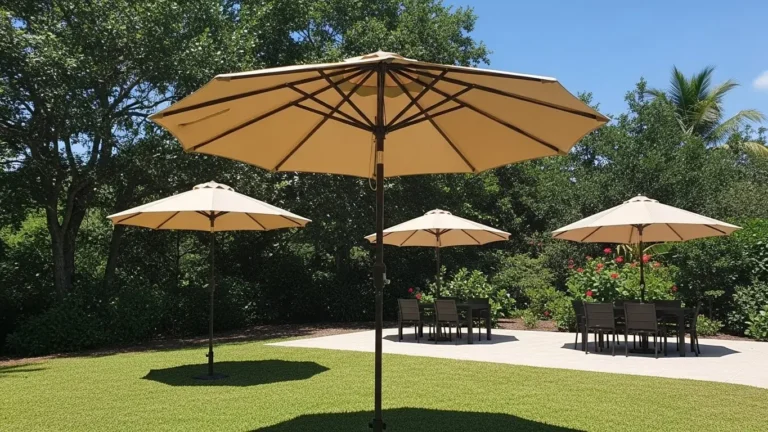



Selecting true Commercial Grade Patio Umbrellas is critical for hotels. Many models look strong but fail in the first windy season. Durability isn’t visible—it’s determined by the pole’s wall thickness and the specific aluminum alloy used.
What is “Commercial Grade”?
In the patio furniture industry, commercial grade refers to products specifically engineered to withstand rigorous daily use in public spaces like hotels and resorts. Key specifications typically include 6061-T6 aluminum poles with at least 2.0mm wall thickness, solution-dyed acrylic fabrics, and verified wind resistance ratings.
This guide breaks down the engineering facts behind a commercial-grade product. We analyze the material specs and manufacturing details that separate a one-season liability from a long-term asset.
The “Wall Thickness” Secret: Why 2.0mm is the 2026 Commercial Minimum
In simple terms: An aluminum pole for a commercial umbrella needs walls at least 2.0mm thick. This gives it the strength to handle daily use at a restaurant or hotel without bending or breaking in light winds.
Defining the Baseline: The Line Between Residential and Commercial
Think of an umbrella pole like a metal straw. A pole with thick walls is strong and hard to bend. A pole with thin walls can easily get dented or snap under pressure.
This is why wall thickness is a key difference between a home umbrella and a commercial one. Umbrellas with walls thinner than 2.0mm are designed for light backyard use, not for a busy business that needs equipment to last.
The 2.0mm (or 0.080-inch) mark is the industry’s unofficial starting line. At this thickness, an umbrella has enough structural muscle to be labeled “commercial quality” for cafes, hotels, and restaurants.

Performance Tiers: A Data Comparison for Specifiers
| Performance Tier | Typical Wall Thickness | Best For |
|---|---|---|
| Entry-Level Commercial | ≈ 2.0 mm (0.080″) | Standard restaurant patios and poolside areas with light to moderate wind. |
| Heavy-Duty Commercial | ≈ 3.0 mm+ (0.125″) | High-wind locations, coastal properties, or umbrellas with very large canopies. |
| Extreme-Duty Commercial | 3.0mm+ with a wider pole (up to 4″) | Giant, fixed umbrellas designed to handle strong wind gusts over 50 mph. |
Alloy Quality: Testing for Prime 6061-T6 vs. Recycled “Scrap” Aluminum
In simple terms: Certified 6061-T6 aluminum has a precise recipe that guarantees its strength. Recycled scrap is a random mix of unknown ingredients, likely to bend or break.
Material Showdown: Aluminum vs. Wood vs. Fiberglass
Why do we stick to aluminum? Here is how commercial-grade aluminum compares to other common market materials:
| Feature | Commercial Aluminum (6061-T6) | Wood (Teak/Hardwood) | Fiberglass |
|---|---|---|---|
| Wind Resistance | High (Rigid & Stable) | Low (Prone to snapping) | High (Flexible in gusts) |
| Maintenance | Low (Rust-free, wipe down) | High (Needs varnishing) | Low |
| Lifespan | 5-10+ Years | 1-3 Years (Rot/Fade) | 3-5 Years (UV degradation) |
The Chemical Fingerprint of Prime 6061-T6
Think of prime 6061-T6 aluminum like a strict recipe for a high-performance engine part. It’s not just aluminum; it’s a specific mix defined by standards like ASTM B221. This ensures every batch has the exact same ingredients for reliable strength.

Verifiable Mechanical Strength for Durability
The strength of 6061-T6 isn’t just a claim; it’s a measurable number, like the horsepower rating of a car. It guarantees that the metal can resist a specific amount of force before it bends or breaks, which is critical for standing up to wind.
The “T6” part of the name refers to a special heat-treating process. Think of it like baking the aluminum in a specific way to lock in its strength and hardness. This step is what separates true structural aluminum from softer, generic metal.
The Hidden Factor: Wind Ratings & Base Weight
In simple terms: A commercial umbrella is only as safe as its base. Even the strongest frame will tip over if the base is too light. For commercial safety, “heavier is always better.”
One of the most common reasons for umbrella failure isn’t a broken pole—it’s the wind blowing the entire unit over. This is why Wind Ratings and Base Weights are inseparable.
A residential base typically weighs 20-40 lbs. For a commercial setting, we recommend a minimum of:
- 75 lbs: For table-mounted umbrellas (through a hole).
- 100-150 lbs: For free-standing umbrellas up to 9ft.
- 200 lbs+: For large cantilever umbrellas or high-wind zones.
The Cost of Quality: A Transparent Raw Material Cost Breakdown
Think of building a durable tent. The strong poles and the weatherproof fabric are the most important—and expensive—parts. It’s the same for a commercial umbrella, where the frame and canopy drive the final cost.
The structural frame, including the main mast and supporting ribs, is the single biggest material expense. Using high-grade 6061-T6 aluminum provides the strength needed for constant public use and windy conditions.
Cost Percentages by Component
When we look at where the money goes, the aluminum for the frame (mast, ribs, and hubs) makes up about 35% to 45% of the total product cost.
The heavy-duty canopy fabric is the next piece of the puzzle, accounting for roughly 15% to 25% of the cost.
All the small but critical parts like stainless steel fasteners and lifting mechanisms contribute another 10% to 15%. These high-quality components prevent rust and ensure the umbrella operates smoothly.
Stop Replacing Cheap Umbrellas Every Year

Factory Lab: How We Verify “Contract Grade” Standards Internally
To call an umbrella “contract grade,” we have to prove it can handle the daily demands of a busy commercial space. It isn’t about looks; it’s about measurable strength and durability. Our internal lab testing focuses on two key areas: the core structure and the materials exposed to the elements.
Structural Component Analysis: Frame and Hardware Integrity
Think of the umbrella pole like a bone; a thicker bone is much harder to break. We use precise tools to measure the aluminum pole walls, making sure they are at least 0.080 inches thick. Anything less just won’t hold up to constant use and windy conditions.
The ribs that support the canopy are also critical. Instead of thin, brittle metal, we use thick fiberglass ribs up to ¾” wide. They act like strong, flexible fishing rods, designed to bend under pressure from wind gusts without snapping or permanently deforming.
TCO Analysis: Why “Cheap” Retail Umbrellas Cost Hotels More Later
An umbrella built for a quiet backyard is not prepared for the daily demands of a hotel pool, restaurant patio, or windy coast. Most retail umbrellas only last one or two seasons in these environments before they fail.
This creates a cycle where you’re constantly buying replacements. What seemed like a low one-time cost quickly becomes a recurring expense that keeps appearing in your budget.

A Comparison of Key Failure Points: Materials and Engineering
The main difference comes down to the materials. A retail umbrella pole often uses thin metal with a wall thickness under 1.5mm. It’s not designed to handle strong winds or constant daily use.
Commercial-grade poles use thicker, stronger aluminum—typically 2.0mm to 3.0mm thick. This extra thickness gives the frame the strength it needs to stand up to the weather and frequent handling without bending or breaking.
Final Thoughts
The term “commercial grade” is more than a marketing label; it’s a standard defined by specific engineering and material choices. It means using certified 6061-T6 aluminum for structural integrity, ensuring pole walls meet a minimum thickness for wind resistance, and selecting fabrics that won’t fade or tear after one season.
For any hotel, restaurant, or public space, selecting Commercial Grade Patio Umbrellas is an investment. A low upfront cost often leads to a cycle of replacements, creating higher expenses over time. Understanding the key material specifications helps you look beyond the price tag to identify a product built for reliability.
Frequently Asked Questions
What exactly makes a patio umbrella ‘Commercial Grade’?
A patio umbrella is considered ‘commercial grade’ when engineered for continuous, high-traffic use. This means it has a larger, heavier structure (7–11 ft canopy; ≥75 lb base), a 1.5–2.0 inch heavy-wall aluminum pole (not thin steel), and contract-grade canopy fabric (UPF 50+), all while complying with wind load standards.
Why use aluminum instead of steel for umbrella frames?
We use aluminum for our frames because it provides the necessary structural strength at about one-third the weight of steel. It is also naturally corrosion-resistant, which prevents rust in humid, poolside, or coastal environments, making the umbrellas easier for staff to move and longer-lasting.
Does the pole’s wall thickness matter if it looks heavy?
Yes, wall thickness is critical. Commercial-grade aluminum poles start at a 2.0 mm (≈0.080″) minimum wall thickness, while heavy-duty models use 3.2 mm (≈0.125″) or more. Thinner walls flex, bend, and fail much sooner under wind loads, no matter how thick the pole appears externally.
If you are comparing suppliers, our Commercial Outdoor Umbrella Manufacturer – Contract Grade page lists specifications, MOQ and certifications for factory-direct orders.