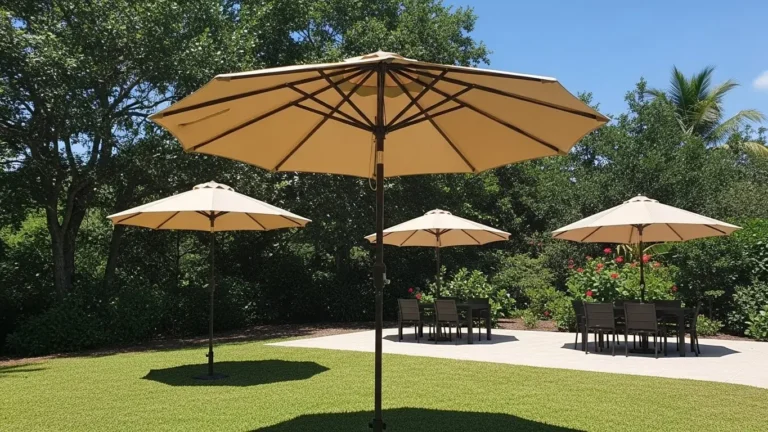



Selecting outdoor shade for a resort goes beyond aesthetics; it requires a structural commitment to safety. While a standard residential umbrella often fails at 30mph, professional hospitality environments demand a 50mph benchmark to handle the unpredictable loads of coastal and high-traffic areas.
This article explains the engineering requirements behind these wind ratings, including the precision of closed-circuit wind tunnel testing and the impact of ASCE 7 enclosure categories on internal pressure. We explore how reinforced rib design and specific material grades like 900D polyester allow equipment to remain stable in exposure zones where gusts can reach 200 mph.
Open vs. Closed Testing: Reading the Fine Print
Wind testing accuracy depends on whether a facility uses open-circuit tunnels, which draw ambient air, or closed-circuit systems that maintain temperature stability within 1°C. In 2026, these technical specs, combined with ASCE 7 enclosure categories—where 80% wall openness shifts internal pressure—dictate the reliability of a product’s wind rating.
| Feature | Open-Circuit Tunnel | Closed-Circuit Tunnel |
|---|---|---|
| Airflow Path | Draws ambient air / Open ends | Recirculates air in a loop |
| Flow Quality | Requires honeycomb mesh for cleaning | Superior uniformity and low noise |
| Stability | Subject to external environment | Stable temperature (within 1°C) |
Wind Tunnel Circuit Dynamics and Airflow Precision
Open-circuit wind tunnels pull air directly from the environment. These setups require honeycomb mesh to clean incoming air and strip away turbulence before it enters the test section. Because they draw ambient air, these tunnels remain sensitive to external dirt and dirt particle entry. Closed-circuit systems recirculate air through a continuous loop using turning vanes and diffusers. This recirculation ensures temperature variations stay below 1°C, providing the high measurement accuracy required for research-grade data. Precision testing in 2026 favors closed-return tunnels for contract-grade furniture to minimize vibration and external contamination during high-velocity simulations. While open test sections lack side walls to accommodate larger models, closed sections provide better boundary control for subsonic testing.

Enclosure Category Effects on Internal Pressure Loads
ASCE 7-16 standards define a structure as open if wall openings allow at least 80% free airflow. This classification fundamentally changes how wind forces interact with the Main Wind Force Resisting System (MWFRS). Internal wind pressures fluctuate based on this enclosure status, directly impacting the load calculations for roofs and walls. Partially enclosed designs in hurricane-prone zones must account for higher internal pressures than fully closed structures. Validation reports for umbrellas, pergolas, and cabanas must specify the enclosure type to ensure PSI ratings reflect the real-world conditions of hospitality environments. Verifying the enclosure status per ASCE 7 ensures that product wind ratings translate accurately from the lab to the installation site.
The 50mph (80km/h) Standard for Resorts
The 50mph (80km/h) standard separates professional resort shade from residential products. While standard umbrellas typically fail at 30mph, resort-grade models utilize reinforced aluminum and high-denier fabrics to maintain stability in coastal environments and high-traffic event spaces.
| Shade Category | Frame Material | Wind Resistance |
|---|---|---|
| Standard Residential | Steel or Thin-walled Metal | 20–30 mph (32–48 km/h) |
| Commercial Resort | Reinforced Aluminum | 50 mph (80 km/h) |
| Heavy-Duty Canopies (e.g., Y8) | Industrial Aluminum Alloy | 50+ mph (80+ km/h) |
Defining the Commercial Wind Resistance Threshold
Resort pool umbrellas and specialized event tents must meet the 50mph benchmark to ensure safety in professional hospitality environments. This rating creates a clear distinction between professional equipment and basic residential models that generally reach their physical limits at 30mph. Manufacturers establish these ratings through wind tunnel testing to simulate the dynamic pressure of sustained gusts rather than simple static loads.
Coastal resorts and exposed beachfront areas require these specific risk classification standards. In these high-traffic settings, equipment must resist uplift and sway to protect guests and property. Professional-grade structures provide the necessary resilience to handle sudden weather shifts without the risk of catastrophic frame failure common in lower-rated alternatives.
Engineering Specifications for 80km/h Resilience
Aluminum frames provide the structural integrity required to sustain 50mph loads. Steel structures often fail at much lower thresholds, sometimes as low as 20mph, due to their weight-to-strength ratio and susceptibility to bending under stress. Industrial-grade aluminum alloy remains rigid, allowing the structure to disperse wind energy without snapping or permanently deforming.
Fabric durability is equally important for maintaining structural integrity. Commercial models use high-denier polyester, typically ranging from 500D to 900D, treated with a PU coating. These materials offer the high tensile strength needed to resist tearing while meeting CPAI-84 fire ratings. Thickened roof corners and reinforced seams prevent the canopy from shredding during high-velocity airflow.
Stabilizing these structures depends on a specialized anchoring system. This includes reinforced truss bars, high-strength connectors, and wide foot-pads that increase the contact area with the ground. Using adequate base weights or industrial stakes ensures the equipment counters the lift generated by 80km/h winds, keeping the entire assembly secure in open environments.
Reinforced Ribs: Where the Stress Goes
In 2026, high-performance umbrella ribs use finite element analysis (FEA) to align structural reinforcement with principal stress lines. This engineering approach directs internal forces along specific trajectories, reducing peak material stress by approximately three times and preventing structural buckling during sudden wind gusts or sustained high-pressure exposure.
Load Path Optimization via Stress Line Alignment
Placement of ribs follows principal stress lines derived from finite element analysis to ensure material continuity matches internal force trajectories. These reinforced structures exhibit nearly 66% less maximum shell stress compared to unreinforced components when subjected to identical wind loads. By aligning the ribs with these calculated paths, the frame manages mechanical tension more efficiently than traditional uniform designs.
Strategic network simplification removes low-contribution ribs to maintain high stiffness while reducing the overall weight of the frame. This optimization allows for a leaner structure that does not sacrifice durability. Even rib spacing further prevents warping and localized flexing in flat material areas by spreading tension across the entire surface, ensuring the umbrella maintains its aerodynamic shape under pressure.

Mechanical Benchmarks and Geometric Specifications
Structural ribs utilize specific geometric profiles, including 16.80 mm spacing and 2.60 mm heights, to maximize resistance to bending. Flank inclinations of 65° paired with rib inclinations of 60° optimize the distribution of compressive stresses at the rib tips. These precise angles prevent material fatigue at the points most vulnerable to wind-driven deformation.
Reinforcement zones manage tensile residuals between 28-56 MPa in the core while handling tangential compressive stresses up to -158 MPa at the transverse tips. To maintain structural integrity at joints, bolt connections in rib-plate structures require specific 18-inch to 27-inch center spacing. This configuration mitigates high local bending at attachment points, extending the operational lifespan of the umbrella assembly.
Premium Commercial-Grade Umbrellas: Direct from the Manufacturer

Vents and Airflow: Reducing Lift Pressure
Venting reduces lift pressure by equalizing internal and external air pressures. By increasing velocity pressure through specific openings, the static pressure acting on a surface decreases. This keeps net uplift forces within safe limits—typically below 2.3 psf—preventing wind from suctioning panels or roofs off their frames.
Physics of Pressure Equalization and Uplift
Engineers measure uplift pressure on flat surfaces in pounds per square foot (psf), where 1 inch water gauge (w.g.) equals approximately 5.2 psf. Fundamental duct design physics dictates that an increase in velocity pressure through a vent causes a direct reduction in static pressure on the surrounding surface. These vents provide intentional flow paths that equalize internal and external environments. This mechanism prevents the full force of wind suction from acting on a sealed structure, effectively keeping net uplift loads within manageable limits.

Design Benchmarks and Flow Velocity Limits
NFPA 92 standards for pressure differentials suggest a range of 0.10 to 0.45 in. w.g. (0.5–2.3 psf) for functional building elements. Industrial airflow criteria typically target 1,000 fpm (5.1 m/s) for ceiling plenums and 500 fpm for exhaust grilles to maintain manageable pressure drops and minimize noise. Specialized pressure-relief vents, such as those produced by Amphenol LTW, handle 7 kPa (145 psf) differentials with permeability ranging from 300 to 10,000 ml/min. Sizing vent areas based on AMCA 201 guidelines ensures internal pressure never reaches the peak external suction force during high-wind events, protecting the structural integrity of the enclosure.
Beaufort Scale: Understanding Wind Forces
The Beaufort Scale is a standardized 0–12 system that links visual observations to specific wind speed ranges measured 10 meters above ground. In 2026, it remains the primary reference for determining when outdoor installations move from safe operation to high-risk structural thresholds, with critical damage typically starting at Force 9.
Visual Observations and Meteorological Standards
The World Meteorological Organization (WMO) and the National Oceanic and Atmospheric Administration (NOAA) define the modern scale using a 10-meter reference height to maintain global consistency. This standardized height ensures that wind speed data collected at different locations remains comparable for engineering and safety planning. By mapping visual cues to quantitative speed brackets, the scale provides a reliable framework for real-time risk evaluation when electronic anemometers are unavailable.
Force 6, characterized as a Strong Breeze, occurs at wind speeds of 25–31 mph (39–49 km/h). At this level, large tree branches move continuously and the stability of outdoor equipment like commercial parasols requires active monitoring. Force 8, known as a Gale, marks a critical operational limit with speeds between 39–46 mph. These conditions often trigger mandatory safety warnings and the immediate closure of temporary structures to prevent mechanical failure or site accidents.
Structural Thresholds and Wind Load Scaling
Aerodynamic force scales with the square of wind speed, meaning doubling the velocity increases the structural load by approximately four times. This non-linear relationship is why small increases in Beaufort numbers result in significantly higher stress on outdoor fixtures. Engineers apply the formula B = (v / 0.836)^2/3 to convert wind velocity (v) in meters per second into Beaufort numbers (B) for site-specific risk modeling and product testing.
Force 10 winds, categorized as a Storm at 55–63 mph, result in considerable structural damage and uprooted trees. This range defines the ultimate failure limit for most non-permanent installations and lightweight architectural elements. While the standard modern scale runs to Force 12, understanding these specific thresholds allows project managers to establish clear safety envelopes based on well-defined meteorological data and predictable structural impacts.
Safety Protocols: When to Close the Umbrella
Facility managers and homeowners should close umbrellas when wind speeds reach 20-24 mph (32-38 km/h), corresponding to Beaufort Scale Level 6. While contract-grade models often withstand 30-40 mph, reaching these limits increases the risk of structural fatigue. Immediate closure is required during Beaufort Level 7 conditions to maintain site safety.
Wind Speed Thresholds and Beaufort Scale Indicators
Safety protocols dictate initiating closure when wind speeds reach 20-24 mph to prevent structural damage and reduce liability from potential flying debris. Personnel should monitor for Beaufort Scale Level 6 indicators, such as whistling in overhead wires and visible difficulty using umbrellas effectively. Conditions reaching Level 7 (28-33 mph) and Level 8 (34-40 mph) represent critical hazard zones where even reinforced aluminum or steel ribs may fail. Staff must prioritize closure when gusts become unpredictable, as sudden shifts in wind force often exceed the safety limits of open canopies regardless of the sustained forecast.
ASTM Safety Standards and Commercial Compliance Requirements
Engineering teams follow ASTM F3512-21 Procedure A to evaluate structural integrity under uniform wind loads, while Procedure B assesses endurance during sustained performance tests. Beach installations require a minimum of 75 pounds of anchoring resistance to comply with ASTM F3681 safety specifications for 7.5-foot umbrellas. Regional oversight districts often mandate that permitted installations meet a 45 mph sustained wind rating to ensure public safety in high-traffic areas. Utilizing specific wind tunnel data helps facility managers establish site-specific safety limits for high-exposure zones like rooftops and beachfront decks.
Wind Tunnel Video Evidence
Modern wind tunnel testing treats video as a precise metrology tool rather than marketing footage. Facilities use high-speed 4K cameras and 20-MP sensors to track structural deformation, wing twist, and 3D point clouds, providing frame-by-frame quantitative evidence of how objects respond to wind loads in real-time.
Metrology-Grade Video Documentation
NASA Langley uses videometric wind-tunnel tests to document Mach numbers from low speed up to hypersonic and pressures ranging from less than 1 atm to nearly 7 atm. This video-based optical measurement provides primary evidence for structural deformation and angle-of-attack across various facilities. By tracking wing twist and bending under aerodynamic loads, engineers generate quantitative proof of aeroelastic response rather than simple qualitative visualization.
Specialized facilities like the UT Dallas BLAST tunnel feature optical-glass side walls and ceilings designed specifically for flow visualization and laser-based measurement. These calibrated video systems integrate with traditional balances to validate CFD and structural models through instrumented evidence. Research programs, such as the FHWA bridge-cable studies, utilize these tools in 2 x 3 meter wind tunnels at speeds up to 75 m/s to maintain repeatable, documented test matrices for cable-section stability.
High-Speed Imaging Specs and 3D Data
High-speed cameras like the Phantom VEO4K 990 record 4K resolution at 1,000 frames per second to document vortex shedding and flow separation for detailed engineering analysis. Industrial measurement providers often deploy multi-camera stereo rigs using 20-MP CMOS sensors to reconstruct 3D point clouds of model deformation with sub-millimeter accuracy. These systems resolve torsion as fine as 0.1 degrees and maintain coordinate accuracy within 0.5 permille of the chord length.
Fiber-link systems allow for synchronized data capture over long distances, ensuring high-fidelity transmission of stereo video frames from 10-GigE sensors. These video frames serve as the raw data driving 3D reconstruction and structural assessments. Engineering teams treat this video as instrumented, calibratable evidence, often cross-referencing it with load cells and pressure taps to ensure model setup and tunnel conditions remain consistent throughout the test matrix.
High-Wind Zones: Rooftops and Beachfronts
Rooftops and beachfronts experience intensified wind forces due to height and lack of surface friction. Engineers design for these zones using Exposure C or D classifications, targeting 3-second gusts between 130 and 200 mph. These environments require materials that withstand high uplift pressures and meet standardized cyclic load testing.
Coastal Exposure Categories and Velocity Pressure
Exposure D applies to beachfront sites where wind blows over open water for at least 5,000 feet. Exposure C covers open terrain with scattered obstructions like small buildings or vegetation. These classifications account for the lack of surface friction that normally reduces wind speed at ground level. As the height of a structure increases, the velocity pressure rises, necessitating specific calculations for any structure on buildings exceeding 15 feet.
Rooftop equipment designers apply gust-effect factors (GCr) as high as 1.9 for horizontal forces and 1.5 for vertical uplift on small units. Proximity to open water eliminates the natural wind-breaking effect of trees and neighboring buildings. This environment creates sustained high-velocity conditions where ASCE 7-16 and 7-22 provisions guide the required strength of curbs, anchors, and frames.
Structural Uplift Ratings and ASTM Testing Protocols
ASCE 7 standards dictate design wind speeds (Vult) ranging from 130 to 200 mph for critical coastal infrastructure. Interior roof zones at a 30-foot height frequently face uplift demands exceeding 30.8 psf, while corner and edge zones require even higher resistance due to localized turbulence. Roofing systems must carry laboratory-tested uplift ratings, often via UL or FM protocols, that exceed the calculated design pressure for each specific roof zone.
ASTM E1233 cyclic pressure testing validates that cladding, soffits, and roof coverings survive repeated hurricane-strength pulses. Engineered systems for these zones often utilize reinforced concrete decks or FM Approved assemblies to maintain structural integrity. These high-performance materials ensure components remain attached during 100-mph sustained gusts and peak gusts that reach the upper limits of coastal design envelopes.
Final Thoughts
Professional hospitality settings demand equipment that stays grounded when the weather shifts. The 50mph benchmark serves as a dividing line between standard patio furniture and structural shade. By relying on wind tunnel data and FEA-optimized rib designs, resorts ensure their installations survive more than just a light breeze. This technical rigor transforms a simple umbrella into a piece of engineered safety equipment.
Selecting shade structures based on specific exposure categories like C or D protects both guests and the property. Managers who follow documented safety protocols and understand local wind dynamics reduce the risk of mechanical failure. High-velocity environments like rooftops and beachfronts require this level of engineering to prevent accidents. Investing in products with verified wind ratings and pressure-equalizing vents keeps outdoor spaces operational and safe.
Frequently Asked Questions
What wind speeds can commercial umbrellas typically withstand?
High-end commercial models handle sustained winds between 35 mph and 55 mph (88 km/h). Some specialized units meet ASCE 7-02 standards for 3-second gusts up to 90 mph (145 km/h), though performance depends heavily on the anchoring system and frame material.
Which umbrella designs perform best in high-wind environments?
Engineered commercial models using fiberglass ribs or reinforced T6 aluminum frames provide the most stability. These units often carry ratings for 40–50 mph sustained winds, significantly outperforming standard residential umbrellas which typically fail at speeds above 24 mph.
How do canopy vents improve stability in windy conditions?
Vents allow air to pass through the canopy, which reduces upward lift and pressure buildup. This mechanism prevents the umbrella from inverting. While general guidelines suggest closing umbrellas at 12–19 mph, vented commercial designs can withstand much higher thresholds in professional 2026 hospitality settings.
When is the safest time to close an outdoor umbrella?
Safety protocols require closing standard umbrellas when wind speeds reach 12–19 mph (20-30 km/h). Even if a model has a higher wind rating, operators should secure the equipment during unpredictable gusts or severe weather alerts to protect the structure and surrounding property.
If you are comparing suppliers, our Commercial Outdoor Umbrella Manufacturer – Contract Grade page lists specifications, MOQ and certifications for factory-direct orders.