


For commercial developers and hospitality architects, designing outdoor spaces at 200 feet or along hurricane-prone coastlines is an engineering challenge where standard solutions often fail. When vertical wind shear and corrosive saline aerosols are the daily reality, ensuring structural integrity and patron safety requires moving beyond aesthetics to rigorous technical compliance and long-term durability.
This case study examines recent **projects** involving high-rise rooftop bars and windy beach resorts, detailing the engineering strategies used to meet ‘occupied roof’ standards under the International Building Code (IBC). We break down the implementation of hybrid solutions—such as pultruded fiberglass ribs with 1100 MPa tensile strength—designed to withstand 100 psf live loads and extreme wind speeds ranging from 115 to 170 mph.
Project Profile: The High-Rise Rooftop Bar
Designing a high-rise rooftop bar involves meeting ‘occupied roof’ standards under the IBC, requiring a 100 psf live load capacity and Class A fire-rated assemblies. Crucially, these structures must be engineered for wind speeds between 115–170 mph using ASCE 7-16/22 protocols and ANSI/SPRI ES-1 edge securement to prevent uplift failure.
Structural Compliance and Life Safety for Occupied Roofs
Transforming a high-altitude roof into a commercial assembly space triggers a specific regulatory framework under the International Building Code (IBC). A primary requirement is the calculation of occupant load according to IBC Table 1004.1.2. For rooftop bars where standing and drinking are the primary activities, this calculation determines the necessary means of egress. For instance, an occupied roof serving between 1 and 500 occupants must provide at least two independent exits, which often necessitates extending existing stairwells or elevators to the roof level to ensure safe emergency evacuation.
Fire safety for high-rise structures (typically Type I or II construction) demands that the roof assembly meets Class A classification. This performance is verified through testing standards such as ASTM E108 or UL 790, which evaluate the assembly’s resistance to external fire exposure. These requirements apply to the entire roofing system, including the membrane, insulation, and any underlayments, such as ASTM D226 (Type II) or self-adhered polymer-modified bitumen conforming to ASTM D1970, to ensure the building remains protected in dense urban environments.
Architectural elements and safety barriers on occupied roofs are subject to strict height and placement limitations. Under IBC 2018 Section 503.1.4.1, enclosing elements generally cannot extend more than 48 inches (1.22 m) above the roof surface, unless they qualify as specific rooftop structures like penthouses under Section 1510. Simultaneously, life safety codes require the installation of guards and railings at a minimum height of 42 inches (1.07 m) to provide fall protection for patrons, balancing the need for unobstructed views with essential safety compliance.
Wind Resilience and Load Engineering at 200 Feet
The engineering of a high-rise rooftop bar must account for significant gravity loads that exceed standard roofing requirements. These “occupied roof” live loads are typically set at 100 psf to support the dynamic weight of crowds, heavy planters, commercial bar equipment, and fixed furnishings. To support these loads, structural engineers utilize AISI S100 standards and manufacturer technical manuals, such as the Verco Roof Deck Design Guide, to select high-strength steel grades like ASTM A653 with yield strengths ranging from 33 to 80 ksi.
Wind resilience is perhaps the most critical technical challenge at high altitudes. Structures must be designed according to ASCE 7-16 or ASCE 7-22 wind provisions, which calculate pressures for the main wind force resisting systems and components & cladding. In many U.S. jurisdictions, ultimate design wind speeds (V_ult) range from 115 to 170 mph. These calculations must extend to every rooftop component, including shade structures, canopies, and parapets, to ensure they can withstand extreme lateral forces and suction pressures without detachment.
Roofing membrane integrity is maintained through rigorous edge securement and coping verification. Edge details must comply with ANSI/SPRI ES-1, and the assembly’s durability is often confirmed through ASTM D3746 or ASTM D4272 testing for uplift and resistance to high-velocity gusts. For ballasted single-ply systems on low-slope surfaces, designers must follow ANSI/SPRI RP-4 to determine the correct ballast size and weight, preventing wind scour and ensuring the roof remains secure even when exposed to the high-exposure categories typical of high-rise urban settings.
Challenge: Uplift Forces at 200ft
Uplift forces at 200ft are intensified by wind shear, where velocity increases relative to height according to the power law. These forces exert exponential lift and drag, necessitating structural designs that manage resonance frequencies and distribute dynamic loads through high-rigidity joints to prevent displacement.
Wind Shear Mechanics and Velocity Scaling
The calculation of uplift forces at a 200ft (approximately 61m) elevation requires the application of the power law wind shear equation: V = V_ref (H/H_ref)^α. This formula accounts for the atmospheric boundary layer where wind speed amplifies as height increases away from ground-level friction. Because wind-induced forces, including lift and drag, increase cubically with velocity, even the transition from 50ft to 200ft results in massive pressure differentials on rooftop furniture and shade structures compared to ground-level environments.
These “sheared winds” create a unique mechanical challenge because velocity is not uniform across the vertical plane of the structure. This gradient creates additional torque and drag, as the upper sections of a structure experience significantly higher wind speeds than the base. Engineering such structures necessitates a focus on managing these vertical pressure imbalances to prevent the mechanical uplift from overcoming the dead weight or anchoring system of the installation.

Resonance Frequency and Dynamic Load Distribution
At significant heights, structural rigidity is the primary defense against dynamic wind forces. High tower rigidity is required to shift the natural resonance frequency of the structure away from external frequencies, such as wind gusts or rotor-passing frequencies in wind-integrated designs. By increasing rigidity, engineers prevent catastrophic vibrations that occur when wind speeds reach peak thresholds, such as the 15 m/s limit often cited for safe operation and installation of high-rise modules.
Managing these loads requires advanced distribution systems, such as the implementation of friction joints with lock bolts and 400mm diameter reinforced tubes. These components, often used in modular tower systems like Nabralift, allow for the distribution of WTG (Wind Turbine Generator) or aerodynamic loads across a wider base. By utilizing upgraded transition pieces and corner connectors, the structure can handle higher uplift loads without significant fatigue, ensuring stability in high-shear environments where traditional anchoring might fail.
Solution: Bolt-Down Anchors & Fiberglass Ribs
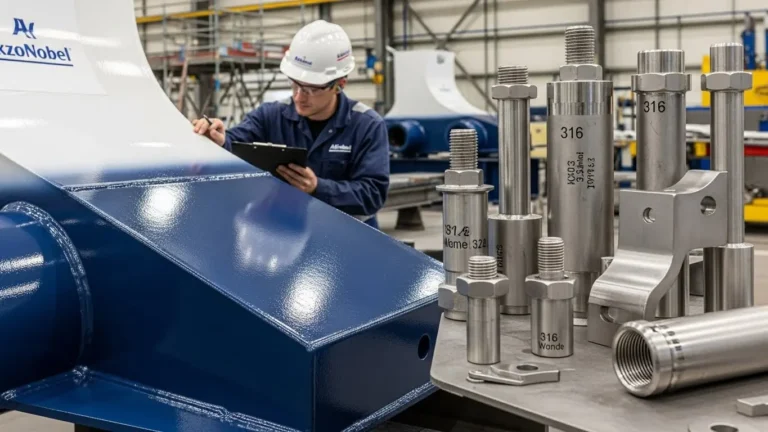
This hybrid solution pairs steel bolt-down wedge anchors for high-shear concrete embedment with pultruded fiberglass ribs. By leveraging fiberglass’s 1100 MPa tensile strength and steel’s 55,000 psi yield, the system offers a lightweight, corrosion-free alternative that withstands extreme uplift forces while maintaining a 50+ year service life.
| Performance Metric | Steel Wedge Anchors | Fiberglass (FRP) Ribs |
|---|---|---|
| Tensile Strength | 600-800 MPa | 1000-1100 MPa |
| Unit Weight (6m) | 16.8 kg | 4.2 kg |
| Service Life | 8-12 Years (Corrosive) | 50+ Years |
The Hybrid Mechanism: High-Shear Steel Meets Tensile Fiberglass
The engineering logic behind this hybrid system involves the synergy of material properties to resist complex wind loads. Steel bolt-down wedge anchors act as the primary concrete embedment, providing shear capacities ranging from 628 to 1533 lbs in 2500 psi concrete. By establishing a high-yield connection (55,000 psi) at the base, the system ensures that lateral forces are effectively transferred to the building’s structural slab.
Fiberglass (FRP) ribs, manufactured via pultrusion with E-glass fiber, provide the vertical and horizontal tensile reinforcement. With an initial tensile strength of 1100 MPa—roughly 37% higher than standard structural steel—these ribs manage dynamic uplift without the weight penalties of traditional metal. The system’s inherent elasticity allows for 30% better load distribution across compatible plates and nuts, reducing localized stress concentrations during extreme weather events.

Durability and Specs: Corrosion Resistance in Marine Environments
Longevity in high-moisture or coastal environments is guaranteed by the non-reactive nature of the fiberglass components. Unlike steel, which often reaches its maintenance threshold within a decade in saltwater conditions, fiberglass offers a 50+ year lifespan. It is completely non-conductive and resistant to acids and alkalis, making it ideal for balcony installations and hospitality projects where environmental exposure is constant.
From a logistical perspective, the system maximizes installation efficiency. The use of fiberglass reduces component weight by 75% compared to steel (0.7 kg/m vs 2.8 kg/m), leading to a 42% increase in deployment speed. Steel wedge anchors are specified for embedment depths of 1.75 to 3.38 inches, providing a secure, novice-friendly anchoring method that allows for high-rise rooftop stability without requiring specialized geotech equipment.
Scale Your Business with Factory-Direct Commercial Outdoor Umbrellas

Project Profile: The Windy Beach Resort
Designing for a high-wind beach resort involves adhering to the Facility Designers Guide for Tropical Islands (FDGTI) and ASCE 7 standards. This requires structural systems capable of withstanding ultimate wind speeds of 155–180 mph, utilizing specialized wind tie-down connections and marine-grade, corrosion-resistant finishes to ensure long-term durability against salt-laden air and cyclonic forces.
Engineering Resilience for Tropical Coastal Environments
The engineering framework for coastal resort infrastructure relies on the Facility Designers Guide for Tropical Islands (FDGTI) as the primary playbook for maritime environments. This guide mandates that structural systems for lodging facilities be designed to withstand high-pressure differentials and wind-driven rain, as defined in Section 5.2.5. By adhering to these standards, designers ensure that the building envelope remains intact during extreme weather events characteristic of tropical regions.
Resilience is further bolstered by the integration of thermal and moisture protection systems rated specifically for high-wind climates under Section 5.2.4. In addition to wind resistance, the design must incorporate NFPA fire and life safety standards. This comprehensive approach ensures that isolated tropical resorts maintain rigorous safety protocols despite their exposure to harsh environmental variables and cyclonic forces.
Technical Specifications for High-Wind Coastal Loadings
Technical specifications for this project are dictated by ASCE 7-16/7-22 wind maps, which identify ultimate design wind speeds (Vult) between 155 and 180 mph for hurricane-prone coasts. Structural load combinations, derived from ASCE 7 Chapters 2 and 26–30, are applied to balconies and facades to account for extreme lateral and uplift forces. These calculations ensure that every component, from the main structure to the smallest balustrade, is capable of maintaining structural equilibrium under peak loads.
To mitigate the effects of the marine environment, the project implements engineered wind tie-down connections for balcony slabs and shade structures as specified in FDGTI technical data sheets. Materials and finishes must meet Section 5.3.2 standards, utilizing ACI-compliant concrete and AISC-certified structural components. The use of high-mil thickness marine-grade coatings and corrosion-resistant hardware is essential to prevent structural degradation from salt-laden air and prolonged moisture exposure.
Challenge: Salt, Sand, and Daily Gusts
Coastal furniture faces a dual threat: ‘saltation,’ where wind-blown sand grains (100-300 µm) physically erode surfaces, and saline aerosols that drive rapid corrosion. Engineering for these zones requires meeting ASCE 7-22 wind standards (up to 116 mph) and ISO 9227 salt-spray durability protocols.
Mechanisms of Coastal Wear: Saltation and Saline Aerosols
Sand saltation is a high-energy mechanical process occurring when near-surface wind speeds surpass the friction threshold of 8–10 m/s. In these conditions, particles typically ranging from 100 to 300 µm are lifted and propelled against surfaces. Research indicates that the most active transport layer for sand impact is concentrated within the first 0.15 meters (15 cm) above the ground. Consequently, the base frames and lower supports of outdoor furniture in desert or beach settings experience constant, repeated impacts that can strip standard finishes and weaken structural integrity.
In addition to physical abrasion, NASA SLS-SPEC-159 identifies marine aerosols and salt fog as distinct environmental hazards. These saline aerosols create a corrosive electrolyte layer that settles on furniture surfaces. Unlike inland dust, these coastal particulates are chemically active, penetrating porous coatings to initiate subsurface oxidation. This combination of “saltating sand” and “sea-spray” environments necessitates a hardware shielding approach similar to that used in aerospace launch structures to prevent rapid material degradation.

Engineering Standards for High-Velocity Wind and Corrosion
Designing for severe coastal environments requires adherence to international structural codes to ensure safety during peak weather events. Wind load design must align with ASCE 7-22 (U.S.) or Eurocode EN 1991-1-4 (EU) to withstand ground-level peak gusts of approximately 52 m/s (116 mph). These standards provide the necessary toolchain to calculate the wind actions on balconies and façades, ensuring that large-scale furniture pieces do not become projectiles during high-velocity gusts.
Validation of material durability is achieved through standardized testing and specific material selection. Corrosion resistance is typically verified using ISO 9227 salt spray tests, while the environment itself is classified under ISO 12944 for C5-M (Marine) severity. To combat these stressors, technical specifications often mandate the use of T6-grade aluminum, hot-dip galvanizing per ISO 1461, and UV-stabilized HDPE. These materials are chosen specifically for their ability to withstand the abrasive energy of blowing sand and the chemical hostility of saline environments defined in industrial and aerospace specifications.
Solution: Flexible Frames & Heavy Bases
The solution utilizes ‘Forceflex’ technology and materials like TR-90 polymer and memory metals to allow frames to bend under stress without breaking, paired with heavy bases like the SM 4330 frame rated for 1,000 kg (2,200 lbs) to ensure low-center-of-gravity stability during coastal gusts.
| Technology / Material | Technical Specification | Engineering Benefit |
|---|---|---|
| Forceflex & TR-90 | ANSI Z87.2+ / CE EN 166 Standards | Superelasticity with 5-8% strain recovery under wind stress. |
| SM 4330 Base Frame | 2,200 lbs (1,000 kg) Load Capacity | High-mass anchoring to counteract coastal uplift forces. |
| FlexFrame Perimeter | Widths 24⅞” to 144⅞” | Scalable aerodynamic integrity without inner vertical breaks. |
Impact-Resistant Materials: TR-90 and Memory Metal Engineering
Forceflex technology utilizes patented bendable frames designed to meet rigorous international safety standards, including ANSI Z87.2+ in the USA, CE EN 166 in Europe, and CSA Z94.3 in Canada. These impact-resistance ratings ensure that structural components can withstand severe mechanical stress and environmental pressure without suffering permanent deformation or fracture.
The implementation of TR-90 polymer and specialized memory metal alloys enables a state of superelasticity. This is achieved through stress-induced martensitic transformation, allowing the material to reach a strain recovery of 5-8%. By utilizing these advanced composites, frames can be twisted or bent by high-velocity winds and still return to their original shape once the pressure is removed.
Engineering flexible frames prioritizes deflection over rigid resistance. This design philosophy allows components like 148mm temples or umbrella ribs to absorb and dissipate energy rather than snapping. Furthermore, the non-conductive properties of these composite materials provide an additional layer of safety in coastal environments that are frequently prone to lightning and storm activity.
Static Stability: Heavy Base Loads and Modular Dimensions
To ensure the stability of outdoor partitions and structures, the system employs heavy-duty lifting column base frames, such as the Model SM 4330. These frames provide a maximum load capacity of 2,200 lbs (1,000 kg) for 4-leg setups. This significant mass is essential for lowering the center of gravity and counteracting the uplift forces generated by coastal gusts and balcony updrafts.
Modular perimeter frames provide the necessary scale for diverse installations, offering widths ranging from 24⅞” to 144⅞” and heights up to 80¹⁵/₁₆”. These dimensions allow for the creation of expansive, wind-resistant partitions that maintain structural integrity across large surface areas. The modularity ensures that the frames can be adapted to specific spatial requirements while maintaining a standardized safety profile.
Structural sections are strategically divided at 24″, 30″, and 36″ intervals without the need for inner verticals, which helps maintain aerodynamic integrity. During installation, the use of T-brackets and threaded strips ensures a secure attachment to existing walls or flooring. This method distributes wind force across the entire vertical perimeter, preventing localized failures and ensuring the assembly remains anchored during extreme weather events.
Client Testimonials: Durability Reports
Durability reports from high-traffic commercial clients serve as empirical evidence of product longevity, moving beyond theoretical engineering specs. By documenting performance in coastal and high-wind environments, these reports track material survival, maintenance requirements, and overall structural safety across multi-year operational cycles.
The Strategic Importance of Long-Term Performance Feedback
Client-led durability reports provide critical verification of how contract-grade materials, specifically T6-grade aluminum and high-density polyethylene (HDPE) wicker, perform under sustained ultraviolet (UV) exposure and corrosive salt-air environments. While factory certifications such as EN581 for outdoor strength and UL4041 for safety establish necessary benchmarks, real-world feedback bridges the gap between laboratory testing and the rigorous wear-and-tear of hospitality settings. Documenting these outcomes allows commercial operators to demonstrate a significant return on investment (ROI) by validating the extended replacement cycles of reinforced outdoor assets compared to residential-grade alternatives.
Data-Driven Reliability: Tracking Survival and Maintenance Cycles
Technical reliability is increasingly monitored through structured annual surveys that track product retention rates and identify specific failure points within high-traffic zones. By aggregating client maintenance logs into a reliability database, engineers can quantify the survival rates of critical structural components, including sofa frames and umbrella ribs, under heavy use. This field-tested data is subsequently applied to refine factory quality control (QC) processes and optimize material selections for challenging coastal installations, ensuring that structural integrity and safety standards are maintained throughout the product’s operational lifecycle.
Gallery: Wind Resistant Installations
Wind-resistant installations are defined by their ability to withstand ultimate wind speeds (Vult) of 115–140+ mph, as established by ASCE 7 and the Florida Building Code. These projects feature structural load-tested barriers (10.8 psf) and impact-rated protection (ASTM E1996) to ensure stability in coastal resorts and high-rise rooftop environments.
Coastal and High-Rise Application Profiles
Engineering wind-resistant outdoor spaces requires adherence to specific application profiles based on building height and geographic exposure. Resort and hospitality balcony installations are typically designed for ultimate wind speeds (Vult) starting at 115 mph, following the ASCE 7-22 frameworks. For high-exposure urban environments, particularly for Type III and Type V wood-framed buildings reaching up to 85 feet above the grade plane, specialized structural considerations are mandatory to account for increased wind velocity at elevation.
In coastal “Hurricane Zones,” technical specifications focus on mitigating wind-driven rain through advanced weather-resistant barrier (WRB) integration. High-performance installations utilize a continuous WRB turned up at least 2 inches (50 mm) at wall junctions and integrated with waterproofing membranes. These projects often align with the 2025 FORTIFIED Home™ High Wind standards, which are applicable in environments where Vult meets or exceeds 120 mph, ensuring a continuous load path and superior envelope protection.
Structural Pressure and Impact Rating Standards
The integrity of a wind-resistant installation is validated through rigorous testing benchmarks for both structural load and water infiltration. Certified balcony envelope assemblies must meet ASTM E1677 standards, demonstrating a structural load resistance of 10.8 psf, which is roughly equivalent to 65 mph wind gusts. Furthermore, water-infiltration resistance is tested at 6.24 psf—simulating approximately 50 mph wind-driven rain—under ASTM E331 and ASTM E1105 protocols to prevent moisture-related structural degradation.
For installations involving glazed openings in windborne debris regions, compliance with impact standards is critical. This includes meeting TAS 201/202/203 and ASTM E1996 benchmarks for impact and pressure cycle testing. It is important to note that non-rated porch enclosure panels often face strict operational limits; for instance, local codes such as Palm Beach County PBO-089 require the physical removal of non-rated panels when wind speeds are projected to reach 75 mph or higher, highlighting the necessity for fully rated structural systems in high-risk zones.
Final Thoughts
Designing for extreme environments like 200-foot rooftops or cyclonic beach fronts requires a fundamental shift from aesthetic-led selection to engineering-led procurement. The data suggests that standard outdoor furniture and structures cannot survive the 115–180 mph wind speeds or the aggressive sand saltation found in high-exposure coastal zones. By integrating IBC-compliant structural loads with hybrid material solutions—such as pultruded fiberglass ribs and high-shear steel wedge anchors—developers can effectively mitigate the risks of uplift failure and mechanical displacement, ensuring that high-altitude and seaside hospitality spaces remain both legally compliant and structurally sound.
Ultimately, the implementation of Forceflex technology, memory metals, and high-mass anchoring systems like the SM 4330 base represents a strategic investment in long-term safety and operational longevity. Utilizing materials with 50+ year service lives and adhering to ISO 9227 durability protocols significantly reduces the total cost of ownership by extending replacement cycles in chemically hostile marine climates. For commercial operators, these professional-grade installations provide the empirical reliability needed to transform volatile outdoor footprints into stable, revenue-generating assets capable of withstanding the most demanding environmental stressors.
Frequently Asked Questions
Can I put a patio umbrella on a roof deck?
Yes, patio umbrellas can be safely installed on roof decks using a deck-mounted base secured between support beams and bolted directly to the surface. For cantilever umbrellas 8-13 feet wide on elevated structures, a minimum base weight of 400 pounds is recommended to ensure stability against uplift forces.
How do you secure an umbrella on a windy balcony?
To secure an umbrella on a windy balcony, utilize a wind-rated model engineered for 25–35 mph sustained winds and mount it to a permanent or semi-permanent fixing like an anchored plate rather than a freestanding base. Commercial high-wind models with reinforced aluminum or fiberglass frames are rated for 30–40+ mph but should be closed when forecast winds approach 20–24 mph.
What are the best umbrellas for commercial rooftops?
Cantilever and giant telescopic umbrellas are the preferred choices for commercial rooftops. Key specifications include 2.0mm 6061-T6 aluminum poles (1.5–2.5 inch diameter), vented canopies to reduce uplift, and wind ratings ranging from 25–45 mph, or up to 90 mph per ASCE 7-02 standards when properly anchored.
What wind speeds can professional-grade wind-resistant umbrellas survive?
Commercial wind-resistant umbrellas are typically engineered to survive 40–60 mph winds while open. Advanced systems featuring flexible fiberglass ribs and engineered nylon hubs have documented resistance up to 80 mph (130 km/h), with specialized heavy-duty installations tested up to 112 mph (180 km/h).