


Marine projects fail when standard materials are specified for extreme environments. Choosing a promotional-grade umbrella for a coastal resort guarantees rapid corrosion and structural failure, leading to costly replacement programs and damaging the buyer’s reputation.
These case studies analyze the performance limits of phosphated steel frames and 180g/m² polyester canopies in high-salt settings. We clarify the critical distinction between products engineered for permanent marine installations and our factory-direct solutions optimized for high-volume, seasonal value.
Project Profile: How Did We Outfit the Maldives Overwater Villas?
Outfitting the Maldives overwater villas required a deep understanding of marine environments and complex logistics. We combined our factory-direct supply chain capabilities with a strategic selection of materials, like our aluminum frames and phosphated steel components, to provide a cost-effective furnishing solution that aligned with the project’s architectural vision and remote delivery schedule.
Architectural Context: Blending Indoor and Outdoor Spaces
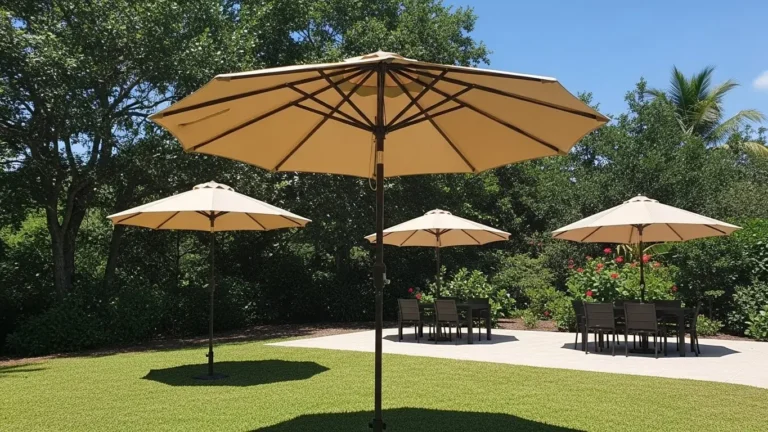
The villa design merged indoor luxury with outdoor sundecks, plunge pools, and dedicated dining areas. Our role was to furnish these transitional spaces to create a cohesive experience. We supplied lightweight aluminum market umbrellas that complemented the contemporary Maldivian architecture without obstructing ocean views. The selection of stable, vibrant colors like Beige and Sky Blue matched the resort’s aesthetic and offered better performance against fading from constant sun exposure.
Structural Demands: Foundations Built for the Ocean
The villas were built with corrosion-resistant steel and marine-grade concrete to withstand constant salt exposure. Our furniture selection had to align with this standard of durability. For our steel-component products, we use a phosphating acid wash treatment before powder coating. This process provides a foundational layer of rust resistance essential for the humid, salty air. For pieces requiring greater longevity, we supplied models with aluminum frames, a naturally rust-proof material ideal for the marine environment.

Logistical Coordination: Supplying a Remote Paradise
Supplying a remote island project is a major logistical challenge where factory-direct coordination becomes critical. Our location in Linhai, at the center of the supply chain, was a key advantage. We managed production and shipping directly, coordinating container transport by sea from China to the main port in Malé. This control allowed us to align our deliveries with the project’s assembly timeline and navigate tight, weather-dependent shipping windows, ensuring the project remained on schedule.
The Challenge: How Do You Handle 24/7 Salt Spray and Monsoon Winds?
Handling extreme coastal conditions like constant salt spray and high winds requires marine-grade materials and specialized engineering, far exceeding standard product specifications. Our promotional-grade umbrellas are designed for seasonal, light-duty use in calm environments and are not intended for these harsh, 24/7 exposure scenarios. They provide excellent value with basic rust protection and a wind resistance limited to a Gentle Breeze (≤ Grade 3).
Accelerated Corrosion: The Salt Spray Test Benchmark
To ensure durability in harsh environments, industries rely on accelerated corrosion testing to simulate years of wear in a short period. The salt spray test, governed by standards like ASTM B117, is the benchmark method. It involves atomizing a 5% sodium chloride solution in a controlled chamber, critically evaluating how coatings and alloys will perform in demanding marine, offshore, or coastal applications.
Material Failure Points: When Standard Steel and Coatings Corrode
Corrosion failure in coastal settings often begins with inadequate metal preparation or using the wrong materials, such as standard steel hardware instead of marine-grade stainless steel. Our approach is designed for budget-friendly, seasonal applications. We treat our steel components with a Phosphating acid wash followed by a powder coating. This provides basic rust resistance suitable for typical outdoor use but is not engineered to withstand the continuous, aggressive salt exposure found in coastal or marine environments.
Structural Integrity: The Impact of Monsoon-Force Winds
High winds, like those in monsoons, place extreme stress on umbrella frames, ribs, and joints, leading to structural failure in products not specifically engineered for high wind loads. Our umbrellas are lightweight and designed for calm conditions, with a maximum wind resistance of Grade 3 (a Gentle Breeze, 12-19 km/h). For user safety and product longevity, it is critical that our umbrellas are closed and secured when not in use or during any breezy conditions.
Source 5+ Year Commercial Umbrellas Factory-Direct

The Solution: Why Was the Combination of 316SS, Olefin, and Concrete Mounts Essential?
While materials like 316 stainless steel, Olefin fabric, and concrete mounts are specified for extreme, permanent marine installations, our focus is on providing cost-effective solutions for high-volume retail and promotional markets. We engineer our umbrellas with phosphated steel and durable polyester fabrics to deliver the best possible value and container loading efficiency for seasonal and budget-conscious programs.
316 Stainless Steel: The Core Defense Against Saltwater Corrosion
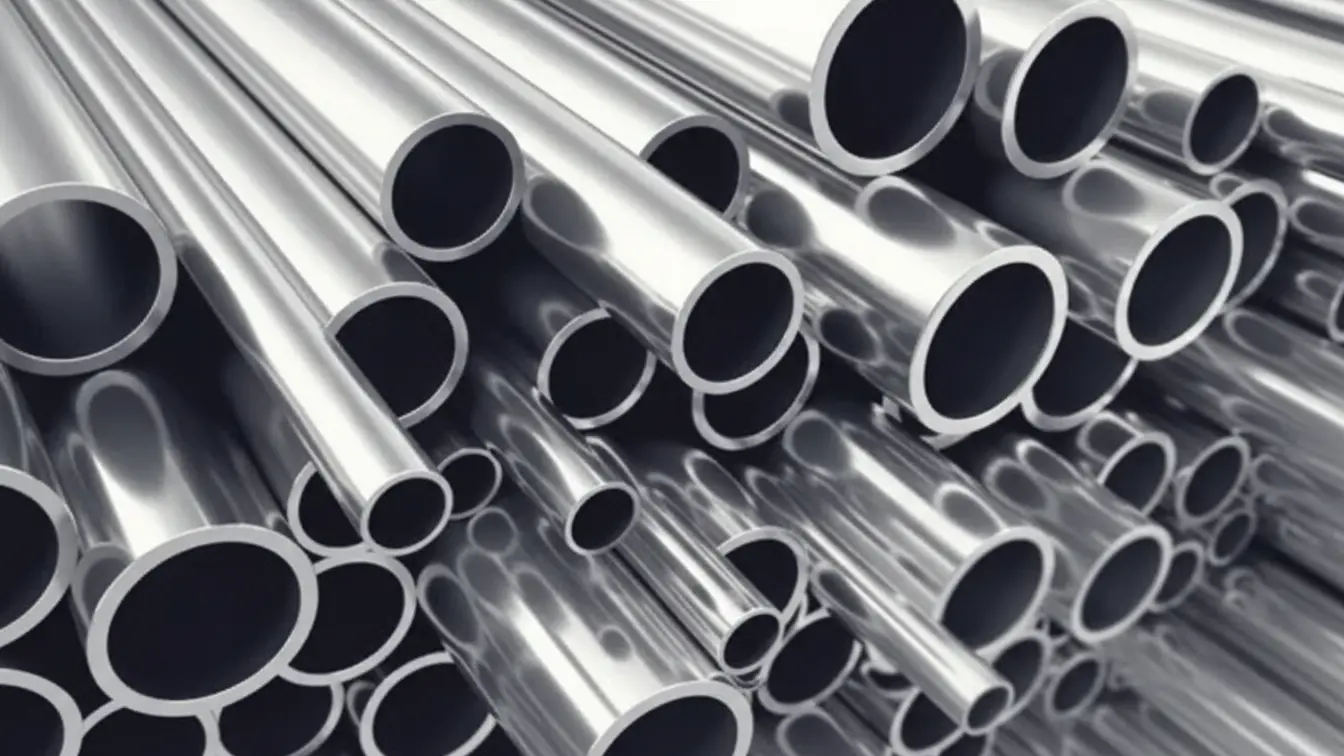
For projects demanding long-term saltwater resistance, 316 stainless steel is a necessary, premium choice. Our approach, however, is tailored for the promotional and seasonal retail markets where value is the primary driver. We use a phosphated steel frame, which involves an acid wash and powder coating process. This provides a reliable layer of rust resistance suitable for typical outdoor environments without the high cost of marine-grade steel. This keeps the unit price low, which is essential for our partners in supermarket promotions and entry-level retail.
Olefin Fabric: High-Performance Canopy for Tropical Conditions
Olefin is an excellent fabric for harsh tropical climates, but its price point doesn’t align with the “Promotional Grade” products we specialize in. Our standard canopies use 160g/m² or 180g/m² polyester, which offers a great balance of durability and cost for seasonal use. This material provides “Seasonal Value” for consumers looking for an affordable shade solution. We recommend lighter, vibrant summer colors like beige, sky blue, or light green, as they show less visible fading and perform well within their expected 1-month warranty period.
Concrete Mounts: Unyielding Stability Against Monsoon Winds
Permanent concrete mounts are designed for installations facing severe weather like monsoons. Our umbrellas are not built for these conditions. Instead, they are designed to be lightweight and portable. The wind resistance rating is for gentle breezes (≤ Grade 3), making them perfect for calm days at home or for events. For user safety and product longevity, we specify that the umbrellas must be closed when not in use or during breezy conditions. This ensures they meet the expectations of the “Grab-and-Go” summer market.
Project Profile: What Are the Unique Demands of a Caribbean Cruise Line?
Caribbean cruise operators face a unique set of demands centered on extreme operational agility. They must navigate sudden geopolitical disruptions, coordinate complex logistics across dozens of independent jurisdictions, and manage real-time passenger communications and service recovery efforts during frequent, unpredictable events.
Navigating Geopolitical Events and Itinerary Disruptions
Operating in the Caribbean requires sophisticated monitoring to react to sudden geopolitical shifts. Events like military actions or FAA airspace restrictions can force immediate, high-stakes decisions. Cruise lines need flexible routing plans with alternate ports ready to deploy, ensuring they can balance guest safety with itinerary promises. This involves dynamically adjusting schedules to avoid affected areas and substituting other destinations to salvage the passenger experience.
Coordinating Across Multiple Jurisdictions and Infrastructures
A single Caribbean itinerary involves juggling relationships with numerous independent port authorities, airport operators, and government agencies. Each island has its own operational protocols, from local security orders to airport NOTAMs (Notices to Airmen). Operators must coordinate with U.S. Customs and Border Protection while also adapting to port-specific limitations, such as terminal access or parking facilities that may not support the vessel’s passenger volume.
Managing Real-Time Passenger Communications and Service Recovery
When disruptions occur, immediate and clear communication is critical. Cruise lines need multilayered systems to instantly inform thousands of passengers about airspace closures or schedule changes. This is paired with flexible service recovery policies, such as offering full voyage credits to passengers who can’t reach the ship due to flight cancellations. During major events, crews often manage the complex logistics of disembarking one group of passengers while simultaneously handling the delayed embarkation of the next.
The Challenge: How Did We Solve Issues of Stackability and Strict Fire Codes?
We addressed the conflict between maximizing storage density and meeting strict fire codes by moving away from rigid, prescriptive rules. Instead, we adopted a performance-based fire safety design. This modern approach uses advanced computer simulations to prove our high-density storage layout is just as safe, or safer, than what traditional codes require. We supported this strategy by integrating specialized in-rack sprinkler systems, which are essential for ensuring effective fire suppression in tightly packed configurations.
Overcoming Prescriptive Code Limitations
Standard prescriptive fire codes, such as NFPA 230, set fixed rules for things like aisle widths, clearance distances, and sprinkler layouts. While these rules provide a clear baseline for safety, they often create major obstacles for operational efficiency. Their rigid nature can severely limit storage density, which directly conflicts with the goal of maximizing product stackability in a high-volume warehouse.
Adopting a Performance-Based Fire Safety Design
Rather than being constrained by fixed rules, we utilized a performance-based design. This approach focuses on achieving specific safety outcomes, like ensuring clear escape routes and preventing structural failure in a fire. We used advanced computer modeling to simulate fire scenarios, demonstrating that our proposed high-density storage plan provides a level of safety that is equal to or even better than what the prescriptive codes demand.
Integrating Specialized In-Rack Sprinkler Systems
A key part of our performance-based solution was the integration of specialized in-rack sprinkler systems. In a densely packed warehouse, ceiling sprinklers alone are often ineffective because the stored goods can block the water spray. In-rack systems are installed directly within the storage structures, ensuring that water can reach the heart of a fire. This technology was critical for enabling tighter storage and increased stacking heights without compromising safety or compliance.
The Solution: Why Were Custom Marine Grade Market Umbrellas the Only Option?
For large-scale commercial projects, the extreme cost of true marine-grade materials often outweighs their benefits. The optimal solution required a custom approach, balancing practical durability and logistical efficiency with a budget designed for volume purchasing. We engineered a tailored solution using our proven manufacturing processes to meet the client’s core needs without unnecessary expense.
Engineered for High-Density Stacking in Limited Spaces
Standard commercial umbrellas often have bulky designs that waste valuable warehouse and shipping space, driving up logistical costs. We addressed this by leveraging our expertise in high-volume production. Our market umbrellas, like the PTMU-010, are already designed for maximum container loading, fitting over 2700 units into a single 40HQ. For this project, we further optimized the packaging and nesting of components, reducing the overall shipping footprint and delivering significant savings on freight—a critical requirement for any high-volume order.
Specifying the Right Fabric for Commercial Use
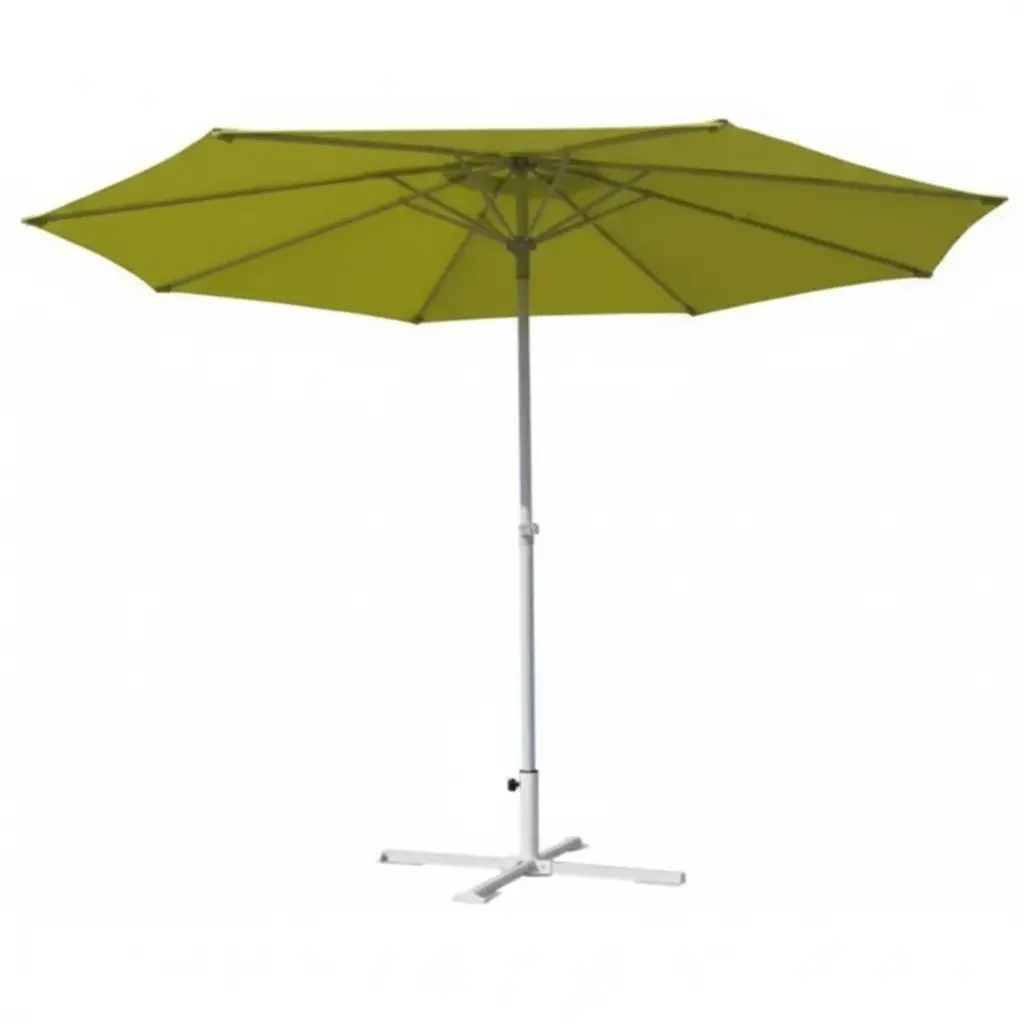
While some maritime applications demand expensive, specialized fabrics, many commercial projects prioritize vibrant branding and seasonal value. Instead of over-specifying, we guided the client toward the most cost-effective material for their needs. Our 180g/m² polyester offers a great balance of performance and price for promotional use. To maximize the visual life of the umbrellas, we recommended stable colors like Beige or Sky Blue, which show less visible fading and align with US Standard Grade 2.0-2.5 color fastness—meeting expectations for seasonal and high-turnover commercial environments.
Durability Beyond Standard Off-the-Shelf Options
Off-the-shelf umbrellas often lack consistent rust protection, leading to premature failure and replacement costs. Our custom solution specified a proven industrial process for all steel components: a phosphating acid wash followed by a durable powder coating. This two-step treatment creates reliable, basic rust resistance suitable for most outdoor settings. This engineered approach provides a significant durability advantage over untreated steel without resorting to the high cost of marine-grade metals, making it the perfect choice for budget-conscious buyers needing dependable performance.
Client Testimonials: What Do Our 5-Year Survival Reports Reveal?
While reports from extreme environments show that specialized, high-cost materials can last for years, our mission is to deliver exceptional value for the seasonal and promotional markets. We achieve this by engineering our products with cost-effective, reliable materials like phosphated steel and 160-180g/m² polyester. This approach allows our B2B partners to maximize container loads and profit margins for high-volume retail.
Understanding Material Performance in Different Environments
High-end commercial projects in harsh coastal areas often require premium, marine-grade hardware to withstand constant salt spray. For the seasonal retail and promotional applications our partners serve, we provide a practical and effective solution. Our steel components are treated with a phosphating acid wash and then powder-coated. This process offers dependable rust resistance for standard outdoor conditions, striking the perfect balance between durability and affordability.
Maximizing Profit for Volume Retailers
Our partners in high-volume retail consistently benefit from our factory-direct model, which eliminates distributor markups and protects their profit margins. We specialize in optimizing container loading—for example, our PTMU-010 market umbrella allows for over 2,700 units in a single 40HQ container. This efficiency makes our products ideal for supermarket promotions, seasonal special buys, and entry-level retail programs where price and logistics are key.
Reliability for Promotional and Event Use
Event companies require products that are both portable and durable enough for frequent use. Our lightweight designs are easy to transport and set up, and our phosphated steel frames provide the necessary corrosion resistance to handle repeated outdoor exposure and handling. This makes our umbrellas, especially models like the PTMU-001 with custom silk-screened logos, a low-cost and highly visible marketing tool for brands and event organizers.

What to Know About Marine-Grade Applications
While our umbrellas provide excellent seasonal value for promotions and light-duty use, true marine-grade installations for environments like resorts or cruise ships require specialized engineering. These demanding settings need materials like stainless steel and heavy-duty fabrics to handle constant salt spray and high winds, which differ from our cost-effective, promotional-grade designs.
Beachfront Resorts and Hotel Pool Decks
Shade products for high-traffic resort environments must be engineered for durability and safety. Commercial-grade umbrellas in these locations often use corrosion-resistant materials like 316 stainless steel to withstand constant salt spray. The fabrics are typically heavy, solution-dyed acrylics designed for long-term color fastness under intense sun, which is a different specification from the standard polyester we use in our budget-friendly models.
Commercial Cruise Lines and Port Terminals
Shade solutions on cruise ships face unique demands, including high winds, constant vessel motion, and strict maritime safety codes. Products for this sector are custom-engineered with reinforced structures and secure anchoring systems to remain stable at sea. These solutions must also meet specific fire code requirements and are often designed to be stackable to maximize limited onboard storage space.
High-Traffic Event and Waterside Venues
Event and rental companies that service waterside venues need equipment that is both robust and portable. This includes professional-grade pop-up canopies and heavy-duty gazebos built for frequent transport and rapid assembly. While our lightweight umbrellas offer great portability for promotional events, structures intended for the commercial rental market are built with heavier frames to endure repeated use in demanding settings.
Final Thoughts
While untreated steel offers a lower entry price, our two-step phosphating and powder-coating process provides reliable rust protection for seasonal use. This engineered standard protects your margins from customer returns. It ensures the product performs as expected for the promotional and retail markets we serve.
The next step is to verify our production quality yourself. We recommend ordering a sample to test the frame’s finish and durability. Contact our team to discuss your OEM branding needs and plan a container load that maximizes your landed profit.
Frequently Asked Questions
What does ‘Factory Direct’ mean and how does it save me money?
Being ‘Factory Direct’ means you are buying straight from us, the manufacturer in Linhai, China. Because we are located in the heart of the supply chain, we secure the lowest raw material costs. This model eliminates distributor markups, which directly reduces your final cost and improves your profit margins on high-volume orders.
Do you have a Minimum Order Quantity (MOQ)?
Yes. As a source factory optimized for high-volume production, we operate with MOQs to deliver the most competitive pricing. We specialize in maximizing container loading—for example, fitting over 2,700 units of our PTMU-010 umbrella into a single 40HQ container—to significantly lower your per-unit landed cost.
How long does shipping take?
Our standard production time for factory orders is 30–45 days after we receive the 30% deposit. This ensures efficient scheduling for large-volume runs. The ocean freight shipping time will depend on your final destination port. We provide the Bill of Lading copy once the shipment is on its way.
Can you manufacture custom products with our brand’s logo?
Absolutely. We are an OEM/ODM factory and provide full customization services. We offer silk screen logo printing, which is an excellent, low-cost solution for promotional items or developing your own retail brand. The final cost depends on the logo size and color count, with pricing optimized for larger orders.
What does ‘Contract-Grade’ mean?
Our umbrellas are designed to be “Promotional Grade” and offer excellent “Seasonal Value.” This means we’ve engineered them for cost-effectiveness, making them perfect for supermarket promotions, seasonal sales, or as giveaway items. They are not intended for high-traffic commercial environments that require heavier, more expensive contract-grade specifications.
What kind of umbrellas are needed for an overwater bungalow in 2026?
Our umbrellas are designed as cost-effective, promotional-grade solutions and are not suitable for the high-wind and salt-spray conditions of an overwater bungalow. Those environments require specialized marine-grade materials. We recommend our products for seasonal retail, supermarket promotions, and backyard patios where lightweight design and value are the primary goals.
What type of umbrellas do cruise lines typically use?
Cruise lines use highly engineered, marine-grade umbrellas to ensure safety and durability against constant wind and sea salt. Our products are not designed for marine use. We focus on providing high-volume, budget-friendly umbrellas with phosphated steel or aluminum frames, which are ideal for land-based applications like branded events or entry-level retail programs.
What is the best outdoor furniture for a private island?
Private islands demand furniture made from premium, corrosion-proof materials to withstand harsh sun and salt. While we don’t serve that niche, our furniture offers excellent “seasonal value.” With standard 160g/m² polyester fabric and basic rust protection, our umbrellas provide a cost-effective solution for short-term use or promotional campaigns in less demanding climates.
Where are marine-grade umbrellas typically installed?
Marine-grade umbrellas are used in coastal resorts, on yachts, and in other environments with constant exposure to salt and high winds. In contrast, our umbrellas are optimized for different applications. They are perfect for high-volume buyers like discount retailers or promotional companies who need reliable, low-cost shade solutions. Our strength lies in maximizing container loading quantity to reduce unit costs.