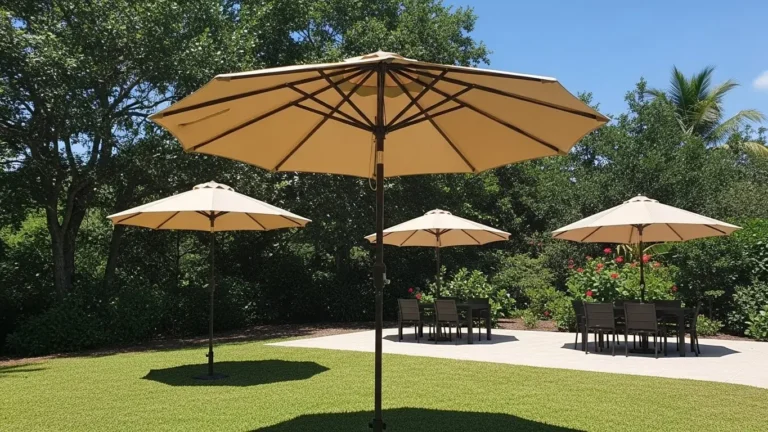



Following correct sizing rules is the primary defense against customer complaints about inadequate shade. When end-users ‘eyeball’ their choice, they often select a canopy too small for full coverage or one so large it creates a dangerous wind sail, leading to product returns and negative reviews.
This guide provides clear calculations based on table dimensions and guest movement. We match these requirements to specific factory models, balancing coverage against our products’ Grade 3 wind resistance limits to help you source the right SKUs and avoid safety liabilities.
Why Does “Eyeballing” Fail? (Understanding the Sun Angle Problem)
Visual estimates fail because the sun constantly moves along two angles, altitude and azimuth. A shadow is never static, so an umbrella that looks big enough often isn’t.
The Sun’s Two-Way Movement: Altitude and Azimuth
Trying to guess the right umbrella size by eye doesn’t work because the sun isn’t in a fixed spot. Its position is defined by two angles that are always changing: its altitude (how high it is) and its azimuth (its direction). These angles shift all day and through the seasons. This means the location, shape, and length of a shadow are never static, making visual judgment completely unreliable.
The “Moving Shadow” Effect on Your Patio
This constant movement has a direct impact on your customers. As the sun gets lower in the morning or late afternoon, the shadow cast by an umbrella moves further away from its base. A small sizing error—like choosing our 2.5m PTMU-010 model when a 3.0m PTMU-001 is really needed—can leave people sitting in direct sun long before the day is over. The shaded spot they had at noon is gone by 3 PM.
What Is the “2-Foot Extension Rule” and Why Should You Follow It?
The “2-foot extension rule” means your umbrella canopy must extend at least two feet past the table’s edge. It guarantees full shade but creates a bigger wind sail.
Defining the Rule: Sizing for Full-Table Shade
The rule is straightforward: pick an umbrella canopy that extends a minimum of two feet past your table’s edge on every side. This isn’t just about covering the tabletop; it’s about making sure your guests are still in the shade when they push their chairs back from the table to relax.
Balancing Coverage with Wind Safety Limits
A larger canopy provides great shade, but it also acts like a sail. The bigger the umbrella, the more wind it catches, putting significant stress on the frame and base. You have to respect the physical limits of the product. Our umbrellas are rated for use in gentle breezes up to Grade 3 (12-19 km/h). They “Must be closed when not in use or in breezy conditions.” This isn’t a suggestion; it’s a hard limit for safety and product life.
Source Durable, Commercial Umbrellas Factory-Direct

How Do You Calculate the Right Shade Size for Round Tables?
Measure your round table’s diameter and add about 4 feet (1.2m). This gives you the ideal umbrella canopy size to cover the table and chairs.
Figuring out the right umbrella size isn’t complicated. You just need to make sure the shade covers not only the table but also the people sitting around it. Here’s the simple way to get it right without guessing.
The ‘2-Foot Extension’ Guideline
The goal is to extend the shade about two feet past the edge of the table on all sides. This ensures your chairs are fully covered, keeping everyone comfortable even as the sun moves. It’s a straightforward calculation:
- First, measure the diameter of your round table from one edge to the other, straight across the center.
- Add 4 feet (or 1.2 meters) to that measurement. This accounts for adding 2 feet of coverage to each side.
- The final number is the minimum canopy diameter you should look for. This provides enough shade for the entire seating area.

Matching Your Table to Standard Product Sizes
Once you have your ideal measurement, you can match it to our standard product line. We design our umbrellas to fit the most common table sizes.
- For smaller tables (2-4 people): A 2.5m umbrella, like our steel pole PTMU-010 model, usually provides plenty of coverage.
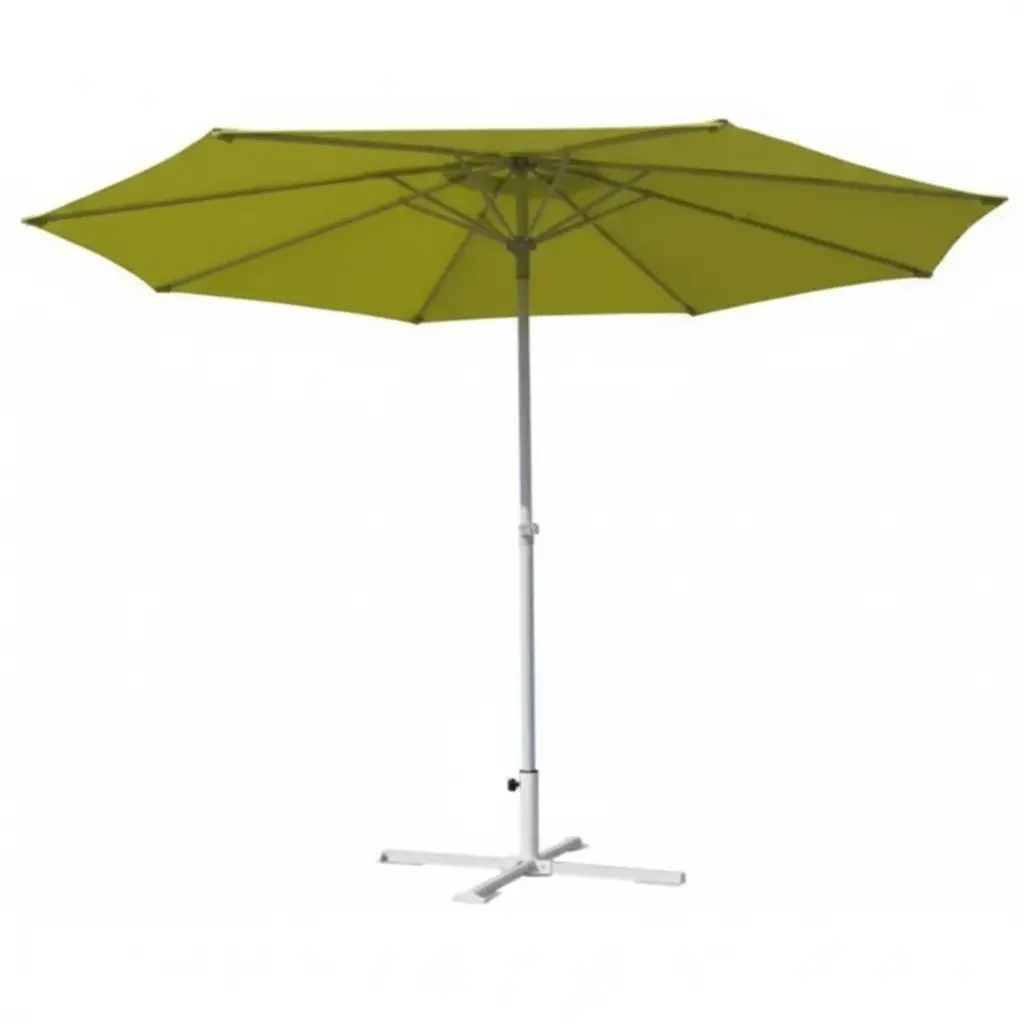
- For standard round tables (4-6 people): Our popular 2.7m and 3.0m aluminum pole PTMU-001 models are the perfect fit.
Just be careful not to go too big. A massive canopy on a small table can act like a sail in the wind. Our umbrellas are rated for Grade 3 wind resistance (up to 19 km/h), but they must be closed in breezy conditions to be safe.
How Do You Calculate Shade for Square and Rectangular Tables?
Measure your table’s length and width, then decide on a ‘drop’ or overhang. Add the drop amount twice to both dimensions to find the required shade size.
Using the ‘Drop Allowance’ Formula for Full Coverage
Guessing shade size is a common mistake that leaves guests exposed to the sun. A simple calculation ensures you get full coverage without overspending. The key is accounting for the “drop,” which is the amount of shade you want extending past the table’s edge.
- First, get the exact width and length of your table.
- Next, determine your desired drop. A 2-foot (about 60cm) drop on each side is a reliable standard for covering seated guests.
- Apply the formula: Calculate the required shade width by adding the drop twice to the table’s width. Do the same for the length.
Applying the Rule to a 3x3m Square Umbrella
Let’s look at a practical example. Our 3x3m Roma umbrella (Model PTZHU-020) is a solid fit for most commercial square and large rectangular tables. This size provides a significant overhang for typical 4-to-6-seat dining sets, ensuring guests are fully shaded from different sun angles throughout the day.
For a product like the Roma with its durable aluminum frame, we advise pairing it with our Yarn-Dyed fabric upgrade. This option extends the fabric warranty to 3-6 months, a better match for the frame’s quality compared to the standard 1-month warranty on basic polyester.
The “Chair Slide-Out” Zone: Did You Account for Your Guests’ Movement?
The ‘chair slide-out zone’ is the minimum clear floor space—at least 30 by 48 inches—required for guests to move safely, a key detail for accessibility compliance.
When planning a commercial space, it’s easy to focus on table capacity and forget about the space people actually need to move. This clear area around a table is often called the “chair slide-out zone,” and it’s not just about comfort—it’s a critical component of safety and accessibility.
Defining the Minimum Space for Seating and Access
Official accessibility guidelines provide clear, non-negotiable dimensions to ensure everyone can use a space. These aren’t suggestions; they are standards for creating a functional and compliant layout.
- The absolute minimum clear ground space for a single wheelchair user is 30 inches wide by 48 inches deep. This area must be kept free of obstructions.
- This designated zone has to be level and stable. It also must connect directly to an accessible route so guests can get in and out safely.
- These dimensions give a person enough room to approach a table, pull out a chair, and get seated without hitting obstacles or other guests.

Why This Zone Matters for Commercial Venues
For hotels, restaurants, and event companies, getting this spacing right has direct business consequences. It impacts guest experience, legal compliance, and overall safety.
- Proper planning creates a comfortable flow for guests and staff. It prevents the kind of overcrowding that makes a venue feel cheap or poorly managed.
- For any business serving the public, following these accessibility guidelines is a legal requirement. Building an inclusive environment isn’t just good ethics; it’s good business.
- Factoring in this movement space from the start helps you select the right size tables and umbrellas. It prevents you from creating a layout that looks good on paper but feels cramped and unsafe in reality.
Morning vs. Afternoon: How Do Changing Sun Angles Affect Your Coverage?
A low morning sun casts a long shadow, while a high midday sun creates a small patch directly below. This means a fixed umbrella only provides good coverage for a few hours.
The Traveling Shadow: Why Your Shade Is a Moving Target
The sun’s position is always changing, and your umbrella’s shade moves with it. In the early morning and late afternoon, the sun sits low in the sky, casting a long, stretched-out shadow far from the umbrella’s center. By noon, the sun is directly overhead, creating a much smaller, concentrated circle of shade right under the canopy. This movement means a standard, fixed-pole market umbrella will inevitably leave your seating exposed for a large part of the day.
Using Offset Designs for More Consistent Coverage
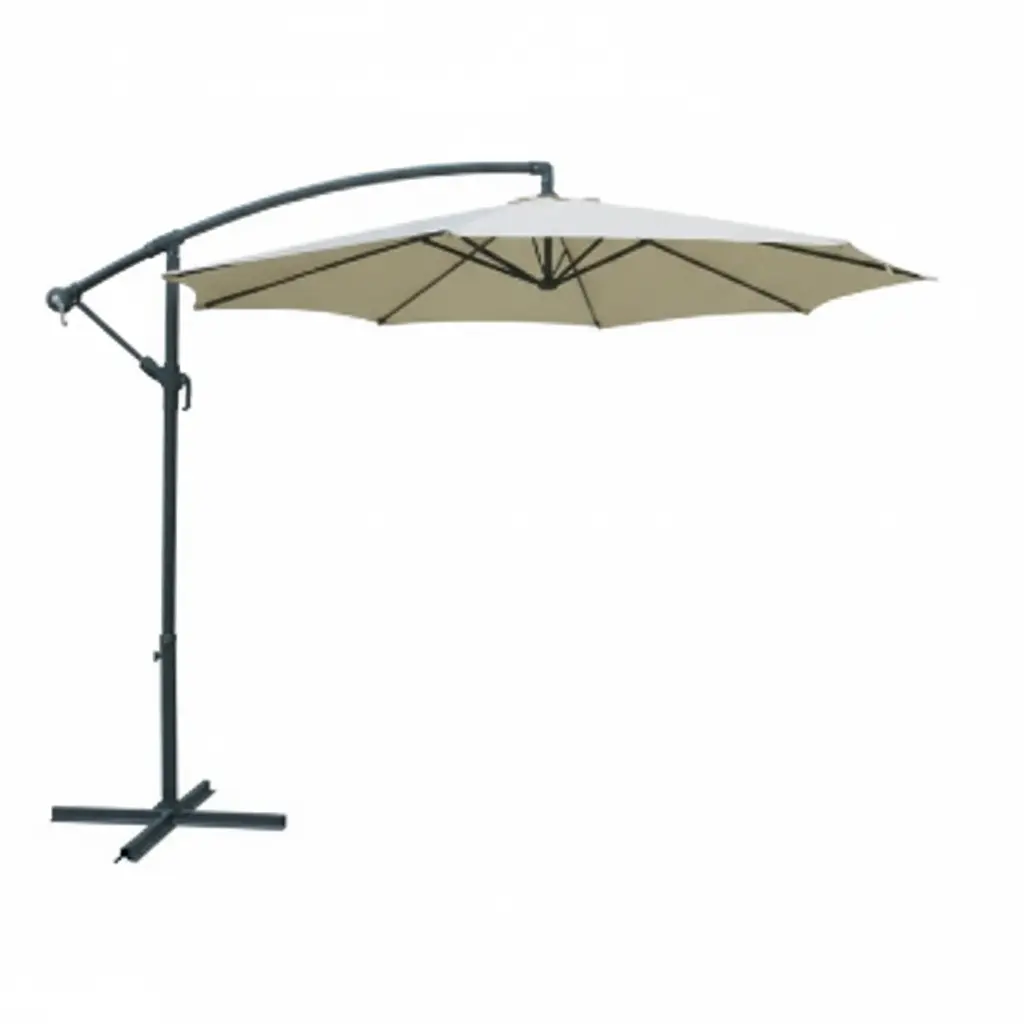
Offset umbrellas solve this problem. Models like our PTZHU-003 ‘Banana’ style separate the pole from the canopy, which allows you to position the shade directly over your seating area without the pole getting in the way. This design gives you the flexibility to follow the sun and maintain coverage throughout the day. You simply can’t get that kind of adaptability from a traditional market umbrella. Just be aware that these styles are built for low-wind areas and must be closed in breezy conditions, as they are rated for ≤ Grade 3 wind resistance.
Can an Umbrella Be Too Big? (The Danger of Creating a “Wind Sail”)
Yes, an oversized canopy acts like a sail, creating a serious safety hazard. Our promotional-grade umbrellas are designed for seasonal use and rated only for gentle breezes (Grade 3).
How a Large Canopy Catches Wind
A large umbrella canopy is essentially a giant fabric panel. When the wind blows, that surface area catches the air pressure and generates significant upward force, just like a sail on a boat. Without vents designed to let that air pressure escape, the entire umbrella can lift, tip over, or become a dangerous projectile.
This isn’t just a theoretical problem. The U.S. Consumer Product Safety Commission consistently reports thousands of injuries each year from unsecured umbrellas that have been caught by the wind. A bigger size amplifies this risk if the design and anchoring aren’t built to handle the increased load.
Our Umbrellas’ Wind Resistance Limit (Grade 3)
We are specialists in budget-friendly, promotional products. To meet that price point, our umbrellas are specifically designed for calm weather. They are rated for wind resistance at or below Grade 3, which is a gentle breeze of approximately 12-19 km/h.
It’s a critical safety measure that our umbrellas must be closed when not in active use or in any breezy conditions. This prevents damage to the product and, more importantly, ensures the safety of anyone nearby. This operational limit is a key part of the product’s design for seasonal and promotional applications.
Visual Sizing Chart: What Size Do You Need for 2, 4, 6, or 8-Seat Tables?
For 2-4 seat tables (36-48″), a 2.5m-2.7m umbrella is enough. For 4-6 seats, go with 3.0m. Large 6-8 seat tables (60″+) require a 3.0m-3.5m umbrella for full coverage.
Trying to “eyeball” the right umbrella size is a common mistake. Sun angles change, and what looks right at noon can leave your guests exposed in the afternoon. This guide gives you the standard dimensions and matches them directly to our factory models so you can make a decision based on data, not guesswork.
Standard Dimensions for Common Table Shapes
Before choosing an umbrella, you need to know the standard table dimensions your customers are using. These are the typical measurements we see in the market:
- Round Tables: A 36-48 inch diameter table is the standard for 2-4 people. Larger groups of 6-8 require a 60-72 inch diameter table to be comfortable.
- Rectangular Tables: For 4-6 people, expect a table length of 60-72 inches. To seat 6-8 guests, the table needs to be at least 96 inches long.
- Square Tables: A 30-48 inch square table works for 2-4 people. For larger parties of 6-8, the table should measure around 60 inches per side.
Matching Our Umbrella Models to Your Table
Based on these dimensions, here are the direct model recommendations. We’ve designed these for high-volume orders, focusing on the most common table sizes found in retail and promotional settings.
| Table Size / Seating | Recommended Model | B2B Advantage |
|---|---|---|
| 2-4 Seat Tables (Up to 48 inches) | Option 1: 2.5m PTMU-010 Option 2: 2.7m PTMU-001 | Provides excellent coverage for smaller sets. The PTMU-010 is our lowest-priced model, optimized for maximum container loading (~2750 pcs/40HQ). |
| 6-8 Seat Tables (60 inches and larger) | Option 1: 3.0m PTMU-001 Option 2: 3.0m / 3.5m PTZHU-003 ‘Banana’ | Ensures all guests are shaded. The PTZHU-003 hanging model offers a more premium look for entry-level e-commerce or promotional events. |
Frequently Asked Questions
What size umbrella do I need for a 48-inch table?
For a 48-inch table, an umbrella between 8 and 11 feet is ideal. A 9-foot model is a popular choice because it provides the recommended 2 feet of shade overhang on all sides, ensuring seated guests are fully covered.
How much should a patio umbrella overhang the table?
A patio umbrella should extend at least 2 feet beyond the table’s edge on all sides. This extra coverage is essential to keep guests shaded as the sun’s angle changes throughout the day.
How is an umbrella’s size measured?
An umbrella’s size refers to its diameter. To measure it, open the canopy completely and measure the distance from the tip of one rib, across the center, to the tip of the opposite rib. For square models, measure the length of one side.
What size umbrella is best for a 6-person dining table?
An 8-foot to 9-foot umbrella works best for most 6-person tables. This size provides enough shade to cover tables up to 54 inches wide, keeping all your guests comfortable.
Final Thoughts
Ignoring wind safety is a commercial risk. Our umbrellas are clearly specified for Grade 3 conditions to protect your business from costly returns and liability claims. Selling promotional-grade products successfully means managing customer expectations from the start.
The next step is to verify our specs for your market. Request our full catalog for container loading data or order a sample to test the frame and fabric. Let’s discuss your OEM requirements for the upcoming season.