

A proper TCO strategy directly confronts the high replacement cycle costs hidden within disposable, promotional-grade assets. Choosing low-cost units seems smart, but this approach inflates annual FF&E budgets and creates operational downtime when equipment predictably fails after a single season.
This analysis benchmarks the repairable asset model against disposable units specified with 160g/m² Polyester and a Grade 3 wind resistance. We evaluate how a modular design allows for component-level fixes, providing a clear financial path to reducing long-term procurement costs.
How Do You Calculate TCO: Disposable vs. Repairable Umbrellas?
Calculating true umbrella cost means looking past the price tag. The formula is Initial Price + Maintenance + Replacements. A disposable model is cheap upfront but costs more over time.
| Cost Component | Disposable (‘Seasonal Value’) Model | Repairable (Commercial-Grade) Model |
|---|---|---|
| Initial Purchase Price | Very Low | High |
| Maintenance & Repair Costs | Zero (Designed for replacement) | Low to Moderate (Modular parts) |
| Replacement Cycle Costs | High (Every 1-2 seasons) | Very Low (Every 5-10 years) |
| Opportunity & Downtime Costs | High risk (Faded or broken units look bad) | Low risk (Durable and repairable) |
The Core Components of the TCO Formula
To get an accurate financial picture, you need to account for every cost across the umbrella’s entire service life, not just what you pay on day one. The calculation breaks down into four key areas.
- Initial Purchase Price: The upfront cost paid for the umbrella unit.
- Maintenance & Repair Costs: Expenses for parts and labor to fix damage. This is typically zero for disposable models because they aren’t built to be fixed.
- Replacement Cycle Costs: The frequency and cost of buying a new unit after the original fails or fades.
- Opportunity & Downtime Costs: The business impact of having an unusable outdoor space because an umbrella is broken, faded, or looks unprofessional.
Calculating TCO for ‘Seasonal Value’ Umbrellas
The Total Cost of Ownership model for promotional-grade umbrellas prioritizes a rock-bottom initial investment. The entire calculation is built around a short, planned lifespan. We achieve this low cost with materials like 160g/m² Polyester fabric and Phosphated Steel frames. The TCO must factor in product specs that define this “seasonal value,” such as a 1-month fabric warranty and a US Standard Grade 2.0-2.5 for color fastness. The most critical variable in this model is the replacement frequency, as the product is engineered to be replaced, not repaired, after a season of use.

What Is the “Landfill Economy” and Why Do Cheap Umbrellas Fail So Quickly?
The “landfill economy” is a take-make-waste model. Budget umbrellas exemplify this with promotional-grade materials and poor wind resistance, ensuring they fail after just one season.
Defining the “Take-Make-Waste” Economic Model
The landfill economy operates on a simple, linear path: take resources, make a product, and expect the customer to throw it away. Value flows in one direction, from raw material to the factory floor to the garbage dump. This model is built for volume and disposal, not longevity. It’s an inherently inefficient system that depletes resources and creates a constant stream of waste.
The Technical Specs Behind a “Seasonal Value” Umbrella
Promotional-grade umbrellas are engineered for a single season, and their failure is predictable. The specs tell the whole story. These products are not designed to last; they are designed to hit a specific, low price point for high-volume sales. Here are the components that guarantee a short lifespan:
- Promotional-Grade Fabric: Most use a basic 160g/m² polyester. Its color fastness rating is extremely low, typically a US Standard Grade 2.0-2.5. This means colors like navy blue or grey will visibly fade in just a few months of sun exposure.
- Minimal Wind Resistance: The frames are rated for Wind Resistance Grade 3 or less. That’s only a “gentle breeze” of about 12-19 km/h. Anything stronger risks damaging the ribs or pole, which is why the usage advice is always to close it when not in use.
- A 1-Month Warranty: The warranty directly reflects the product’s expected life. A 30-day warranty on the fabric confirms that it is a disposable, seasonal item. It covers immediate defects, not durability.
Get Contract-Grade Umbrellas Direct From Manufacturer

Why Is a Modular Design Philosophy Critical for Long-Term Value?
Modular design lets you easily repair or upgrade individual parts instead of replacing the entire product. This reduces lifetime costs, extends the asset’s useful life, and increases operational flexibility.
Reducing Lifetime Costs with Replaceable Components
A modular approach is the direct opposite of the “take-make-waste” landfill economy. Instead of designing a product for a single, finite life, you design it for serviceability. This fundamentally changes the cost structure for importers and retailers. When a single component fails, the business isn’t forced to write off the entire unit.
The benefits go straight to the bottom line and improve customer relationships.
- Lower Warranty Expenses: You can replace only the defective part, like a canopy or a crank handle, which is far cheaper than shipping a brand-new umbrella.
- Operational Flexibility: It allows for quick adaptation to new customer demands or market trends without a complete product redesign. You can offer new fabric colors or materials on an existing, proven frame.
- Circular Economy Support: Good components from returned or damaged units can be refurbished and reused, reducing material waste and creating a secondary parts market.
Extending Asset Life with Upgradable Fabric Canopies
The canopy is the part of an umbrella that takes the most abuse from the sun and elements. Offering fabric options is a perfect example of modularity in action. It allows a buyer to match the canopy’s lifespan to the frame’s quality and the end customer’s budget.
Our standard 160g/m² Polyester canopy offers great seasonal value and comes with a 1-month warranty. It’s ideal for high-volume promotions or budget-conscious retail.
But for a higher-quality frame like our PTZHU-020 (Roma) series, a buyer can specify an upgrade to Yarn-Dyed Fabric. This extends the color life and boosts the warranty to 3-6 months. The customer gets a much longer-lasting product, and the initial investment in a quality frame isn’t wasted. This modular approach maximizes the value of the original purchase.
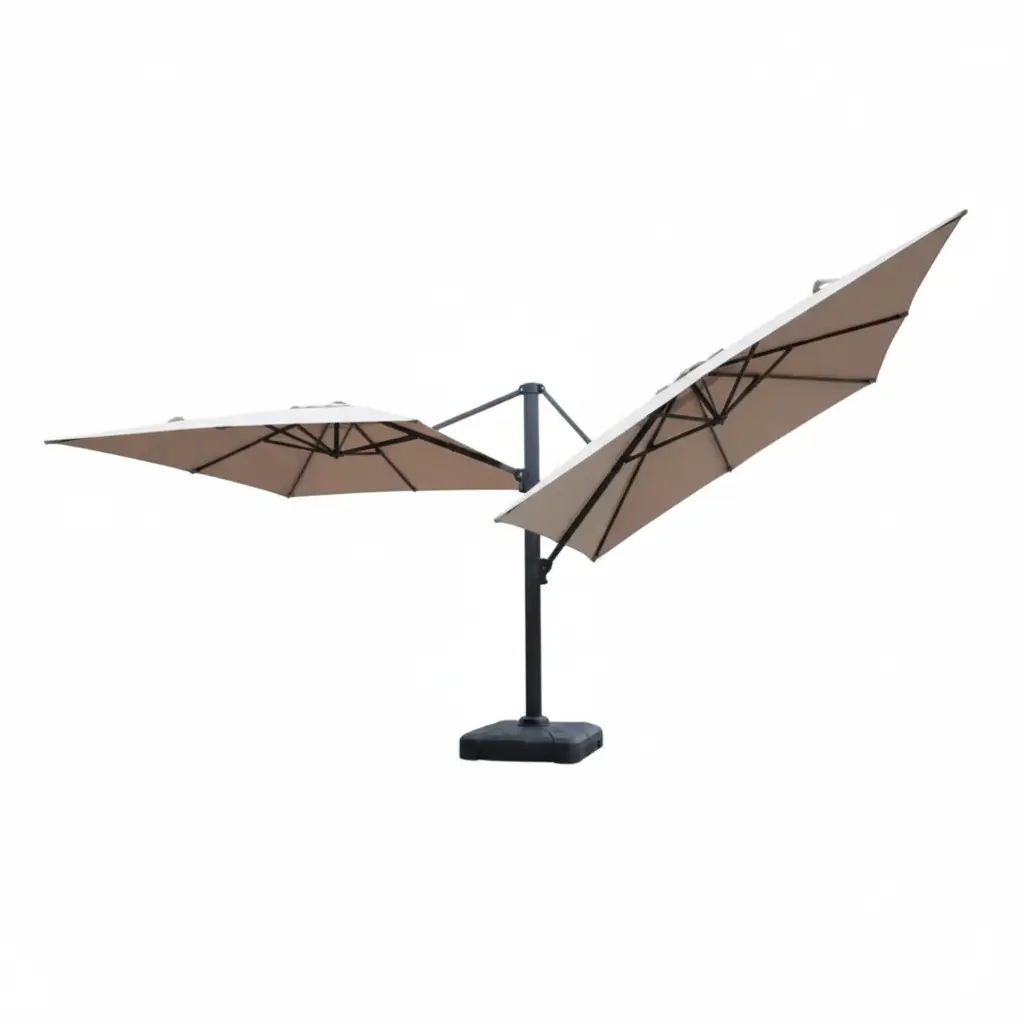
Cost Analysis: Is the Labor Cost of Repair Lower Than the Procurement Cost of New?
For promotional umbrellas, replacement is almost always the cheaper option. Repair is only cost-effective if its total cost is under 50% of a new item’s price.
The 50% Rule: An Industry Standard for Financial Decisions
There’s a common financial benchmark for deciding between fixing or replacing an asset. The 50% Rule says if the total cost of a repair, including labor and parts, is more than half the price of a new replacement, you should just buy new. This simple threshold prevents you from sinking money into an aging product that might fail again soon. It forces a practical look at the asset’s remaining lifespan versus the investment required to keep it running.
Why Promotional-Grade Umbrellas Favor Replacement Over Repair
Our promotional-grade umbrellas are designed for “Seasonal Value,” prioritizing a low initial cost for high-volume buyers. With materials like standard 160g/m² Polyester and a 1-month warranty, the entire product is engineered for a specific, limited lifecycle. The procurement cost of a brand-new unit is intentionally lower than the combined expense of sourcing specific parts and paying a skilled worker for repairs. For this product category, a new purchase is the only logical financial decision.
How Can You Extend Your Asset Life from 2 Years to 7 Years?
Extending asset life from 2 to 7 years means shifting from a disposable model to a long-term value strategy, combining a maintenance plan with superior, contract-grade materials from day one.
Implement a Proactive Maintenance and Operations Plan
Getting a 7-year life isn’t about luck; it’s about discipline. You have to move away from fixing things after they break. The foundation for long-term asset health is a structured operational plan that prevents premature failure before it ever starts.
- Shift to preventive maintenance. Move away from reactive repairs. Use a Computerized Maintenance Management System (CMMS) to schedule regular inspections and service, catching problems early.
- Operate assets within limits. Every product has specified load and environmental limits. Pushing equipment beyond its design ratings is the fastest way to cause unnecessary stress and failure.
- Use certified technicians for installation. A proper setup is critical. Ensure initial installation and commissioning are done by OEM-certified technicians who follow the manufacturer’s exact protocols.
Specify Contract-Grade Coatings and Pre-Treatment
Physical degradation, especially corrosion, is the primary enemy of outdoor assets. The fight against rust starts at the factory, long before the product ever ships. Demanding specific manufacturing processes is non-negotiable for achieving a long service life.
- Mandate proper metal pre-treatment. Basic phosphating isn’t enough for a 7-year target. Specify acid pickling as a required pre-treatment step. This process cleans the metal properly and prevents the vast majority of coating failures down the line.
- Demand high-performance powder coatings. Standard coatings will chalk and fade. Specify a premium powder coat from a reputable supplier like AkzoNobel or Tiger Drylac to defend against UV degradation and corrosion.
- Choose the right hardware. The frame can be perfect, but if the bolts rust, the asset fails. Specify 316 stainless steel hardware for any environment with exposure to salt or chlorides.
Is There a Tax Advantage? (Understanding Repair Expenses vs. CapEx Replacement)
Yes. Repairs are immediately deductible operational expenses that cut your current tax bill. Full replacements are capital expenditures, forcing you to depreciate the cost and delay the tax benefit.
Operational Expense vs. Capital Expenditure: The Tax Timing Difference
Repairs are considered operational expenses (OpEx). This means you can deduct the entire cost in the year you pay for it, which directly reduces your current taxable income. It’s a simple and immediate financial benefit.
Replacing an entire asset is a different story. That’s a capital expenditure (CapEx), and the cost must be depreciated over a long period, often 27.5 to 39 years for property-related assets. You don’t get the full tax benefit upfront.
The IRS guidelines define a repair as any work that keeps your property in its normal operating condition. It doesn’t extend the asset’s useful life or add a new function—it just brings it back to its original state.
How Component-Level Fixes Maximize Deductions
Replacing a single damaged component is a classic repair. Swapping out a worn 180g/m² Polyester fabric canopy, for example, simply restores the umbrella to working order. It isn’t an “improvement” or a full replacement, so it qualifies as a repair expense.
This approach allows you to fully deduct the cost of the new component and any associated labor in the current tax year. You get the tax savings now, not spread out over the next three decades.
A smart way to manage this is to strategically separate your invoices. If you are doing both repair and improvement work, make sure the repair work is itemized on its own. This clean documentation helps you secure those immediate tax benefits without issue.

How Does Repairability Help You Reduce Downtime to Zero? (Fix It Same-Day)
Repairability cuts downtime by enabling instant, on-site fixes with modular parts. Instead of waiting weeks for a new unit, a damaged component gets swapped in minutes.
When an asset is out of commission, your operation loses money. Waiting for a full replacement to be shipped and installed creates a significant gap in service. The goal of a repairable product design is to close that gap completely by turning a multi-week problem into a minutes-long fix performed by your own staff.
The Strategy: Modular Design for Instant Swaps
The entire concept hinges on equipment built with interchangeable components. A modular design allows your team to isolate and swap out a problem part quickly, avoiding a lengthy and complex disassembly of the entire unit.
This strategy only works if you maintain a small inventory of the most common replacement parts. Having them on-site is critical for executing an immediate repair without waiting for a new part to ship.
Practical Application: Field-Serviceable Frames and Fabric
For high-end commercial umbrellas, this approach is straightforward. Frames built with bolted components mean a single damaged rib can be unbolted and replaced in the field. You don’t have to discard the entire, and much more expensive, frame structure.
Canopies designed for simple detachment serve the same purpose. When fabric tears or fades from UV exposure, it can be swapped out with a new one in minutes, completely independent of the frame’s condition. This keeps the asset looking good and functioning properly without replacing the whole umbrella.
Frequently Asked Questions
Is it cheaper to repair or replace a patio umbrella?
It depends on the damage. Repairing minor issues like a broken cord or a single rib is usually cost-effective. But replacing the entire umbrella is often cheaper than major repairs, such as getting a custom-made canopy, which can cost significantly more than a new unit.
Can a patio umbrella be repaired?
Yes, most common issues are repairable. Problems like broken ribs, snapped lift cords, torn fabric, and wobbly poles can often be fixed with the right tools and replacement parts. Ribs can be splinted, new cords can be threaded, and fabric can be patched.
How long do commercial patio umbrellas last?
A well-maintained commercial umbrella typically lasts between 5 to 10 years. Lifespan depends on the quality of materials, such as the fabric and frame, and how it is used and stored. Regular cleaning and closing it during bad weather can significantly extend its service life.
Why are commercial umbrellas more expensive than residential ones?
Commercial umbrellas are more expensive because they are built with higher-quality, more durable materials designed to withstand heavy use in public spaces. The manufacturing process is more complex, involving reinforced frames, premium fabrics, and stricter quality control, all of which increase production costs.
Final Thoughts
While seasonal-value umbrellas lower the initial purchase price, a modular frame with Yarn-Dyed Fabric is the only way to protect your business from customer complaints and replacement cycle costs. Offering a serviceable asset with a 3-6 month warranty builds the long-term dealer trust that drives repeat business.
Don’t guess on TCO—verify the build quality yourself. We recommend ordering a sample of our PTZHU-020 Roma series to test its modular components and finish firsthand. Contact our team to discuss the OEM specifications required to build your repairable product line.



 English
  Spanish
  French
  German
  Portuguese