

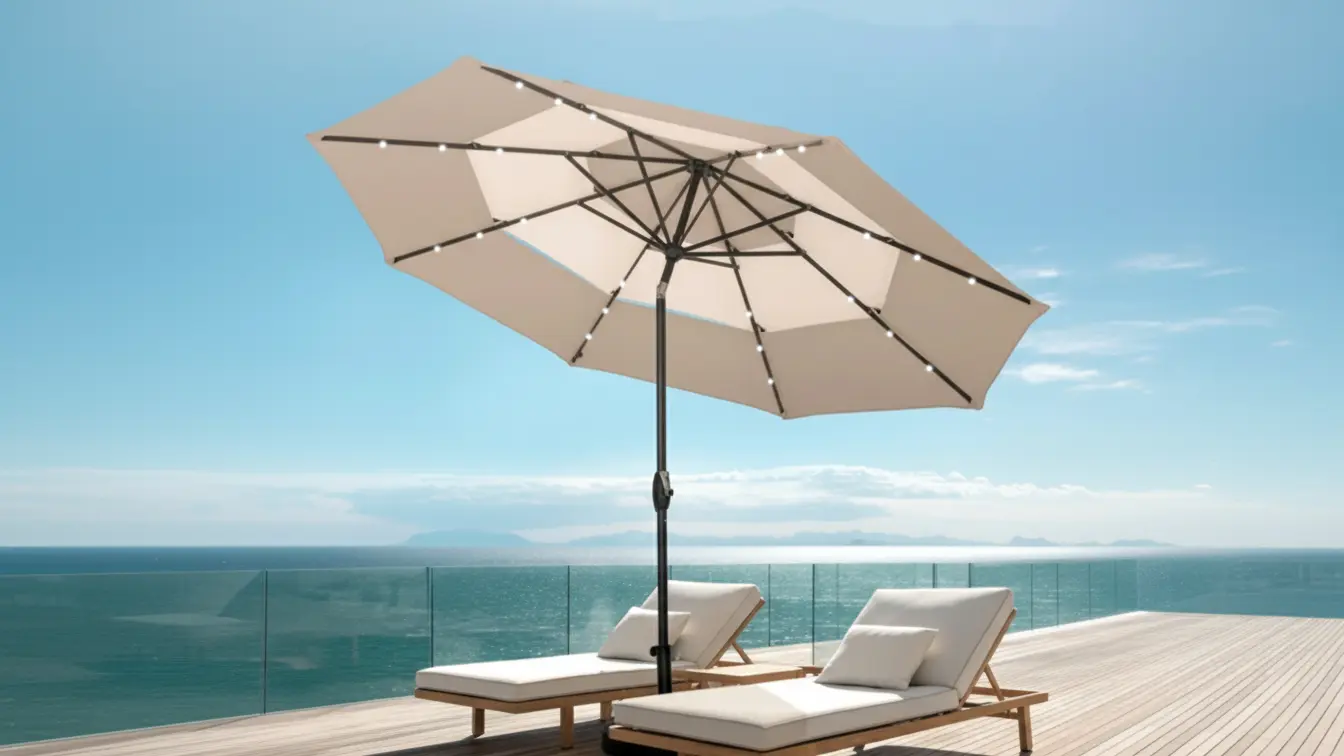
Automatic patio umbrellas offer effortless shade control for homeowners and professionals who value both comfort and innovation. With solar power, remote operation, and safety sensors, they remove the strain of manual cranks while aligning with modern outdoor living needs.
This guide covers essential industry insights, standout solar and remote features, and key installation and maintenance tips—helping you choose and care for an automatic umbrella that enhances convenience, safety, and long-term value.
Overview of Automatic Patio Umbrellas
Automatic patio umbrellas are an expanding segment in the outdoor furniture market, integrating motorized opening mechanisms and durable materials to offer quick, easy operation and enhanced weather protection for residential and commercial use.
The automatic umbrella market is evolving as part of the broader outdoor living trend, combining comfort, technology, and weather resilience. In our experience, these products are now seen as practical investments for both households and commercial spaces.
Market Landscape and Growth Trends
The global automatic umbrella market reached a value of USD 4.5 billion in 2023 and is projected to reach USD 7.9 billion by 2032, with a compound annual growth rate of 6.2%. The broader patio umbrella category also shows momentum, expected to grow from USD 603.2 million in 2025 to USD 1,040.1 million by 2035.
| 🌍 Region / Segment | 🚀 Growth Rate (CAGR) | 💰 Market Projection |
| Global Automatic Umbrella Market | 6.2% | USD 7.9 billion by 2032 |
| Asia Pacific | 7.1% | Fastest regional growth |
| Smart Umbrella Segment | — | USD 160.57 million by 2030 |
Asia Pacific leads in demand thanks to rising incomes and dense urban living. The popularity of automated and smart shade systems underlines a shift toward convenience-driven outdoor design.
Product Types and Features
Automatic patio umbrellas come in two main mechanisms designed for user convenience and reliability. The primary distinction lies in how much automation handles the opening and closing process.
- ✅ Fully Automatic: Opens and closes at the press of a single button, ideal for users seeking total hands-free operation.
- ✅ Semi-Automatic: Combines manual lifting with assisted closing or opening functions for added control.
- 💡 Canopy Materials: Common options are polyester, nylon, and pongee with water-repellent coatings that withstand UV and rain exposure.
- ✅ Frame Construction: Reinforced aluminum offers high durability while keeping the umbrella lightweight for easy repositioning.
- 🏡 End Users: Residential customers, hospitality venues, restaurants, and retail settings benefit from their professional appeal and ergonomic convenience.
In our experience, clients value the choice between mechanisms that balance aesthetic appeal with performance, especially when specified for contract-grade environments.
Key Market Drivers and Distribution Channels
Several forces underpin the fast growth of automatic umbrella adoption across global markets. Climate patterns, technology integration, and distribution convenience each play a major role.
- 🚀 Growing climate unpredictability drives a need for quick-deploy shade systems that provide instant protection.
- 💡 Advances such as one-touch operation and smart sensors make products more attractive to modern consumers.
- ✅ E-commerce represents over 65% of automatic umbrella sales, largely influenced by online reviews and peer recommendations.
- 🏬 Specialty stores and supermarkets also act as secondary channels for diverse consumer segments.
Digital marketplaces remain key for awareness and volume, while commercial procurement continues through supplier networks for large-scale installations.
Critical Perspectives for Commercial Buyers
Commercial buyers differ significantly from residential consumers in their priorities when choosing an automatic umbrella. For B2B users such as resorts or restaurants, long-term structural integrity often outweighs automated convenience.
- ✅ Durability and wind resistance are top priorities, emphasizing contract-grade materials over aesthetic novelty.
- ⚙️ The automatic umbrella segment carries a price premium yet meets only a subset of total shade equipment demand.
- 💡 Market segmentation shows a division between tech-forward households and performance-focused businesses.
- 🏢 Understanding usage needs—such as wind environment, installation frequency, or sensor control—ensures optimal cost-benefit outcomes.
From our manufacturing experience at Patiofurnituresco, buying decisions among commercial accounts hinge on tested certification standards, material sourcing transparency, and the reliability of factory support beyond delivery.
Benefits of Solar-Powered Umbrellas
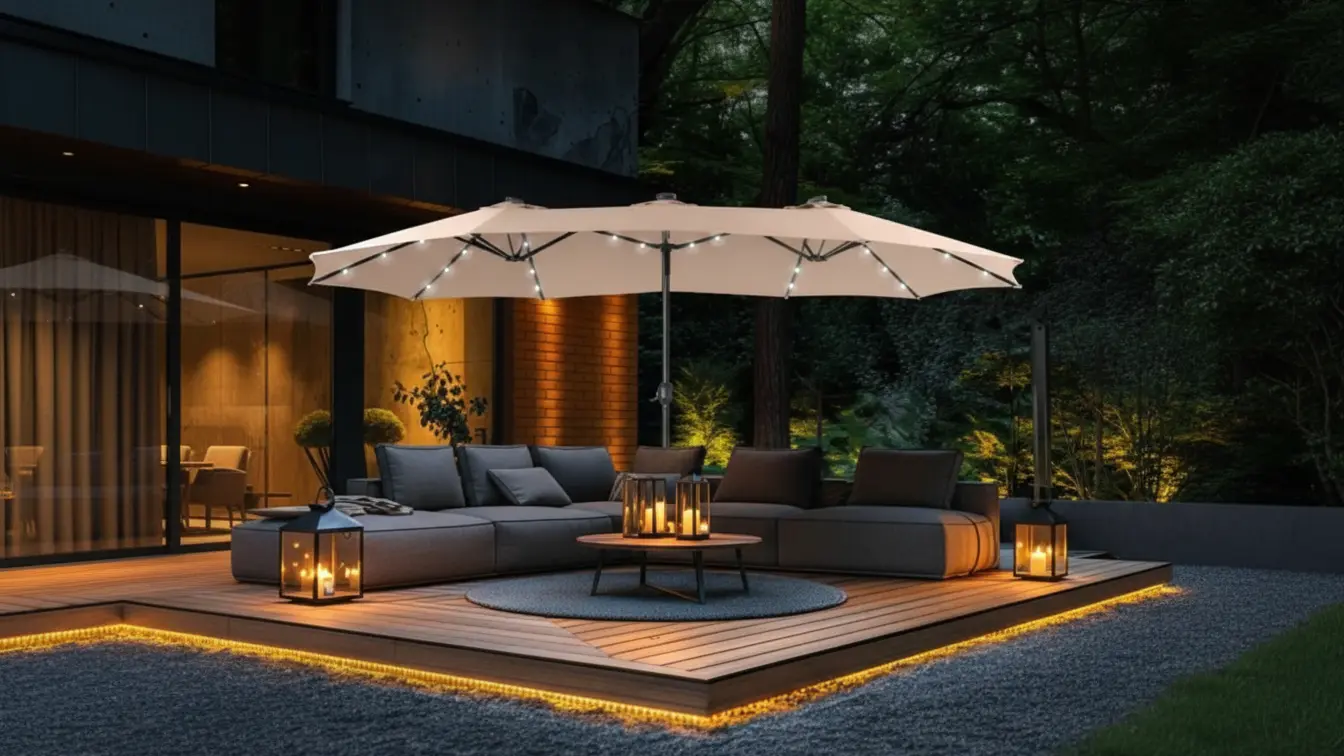
Solar-powered umbrellas deliver dual functionality—daytime shade and nighttime illumination—while generating measurable energy savings and environmental benefits. A typical solar umbrella saves 100–150 kilowatt-hours annually, reduces CO2 emissions by 75–100 pounds per year, and achieves ROI within 2–3 years of regular use.
Solar-powered umbrellas combine smart technology with sustainable energy. They provide comfort and light while cutting electricity costs and lowering environmental impact for both homes and commercial spaces.
Energy and Cost Efficiency
Each solar umbrella typically delivers annual energy savings of 100–150 kWh, equating to about $30–50 in reduced electricity costs per unit. When used daily in commercial settings such as cafés or poolside lounges, these savings accumulate quickly and contribute to noticeable operational efficiency.
Most models have an initial cost of $200–500 and reach full return on investment within 2–3 years of regular use. In our experience with hospitality projects, facilities report 20–30% lower outdoor operating expenses once solar umbrellas replace traditional lighting systems. Their average lifespan of 5–7 years provides long-term value that often outlasts standard umbrellas by an extra 2–3 years.
Environmental Impact and Sustainability
Solar-powered umbrellas directly reduce reliance on grid electricity, cutting CO2 emissions by approximately 75–100 pounds per umbrella annually. By using renewable power, they eliminate the need for disposable batteries, which minimizes environmental waste.
- ✅ Use renewable solar energy instead of grid power
- ✅ Built with recyclable materials to reduce overall footprint
- ✅ Helps eco-conscious businesses align with sustainability goals
As more hospitality and real estate brands adopt green standards, these umbrellas stand out as functional symbols of environmental responsibility.
Functional Versatility and Additional Features
Beyond shading, solar umbrellas enhance nighttime usability and guest comfort. Integrated LED lighting typically offers 6–8 hours of illumination per full charge and up to 10 hours for premium models.
- 💡 USB charging ports for mobile devices—perfect for cafés or poolside use
- 💡 Optional built-in fans or LCD screens for outdoor workers and vendors
- 🚀 Transform static umbrellas into active energy and comfort hubs
These multifunctional features make them particularly attractive for high-end resorts, event venues, and retail patios aiming to deliver more than just shade.
Performance Considerations and Geographic Factors
Optimal performance depends on sunlight exposure and local irradiance levels. Solar umbrellas require about 6–8 hours of direct sunlight daily for effective charging, with higher efficiency in regions that receive ample sunlight throughout the year.
| 🌍 Location | ☀️ Average Solar Irradiance (kWh/m²/year) | ⚙️ Expected Efficiency |
|---|---|---|
| Berlin | 1004 | Moderate |
| Taipei | 1529 | High |
| Wellington | 1475 | High |
⚠️ Placement in shaded or obstructed areas significantly lowers performance. Ensuring direct exposure to the sun is essential to achieve full energy recovery and lighting duration.
Applications and Commercial Benefits
From hotel patios to outdoor dining areas, solar-powered umbrellas serve both practical and aesthetic roles. Restaurants and resorts use them to create welcoming evening atmospheres while simultaneously cutting energy bills.
- ✅ Ideal for hospitality venues like cafés, resorts, and pool bars
- ✅ Portable and power-independent for event rental businesses
- ⚡ Serves as a backup lighting or power source during grid outages
- 🚀 Adds measurable value in retail, hospitality, and emergency setups
For commercial operators looking to stand out while lowering operational costs, solar umbrellas represent an efficient, eco-friendly upgrade aligned with modern sustainability trends and user comfort expectations.
How Remote Control Enhances User Experience
Remote controls improve user experience by simplifying complex device interactions and reducing cognitive load. Modern smart remotes, especially those with voice control and unified device integration, address common pain points like button overload and inconsistent layouts, making everyday entertainment tasks smoother and more intuitive.
Remote control design plays a vital role in how users interact with their devices. Poorly structured remotes often frustrate users, while well-designed ones enhance efficiency and comfort. Below we explore the key design challenges, solutions, and technology trends shaping the modern remote experience.
Challenges in Traditional Remote Control Design
Traditional remote controls often overwhelm users with unnecessary buttons and inconsistent layouts. Research shows the average remote has 239 buttons, yet only 33% are used regularly. This excessive complexity leads to frequent user errors and confusion.
- ❌ Power/on buttons appear in three different spots across six remotes, making operation unpredictable.
- ❌ Numeric keypad layouts differ widely, reducing familiarity across devices.
- ⚠️ Inconsistent button color schemes force users to relearn each new model.
These issues illustrate how inconsistency and over-design increase cognitive load, slowing down what should be effortless interactions.
How Consistency and Simplification Enhance Usability
Design consistency across devices helps users operate remotes instinctively. When button placement and function follow predictable patterns, muscle memory forms over time, allowing more fluid control.
- ✅ Standardizing button placement and functions reduces operational mistakes.
- ✅ Streamlining the button layout to only essential controls prevents decision fatigue.
- 💡 Using uniform color coding and icons shortens the learning curve for new users.
In our experience, simplified and standardized remote layouts directly improve satisfaction and accessibility, especially for older or less tech-inclined users.
Emerging Technologies Improving Remote Experience
New technologies are reshaping remote control usability. Voice-enabled systems and unified smart remotes aim to remove tedious navigation and merge multiple devices into a single, coherent experience.
- 🚀 Voice-enabled remotes respond to natural speech, eliminating complex menu browsing.
- ✅ Unified smart remotes consolidate several devices into one interface for reduced clutter.
- 📈 The smart remote market is expanding at 7.8% annually, reflecting consistent demand for convenience.
- ⚠️ Challenges remain with voice recognition accuracy and user privacy, particularly in noisy environments.
These advancements bring more accessibility and intuitive control, aligning with the growing trend toward connected and automated homes—similar to the smart operation seen in automatic umbrellas.
Critical Perspective on Remote Control UX
While innovation drives the market forward, more features don’t automatically translate to better user experience. Many remotes now include added functions aimed at differentiation, but these often come at the cost of usability.
- ⚠️ Overloaded remotes increase complexity and error rates.
- ❌ Poor multi-device integration creates inconsistent user journeys.
- 💡 Manufacturers often juggle pressure between cost efficiency and true UX improvement.
- 📊 Around 70% of consumers say they would pay more for better-designed, more convenient interfaces.
For businesses in smart outdoor living products—like our remote-controlled automatic umbrellas—these lessons in streamlined interaction and consistent design directly inform how technology can delight users without complicating their daily routines.
Launch Your Commercial Shade Project with Industry-Leading Durability
Partner directly with Patiofurnituresco to access premium, customizable outdoor umbrellas engineered for 5+ years of commercial use and supported by global certifications. Benefit from low MOQs and innovative features designed to elevate your business’s outdoor environment.

Importance of Wind Sensors for Safety
Wind sensors play a vital role in maritime safety by providing real-time data crucial for navigation, dynamic positioning, and offshore operations. Enhanced wind data quality and multiple sensor setups help reduce accidents, optimize routes, and ensure structural integrity of offshore infrastructure.
In maritime environments, accurate and continuous wind monitoring is essential for secure and efficient operations. Understanding how these sensors work and the data they deliver helps vessel operators and offshore engineers maintain control and minimize risk.
Definition and Role of Wind Sensors in Maritime Safety
Wind sensors, also known as anemometers, measure wind speed and direction to help ships and offshore platforms react to changing conditions. They inform navigation and vessel positioning systems, allowing crews to maintain stability during rough sea states.
These sensors also provide real-time weather data that supports route adjustments, preventing exposure to dangerous crosswinds or gusts. By enabling accurate anticipation and response, wind sensors reduce the likelihood of operational disruptions or accidents at sea.
- 💡 Measure wind speed and direction for vessel control and platform stability.
- 🚀 Support dynamic positioning and navigation accuracy during operations.
- ✅ Enable timely decisions that prevent maritime accidents and weather-related risks.
Current Trends and Data in Wind Sensor Usage
Recent industry data shows a growing awareness of wind sensor importance across the maritime sector. Surveys highlight a clear increase in adoption rates and investment in multi-sensor configurations for better coverage and redundancy.
| 📊 Metric | Key Data | Insight |
|---|---|---|
| Local wind measurement importance | 75% of maritime professionals rate local wind data as very important | 🚀 Indicates increased reliance since previous years |
| Average number of sensors deployed | 63% of operators now use three or more sensors | 💡 Multi-sensor setups enhance coverage accuracy |
| Reported safety improvements | 50% of operators report enhanced safety performance | ✅ Shows direct link between wind data and accident reduction |
| Operational control using wind data | 38% utilize data to adjust operational states | 🚀 Promotes proactive management of vessel systems |
| Main challenges | ⚠️ Data quality & continuity (62.5%), maintenance (43.8%), accuracy (12.5%) | 💡 Emphasizes need for robust calibration and upkeep |
Benefits of Wind Sensors for Vessel and Offshore Operations
For both vessels and stationary offshore platforms, wind sensors deliver measurable performance advantages. They strengthen operational safety while supporting efficient use of fuel, energy, and resources.
- 🚀 Enable dynamic positioning systems that reduce fuel consumption and optimize travel routes.
- ✅ Support structural integrity assessments of offshore platforms to prevent mechanical strain.
- 💡 Facilitate real-time data sharing that prevents navigational accidents in coastal and inland waterways.
- ⚠️ Help enforce improved safety protocols that minimize risks for crew and equipment.
In our experience, integrating advanced wind monitoring into onboard and offshore control systems not only improves safety margins but also drives smarter decision-making across the entire operation.
Top Automatic Patio Umbrellas with Safety Features
Explore a selection of leading automatic patio umbrellas designed with enhanced safety features. These models combine ease of use, advanced technology, and certified protections to deliver dependable shade solutions for various outdoor settings.
1. Patiofurnituresco
Patiofurnituresco, based in Taizhou, China, has been manufacturing contract-grade commercial outdoor furniture since 2009, serving clients in more than 30 countries. Their automatic patio umbrellas are built for frequent use in demanding commercial environments, ensuring extended durability and performance.
The company supports OEM and ODM customization with low minimum order quantities, giving businesses flexibility to tailor umbrellas to their exact needs. Each product complies with international standards such as UL4041 and EN581, assuring stable operation and safety in high-traffic spaces.
In our experience, Patiofurnituresco’s direct-from-factory approach helps B2B clients control margins and delivery schedules while maintaining consistent product quality for large-scale projects.
| 🌍 Location | 🪑 Main Products | 🎯 Main Markets |
|---|---|---|
| China | Automatic Patio Umbrellas, Outdoor Seating, Outdoor Structures | Startups, Private Label Brands, E-Commerce |
| ✅ What We Love | ⚠️ Things to Consider |
|---|---|
|
|
2. Bluu
Bluu is a U.S.-based direct-to-consumer brand that specializes in smart and automatic patio umbrellas designed for ease and safety. Their Bluu Maple Pro model integrates obstacle detection, allowing the umbrella to stop or reverse motion to prevent accidents and avoid damage.
Each unit includes a waterproof remote system with an IP64 rating and features certified UV protection that blocks up to 99.95% of harmful rays. The brand’s focus on technology makes it a strong choice for tech-savvy homeowners and older users seeking simple, one-touch operation.
Bluu appeals to premium residential clients who value convenience and safety above all else. While its pricing sits at the higher end, the safety measures and automation features justify the investment for long-term home use.
| 🌍 Location | 🪑 Main Products | 🎯 Main Markets | 🔗 Homepage |
|---|---|---|---|
| USA (Direct-to-Consumer Brand) | Automatic Patio Umbrellas with Remote Control, E-Umbrellas with Obstacle Detection, UV-Resistant Outdoor Umbrellas, Smart Shade Solutions | Residential Luxury Homes, Accessibility-Focused Consumers | Visit Site |
| ✅ What We Love | ⚠️ Things to Consider |
|---|---|
|
|
Installation Tips for Automated Umbrellas
Proper installation of automated umbrellas requires careful assembly of key components like the control board, LED lighting, wind sensors, and pole attachments, followed by secure base mounting with adequate base weight. Most units need 12 hours of solar charging before first use and remote control pairing within 30 seconds of power-up.
Setting up an automatic umbrella can be simple when each step is handled methodically and safely. In our experience, correct installation directly impacts long-term performance and resistance to mechanical issues. Follow the preparation and assembly guidelines below for a secure installation.
Pre-Installation Preparation
Before you begin installing your automatic umbrella, make sure the environment and materials are ready. This reduces risk and saves time during setup.
- 💡 Check all components against the provided checklist before starting assembly.
- ✅ Choose a flat, level, and stable surface for installing the base.
- ⚠️ Avoid setting up the umbrella during heavy winds, rain, thunderstorms, or snow.
- ⚠️ Keep children and pets away from the workspace for safety.
Having all tools and parts within reach ensures smooth progress once assembly begins. Preparation also helps detect any missing or mismatched parts early.
Step-by-Step Assembly Process
Each component of the automatic umbrella is designed to align in a specific order. Handle the materials carefully to avoid loosening or damage during assembly.
- ✅ Attach the finial to the canopy frame by turning it clockwise until secure.
- ✅ Insert the bottom pole into the canopy mainframe, make sure the snap button locks into place.
- 💡 Locate the control board near the motor, remove the silicone cover, and switch power to ON.
- ✅ Install the LED light by aligning and snapping the magnetic arrows on the runner hub and light housing.
- ⚙️ Attach the wind sensor by matching the arrow marks and twisting gently into position.
Once all pieces click into place, verify electrical connections, and confirm smooth motor rotation using the control panel. Tighten joints to prevent wobbling during operation.
Base Installation and Stability
A stable base ensures wind resistance and overall safety. Select the base setup method that matches your model and site conditions.
- ✅ Insert the bottom pole into the base and lock it tightly or screw it in according to model type.
- 💡 Place the base on a completely flat surface; avoid unstable areas such as sand or loose soil.
- ⚙️ Use at least 90 lbs of base weight for 9–10 ft umbrellas and 120 lbs for 11 ft models.
- ⚠️ Heavier bases always improve wind resistance. For outdoor commercial areas, secure the umbrella by bolting or weighting down the base to avoid tipping.
After installation, give the structure a gentle push to confirm it stands evenly and does not wobble. Proper leveling is vital to prevent premature joint wear.
Remote Control Pairing and Initial Charging
Automated umbrellas rely on the correct pairing and solar charge before activation. Follow the steps below carefully.
- ✅ Most remotes are paired at the factory. If re-pairing, turn the power ON to enter pairing mode within 30 seconds.
- 💡 Hold the UP button until you hear a short beep that confirms pairing completion.
- ⚙️ When installing multiple umbrellas, pair them one at a time and disconnect power between each unit.
- ⚠️ Charge the umbrella for at least 12 hours in direct sunlight before its first use to reach full solar capacity.
After charging, test open and close functions using the remote. Keep the solar panel clean and pointed toward direct sunlight for efficient recharging.
Operating Guidelines and Common Issues
After installation, following safe operating habits helps extend the umbrella’s service life. Avoid overuse cycles and check connections regularly.
- ⚠️ Avoid repeatedly opening and closing the umbrella more than 2–3 cycles without a 10-minute break to prevent motor overheating.
- 💡 If raising fails, examine the pulley rope for misalignment or dislodgement.
- ✅ Always close and secure the umbrella when not in use, especially during windy or stormy weather.
- ⚠️ Common mistakes include misaligned magnetic LED or sensor joints, insufficient base weight, and installation during unstable weather.
- ✅ Ensure every arrow mark aligns properly during assembly to maintain correct electrical and mechanical function.
Taking preventive care keeps your automatic umbrella working smoothly and improves long-term reliability. In our experience, regular inspection of wiring and base fixtures every few months can prevent most operational issues.
Maintenance and Troubleshooting
Automatic umbrella maintenance focuses on preventing spring jamming—which accounts for 80% of after-sales complaints—and resolving issues like frame breakage, canopy leaking, button malfunction, and coating peeling. Key practices include regular cleaning, lubrication, inspection, and proper storage. Troubleshooting involves identifying root causes such as material defects or manufacturing tolerances and applying targeted fixes.
In our experience, automatic umbrella maintenance requires consistent attention to detail. Understanding the relationship between quality, environment, and user handling helps extend the umbrella’s lifespan and minimize unforeseen breakdowns.
Common Issues and Root Causes
| Issue | Root Cause | Impact |
| ⚠️ Spring Jamming | Insufficient carbon in spring steel | Responsible for 80% of complaints and 22% return rate |
| ⚠️ Frame Breakage | Metal fatigue under wind stress | Breaks in 23% of level 5 wind tests |
| ❌ Canopy Leaking | Poor stitching and waterproofing | Causes a 15% rise in negative reviews |
| ❌ Button Malfunction | Tolerance misalignment exceeding 0.3mm | Leads to 37% drop in brand favorability, 12% failure rate |
| ⚠️ Coating Peeling | Thin coating or incorrect UV curing | Contributes to 18% returns and water protection loss |
Maintenance Procedures and Frequency
Routine care keeps moving parts of an automatic umbrella responsive and corrosion-free. The following steps ensure steady mechanical performance and visual appeal throughout seasonal use.
- 💡 Debris Removal: Clean joints and hinges with a soft brush or compressed air when buildup appears.
- 💡 Lubrication: Apply silicone spray or WD-40 every 3–6 months on all moving sections.
- 🔍 Damage Inspection: Check monthly for bent ribs, loose connections, or canopy tears.
- ✅ Proper Storage: Keep umbrellas dry in a cool, ventilated area to prevent spring fatigue and rusting.
Key Quality Tests and Standards
Durability testing proves long-term reliability and verifies that materials meet industrial standards for outdoor performance.
| Test Type | Procedure | Target Metric |
| 🧪 Spring Steel Verification | Spectrometer analysis | Carbon: 0.58%–0.62% |
| 🌧️ Salt Spray Test | Following GB/T 10125 | 1,000 hours corrosion resistance |
| 🔁 Cycle Testing | Open-close operations | 3,000 cycles with <10% elasticity loss |
| 💨 Wind Resistance | 60 mph wind tunnel | ≤ 12% canopy deformation |
| 🔘 Button Life Test | Continuous press cycles | ≤ 15% force loss after 3,000 presses |
Precision Manufacturing and Its Impact on Lifespan
Every micron in umbrella manufacturing affects comfort and performance. CNC precision and strict tolerance checks drastically improve product longevity.
- ⚙️ CNC-controlled Spring Pitch: ±0.1mm accuracy enhances stress uniformity by 35%.
- 🧭 Rod Straightness: ≤0.3mm/m deviation reduces lateral stress by 60%, extending joint life by about 2,800 cycles.
- 🔘 Button Force Calibration: Lowers failure complaints from 12% to below 2%.
- 🌡️ Environmental Treatments: Thermal and silane coatings limit degradation through UV and moisture exposure.
Troubleshooting and On-Site Assessment
Quick field testing helps detect early signs of failure before lab confirmation. These practical steps can verify mechanical reliability on-site.
- 🔘 Test button operation through 50 open-close cycles; if jams occur, replace or respring mechanism.
- 💡 Measure trigger force over 5 cycles; deviation of more than 0.3 kgf indicates tolerance drift.
- ✅ Inspect for dust, rust, or foreign particles; apply lubricant to restore spring tension.
- 🔍 Check stitching and coating thickness around seams to prevent canopy leaks and peeling.
Critical Perspectives and Common Misconceptions
Umbrella longevity claims often vary based on regional testing methods and standard definitions. Misunderstanding these can lead to mismatched expectations.
- ⚠️ The 3,000-cycle rating differs across standards—EU EN 809 mandates 3,000 cycles while China GB/T 23147 sets 2,000, a 50% difference.
- 💡 Realistic environmental tests, including temperature and salt spray cycles, provide more accurate lifespan predictions.
- ✅ Load-based performance evaluations often show stronger durability than unloaded mechanical tests.
- ⚙️ Micron-level manufacturing consistency prevents early wear—minor deviations can deeply affect service life.
Frequently Asked Questions
Are motorized patio umbrellas reliable?
Yes, a high-quality automatic umbrella from a contract-grade manufacturer like Patiofurnituresco is built for long-term reliability. Our umbrellas use precision-tested electric motors sealed for all-weather use.
Each motorized model undergoes strict quality checks to meet certifications such as UL4041 and EN581, ensuring dependable performance in hospitality and commercial applications. In our experience, clients report consistent use even after 10,000+ open–close cycles.
Can I open an automatic umbrella manually?
Most automatic umbrellas feature a manual backup crank, allowing users to operate them without power. This hybrid design is especially convenient during low-battery situations or maintenance checks.
In our professional designs, manual operation is friction-assisted, requiring minimal effort—ideal for elderly users or commercial setups that demand quick manual overrides.
Do automatic umbrellas close when it gets windy?
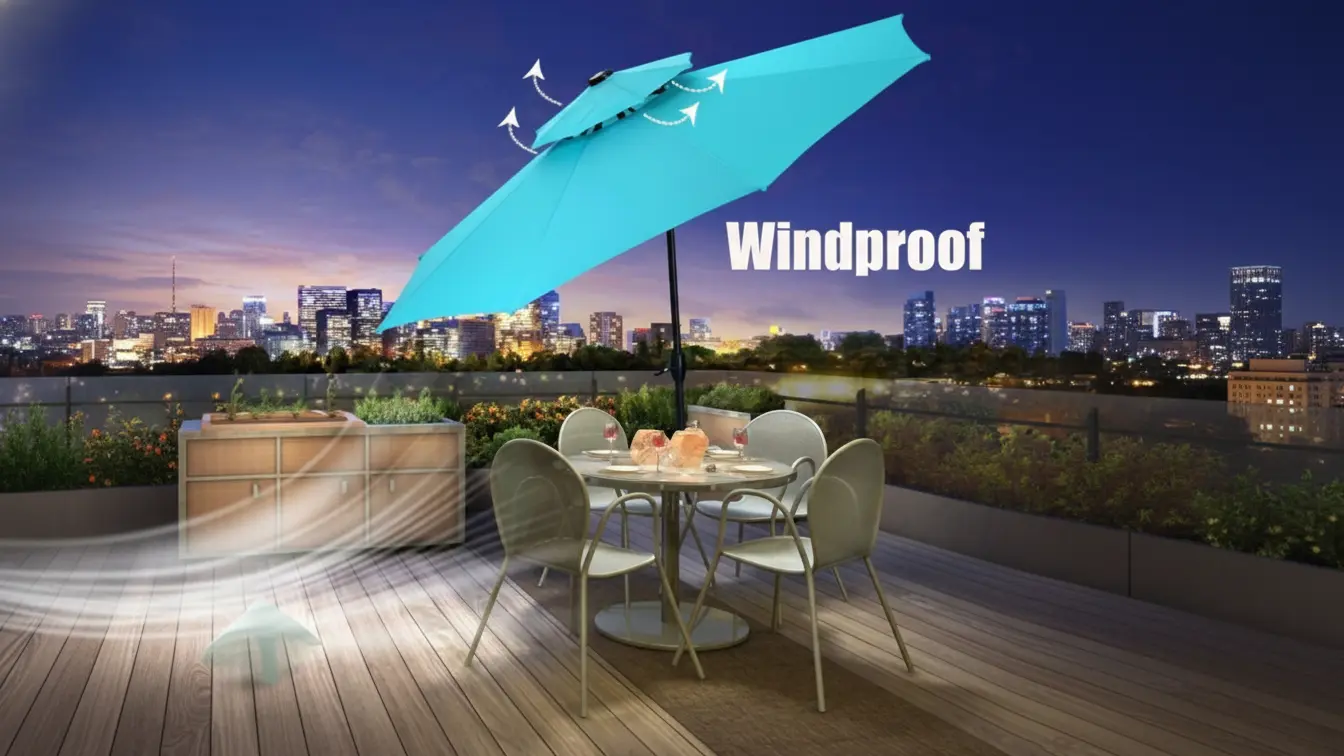
Some advanced models include built-in wind sensors that automatically retract the canopy when wind speeds exceed 25–30 mph (approx. 40–48 km/h).
Patiofurnituresco offers this feature as an optional OEM function for commercial clients, helping to prevent frame or fabric damage during sudden gusts. For locations with unpredictable weather, the smart close function adds an extra layer of protection to your investment.
How do you charge a solar patio umbrella?
Solar automatic umbrellas charge through built-in photovoltaic panels located at the canopy top. These panels store energy in integrated lithium-ion batteries during daylight hours.
When fully charged, the power can operate LED lights or motor functions for up to 6–8 hours. For low-sunlight conditions, an additional USB or plug-in charging port ensures consistent usability.
Best remote control patio umbrella?
The best remote control automatic umbrellas combine strong structural engineering with responsive wireless control. At Patiofurnituresco, our B2B clients often choose models equipped with 2.4 GHz remote systems, providing reliable control within 15–20 meters.
Features can include one-touch open/close, LED dimming, and tilt angle adjustments. We can also integrate custom branding and advanced smart-home compatibility under OEM/ODM terms for retail or hospitality projects.
Final Thoughts
Automatic patio umbrellas bring together smart automation, renewable energy, and advanced safety sensors to transform outdoor living into a low-maintenance, high-comfort experience. From solar-powered illumination to wind-sensing auto-close systems, each technology enhances usability while protecting guests and assets in both residential and commercial spaces.
For property owners and hospitality managers, investing in well-engineered automatic umbrellas means fewer weather-related risks, lower long-term costs, and improved brand image through sustainable design. Partnering with a reliable manufacturer that understands durability, precision, and certified safety standards ensures every installation delivers lasting performance and confidence across demanding outdoor environments.


 English
  Spanish
  French
  German
  Portuguese