

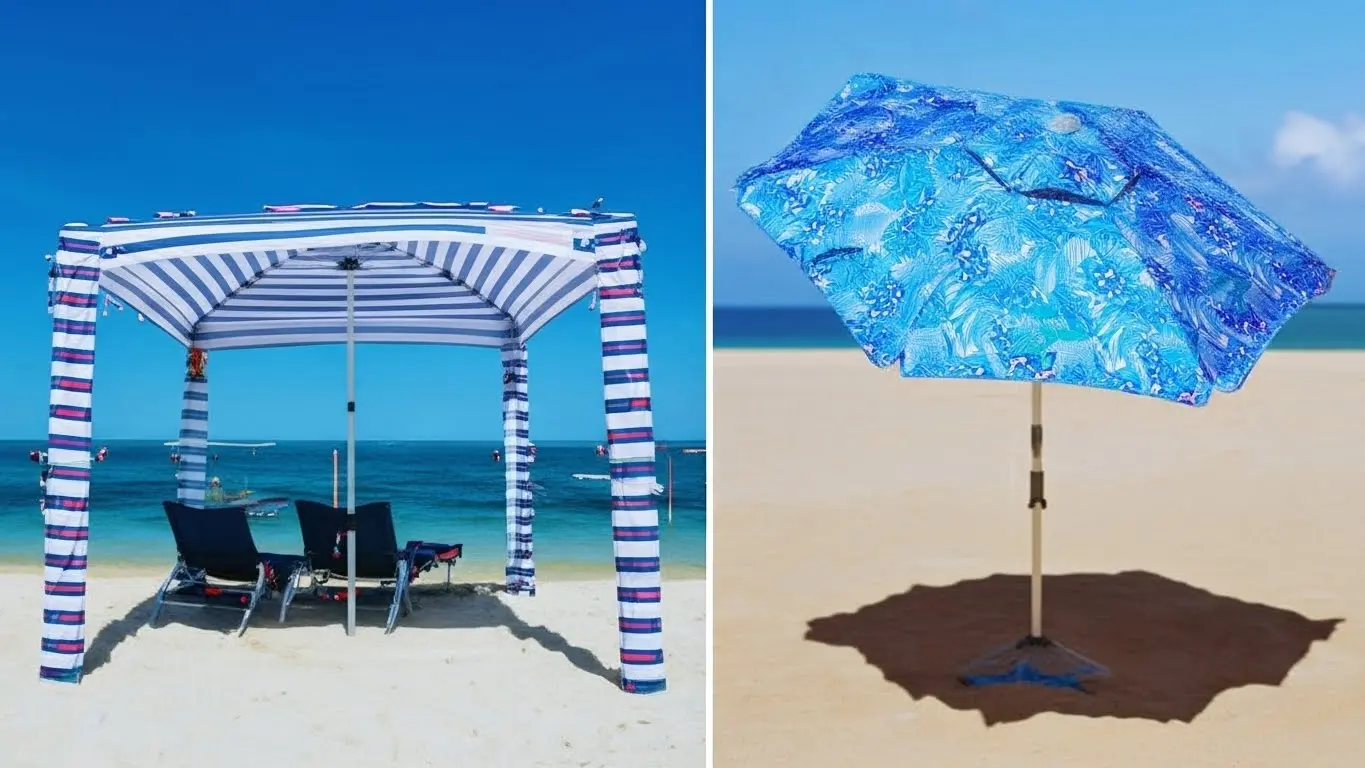
Families planning a beach day often struggle to find shade that’s roomy enough for everyone yet easy to set up. While an umbrella works for quick trips, it rarely provides the space, wind resistance, or coverage families need for a comfortable day by the shore.
This guide explains what sets beach cabanas apart from umbrellas, compares their features and family benefits, and offers tips on choosing the best beach cabana for lasting comfort, protection, and convenience.
What is a Beach Cabana?
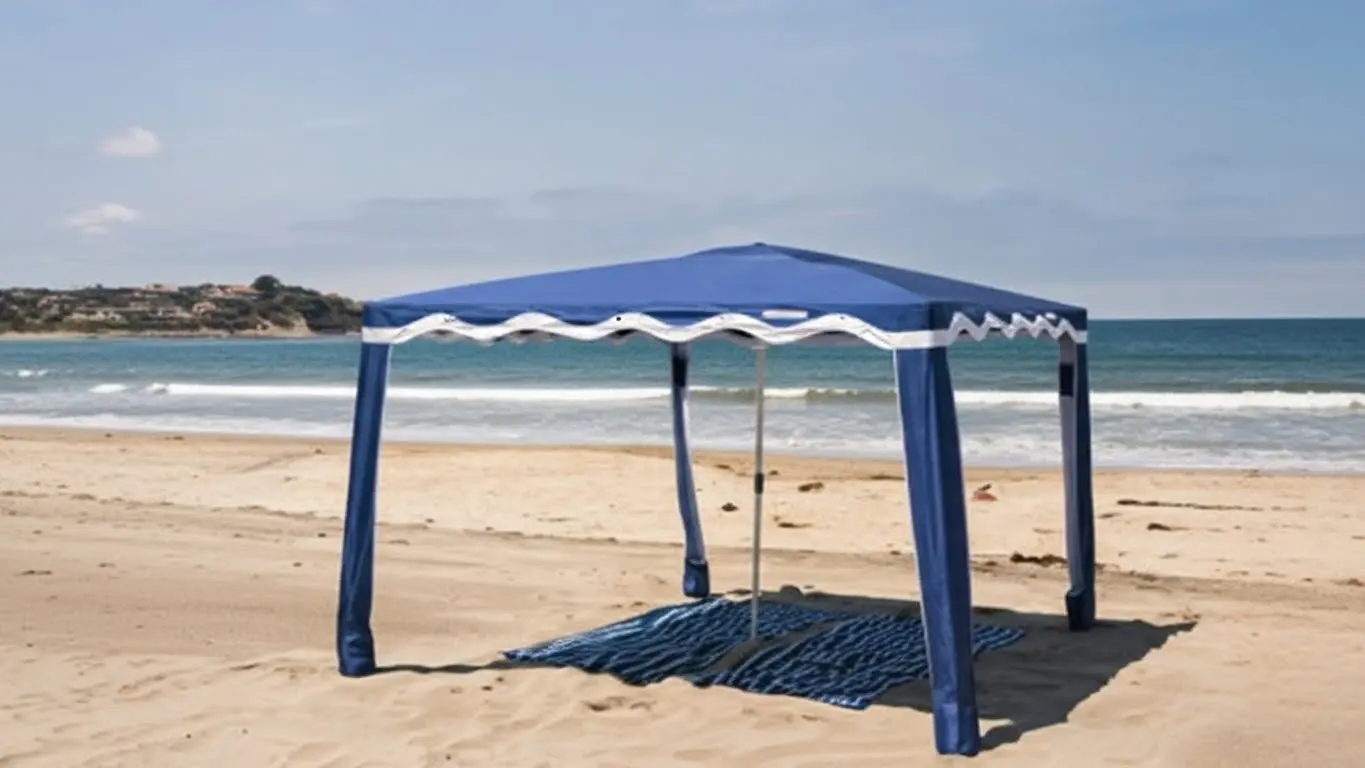
A beach cabana is a gazebo-like shade structure designed specifically for beach use, featuring a central support pole with four corner poles, UV-protective fabric, and open sides for airflow. Larger and taller than umbrellas or tents, it accommodates groups with space for gear and provides excellent ventilation and sun protection.
A beach cabana offers a more spacious and comfortable way to enjoy the beach while staying protected from direct sun exposure. Families often consider it the best beach cabana solution because it combines the ease of setup with room to move, relax, and store essentials.
Definition and Basic Features
A beach cabana is a semi-enclosed, gazebo-like shade structure designed specifically for beach environments. It’s intended for group use, with enough surface area to place chairs, coolers, or beach bags comfortably beneath shade.
- 🏖️ It includes one central pole and four corner poles supporting a UV-protective fabric roof.
- 🌬️ Open sides help natural ventilation and allow sea breeze circulation.
- 🏗️ Taller design provides standing height, unlike smaller umbrellas or compact tents.
- ☀️ UV-blocking materials reduce heat and prevent sunburn while maintaining an airy space.
This construction balances structure and openness, making it adaptable for both family outings and commercial beach setups.
Specifications and Comparison with Other Beach Shelters
When comparing different beach shading options, cabanas stand out for their balanced design and group functionality. The following table highlights key differences among common types of beach shelters.
| Feature | Beach Cabana | Beach Umbrella | Beach Tent |
|---|---|---|---|
| Height | Taller, allows standing comfort ✅ | Low profile, seated use only ❌ | Variable, mostly low ❌ |
| Coverage Area | Large, fits groups ✅ | Small, fits 1–2 people ❌ | Medium, often enclosed ⚠️ |
| Airflow | Fully open for cooling breeze ✅ | Partial airflow ⚠️ | Limited airflow ❌ |
| UV Protection | High-grade UV fabric ✅ | Basic cloth protection ⚠️ | Good UV resistance ✅ |
| Setup Complexity | Moderate ⚙️ | Quick and easy 🚀 | Time-consuming ❌ |
Most cabanas also include integrated sand pockets, storage pouches, and wind stability features for safer use on coastal terrain. In our experience, families looking for the best beach cabana prefer these designs for their spacious coverage and airflow comfort.
Materials, Design Considerations, and Anchoring
The durability and look of a beach cabana depend largely on the chosen materials. Natural and synthetic options both play unique roles in function and aesthetics.
- 🌿 Eco-friendly bamboo and palm thatch deliver a tropical appeal fit for luxury resorts.
- 🏗️ Lightweight aluminum frames paired with polyester fabric ensure corrosion resistance and portability.
- ⚓ Anchoring systems with sand pockets and pegs prevent movement during strong coastal winds.
- 💡 Proper grounding improves stability and ensures user safety in various weather conditions.
Manufacturers specializing in hospitality-grade outdoor structures, such as Patiofurnituresco, often use T6 aluminum and high-density textiles that meet international safety standards, guaranteeing both quality and reliability for B2B projects.
Benefits and Practical Uses
Beach cabanas enhance comfort for families, groups, and hospitality guests who spend extended hours seaside. They offer space and shade without the complexity of full tents.
- 👨👩👧👦 Spacious enough for multiple people and gear, providing a shared retreat.
- 📦 Built-in storage pockets hold essentials like sunscreen, phones, and keys securely.
- 🌬️ Open design maintains airflow and prevents heat buildup under direct sun.
- 💺 Standing room allows for flexible arrangements with lounge chairs or tables.
- 🚀 Setup and takedown balance simplicity and durability.
For beachgoers who want the convenience of an umbrella but the coverage of a tent, the best beach cabana provides the ideal middle ground—functional, comfortable, and easy to manage for day-long use.
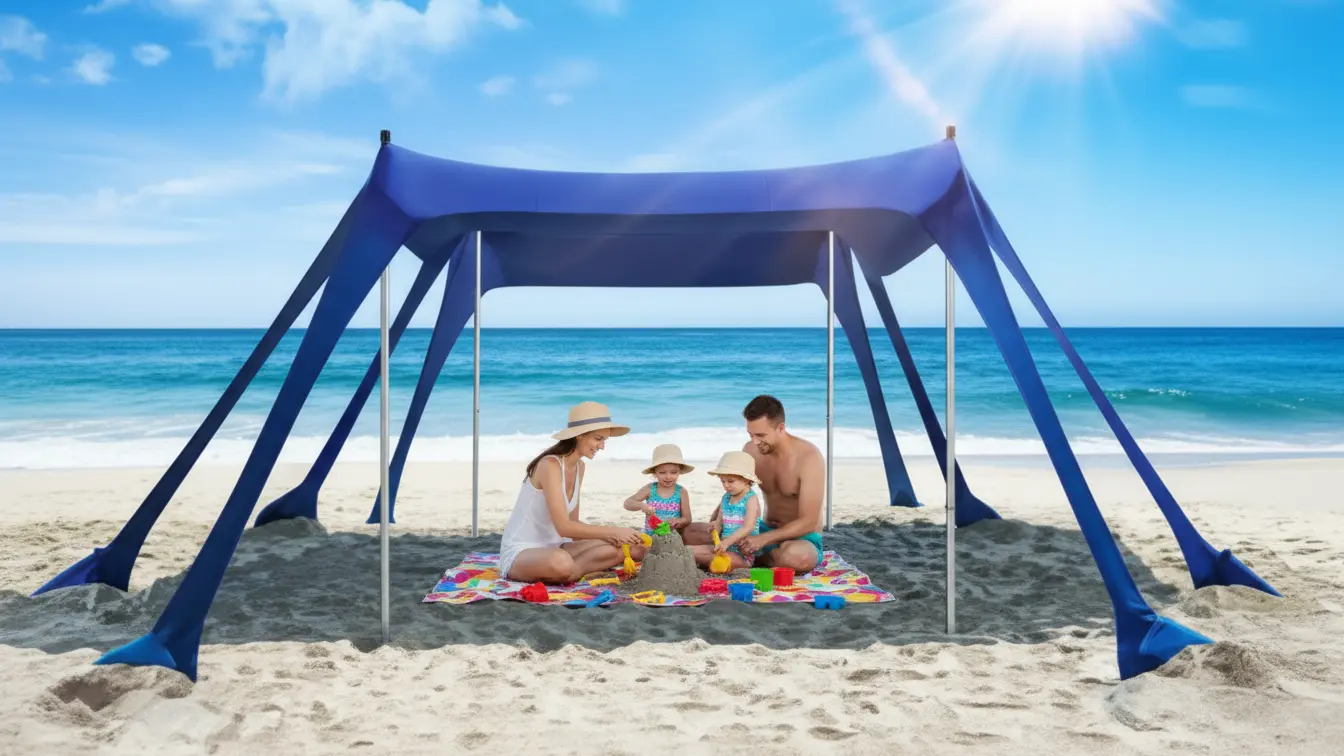
What is a Beach Umbrella?
A beach umbrella is a large, portable canopy designed specifically for sun protection and wind resistance on beaches. It features UV-resistant fabric, reinforced frames, sand anchors, and vented canopies to withstand coastal conditions and provide effective shade for 1–2 people or more.
Beach umbrellas are essential outdoor accessories designed for comfort and protection during seaside activities. They provide shade, cut down heat exposure, and make beach visits more enjoyable for individuals or families.
Definition and Primary Function
A beach umbrella is a portable canopy built for outdoor beach environments. Its key role is to create a shaded area that protects users from harmful ultraviolet rays during extended exposure to the sun.
Unlike standard rain umbrellas, beach models are designed for greater durability, stability, and UV shielding. Their materials, dimensions, and anchoring systems ensure they remain functional even when exposed to coastal wind and sand.
Key Specifications and Design Features
In our experience, the structure of a beach umbrella directly affects its performance under sunny and windy conditions. Standard models usually range in diameter from 6 to 10 feet, with larger versions reaching up to 13 feet.
- ✅ Frame materials such as aluminum, fiberglass, or steel provide a solid foundation against wind stress.
- ✅ UV-resistant fabrics like polyester or canvas offer strong protection against sun radiation.
- ✅ Anchoring systems — including sand stakes or spiral augers — keep the umbrella stable on soft beach terrain.
- ✅ Vented canopies allow hot air to escape, reducing wind resistance and the risk of flipping.
- ✅ Adjustable tilt mechanisms make it easy to follow the sun’s direction for consistent shade.
Types of Beach Umbrellas
Beach umbrellas come in several variations to suit different needs, from solo beachgoers to families seeking more coverage. Selecting the right model depends on the desired level of shade, portability, and resistance to coastal winds.
- ✅ Standard beach umbrellas – Compact in size and designed for casual use by 1–2 people.
- ✅ Anchor beach umbrellas – Reinforced with advanced poles and anchoring systems for windy coasts.
- ✅ Portable or compact models – Lightweight and foldable for easy transportation.
- ✅ Specialty versions – Often include features such as integrated cup holders or Bluetooth speakers.
- ✅ Larger beach cabanas – Provide partial enclosure and greater shade coverage for entire families, making them a top pick among buyers looking for the best beach cabana alternative.
Benefits of Using a Beach Umbrella
Owning a beach umbrella offers a mix of functional and health benefits. It creates a comfortable relaxation zone while limiting direct sun exposure.
- ✅ Reduces UV exposure to help prevent skin damage, premature aging, and sunburn.
- ✅ Provides a cooler resting area for reading, eating, or family activities.
- ✅ Built with resilient materials to withstand wind, sand, and salt spray over time.
- ✅ Easy to carry and store thanks to foldable frames and carrying bags.
- ✅ Adjustable angles help maintain shade as the sun shifts across the sky.
For families debating between a traditional umbrella and the best beach cabana, a beach umbrella remains a reliable and portable option for simple shade needs, while a cabana offers added enclosure and wind protection for longer stays.
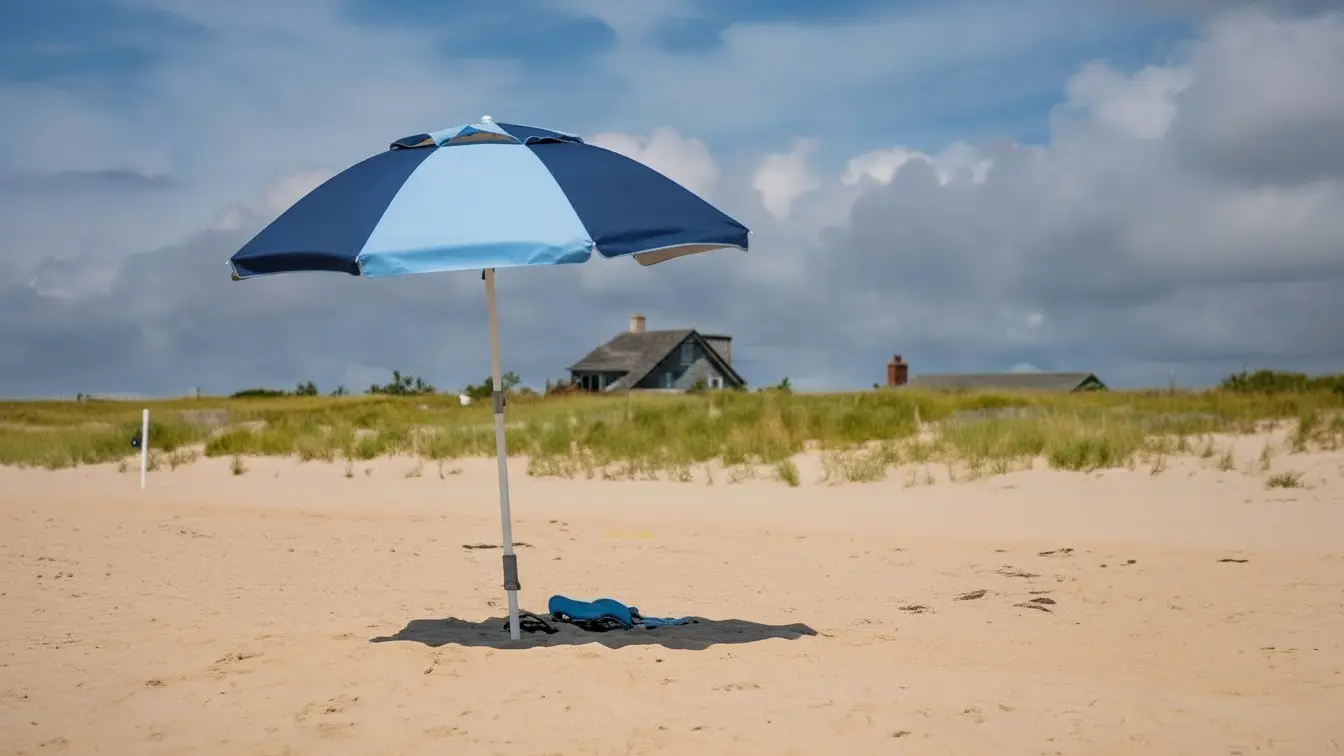
Key Differences Between Beach Cabanas and Umbrellas
Beach cabanas and umbrellas serve fundamentally different purposes for beachgoers. Cabanas provide larger coverage for 4–6 people, better wind resistance, and enclosed designs for privacy and sand protection. Umbrellas offer compact, portable shading for 1–2 people with quick setup but limited protection and stability. The right choice depends on group size, weather, and portability needs.
For families deciding between the best beach cabana setup and a standard umbrella, it helps to understand how each option performs in real-world beach conditions. Below are detailed comparisons and insights drawn from years of manufacturing commercial-grade shade products.
Key Physical Differences (Comparison Table)
This side-by-side comparison shows how cabanas and umbrellas differ in structure, coverage, and usability for both regular and commercial users.
| Feature | Beach Cabanas | Beach Umbrellas |
| Canopy Size | ✅ Large, expansive coverage | ❌ Smaller, compact area |
| User Capacity | ✅ 4–6 people comfortably | ❌ 1–2 people |
| Frame Type | ✅ Robust, sturdy construction | ❌ Lightweight frame |
| Wind Resistance | ✅ Withstands moderate to strong winds | ❌ Easily toppled in high winds |
| Sand Protection | ✅ Enclosed design blocks blowing sand | ❌ Open design, minimal protection |
| Portability | ❌ Bulkier, longer setup | ✅ Highly portable and simple |
| Material Durability | ✅ Polyester/nylon lasting multiple seasons | ❌ Canvas/polyester for occasional use |
| Cost Range | 💡 Around $25+ per day rental | 💡 Lower cost overall |
| Setup Time | ⚠️ Moderate complexity | 🚀 Quick, simple setup |
| Privacy Level | ✅ Full enclosure for privacy | ❌ No privacy, open exposure |
Critical Perspectives on Sun Protection and Wind Stability
Some buyers assume that umbrellas provide adequate sun protection, but research shows otherwise. Ultraviolet rays reflect off sand and water, meaning that even under an umbrella, UV exposure can still cause sunburn without additional sunscreen.
Umbrellas also struggle with wind conditions along most coastlines. Their lighter poles and simpler anchors make them prone to tipping or breaking during gusts, while cabanas feature reinforced frames and sand bags for improved traction. For windy environments, cabanas deliver safer and more dependable sun cover for families and commercial setups alike.
Coverage and Cost Efficiency
A well-sized beach cabana can cover up to 12’x12′—enough to shelter a full family group or multiple loungers. Umbrellas, even large ones, only shade 1–2 people at a time.
- ✅ Cabanas cost about $25 per day for rentals including chairs and shade.
- ❌ Umbrellas are cheaper upfront but cover less area.
- 💡 For groups of 4+, one cabana can replace several umbrellas, making the cost per person lower.
In our experience manufacturing both types of outdoor shade equipment, the right choice depends on how frequently it’s used and whether comfort or mobility is the top priority.
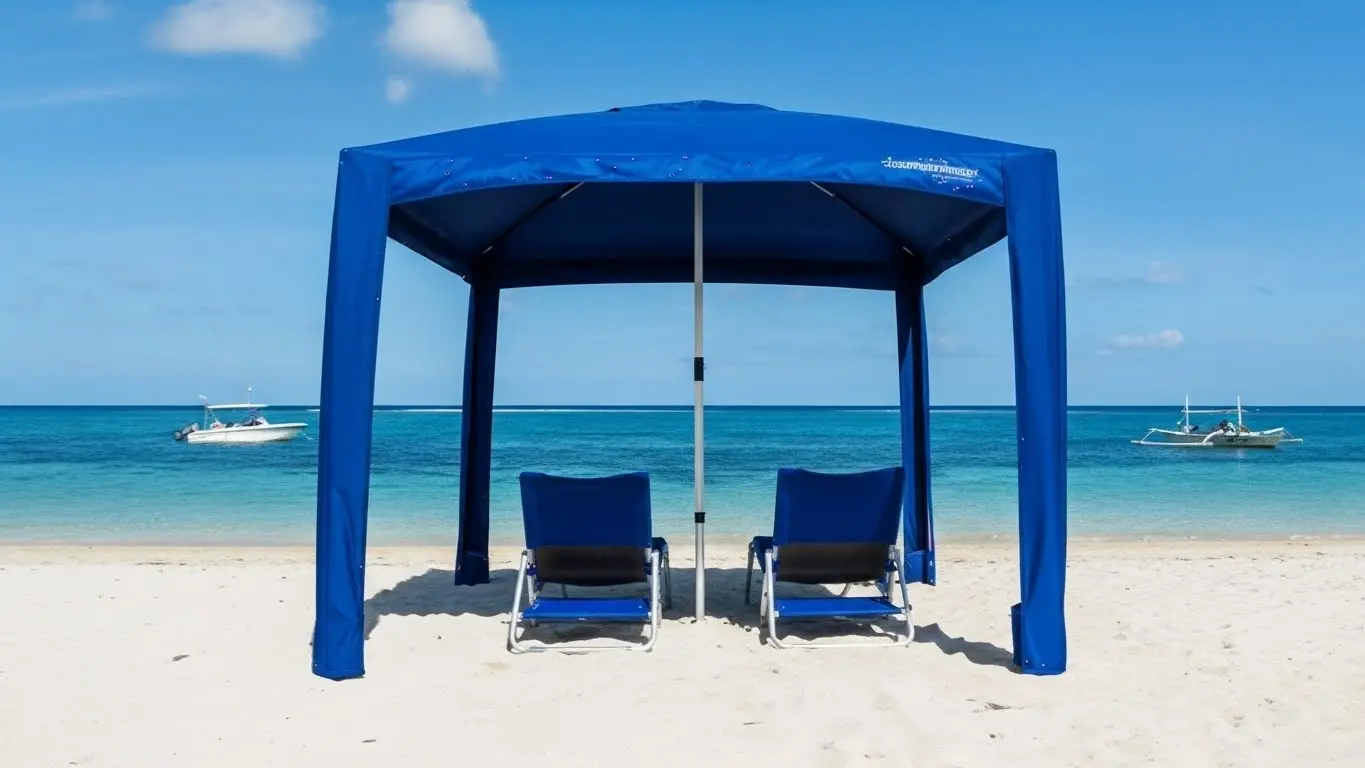
Material Longevity and Suitability
Beach cabanas are built with durable polyester or nylon fabrics that can last through multiple seasons if kept clean and dry after each use. Their frames often use aluminum or fiberglass poles designed for commercial reliability.
Beach umbrellas, by contrast, are better suited for occasional or lightweight recreational use since their fabric and poles are more prone to wear. Frequent visitors or rental operators will gain better value from investing in a cabana made from contract-grade materials.
Families who visit the coast regularly or need shade that withstands strong sun and wind should consider a cabana as the best beach cabana solution for long-term comfort and protection.
Elevate Your Outdoor Spaces with Custom Commercial-Grade Umbrellas
Partner directly with a trusted manufacturer delivering durable, innovative, and fully customizable patio umbrellas built for a 5+ year lifecycle. Unlock low MOQ ordering, global logistics, and expert OEM/ODM support to bring your unique vision to life effortlessly.

Why Families Should Choose a Beach Cabana Over an Umbrella
Beach cabanas provide families with 2–5 times more shade coverage (64–150+ sq ft vs. 28 sq ft for umbrellas), superior UV protection (UPF 50+ blocking 98% of harmful rays), and better wind and sand resistance. This makes them ideal for families seeking all-day comfort, safety, and a defined space for children and belongings.
Families who visit the beach regularly often struggle to find shade solutions that are both spacious and protective. Comparing traditional umbrellas with modern cabanas clearly shows that the latter offer more surface coverage, stronger protection, and added features for family comfort throughout the day.
Key Comparison Between Beach Cabanas and Umbrellas
| Feature | ☂️ Umbrella | 🏖️ Beach Cabana |
| Shade Coverage | ❌ About 28 sq ft | ✅ 64–150+ sq ft (2.3–5.4x more) |
| Recommended Group Size | ❌ 1–3 people | ✅ 2–10 people |
| UV Protection | ⚠️ Limited, no certified rating | ✅ UPF 50+, blocks 98% of UV rays |
| Wind Resistance | ❌ Prone to tipping | ✅ Four-post frame, weighted base |
| Sand Protection | ❌ None | ✅ Enclosed panels and mesh vents |
| Price | 💲 $35–$55 | 💲 $199+ |
| Setup & Portability | ✅ Easy and light | ⚠️ Requires anchoring, heavier |
| Privacy | ❌ Open, no coverage | ✅ Enclosed with side panels |
Why Beach Cabanas Are Safer and More Comfortable for Families
Cabanas create a more secure and comfortable environment for families. Their large covered area shields children from both direct sunlight and reflected UV rays, something umbrellas often fail to do.
Clinical data shows that 78% of umbrella users still experience sunburn, revealing the real limitations of umbrella protection. A cabana’s UPF 50+ fabric sharply reduces this risk, which is crucial for kids with sensitive skin.
The stable construction of cabanas minimizes tipping accidents during gusty coastal winds, while their enclosed side panels keep out blowing sand and provide privacy for changing or caring for infants—features especially valued by families seeking comfort.
Balancing Cost and Value: Is a Beach Cabana Worth It?
Although a cabana costs around 3.6–5.7x more than a standard umbrella, the added value becomes clear over time. Families who visit the beach multiple times each season can easily recover that upfront cost within a few years.
- ✅ Extended durability means multi-year use without frequent replacement.
- ✅ Less sunscreen use saves money and reduces skin irritation risk.
- ✅ Wind-resistant, sand-free, and private space enhances comfort.
- ❌ Umbrellas remain better suited only for quick solo or couple trips.
Common Misconceptions About Beach Umbrellas
- ⚠️ Many assume umbrellas provide enough protection, but studies show a high risk of sunburn due to incomplete shade coverage.
- ❌ Lack of structural stability and sand protection reduces comfort and safety for families.
- ⚠️ The open design offers no defined area, making organization difficult.
- ✅ Choosing a beach cabana instead gives full protection, privacy, and a more relaxed space for family activities.
How to Choose the Perfect Beach Cabana
Choosing the perfect beach cabana requires balancing sun protection (UPF rating), wind resistance, ease of setup, and material durability while considering your family’s size and typical beach weather. The ideal cabana uses UPF 50+ fabric, reinforced frames, and reliable anchoring to ensure comfort and safety throughout the day.
Finding the best beach cabana means matching your family’s comfort preferences with beach conditions like sun exposure and wind strength. In our experience, the right cabana combines durability, convenience, and thoughtful design to support an enjoyable day at the coast.
Essential Selection Criteria for Beach Cabanas
- 💡 UV Protection: Choose cabanas with UPF 50+ to block 98% of harmful rays; UPF 80+ gives maximum protection for intense sunlight.
- 💡 Wind Resistance: Stable designs can handle winds of 35+ mph using reinforced frames, sand pockets, and stakes.
- ✅ Shade Coverage: Sizes range from small (64 sq ft) for couples to large (100+ sq ft) families.
- 🚀 Weight and Portability: Lightweight fiberglass frames fold easily for compact storage.
- ✅ Setup Time: Modern one-person designs with intuitive instructions reduce setup stress.
- 💡 Anchoring System: Look for models with 4–8 sandbags and multiple stakes for better balance on soft sand.
- ✅ Material Durability: Ripstop polyester or nylon with UV coatings resists tears and corrosion.
- 💡 Price Range: Budget cabanas start near $30, while high-end options go beyond $300.
Trade-offs Between Sun Protection and Ventilation
While UPF 50+ cabanas excel in UV blocking, a fully enclosed structure can trap heat during peak hours. Families with young children need proper airflow to keep interiors comfortable.
Mesh windows and vented tops prevent heat buildup while keeping bugs out. Models with removable sidewalls and zippered panels let you adjust airflow depending on wind and sun direction.
Why Wind Resistance and Anchoring Matter
Beach winds can shift quickly, making a strong anchoring system essential. A well-engineered cabana should include multiple sandbags and ground stakes for consistent stability even in gusty conditions.
- ✅ Reinforced triangular frames distribute pressure evenly to reduce wobbling.
- 💡 Fiberglass poles flex under strain while resisting cracks—lightweight yet strong.
- ✅ Powder-coated aluminum or steel adds corrosion resistance for coastal environments.
- ⚠️ Avoid relying solely on heavy materials; proper anchoring provides reliable stability without extra weight.
Material Quality and Durability for Long-Term Use
For consistent performance, fabric and frame materials should handle salt exposure, sand abrasion, and changing weather. Ripstop polyester or nylon with UV-resistant dyes extends color life and prevents fraying.
- ✅ Water-resistant and fast-drying fabrics prevent mildew after frequent coastal use.
- 💡 A balanced fabric weight of around 75-denier offers durability without excess bulk.
- ✅ Frames made with powder-coated aluminum or fiberglass provide added longevity compared to untreated metals.
- 🚀 Washing and drying the cabana properly after each trip helps maintain strength and fabric integrity across seasons.
Setup Ease and Family Convenience Features
Modern cabanas are built for quick assembly. High-quality versions can be set up by one person within 10–20 minutes using color-coded poles and intuitive systems.
- 🚀 Compact fold-down sizes fit easily into car trunks packed with children’s gear.
- ✅ Add-ons like cup holders, gear pockets, and mesh windows increase usability during long beach days.
- 💡 Removable sidewalls let you adapt shade coverage throughout the day without complicated adjustments.
- ✅ Extra help makes setup faster, but one-person operation is now standard.
Common Misconceptions About Beach Cabana Selection
- ❌ Heavier equals more stable — Modern engineering and proper anchoring offer better stability than extra mass alone.
- ⚠️ Not all UPF 50+ fabrics are equal; protection depends on weave density and reinforced seams.
- 💡 Setup no longer takes hours — quality designs now ensure quick, stress-free assembly.
Maintenance and Portability Considerations
Beach cabanas require regular maintenance such as fabric cleaning, frame inspection, and rust prevention. Portability varies widely: lightweight pop-up cabanas offer easy transport, while permanent models need professional installation and are not portable. Maintenance and storage considerations significantly impact family purchase decisions.
Families looking for the best beach cabana should think about how often they plan to use it, how easily it can be moved, and how much time they can dedicate to upkeep. In our experience, maintenance and portability often determine how long a cabana lasts and how convenient it is to use season after season.
Maintenance Requirements for Beach Cabanas
Keeping a cabana in good shape means managing both the fabric and frame. Regular cleaning prevents UV damage and mildew that typically occur in coastal environments. A quarterly treatment schedule helps maintain its color and durability, extending its lifespan.
- 🧽 Clean fabrics quarterly to prevent UV fading and mildew buildup.
- 🔩 Inspect aluminum or steel frames; aluminum resists corrosion better over time.
- ⚙️ Replace worn parts like zippers, hinges, and fasteners before they fail.
- 💰 Expect annual maintenance costs of around 15–20% of the original purchase value.
Portability Options and Trade-offs
Choosing between portability and stability often comes down to the type of beach cabana. While pop-up versions offer easy transport, heavier models deliver better durability for long-term use.
| Type | Weight | Portability | Durability |
|---|---|---|---|
| Lightweight / Pop-up | Under 30 lbs | ✅ Easy to carry & set up | ❌ Less stable in strong winds |
| Heavy-duty / Permanent | 50+ lbs | ⚠️ Requires two people & a vehicle for setup | ✅ High durability & strong stability |
Families should also assess their space and needs. Walk-behind cabanas make sense for frequent mobility, while larger fixed models fit resorts or private property setups.
Storage and Seasonal Considerations
In many climates, beach cabanas may stay unused for 6–9 months annually. Without proper storage, fabrics and structural parts can degrade quickly due to moisture and temperature fluctuations.
- 🌦️ Store in a climate-controlled area to avoid mold or fabric fading.
- ⚠️ Poor ventilation can cause mildew and shorten product life.
- 💡 Choose removable fabrics and foldable frames for easier storage.
Cost Implications of Maintenance and Portability
Total ownership cost goes beyond the initial purchase. Families should consider recurring expenses like cleaning supplies, spare parts, and occasional technician visits.
- 💰 Regular supplies, parts, and servicing can add up yearly.
- ⚠️ Advanced models with motorized systems need specialists that increase upkeep costs.
- ✅ Simpler aluminum-frame designs minimize servicing needs and offer better long-term value.
Critical Insights for Families Selecting Beach Cabanas
Families balancing comfort and convenience benefit most from low-maintenance, portable solutions. In our experience, small design details often have the biggest impact on long-term usability.
- ✅ Pick lightweight aluminum-frame cabanas with simple fabric structures for quick setup.
- ⚠️ Avoid overly complex or motorized mechanisms that require specialized repair.
- 🏠 Keep a dry, sheltered space reserved for off-season storage.
- 💡 Plan for about 2–3 hours of upkeep each year to preserve quality and appearance.
When families evaluate the best beach cabana, balancing portability, maintenance, and cost ensures a reliable companion for years of seaside use.
Frequently Asked Questions About Beach Cabanas and Umbrellas
Is a beach cabana better than an umbrella?
A beach cabana provides more coverage and stability than a standard umbrella, making it ideal for families who need space for kids, bags, and gear. It also resists wind better due to its low profile and multi-point anchoring.
Umbrellas remain easier to carry for short beach visits, but for longer stays and better protection, most users find the best beach cabana to be the more practical choice.
How long does it take to set up a Coolcabana?
Most Coolcabana-style shade systems can be set up in around 3–5 minutes by one person. The process involves unfolding the frame, securing the poles in sand holes, and anchoring with sandbags or stakes.
In our experience, first-time users may take slightly longer, but after a few uses it becomes a quick routine comparable to opening a large patio umbrella.
Are beach cabanas allowed on all beaches?
Not all beaches permit cabanas, especially those with strict lifeguard visibility or safety rules. Regulations vary by region and are often posted at beach entrances.
Before bringing one, check local rules online or call the beach office to confirm whether portable cabanas are allowed. Many public beaches only allow shade structures below 7 feet in height or a specific footprint size.
Which provides more shade?
A typical cabana covers up to 4x more area than a standard umbrella. That extra shade makes a noticeable difference for families who want a comfortable space for both adults and kids.
Umbrellas generally provide cover for 1–2 people, while a medium beach cabana offers shade for 4–6 people, along with space for coolers and bags.
Is a cabana heavy to carry?
Modern cabanas use lightweight aluminum or fiberglass frames, keeping most models under 10–12 lbs. They fold into compact bags with shoulder straps for easier transport.
While heavier than a beach umbrella, the added weight provides stability in windy conditions, making it a fair trade‑off for those prioritizing comfort and safety during extended beach days.
Conclusion: Upgrading Your Beach Experience
Selecting between a cabana and an umbrella highlights one clear insight—comfort, safety, and durability come from investing in quality shade structures. A beach cabana goes beyond basic cover, providing space, UV protection, and stability for families and resorts alike. By emphasizing certified materials, easy setup, and low-maintenance designs, users ensure lasting performance even in demanding coastal conditions.
Partnering with a trusted manufacturer streamlines sourcing, customization, and delivery, helping businesses maintain reliable operations while enhancing guest satisfaction. For families and hospitality venues seeking a better balance between cost and comfort, choosing a well-built cabana means extending both value and enjoyment across every beach season.



 English
  Spanish
  French
  German
  Portuguese