

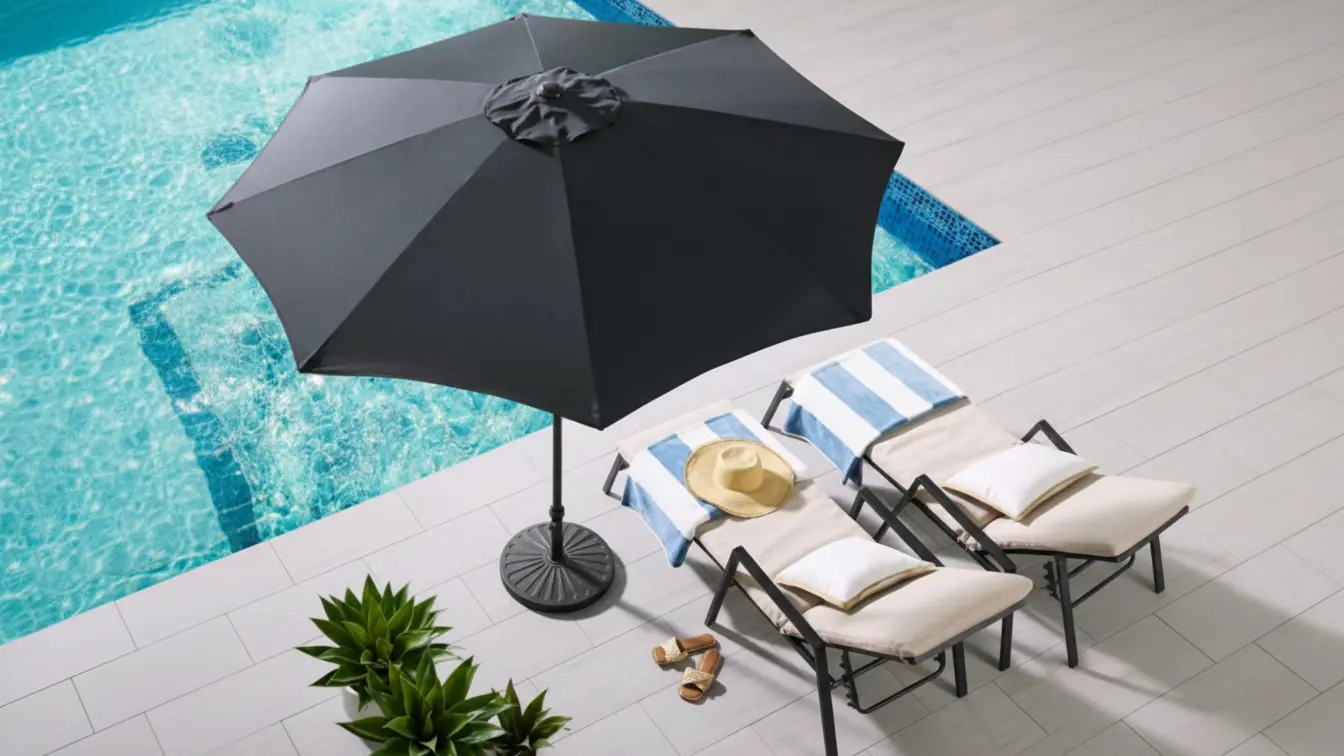
Design-focused buyers love the bold, modern appeal of a black patio umbrella but often hesitate over concerns about heat, fading, and upkeep. The contrast between sleek style and real-world comfort makes this choice more complex than it seems.
This guide covers how black umbrellas perform in sunlight, how fabric quality impacts heat and durability, and what maintenance keeps them looking sharp. It helps you decide whether the black canopy trend fits your climate, budget, and design goals.
Is a Black Patio Umbrella the Right Style Choice for You?
A black patio umbrella suits design-conscious buyers seeking a modern look, especially in dry, sunny climates. It absorbs more heat and shows dust easily, requiring more maintenance and premium fabric to ensure durability.
Black patio umbrellas have become a distinct choice for buyers focused on outdoor style and durability. In our experience working with resorts and property developers, the color selection often defines both the mood and practical comfort of a patio space. Below, we explore how the black color performs in design, temperature, and upkeep before deciding if it’s right for you.
Style Appeal and Market Trends
Black umbrellas bring a sleek, modern tone that aligns with contemporary architecture and minimalist furniture design. Their refined look pairs easily with neutral palettes or contrasting bright seating, making them versatile for both residential and commercial applications.
- ✅ Black umbrellas offer a sophisticated and timeless aesthetic that complements modern and minimalist patio layouts.
- 🚀 The residential patio umbrella market is projected to reach $443.84 million by 2029, with rising demand for black-trimmed models.
- 💡 Design-oriented homeowners aged 35–55 and hospitality clients increasingly prefer black umbrellas for their upscale visual impact.
Heat Absorption and Comfort Considerations
Color strongly affects heat retention. Black fabrics absorb more solar energy than lighter shades, which directly influences how comfortable the shaded area feels during intense sunlight.
| Color Type | Temperature Difference ☀️ | Comfort Level |
|---|---|---|
| Black | +10–15°F warmer | ⚠️ May feel hotter during peak sunlight |
| Beige/White | Cooler by 10–15°F | ✅ More comfortable cooling shade |
In high-heat regions such as the southern United States or Mediterranean climates, the darker canopy can reduce shade comfort during midday hours. Light-colored fabrics reflect sunlight, creating a cooler environment for extended outdoor use.
Maintenance and Durability
While black umbrellas look elegant, maintaining that rich tone demands effort. They tend to highlight dust, pollen, and water spots, especially after rain or windy conditions.
- ⚠️ Require cleaning roughly every 3 months to manage visible residue and mildew in humid environments.
- 💡 UV exposure fades dark fabric faster than pale alternatives, making fabric quality crucial.
- ✅ Premium solution-dyed acrylics like Sunbrella maintain color integrity, though they cost about 20–30% more than standard polyester.
In our manufacturing projects, clients in UV-intensive regions generally opt for upgraded fabric to preserve deep color vibrancy and prevent premature wear. This safeguards long-term visual consistency and reduces replacement frequency.
Is a Black Patio Umbrella Right for You?
Your location, climate, and upkeep tolerance all influence whether a black canopy is a smart investment. Buyers who value design harmony and can handle moderate maintenance will appreciate its statement look.
- ✅ Ideal for dry, sunny climates with manageable humidity levels.
- 💡 Fits buyers prioritizing modern aesthetics and premium outdoor materials.
- ⚠️ Not suitable for patios exposed to persistent moisture or shaded tree cover where mildew forms easily.
- ❌ Budget-focused buyers might find lighter shades more practical due to lower material cost.
Choosing a black patio umbrella ultimately comes down to balancing style with practical use. When paired with UV-stable, solution-dyed fabric, it becomes a compelling choice for contemporary outdoor environments requiring both visual appeal and endurance.
How Fabric Quality Affects Heat Absorption in Black Umbrellas
Fabric quality largely determines heat absorption in black umbrellas, more than color alone. Premium tight weaves, UV-resistant treatments, and ventilation reduce heat transfer to users, making high-quality black umbrellas cooler beneath despite absorbing more solar energy.
While black patio umbrellas are known to absorb more sunlight, the comfort they provide often depends on the fabric itself. High-quality textiles engineered for UV resistance and ventilation can make a dark umbrella significantly cooler underneath compared to low-grade fabrics, even when both appear identical in color.
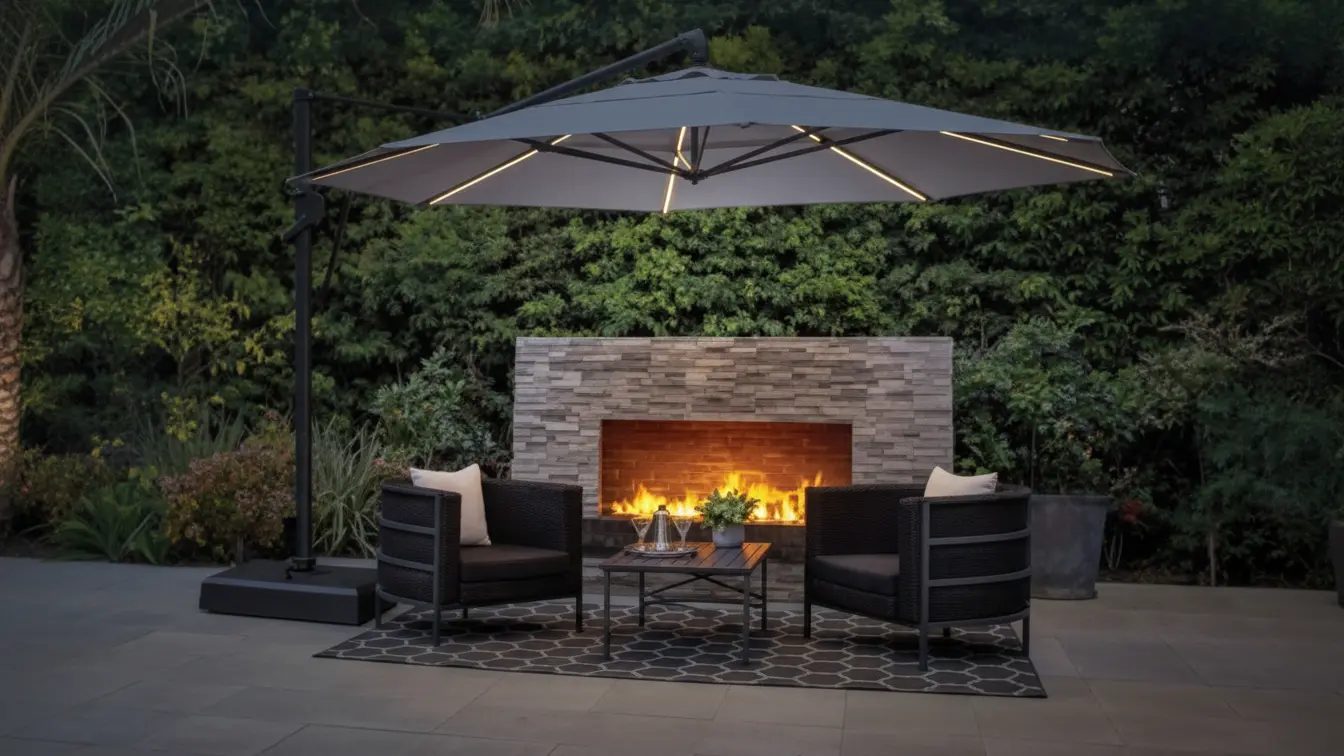
The Fabric Quality Paradox: Heat Absorption vs. UV Protection
Black fabric tends to absorb the most solar energy, creating the perception that a black umbrella must always feel hotter. Yet, in real use, that isn’t always the case. The quality of the canopy material plays a bigger role in determining how much heat actually reaches underneath.
- 💡 Black fabric provides deep shade and reduces glare from intense sunlight.
- ✅ Not all heat absorbed at the surface is transferred beneath the umbrella.
- 🚀 Fabric construction and UV treatments influence comfort more than color alone.
Key Fabric Factors Impacting Heat Absorption
Several core fabric attributes influence how a black patio umbrella manages heat and UV protection. In our experience, commercial-grade fabrics balance these factors to deliver both comfort and durability.
- 💡 Weave Tightness: Denser weaves block UV rays better and reduce internal heat buildup.
- ✅ UV-Resistant Treatments: Special coatings limit heat transfer to the shaded area despite higher external absorption.
- 💨 Ventilation Design: Wind vents release hot air, lowering trapped heat beneath the canopy.
- 🚀 Material Type: Solution-dyed polyester provides superior fade resistance and longer life than standard polyester.
- ☀️ UPF Rating: Fabrics rated UPF 50+ block over 98% of UV radiation, outperforming untreated textiles.
Solution-Dyed Polyester: The Premium Fabric Choice for Black Umbrellas
Solution-dyed polyester stands out as the best choice for a long-lasting black patio umbrella. During manufacture, color pigments are embedded into the fiber before it’s spun, resulting in permanent, fade-resistant coloration.
This process prevents fading after prolonged sun exposure and keeps the umbrella’s UV-blocking power consistent over seasons. Compared to standard dyed fabrics, solution-dyed polyester offers enhanced tear strength and outdoor durability, making it ideal for commercial and residential use alike.
Distinguishing Heat Absorption from Heat Transfer in Umbrella Use
A black umbrella canopy will usually feel hotter to the touch because it absorbs more solar energy on the surface. But that doesn’t always mean the shaded area beneath is uncomfortably warm.
- ✅ High-quality weaves and UV coatings limit how much surface heat passes through the fabric.
- 💨 Thoughtful ventilation designs let warm air escape, maintaining cooler conditions underneath.
- 💡 Poorly constructed light fabrics may allow more heat and UV rays through despite having a cooler surface feel.
The Importance of UPF Rating Over Color Alone
Sun protection is best measured by UPF certification, not color. A certified UPF 50+ umbrella blocks more than 98% of harmful UV rays, regardless of whether it’s black, beige, or blue.
- ✅ A light umbrella with a high UPF rating can outperform a black umbrella without UV treatment.
- ⚠️ Relying on dark color alone provides no guarantee of protection.
- 💡 Always choose fabrics verified for their UV resistance, not just their aesthetic appeal.
Selecting Umbrella Colors and Fabrics Based on Climate and Use Case
Choosing the right umbrella color and fabric depends on climate and intended use. While black umbrellas are stylish and minimize glare, they perform best when matched to the right setting.
- 🌧️ Black umbrellas: Ideal for cooler or cloudy environments where UV protection is key and heat buildup is minimal.
- 🌤️ Mid-tone fabrics (taupe, olive, terracotta): Offer balanced heat control, still concealing dirt while keeping the styling refined.
- ☀️ Lighter tones: Better suited for extremely hot areas when paired with high-quality, certified UV-resistant textiles.
For B2B buyers seeking a black patio umbrella that delivers both modern aesthetics and comfort, focusing on certified, solution-dyed materials ensures lasting performance and user satisfaction rather than relying on color alone.
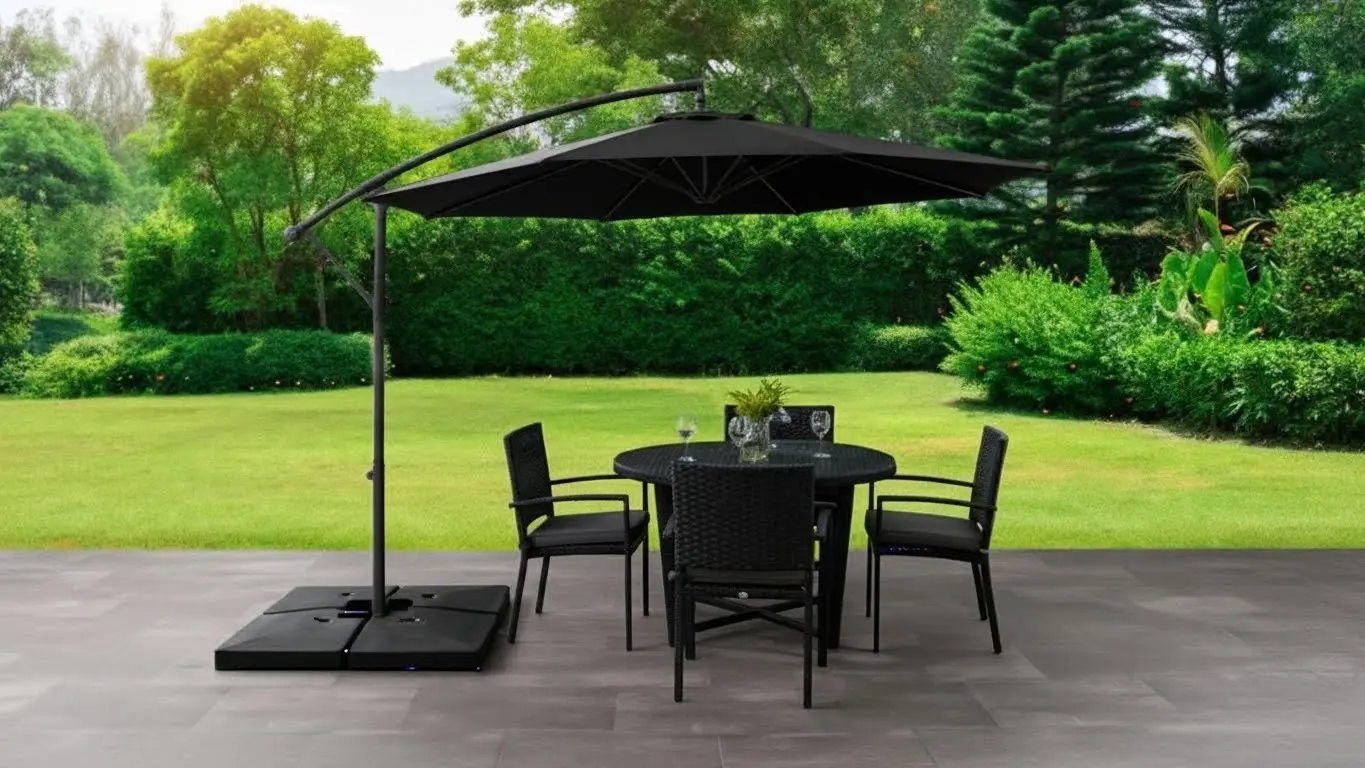
Popular Black Patio Umbrella Fabrics: Pros and Cons
Black patio umbrella fabrics offer modern aesthetics but come with trade-offs: darker colors absorb more UV radiation and heat, which accelerates fading and material wear. Solution-dyed fabrics with heavy weaves and UV treatments, such as acrylic and solution-dyed polyester, best balance style with durability.
In our experience, the look of a black patio umbrella evokes elegance and modern outdoor styling. But understanding how fabric type influences performance and longevity helps buyers make durable, cost-effective decisions.
Comparison of Popular Black Patio Umbrella Fabrics
| Fabric Type | UV Protection | Fade Resistance | Water & Mildew Resistance | Durability | Price Range |
|---|---|---|---|---|---|
| Acrylic (Sunbrella) | 98% ✅ | Excellent ✅ | Water & Mildew Resistant ✅ | 10+ years 🚀 | Premium 💡 |
| Solution-Dyed Polyester (Terylast) | 98% ✅ | Excellent ✅ | Water & Mildew Resistant ✅ | 10 years 🚀 | Economical 💡 |
| Olefin (Texsilk) | UPF 80 ✅ | Excellent ✅ | Water & Mildew Resistant ✅ | 7–10 years 🚀 | Budget-friendly + Eco-certified 💡 |
| Polyethylene (Coolaroo) | 90% ⚠️ | Semi-Translucent / Visible Fading ⚠️ | Not Water Resistant ❌ | 5 years ⚠️ | Economical 💡 |
| Standard Polyester | 40–60% ❌ | Poor ❌ | Poor ❌ | 2–3 years ❌ | Budget 💡 |
Challenges and Considerations for Black Fabrics
Dark fabrics like black absorb higher levels of UV and heat, which accelerates fading and material breakdown. In our experience, this effect is most visible in budget polyester or non-solution-dyed textiles after the first few seasons.
- ⚠️ Heat Retention: Prolonged heat exposure can transfer to metal frames, making rust-resistant aluminum or stainless steel better structural partners than untreated iron.
- 💡 Color Protection: Solution-dyed process is essential for sustaining color depth, while surface-dyed materials tend to bleach faster.
- ⚠️ Maintenance Visibility: Black fabric highlights dust and pollen, requiring more frequent wiping to keep a polished look.
- ✅ Easy Cleaning: Bleach-tolerant fabrics like Texsilk and Terylast simplify upkeep between heavy use cycles.
Selecting the Best Fabric for Black Patio Umbrellas
The ideal fabric for a black patio umbrella depends on your location, climate, and usage setting. Commercial projects and private homes have slightly different durability needs.
- ✅ Sunbrella Acrylic: Offers superior UV defense and long-term color stability, perfect for upscale hospitality or resort patios.
- ✅ Solution-Dyed Polyester (Terylast): Combines resilience and performance at a competitive price, well-suited for retailers and cost-conscious buyers.
- ✅ Olefin (Texsilk): Eco-certified and resilient to stains, favored by clients wanting a sustainable yet durable textile.
- ❌ Avoid Standard Polyester or Polyethylene: Poor fade resistance and limited weather protection make them short-lived in dark tones like black.
For commercial or high-traffic environments, Patiofurnituresco typically recommends acrylic or solution-dyed polyester. These materials match design ambitions with the proven durability required in professional outdoor setups.
Elevate Your Outdoor Spaces with Factory-Direct Innovation
Partner with Patiofurnituresco to access durable, customizable commercial umbrellas backed by 16 years of manufacturing excellence and global certification. Start low-risk market entries with MOQ as low as 10 units and benefit from cutting-edge solar integration and worldwide logistics.

The Science Behind Heat Retention in Dark Outdoor Fabrics
Dark outdoor fabrics retain more heat than lighter ones because their dark colors absorb significantly more solar radiation across a broad spectrum. Black-dyed materials convert sunlight into heat, resulting in heat gains over 100 W/m² under sun exposure.
Dark outdoor fabrics used in products like a black patio umbrella behave differently from light-colored materials because of how they interact with solar energy. Understanding the science helps explain both their aesthetic appeal and thermal behavior in outdoor environments.
How Dark Fabrics Absorb Heat
Dark colors, especially black, absorb light from visible to near-infrared wavelengths. When this solar energy hits the fibers, it converts into thermal energy, a process known as photothermal conversion.
- ☀️ Dark tones absorb more of the solar spectrum, while lighter fabrics reflect most of it.
- 💡 Black composites can gain over 100 W/m² of heat in direct sunlight, significantly increasing surface temperature.
- 🚀 Nanoparticles embedded in modern fabrics amplify this conversion efficiency, trapping heat more effectively for longer durations.
In our experience, these properties are carefully balanced in commercial-grade umbrellas to ensure both warmth and durability for hospitality applications.
Material Innovations Enhancing Heat Retention
Recent breakthroughs in textile engineering have introduced active and adaptive materials designed to improve the performance of dark outdoor fabrics.
- 🔥 Thermoplastic polyurethane matrices combined with polyaniline and polydopamine nanoparticles can raise surface temperature by +54 °F in just 10 minutes.
- 🎨 Thermochromic dyes allow fabrics to shift from black (heat-absorbing) to white (reflective) when warmed, automatically regulating temperature.
- ♻️ Dual-mode layered textiles can be flipped to provide either heating or cooling, maintaining skin temperature within 32–36 °C regardless of ambient changes.
These technologies offer a path for dark-shade designs—like modern black umbrellas—to remain stylish without compromising comfort during summer use.
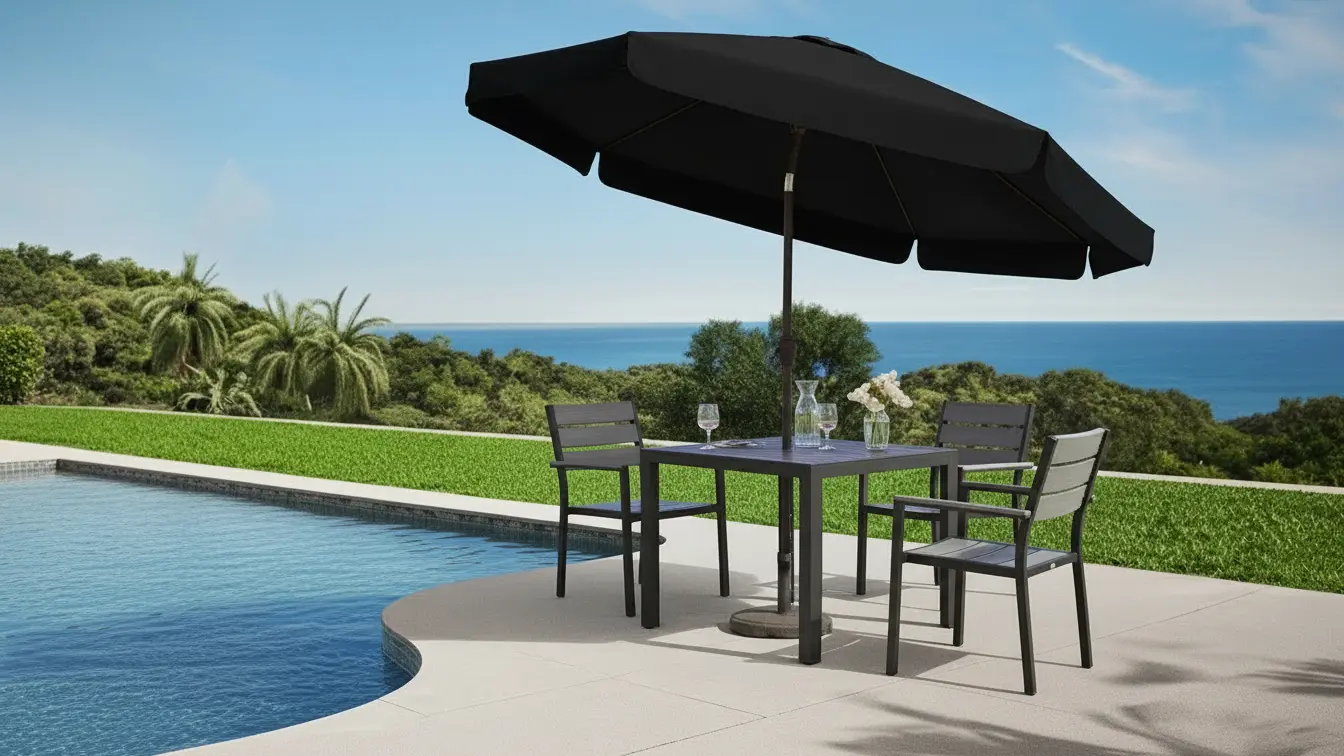
Balancing Heat Retention and Breathability
While dark materials excel at absorbing solar heat, they often restrict airflow and trap moisture, impacting comfort in hot weather. This trade-off drives ongoing innovation in breathable dark fabrics.
- ⚠️ Dark textiles typically reduce breathability and hold more humidity than lighter options.
- ✅ Light-colored composites with moisture‑wicking layers can reduce skin temperature by 2–3.8 °C and offer up to 5 × the breathability of cotton.
- 💡 New hybrid constructions combine heat retention coatings with micro‑ventilation layers to balance warmth, airflow, and UV protection.
Patiofurnituresco incorporates this research into its design of black patio umbrellas, producing shade solutions that look refined yet remain comfortable even under strong sunlight.
Tips for Maintaining Your Black Patio Umbrella
Black patio umbrellas require regular cleaning, proper drying, and protective storage to prevent mold, mildew, and UV fading. Monthly light cleaning combined with seasonal deep cleaning and mechanical maintenance helps maintain both the look and durability of black fabric umbrellas.
Black patio umbrellas bring a modern, sleek touch to outdoor spaces but need consistent care to keep that crisp appearance. Small maintenance habits done regularly protect the fabric color, prevent mildew, and ensure the frame and mechanisms perform smoothly throughout the season.
Routine Maintenance Tasks
Routine upkeep prolongs both the structure and aesthetic of your umbrella. Create a cleaning and inspection schedule based on use frequency and local climate conditions.
- 💡 Monthly cleaning with a soft-bristle brush and mild soap to remove surface dirt and slow fabric degradation.
- 💡 Quarterly or as-needed deep cleaning by soaking the canopy in a mild soap solution to sustain water repellency.
- ⚠️ Always air dry the umbrella completely in an open position after washing to avoid moisture buildup and mildew.
- ✅ Lubricate moving parts once per season with dry silicone spray for smooth operation and reduced wear.
- ✅ Conduct a pre-season inspection of ribs, struts, fabric seams, and fasteners, tightening anything loose.
Special Considerations for Black Umbrellas
Dark fabrics demand a bit more attention because they highlight dust and residue more readily. In our experience, frequent light cleaning improves visual appeal and reduces long-term discoloration.
- ⚠️ Black fabric shows dirt, pollen, and stains easily, requiring frequent surface cleaning to stay sharp-looking.
- 💡 UV fading occurs faster on dark dyes, so use UV-resistant fabric or cover the umbrella when not in use.
- ✅ Because black materials absorb heat, always leave the canopy open until dry, especially in humid areas, to discourage mildew growth.
- ❌ Avoid power washers or harsh cleaning products that weaken the protective coatings and stitching.
Managing Mold and Mildew
Mold and mildew thrive in moisture-retaining fabrics. With prompt drying and periodic protective treatments, you can avoid most growth issues before they start.
- 💡 After rainfall, open the umbrella fully to air out; apply fabric protector sprays to reduce moisture absorption.
- ✅ Store the umbrella in a cool, dry, well-ventilated place under a protective cover during off-seasons to prevent fungus.
- ⚠️ If mold appears, clean gently with a diluted bleach solution and a soft brush, rinse thoroughly, and dry completely.
- 💡 Repeat treatment if needed to eliminate stains while preserving fabric integrity.
Best Practices for Storage
Proper storage keeps your black patio umbrella looking new for years. Always check the environment’s humidity and exposure conditions before putting it away.
- ✅ Choose a dry, shaded, and cool location away from direct sunlight or extreme weather.
- 💡 Use a high-quality protective cover to block UV rays, rain, and debris.
- ⚠️ Never store a damp umbrella—ensure full air drying before folding to prevent trapped moisture.
- ⚠️ Regularly examine umbrella stands for pooled water, particularly when using wooden poles, to avoid rot or warping.
Common Maintenance Mistakes to Avoid
Small errors in care often lead to premature wear, fading, or broken parts. Avoiding common missteps will stretch both performance and lifespan.
- ❌ Avoid power washing, which causes coating and seam damage.
- ⚠️ Never fold the umbrella when it’s still damp; this traps moisture and encourages mildew.
- ❌ Skip harsh or undiluted chemical cleaners; only use diluted bleach when treating active mold.
- 💡 Keep the mechanical joints lubricated—neglecting them results in stiffness and possible breakage.
- ⚠️ Don’t force mechanisms open or closed; check for obstructions before operation to prevent snapping parts.
Stylish Alternatives to Black Patio Umbrellas
Black patio umbrellas remain popular for their versatility and stain resistance, but buyers can choose from appealing alternatives like beige, white, navy, burgundy, and bronze finishes. These options offer varying heat reflection, maintenance demands, and stylistic appeal while matching the durability of black umbrellas with modern materials.
Black patio umbrellas have become a design staple for contemporary patios, cafés, and poolside lounges. Yet, a growing number of buyers are moving toward new colorways and finishes that complement their brand identity or architectural themes. Below are the key color, design, and functional options that serve as strong alternatives while maintaining commercial-grade durability and quality.
Popular Color Alternatives and Their Practical Features
| Color Option | Highlights | Price Range |
|---|---|---|
| Beige / Tan | ✅ Neutral tone and heat-reflective ⚠️ Shows visible dirt; needs more frequent cleaning | $59–$130 |
| White | ✅ Bright, modern look with strong heat reflection ⚠️ Visible stains require regular maintenance | $60–$137 |
| Navy Blue | ✅ Professional and stylish aesthetic ⚠️ Absorbs more heat than lighter shades | $69–$130 |
| Burgundy | ✅ Rich, sophisticated tone with premium appeal ⚠️ Limited availability across models | $70–$90 |
| Antique Bronze | ✅ Warm metallic finish for upscale spaces ⚠️ Positioned in a higher cost bracket | $200–$359 |
Beyond Color: Functional Designs and Features
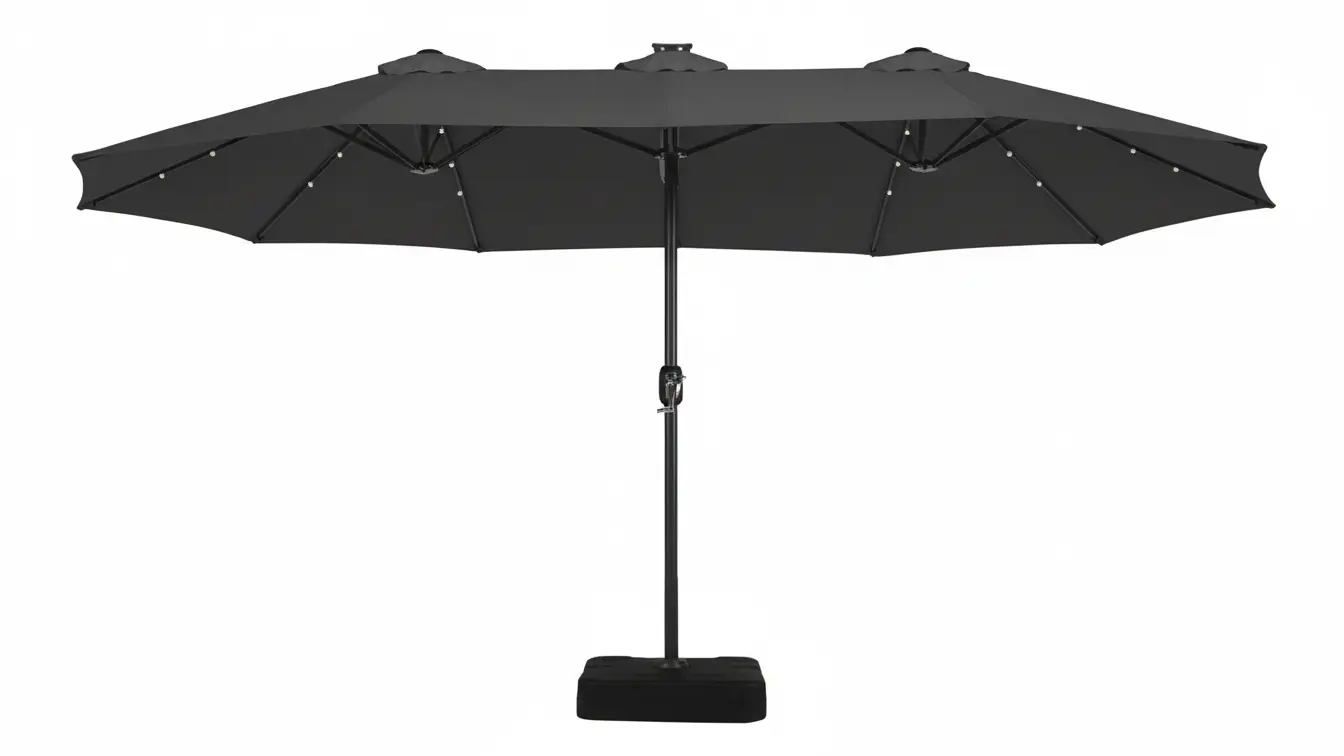
- 💡 Offset / Cantilever umbrellas deliver flexible shading angles, ideal for lounge or dining layouts. 🚀 They require sturdy bases to remain stable and are typically priced between $80 and $228.
- 💡 LED-equipped models allow evening use without extra lighting; available in finishes like black, bronze, and navy for cohesive styling.
- ✅ Rectangular canopies improve space efficiency for linear table setups or balcony installations where a circular shape wastes coverage.
Fabric Technology and Durability Across Colors
Durability is no longer tied to color choice. In our experience, industry-grade materials such as Sunbrella and other solution-dyed fabrics offer unmatched UV and fade resistance, maintaining vibrant tones even under heavy sun exposure.
Premium textiles like Agora acrylic or Suncrylic C paired with rust-proof aluminum frames ensure the longevity demanded by commercial sites. These combinations meet certifications like UL4041 and EN581 for safety and endurance.
Color mainly affects visual character and upkeep frequency rather than strength or lifespan—making beige or navy umbrellas perform equally to their black counterparts in structural quality.
Design Trends and Maintenance Trade-Offs
- ✅ Neutral tones create bright, airy outdoor settings while promoting cooler shaded zones through heat reflection.
- ✅ Darker finishes, including black and bronze, conceal dirt and stains effectively, lowering cleaning frequency.
- 💡 New jewel tones such as navy and burgundy provide refined alternatives for designers aiming for depth without heaviness.
- ⚠️ Lighter shades demand more upkeep since dust and stains show faster, a factor to consider for high-traffic hospitality venues.
Price Ranges and Market Positioning of Alternatives
Across standard finishes like beige, tan, white, navy, and burgundy, pricing generally falls between $59 and $130, giving buyers plenty of budget flexibility.
Premium options with metallic textures such as antique bronze or built-in LED features target upscale resort or commercial spaces, often ranging from $200 to $359.
Color choice itself rarely shifts the base cost structurally, but cleaning and fabric maintenance may impact long-term operational expenses for facility managers.
Frequently Asked Questions about Black Patio Umbrellas
Do black patio umbrellas get hot underneath?
Black patio umbrellas absorb more sunlight than lighter fabrics, so the material itself does warm up faster under direct sun. But the effect underneath the canopy is not as extreme as many assume, because the air below is constantly moving.
In our experience, when paired with breathable fabric such as solution-dyed acrylic or polyester with UV-resistant coating, the temperature difference beneath a black canopy versus a beige one is typically less than 3–5°C. Airflow and umbrella height play a bigger role in user comfort than color alone.
Does black fabric fade faster?
Darker fabrics, including black, do tend to show fading sooner than lighter tones if they are not UV-stabilized. However, when you use high-quality, solution-dyed yarns, the pigments are fully integrated into the fiber instead of sitting on the surface.
Patiofurnituresco’s commercial-grade canopies are engineered with UV inhibitors and colorfast treatments tested to retain color for over 500 sunlight hours. Regular rinsing and covering the umbrella when not in use can extend longevity even further. 💡
Is a black umbrella good for UV protection?
Yes, a black patio umbrella offers excellent UV protection because darker shades absorb more UV rays rather than allowing them to pass through. This helps reduce skin exposure when seated below.
All Patiofurnituresco canopies use fabrics rated UPF50+, blocking up to 98% of harmful UV radiation. The combination of a dark canopy and certified UV-resistant textile gives maximum shade performance for commercial and residential applications. ✅
What is the best color for a patio umbrella?
The “best” color depends on the environment and function. Black and charcoal bring a modern, architectural feel and provide high UV protection, while lighter colors reflect heat better and complement tropical or coastal settings.
For commercial venues, we recommend darker tones for high-traffic zones where dirt and stains are more noticeable. Hotels often choose neutral solids like taupe or gray for design flexibility. Patiofurnituresco can produce custom shades with full OEM color matching to align with brand identity. 🎨
How to clean bird poop off a black umbrella?
Remove any residue as soon as possible to prevent staining. Start by gently rinsing the area with water to soften the droppings without rubbing them in. Then apply a mild soap solution (one teaspoon per 1L of warm water) using a soft brush or sponge.
Rinse thoroughly and let the umbrella air dry in the shade. Avoid using bleach or harsh chemicals on solution-dyed fabrics, as they can degrade the UV coating. For commercial use, periodic deep cleaning every 2–3 months helps maintain the canopy’s appearance and service life. ✅
Final Thoughts
A black patio umbrella delivers a distinctive, modern aesthetic but demands performance-grade materials to manage heat and preserve color integrity. The choice of solution-dyed acrylic or polyester, along with UV-resistant coatings and proper ventilation, turns what might be a heat trap into a functional design asset. Pairing premium fabrics with consistent care ensures that the sharp look lasts across seasons without compromising user comfort.
For buyers and specifiers balancing style and practicality, success comes from aligning fabric technology with climate and usage needs. Investing in certified UV-stable materials upfront reduces maintenance costs and enhances the guest experience—a measurable advantage for designers, retailers, and developers focused on long-term value in commercial outdoor environments.


 English
  Spanish
  French
  German
  Portuguese