


For B2B facility managers and hospitality procurement leads, a weathered canopy is more than an aesthetic issue; it is a direct drain on CAPEX and brand reputation. Transitioning to a high-ROI maintenance strategy through fabric replacement costs as little as $40 to $300, offering a fraction of the expense required for a full contract-grade frame overhaul while significantly extending the service life of your outdoor assets.
This comprehensive guide details the technical protocols for professional care & maintenance, covering everything from ASCE 7 wind load compliance and pH-neutral cleaning chemistry to advanced mold remediation standards. We analyze why maintaining a 10-15% buffer of spare covers can reduce hospitality guest complaints by 40%, providing you with the engineering specifications and inventory strategies necessary to maximize total cost of ownership.
The Economics of Replacement Canopies
Replacing a canopy fabric is a high-ROI maintenance strategy costing $40–$300, significantly lower than full frame replacement. By adhering to ASCE 7 wind load standards and ASTM-certified material specs, B2B buyers can extend structural lifespans and minimize CAPEX through engineered resilience and 5-year performance warranties.
Cost-Benefit Analysis: Replacement vs. Frame Overhaul
The financial incentive for fabric replacement is substantial, with costs typically ranging from $40 to $300 depending on material grade and dimensions. This represents a fraction of the capital expenditure required for a complete contract-grade gazebo overhaul. For commercial outdoor spaces, direct-from-factory sourcing from Taizhou-based manufacturers like Patiofurnituresco further optimizes these margins by eliminating trading company markups, allowing for high-volume procurement at significantly lower price points.
Economic efficiency is also tied directly to precise fitment. Standard gazebo frame-to-canopy sizing requires specific oversizing ratios to maintain the necessary roof pitch and tension: an 8′ x 8′ frame requires a 9′ x 9′ canopy, a 10′ x 10′ frame necessitates a 12′ x 10′ canopy, and a 12′ x 12′ frame should be paired with a 14′ x 12′ canopy. Adhering to these engineering ratios prevents wind flapping and fabric sagging—the two leading causes of mechanical wear—thereby extending the replacement cycle and maximizing the return on investment.

Engineering Resilience and Long-Term ROI Standards
To ensure long-term structural viability, replacement systems must comply with ASCE 7 and ASTM E2950 standards for wind, snow, and seismic loads. These pre-engineered specifications ensure that the replacement fabric or glass can handle environmental stress without permanent deflection. For glass-integrated systems, utilizing ASTM E1300 standards prevents seal failure and breakage, ensuring the unit remains watertight and structurally sound throughout its service life.
Material integrity is further reinforced by the use of ASTM-certified structural components. High-performance replacements often utilize ASTM A572 Grade 50 for structural beams and anchor bolts, combined with ASTM A653 galvanized steel sheets for enhanced corrosion resistance in high-moisture or coastal environments. By specifying these industrial-grade materials, facility managers can mitigate the risk of premature structural failure and reduce the frequency of maintenance interventions.
The economic protection of these assets is codified through tiered warranty structures. Commercial-grade replacements generally include a 5-year glass warranty against delamination or blemishes and a 5-year installer warranty for watertight performance and structural defects. These performance guarantees shift the risk of failure away from the buyer, providing a predictable maintenance schedule and a lower total cost of ownership compared to non-certified, commodity-grade alternatives.
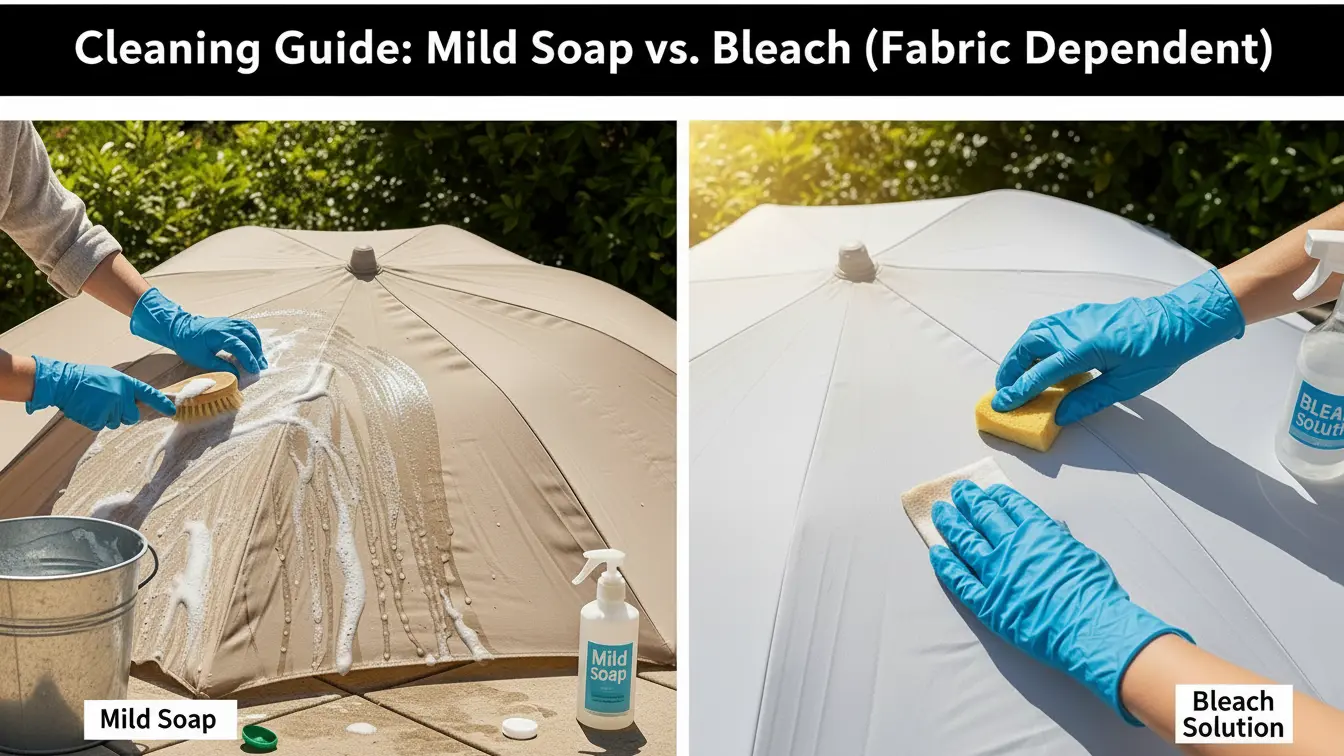
Cleaning Guide: Mild Soap vs. Bleach (Fabric Dependent)
Standard maintenance requires a pH-neutral (6-8) mild soap solution, typically 1/4 cup per gallon of lukewarm water. Bleach is reserved strictly for bleach-cleanable performance fabrics, using a 1:10 dilution (1 cup bleach per gallon) for disinfection. Always verify ‘W’ cleaning codes and rinse thoroughly to prevent chemical residue.
| Cleaning Agent | Standard Dilution | Technical Application |
|---|---|---|
| Mild Soap (pH 6-8) | 1/4 cup per gallon water | General maintenance; Code ‘W’ compliant; Max 40°C. |
| Bleach Disinfection | 1:10 ratio (5 tbsp per gallon) | Infection control; 15-min contact limit; Mandated rinse. |
| Bleach (Stain Release) | 1:5 ratio (AATCC 130) | Aggressive soil removal on bleach-resistant fibers. |
Universal Care: pH-Neutral Mild Soap Protocols
Standard maintenance for commercial and performance textiles relies on low-concentration, pH-neutral soap solutions to preserve fiber integrity. The technical benchmark for bulk cleaning is a dilution of 1/4 cup mild soap per gallon of lukewarm water, while spot treatments utilize 1/4 tsp enzyme detergent per cup of water. This approach maintains a chemistry range of pH 6-8, which is critical for preventing the degradation of protective coatings and avoiding the premature weakening of synthetic and natural fibers alike.
Thermal management is equally vital to prevent dimensional changes or fabric shrinkage. According to AATCC standards, maximum wash and rinse temperatures must not exceed 40°C (104°F). This protocol is specifically required for textiles bearing the Cleaning Code ‘W,’ which indicates the material is safe for water-based shampoos but strictly prohibits the use of harsh chemical solvents or reactive agents that could strip fiber finishes.
Disinfection Standards: Bleach Ratios and Safety Limits
For environments requiring clinical-grade infection control, bleach application is permissible only on textiles explicitly rated as bleach-cleanable or bleach-resistant. A standard disinfection protocol involves a 1:10 dilution—approximately 5 tablespoons of bleach per gallon of water—aligned with CDC requirements. In cases of extreme soil intensity, a 1:5 bleach-to-water ratio is validated by AATCC 130 testing for aggressive soil release, though this should only be applied to highly resistant synthetic performance fibers.
Strict operational limits are necessary to maintain the physical properties of the textile. Bleach soak times must be limited to a maximum of 15 minutes, followed immediately by a thorough clean water rinse to neutralize sodium hypochlorite residues. Residual bleach left on the fiber can lead to irreversible yellowing and a loss of tensile strength over time. It is imperative to prioritize blotting over rubbing and to air dry the material to minimize mechanical stress during the disinfection cycle.
Removing Mold and Mildew: Step-by-Step
Mold remediation on outdoor canopies is categorized into levels based on contamination size: Level I (<10 ft²) requires simple detergent cleaning, while Level II (10-100 ft²) and above require 6 mil polyethylene containment and HEPA vacuuming. Professionals follow ANSI/IICRC S520 standards, prioritizing physical removal and ensuring the fabric dries within 48 hours.
Assessing Contamination Levels and Containment Protocols
Effective mold remediation begins with a technical assessment of the fungal growth area to determine the required containment protocols. Adhering to military guidelines and UFGS 02 85 00 standards, contamination is classified by square footage: Level I covers areas under 10 square feet, Level II spans 10 to 100 square feet, and Level III involves large-scale growth exceeding 100 square feet. For Level II and above, technicians must implement containment using 6 mil fire-retardant polyethylene sheeting, which acts as a critical barrier to prevent the migration of allergenic spore fragments into hospitality or residential spaces.
Safety during this process is governed by ANSI/IICRC S520 (Professional Mold Remediation), which mandates specific Personal Protective Equipment (PPE) and engineering controls. While smaller Level I areas can often be managed with standard cleaning and HEPA vacuuming, larger contaminations require sealed boundaries secured with duct tape and, in some cases, negative pressure via HEPA exhaust. This rigorous isolation ensures that cleaning activities do not inadvertently aerosolize spores, protecting the health of occupants in adjacent areas.
Physical Removal Techniques and Moisture Control
The core of technical remediation is the physical removal of mold rather than simple disinfection. Industry standards emphasize the use of HEPA (High-Efficiency Particulate Air) vacuums to capture dry spores before any damp cleaning occurs. For outdoor canopy fabrics, which are often semi-porous, EPA-registered fungicides are utilized instead of standard bleach. Bleach is frequently ineffective on these materials as it may not penetrate the root systems (hyphae), leaving the fabric vulnerable to rapid regrowth once environmental conditions become favorable again.
Moisture control serves as the final and most vital phase of the remediation process. All cleaned materials must be completely dried using industrial-grade dehumidifiers or high-velocity air blowers within a strict window of less than 48 hours. This timeframe is essential to prevent any remaining dormant spores from regenerating. Highly porous materials that exhibit deep fungal penetration must be discarded according to biohazard disposal protocols, while non-porous or semi-porous surfaces undergo damp-wiping and professional air-washing to ensure a mold-free environment.
Scale Your Business with Factory-Direct Commercial Umbrellas

Bird Droppings & Tree Sap: Emergency Cleaning
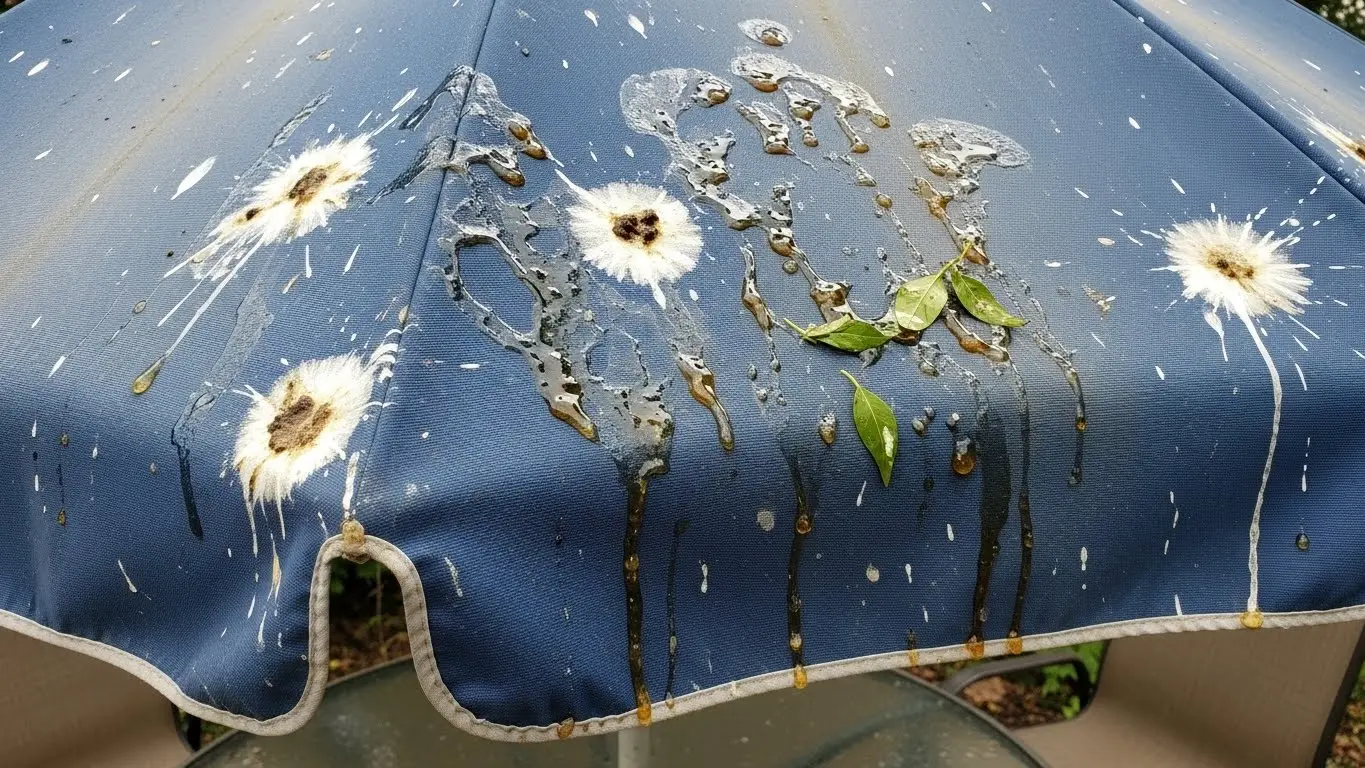
Bird droppings and tree sap are highly reactive; droppings maintain an acidic pH of 3.0–4.5 that can etch surfaces within minutes under sun exposure. Safe removal requires a 10–15 minute pre-soak with warm water to soften residues, followed by a ‘rolling lift’ technique to prevent the micro-abrasions caused by aggressive scrubbing.
The Chemical Risk: Acid Etching and Oxidative Bonding
The biological composition of bird droppings presents a significant threat to the structural integrity of outdoor finishes. With a concentrated uric acid level resulting in a pH of 3.0–4.5, these contaminants initiate rapid chemical etching when activated by solar UV radiation. This reaction is particularly aggressive on high-end clear coats and synthetic fabric finishes, where heat accelerates the breakdown of protective polymers and facilitates permanent surface staining if the contaminant is not immediately diluted.
Tree sap presents a mechanical hazard through oxidative bonding. As it dehydrates, it hardens into a sticky residue that forms “high spots” on the material surface. These elevated spots act as powerful adhesives for abrasive environmental particles such as grit, dust, or wind-blown seeds. Attempting to wipe these hardened deposits without prior chemical softening leads to micro-marring and surface scratches that penetrate the protective layers, as the trapped abrasive particles are dragged across the substrate during mechanical agitation.
Emergency SOP: Pre-Softening Protocols and Surface Barriers
Effective remediation begins with a mandatory 10–15 minute pre-softening protocol. By applying a warm, damp microfiber towel or a dedicated detailing spray to the affected area, the bonded contaminants are rehydrated and released from the substrate without the need for aggressive force. For stubborn, hardened tree sap, isopropyl alcohol should be utilized as a solvent to break down the resin, followed by a “rolling lift” motion—delicately peeling the residue away from the surface rather than scrubbing it into the material grain, which prevents marring.
To mitigate future damage, a proactive barrier strategy is recommended for all contract-grade outdoor surfaces. Utilizing ceramic coatings provides a hydrophobic shield with a durability of 2–5 years, significantly resisting the chemical adhesion of both sap and droppings. Alternatively, high-quality paint sealants offer a 3–6 month protection window. Establishing a maintenance schedule that includes at least two full professional details per year, supplemented by immediate spot maintenance using the pre-softening SOP, ensures that biological contaminants do not reach the threshold of permanent mechanical damage.
Re-treating Water Repellency (303 Fabric Guard)
303 Fabric Guard is a manufacturer-recommended fluoropolymer-based coating that restores water and stain repellency to outdoor fabrics like Sunbrella®. It creates a breathable, invisible barrier that forces water to bead and roll off without altering the material’s color, texture, or flammability.
Restoring Factory Performance: The Role of Fluoropolymer Coatings
303 Fabric Guard is specifically engineered to restore the factory-level repellency of contract-grade materials after deep cleaning or extended UV exposure. As the primary treatment recommended by Sunbrella® and other leading fabric manufacturers, this fluoropolymer-based formula bonds directly to individual fibers. Unlike silicone-based alternatives that can trap moisture or create a “plastic” feel, this formula maintains the material’s natural breathability and original hand-feel, ensuring technical performance is revived without compromising user comfort.
The treatment is compatible with a wide range of high-performance textiles, including solution-dyed acrylics, polyesters, nylons, and heavy-duty cotton duck canvas; however, it should not be used on vinyl, rubber, or plastic-based materials. In hospitality and commercial environments, the application of this coating serves as a critical preventative measure. It effectively stops moisture “wicking” at the seams and significantly reduces the substrate’s susceptibility to oil-based stains and subsequent mildew growth by creating a high-tension hydrophobic barrier.
Technical Application Specs: Coverage, Temperature, and Cure Requirements
For facility managers and maintenance teams, application efficiency is driven by specific environmental metrics. Standard coverage typically ranges from 40 to 75 square feet of protection per 16 oz (473 ml) bottle, though this varies based on material density and the application method used. To ensure maximum bonding efficiency, the fabric must be treated in a well-ventilated area when ambient temperatures are consistently above 70°F (21°C). Lower temperatures can impede the chemical bonding process, leading to suboptimal hydrophobic performance.
The curing process requires a dedicated 12 to 24-hour drying period, during which the treated fabric must remain entirely protected from rain, dew, or incidental moisture. Once the cure time is complete, performance can be verified through a standard “bead test.” By pouring water onto the fabric, technicians can determine the integrity of the coating; if water fails to bead and roll off, or begins to saturate the fibers, a re-treatment is required. For commercial-scale operations, 303 Fabric Guard is available in multiple formats, including 16 oz sprayers (SKU 481100), 32 oz bottles, and 1-gallon jugs (Product Code 30607) for high-volume maintenance cycles.
Winter Storage: Dry Bags Prevent Mold
Preventing mold during winter storage requires maintaining humidity levels below 50% and ensuring items are dried within 24–48 hours before sealing. Utilizing multi-layered polyethylene dry bags with silica gel desiccants creates a hermetic seal that blocks moisture ingress and prevents the fungal growth associated with fluctuating storage temperatures.
Inhibiting Fungal Growth Through Vapor Barriers
To effectively inhibit fungal growth during seasonal storage, it is critical to manage the environmental thresholds that allow mold spores to transition from dormancy to active growth. Mold spores generally remain inactive when the relative humidity (RH) is strictly maintained below 50%, or more precisely, when the Equilibrium Relative Humidity (ERH) or water activity (aw) is kept between 0.55 and 0.60. Achieving these levels begins with a rigorous pre-storage protocol: all outdoor fabrics and gear must be thoroughly cleaned and dried within a 24 to 48-hour window before being placed in a secondary container. Trapping ambient moisture within a sealed bag is a leading cause of localized mildew outbreaks, even in otherwise dry storage units.
The implementation of a high-quality vapor barrier is the primary engineering control against external moisture ingress. Polyethylene plastic vapor barriers are technically superior for winterizing gear because they physically block the migration of ground moisture and atmospheric humidity. In unconditioned environments such as garages or sheds, humidity spikes can lead to condensation on the surface of storage containers. Heavy-duty polyethylene acts as a non-permeable shield, ensuring that the internal microclimate remains stable despite external temperature fluctuations that would otherwise drive moisture through more porous materials.

Technical Storage Protocols: Hermetic Sealing and Environmental Control
Material selection for storage bags significantly impacts the longevity of the contents. Industrial standards suggest that multi-layered polyethylene bags provide a superior hermetic seal compared to breathable woven polypropylene. While woven polypropylene is often used for bulk transport, its porous nature allows for vapor exchange, which can lead to “container rain” or internal condensation when warm items are placed in cool storage. For high-value outdoor investments, a multi-layered construction ensures a waterproof and vapor-proof environment. To manage any residual internal air moisture, the inclusion of silica gel desiccant packets is required. These desiccants should be monitored and replaced if they reach saturation, or users may utilize DIY cloth bags filled with bulk silica pellets for higher-volume storage applications.
Beyond the bag itself, the physical arrangement of the storage area is vital for moisture mitigation. Inventory should be elevated off concrete floors using raised wooden pallets combined with plastic sheeting. Concrete is naturally porous and prone to capillary wicking, which can transfer moisture directly into the base of storage bags over several months. Elevating the load promotes airflow and prevents direct contact with damp surfaces. Finally, maintaining the storage environment between 60–68°F minimizes the risk of condensation and keeps the internal water activity at the recommended 0.55–0.60 range, providing a scientifically validated barrier against fungal proliferation throughout the winter season.
Pattern Retention: We Keep Your Template on File
Pattern retention is our commitment to archiving your project’s specific design templates and CAD files. For B2B clients, this ensures that any replacement canopy—whether ordered six months or six years later—matches the original frame specifications and brand aesthetics perfectly, eliminating the need for costly on-site measurements or trial-and-error fitting.
Digital Archiving for Long-Term Design Consistency
Maintaining digital and physical archives of project-specific templates is essential for brand uniformity across large-scale deployments. By utilizing original CAD files and physical pattern templates stored at our Taizhou factory, we eliminate the risk of measurement errors inherent in manual site surveys. This precision ensures an exact fit for complex umbrella geometries, including high-tension cantilever systems and custom-branded shade structures that require millimetric accuracy for optimal performance.
Furthermore, this master “blueprint” system facilitates seamless multi-site rollouts for hospitality chains and corporate franchises. By having immediate access to historical design data, we significantly reduce supply chain risks. B2B clients can initiate rapid reproduction of fabric components without the logistical burden and downtime associated with shipping old, weathered covers back to the facility for prototyping, ensuring that the brand’s visual identity remains consistent regardless of the replacement timeline.
Technical Compliance and Life-Cycle Maintenance
Our pattern retention protocols are designed to support rigorous technical standards, including ASTM F1449-20 for the industrial care and maintenance of flame-resistant (FR) and technical fabrics. By preserving the original engineering data, we provide a definitive baseline for mandatory 6-month inspection intervals. This allows facility managers to accurately identify fabric thinning, stretching, or structural wear by comparing the current state of the material against its original design specifications, supporting proactive risk management.
Retained data ensures that every replacement fabric component matches the original technical performance criteria, including UV-resistance ratings, water repellency, and specialized safety certifications such as UL4041 or EN581. This controlled manufacturing process preserves the dimensional stability of the canopy, preventing the fiber compression or excessive stretching often found in third-party aftermarket replacements. Ultimately, manufacturer involvement through archived data extends the service life of outdoor assets while maintaining the physics-based properties required for commercial safety and regulatory compliance.
Spare Canopy Inventory Strategy for Hotels
A successful canopy inventory strategy utilizes ABC analysis to prioritize high-value fabrics and establishes PAR levels based on maintenance history. By maintaining a 10-15% buffer of spare covers and using centralized tracking, hotels can reduce out-of-order complaints by up to 40% and avoid significant revenue losses.
| Inventory Control Method | Implementation Focus | Strategic Benefit |
|---|---|---|
| ABC Analysis | High-value “A-items” (custom canopies) vs “C-items” (hardware) | 40% reduction in waste via prioritized controls |
| Centralized Tracking | Real-time housekeeping and maintenance integration | 30-40% decrease in room readiness complaints |
| PAR Levels & FIFO | Min/Max stock thresholds based on seasonal occupancy | Prevents fabric degradation and revenue-draining stockouts |
Establishing PAR Levels and ABC Prioritization
Implementing a rigorous ABC analysis allows hospitality managers to categorize canopy inventory effectively. “A-items” typically encompass high-value custom-branded canopies which require tight controls and frequent auditing, while “C-items” cover low-cost hardware such as ties, pins, or minor brackets that require simplified tracking. By differentiating assets this way, properties ensure that capital is not tied up in low-priority items while critical high-value stock remains available for guest-facing areas.
Defining reorder points is essential; these thresholds should be set at or below minimum stock levels while factoring in manufacturer lead times and peak seasonal occupancy rates. By adopting a FIFO (First-In, First-Out) rotation strategy for stored fabrics, hotels can prevent material degradation and ensure the newest stock is reserved for emergency replacements. Furthermore, maintaining detailed usage logs linked to housekeeping SOPs helps track the lifespan of different fabric types, providing the necessary data to justify budget allocations for annual replacements.
Operational KPIs and Centralized Tracking Systems
Utilizing centralized tracking systems is a critical technical requirement for optimizing inventory performance. These systems integrate maintenance and housekeeping data to reduce “area out of order” complaints by 30-40%, effectively mitigating potential revenue losses that can reach $20,000 per month for a 100-room property. Core KPIs to monitor include the inventory turnover rate, shrinkage percentage, and the variance between forecast and actual usage to refine purchasing cycles.
To further drive efficiency, properties should implement Vendor-Managed Inventory (VMI) or Just-In-Time (JIT) programs. These frameworks target a 40% reduction in waste and minimize the carrying costs associated with bulky canopy frames and seasonal fabrics. Annual usage trend summaries and baseline assessments of inventory accuracy are vital for identifying critical spares from maintenance history, ultimately preventing high-frequency stockouts and ensuring seamless guest experiences.
Final Thoughts
Integrating systematic maintenance with a precision-engineered replacement strategy is the cornerstone of protecting high-value outdoor infrastructure. By prioritizing direct-from-manufacturer sourcing and adhering to ASTM-certified cleaning and fitment standards, facility managers can significantly extend the operational life of their canopies while minimizing capital expenditure. Transitioning from reactive repairs to a data-driven approach—including pattern retention and automated inventory replenishment—ensures that every fabric component maintains its structural integrity and aesthetic consistency throughout its service life.
Ultimately, the synergy between advanced chemical treatments, such as fluoropolymer-based repellents, and rigorous storage protocols provides a scientific defense against environmental degradation. For B2B stakeholders in the hospitality industry, implementing these protocols is an investment in operational resilience that directly impacts guest satisfaction and bottom-line profitability. By viewing canopy care through the lens of engineering standards and asset lifecycle management, organizations can eliminate the hidden costs of premature failure and maintain a premium outdoor environment year-round.
Frequently Asked Questions
Can you wash patio umbrella covers in the washing machine?
Yes, removable covers made of machine-washable fabrics like Sunbrella can be cleaned in a washing machine using cold water (under 100°F/38°C) and mild detergent. For heavy cleaning, you can add 8 ounces (1 cup) of bleach per load; however, you must always air dry the fabric to prevent damage.
What is the best way to remove mold and mildew from umbrella fabric?
To eliminate mold, prepare a solution of 1 cup bleach and 1/4 cup dishwashing liquid per gallon of warm water. Apply it to the fabric and allow it to soak for 15 minutes. Scrub the area with a soft bristle brush or sponge, rinse thoroughly, and air dry completely.
Is it possible to purchase just the replacement fabric for an existing frame?
Yes, replacement canopies can be purchased independently of the frame. Manufacturers offer these for various configurations, such as 7×7 square or 9 ft octagonal models. For instance, a contract-grade replacement canopy in Sunbrella fabric typically costs approximately $151.00.
How often should I re-apply water repellent treatments?
There is no industry-standard frequency, but applying a nano-ceramic treatment like QproTECH Hydro Block creates a 2-3 micron thick dry film that provides long-term hydrophobic protection. This treatment requires an ambient cure time of 12+ hours for maximum durability.



 English
  Spanish
  French
  German
  Portuguese