


Selecting furniture for high-traffic commercial environments requires a balance between weight and long-term structural integrity. While recycled aluminum scrap saves on initial costs, the resulting material often harbors impurities that undermine the 260 MPa tensile strength expected in professional-grade frames. Using primary ingots with over 99% purity ensures that structural tubes remain consistent and free from the microscopic flaws that cause unpredictable failures.
This analysis explores the technical differences between T5 and T6 tempering and how multi-stage thermal cycles achieve superior yield strength. We examine the importance of extrusion geometry for maintaining dimensional tolerances and compare the lifecycle performance of aluminum against steel and wood. Understanding these metallurgical standards helps project managers specify materials that withstand decades of use without the risk of corrosion or fatigue.
Prime Ingot vs. Recycled Scrap: The Hidden Risk
Primary aluminum ingots offer over 99% purity and uniform mechanical properties, ensuring consistent strength. Recycled scrap, or secondary aluminum, often contains mixed-alloy contaminants and residues that can cause structural variability and weaken the 260 MPa tensile strength expected in commercial-grade 6061-T6 frames.
Material Purity and Processing Differences
Refineries produce primary ingots from bauxite ore through the Hall-Héroult process. This energy-intensive extraction achieves a purity level exceeding 99% aluminum, creating a clean slate for precise alloying. This high purity level supports the demanding mechanical requirements of structural components used in high-stress environments.
Secondary aluminum production involves melting post-consumer or post-industrial scrap at temperatures between 1300 and 1400°F. The melting of diverse scrap sources introduces potential contaminants like dross, paint residues, and non-aluminum inclusions. These impurities often persist through the casting process, affecting the final metal quality.
Sorting methods for recycled materials, such as laser spectroscopy, vary in their ability to isolate specific alloys. Trace elements often remain in the melt, which subtly alters the base alloy’s chemical composition. These deviations make it difficult to replicate the exact performance characteristics of bauxite-derived primary metal.
Structural Integrity and Performance Reliability
Contaminants within recycled scrap create microscopic inclusions in the finished metal. These tiny flaws act as stress concentrators, leading to inconsistent strength across a single structural tube. In load-bearing furniture applications, these inclusions result in unpredictable failure points that compromise safety.
Verified 6061-T6 prime alloys maintain the mechanical precision necessary for hospitality environments where furniture faces constant use. Scrap-based versions frequently fail to meet rigid PSI ratings or verifiable temper standards. Choosing primary aluminum ensures the frames withstand high-stress cycles without premature fatigue.
ISO 14021 classifications help differentiate between pre-consumer and post-consumer recycled content, but these labels focus on environmental accounting rather than structural performance. These standards do not guarantee the same verifiable integrity found in primary metals, leaving a performance gap in critical structural applications.
Understanding “Temper”: T5 vs. T6 Hardness
Temper refers to the hardness and strength achieved through heat treatment. T5 aluminum undergoes basic air cooling and aging, while T6 involves a rigorous solution heat treatment and water quenching process. T6 provides roughly 25% higher tensile strength, making it essential for heavy-duty outdoor furniture frames.
| Performance Metric | 6063-T5 Temper | 6063-T6 Temper |
|---|---|---|
| Tensile Strength | 175-260 MPa | 215-310 MPa |
| Yield Strength | 145-220 MPa | 180-260 MPa |
| Brinell Hardness | 80-85 HB | 95-100 HB |
| Production Time | 1-2 Days | 3-5 Days |
Thermal Aging and the Hardening Process
T5 tempering relies on artificial aging. Aluminum extrusions cool naturally in the air immediately after forming and then sit in an oven at 160-180°C for 8 to 12 hours. This process uses residual heat to create basic precipitation strengthening. Because it avoids complex heating cycles, T5 production usually finishes within 48 hours, providing a cost-effective solution for architectural trim and window frames.
T6 tempering requires a multi-stage thermal cycle to reach peak strength. The metal undergoes solution heat treatment at temperatures between 520-540°C to dissolve alloying elements like magnesium and silicon. Engineers then quench the aluminum in water to cool it instantly, locking the elements into a supersaturated solid solution. This rapid change creates fine, uniform precipitates that reinforce the metal’s internal structure more effectively than air cooling.
Mechanical Strength and Performance Metrics
6063-T6 aluminum achieves a tensile strength of up to 310 MPa. This represents a substantial increase over the 260 MPa maximum seen in T5 alloys. Brinell hardness measurements show T6 at 95-100 HB, which provides superior resistance to dents and surface deformation. T5 frames typically measure 80-85 HB, making them more susceptible to damage in high-traffic commercial environments.
Yield strength peaks at 260 MPa for T6-tempered frames. This capacity ensures that furniture maintains its structural shape under the heavy usage patterns expected in 2026 hospitality projects. T6 also demonstrates superior fatigue strength, reaching 140 MPa. This durability allows main poles and high-stress structural joints to withstand repetitive loads without material failure, making it the preferred standard for professional-grade outdoor installations.
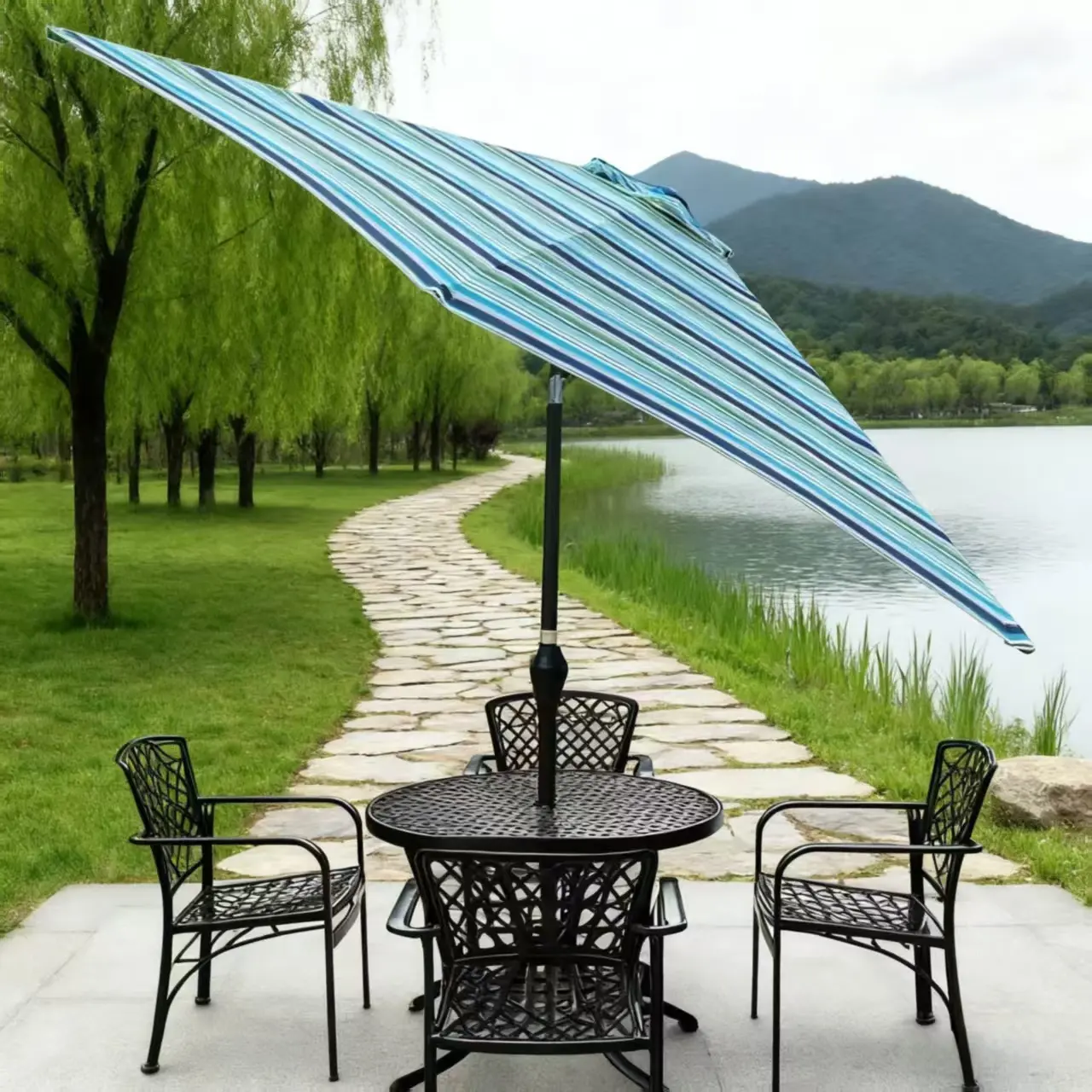
Tensile Strength Specs: 260 MPa Standard
The 260 MPa standard represents the minimum yield strength required for high-traffic structural components. In the 2026 B2B market, this threshold ensures that frames, such as those made from 6082-T6 aluminum or HC260B steel, withstand heavy loads without permanent deformation, maintaining safety margins in hospitality and commercial settings.
| Material Grade | Yield Strength (MPa) | Minimum Elongation |
|---|---|---|
| HC260B Micro-alloyed Steel | 260 (Min) | 20% |
| ASTM A414 Grade C Steel | 260 (Proof) | 18-20% |
| Aluminum 6082-T6 | 250–260 | 8–10% |
| Aluminum 6061-T6 | 240–276 | 4–12% |
Defining the 260 MPa Yield Point for Structural Stability
Yield strength defines the limit where metal begins to deform permanently. Ultimate tensile strength measures the maximum stress a material handles before total failure occurs. Standards like ASTM A414 Grade C and HC260B micro-alloyed steel use 260 MPa as a baseline. This benchmark ensures frames return to their original shape after heavy loading. Safety margins in commercial furniture rely on this 260 MPa threshold. It prevents the sagging or bending seen in lower-grade consumer alternatives. Ductility remains high at this specification, with elongation rates often exceeding 20% for steel and 10% for aluminum. These rates prevent brittle fractures under sudden impact.
Comparative Analysis: Aluminum 6082-T6 vs. Structural Steels
Aluminum 6082-T6 provides a yield strength between 250 and 260 MPa and ultimate tensile strength up to 310 MPa. This combination offers a high strength-to-weight ratio for large structures like gazebos. Carbon steel grades used in heavy-duty seating often target the 260–400 MPa yield range to handle extreme public use without structural fatigue. 6061-T6 aluminum reaches 240–276 MPa yield strength, nearly tripling the durability of pure aluminum at 90 MPa. Compliance testing via ASTM B557 ensures these materials maintain their 260 MPa performance across different wall thicknesses and extrusion profiles.
Premium Commercial Umbrellas: Factory-Direct & Fully Customizable

Corrosion Resistance: Aluminum vs. Steel vs. Wood
Aluminum outperforms steel and wood in outdoor longevity because it forms a self-repairing 5-10 nm alumina layer. While carbon steel corrodes at rates up to 176 µm/yr in contact with treated wood and wood itself is prone to rot, aluminum remains stable across neutral environments without the need for intensive chemical treatments or frequent recoating.
Natural Passivation and the Self-Repairing Oxide Layer
Aluminum reacts with oxygen to form a 5-10 nm thick Al₂O₃ layer. This alumina film functions as a permanent shield against moisture and atmospheric gases. The layer reforms immediately if scratched, even in environments with oxygen levels as low as 1 millibar. This mechanism prevents deep oxidation and preserves the structural integrity of the metal over decades of exposure.
Anodizing treatments increase the thickness of this protective shield to between 0.015 and 0.025 mm. This process makes the material highly effective for coastal installations or high-moisture hospitality zones. The thickened oxide layer resists the aggressive salt spray and humidity that typically degrade untreated metals.
Corrosion Rates and Lifecycle Performance Metrics
Performance metrics reveal a stark contrast in material longevity. Carbon steel experiences rapid decay when touching treated timber, with corrosion rates reaching 176 µm/yr in ACQ-treated wood. Hot-dip galvanized steel follows ISO 1461 standards and lasts about 33 years in urban environments, but its degradation varies from 2 to 113 µm/yr depending on moisture levels and specific wood preservatives.
Stainless steel and aluminum offer more stable alternatives. Stainless steel 304 shows negligible decay, often measuring less than 1 µm/yr. Aluminum avoids the rot issues associated with wood and the heavy maintenance cycles of plain steel. Designers should avoid pairing aluminum with CCA or ACQ-treated wood, as these specific chemicals can trigger localized corrosion despite the metal’s overall durability in neutral environments.
The Extrusion Process: Ensuring Uniformity
Aluminum uniformity depends on optimized extruder ratios and die parameters. Using L/D ratios of 30:1 or 32:1 ensures consistent melt homogeneity, while die land length ratios up to 10:1 prevent twisting. These 2026 standards allow manufacturers to meet Aluminum Association tolerances, keeping profiles straight and structurally sound for heavy commercial use.
Extruder Geometry and Melt Homogeneity
High-performance extrusion relies on specific extruder ratios to maintain a steady flow of material. Opting for L/D ratios of 30:1 or 32:1 increases output and creates better melt homogeneity compared to traditional 24:1 setups. These longer screws provide the necessary residence time to melt the aluminum alloy completely before it reaches the die. Screw compression ratios between 2.5 and 3.5 further refine this process by optimizing shear forces, which keeps viscosity stable and prevents sudden spikes that could lead to structural weaknesses.
Hardware components within the extruder also play a critical role in material quality. Breaker plates with 2.0 mm to 4.0 mm diameter holes filter out impurities and stabilize the extrudate before it enters the die. Modern screw designs often incorporate mixing heads or pins to eliminate turbulent flows. This configuration prevents irregular material distribution, ensuring the aluminum remains structurally consistent throughout the entire production run.
Die Parameters and Dimensional Tolerances
Precision in the die assembly directly influences the final dimensions of aluminum furniture components. Die land length ratios ranging from 1:1 to 10:1 regulate exit velocity, ensuring the material matches the specific profile thickness without surging. Maintaining a minimum spider-to-die exit distance of 125 mm (4.92”) eliminates the flow imbalances that often cause twisting or warping in the finished frame. These geometric controls are vital for maintaining the integrity of complex profiles, especially those with thicknesses between 0.5 mm and 3.0 mm.
Rigid wall thickness monitoring ensures the aluminum flows evenly into the mold. Manufacturers use these parameters to adhere to strict Aluminum Association standards, such as a +/-.003” tolerance for 0.500” OD tubes. Scaling these tolerances based on the dimension size guarantees that high-traffic furniture components fit together perfectly during assembly and remain durable under heavy commercial use. Proper die maintenance and alignment prevent the structural defects often seen in lower-quality extrusions.
Anodized vs. Powder Coated Finishes
Anodizing converts the aluminum surface into a sapphire-hard oxide layer (5–25 µm) that is integral to the metal and cannot peel. Powder coating applies a thicker polymer film (50–150 µm) offering vast color choices and UV stability. Choosing between them depends on whether a project requires high-precision fits or high-impact aesthetics.
Surface Integration and Hardness Profiles
Anodizing utilizes an electrochemical conversion process to transform the aluminum substrate into a controlled aluminum oxide layer. This layer is not a coating but an integral part of the metal, which eliminates the risk of peeling, chipping, or under-film delamination. Engineering data shows that this oxide layer reaches a Mohs hardness rating of 9, providing abrasion resistance far superior to organic paint-based finishes. While the base aluminum is relatively soft, the anodized surface mimics the structural characteristics of sapphire.
Powder coating relies on the electrostatic application of thermoset polymer resins that melt and cross-link during a curing cycle. This results in a discrete organic film that sits on top of the metal rather than merging with it. Type II decorative anodizing maintains a very thin profile of 5–25 µm, making it ideal for maintaining the original texture of the metal. In contrast, powder coatings typically build a thickness of 50–150 µm, which creates a robust barrier but can mask fine structural details of the aluminum component.

Dimensional Accuracy and Environmental Resistance
High-precision parts, such as those found in motion assemblies or threaded components, benefit from the minimal surface build-up of anodizing. This process allows for tight-tolerance fits that powder coating often obstructs due to its substantial film thickness. Engineers specifying components for 6061-T6 or 6063-T5 aluminum profiles frequently select anodizing when the assembly requires exact mechanical clearances and a translucent metallic aesthetic.
Powder coating excels in environments where brand-specific aesthetics or aggressive chemical exposure are primary concerns. It offers a vast range of UV-stable colors and textures that anodizing cannot match. The polymer barrier provides a resilient shield against industrial wash-down cycles and extreme pH shifts. Anodized finishes face structural limitations in high-heat applications; exposure to temperatures exceeding 80 °C (176 °F) can lead to thermal crazing, where the rigid oxide layer develops microscopic cracks due to the different expansion rates of the oxide and the underlying aluminum.
Impact Resistance: Surviving Falls and Knocks
Impact resistance measures an alloy’s capacity to absorb energy during sudden shocks without fracturing. By utilizing Charpy and Izod pendulum tests, manufacturers quantify toughness in Joules, ensuring structural components survive drops and heavy knocks in high-traffic commercial settings.
Energy Absorption and Pendulum Testing Methods
Notched pendulum tests like Charpy and Izod measure the energy in Joules that a material absorbs before failure. This data helps engineers understand how a frame reacts to sudden, dynamic loading rather than slow, static weight. ASTM E23 and ISO 148-1 define specific specimen geometries, such as the 10 mm x 10 mm V-notch, to ensure consistent fracture results across different batches of material.
Testing distinguishes between ductile and brittle behavior, which determines if a furniture frame bends or snaps upon impact. While ductile metals deform and absorb energy, brittle materials may crack under the same force. Instrumented tests following ASTM E2298 provide even deeper insights by recording the exact force and displacement throughout the impact event, allowing for a precise evaluation of structural integrity.

Impact Standards and Temperature Variables
ASTM A370 and ASTM E208 establish the acceptance criteria for heavy-duty structural materials and armor plates. These standards ensure that the metal can handle the rigors of commercial use where equipment might be dropped or hit by heavy objects. Drop-weight tests simulate high-velocity impacts to evaluate failure modes that go beyond simple static strength specifications, providing a more realistic view of real-world durability.
Environmental conditions change how metals behave. Alloys often undergo a ductile-to-brittle transition at low temperatures, which makes testing at -20°C or -40°C vital for products intended for cold-weather environments. Standardized procedures ensure reproducibility across different laboratories, allowing buyers to verify that contract-grade frames meet all necessary safety and performance requirements before they reach the field.
Why We Don’t Use Steel for Main Poles
Steel presents significant challenges in outdoor environments due to its high density and rust vulnerability. We use 6063 aluminum alloys because they offer a superior strength-to-weight ratio, are approximately 2.5 times lighter than steel, and provide a 50-year maintenance-free lifespan even in high-salinity coastal areas.
Weight Constraints and Installation Logistics
Steel density ranges from 7.75 to 7.89 g/cc, which makes poles significantly heavier and more difficult for staff to move during daily setup. We select 6063 aluminum alloy with a density of roughly 2.7 g/cc to address these logistical hurdles. This choice reduces labor requirements and lowers international shipping costs for bulk resort orders. Lighter poles also allow for easier manual operation of market umbrellas in busy commercial venues.
Staff handle these materials with a lower risk of injury during installation because the weight remains manageable. While steel grades like S275 or S355 provide high raw strength, their excessive mass complicates onsite handling. Aluminum maintains structural integrity through an excellent strength-to-weight ratio, meeting the strict demands of B2B projects without the burden of unnecessary weight.
Corrosion Standards and Long-Term Durability
Steel requires intensive galvanizing to ISO 1461 standards or heavy powder coating to prevent immediate oxidation and rust streaks. These coatings can fail over time, especially in harsh weather. Aluminum naturally forms a protective oxide layer that ensures a 50-year service life in humid or saline conditions. This material avoids the peeling and cracking risks often associated with steel alloys or lower-tier metals like Alloy 319.
We use 356 aluminum base castings with 0% copper content to eliminate the corrosion common in cheaper alternatives. Removing steel components from the main structure minimizes the need for yearly maintenance cycles. Property managers gain a more cost-effective solution for long-term property management by choosing materials that resist the elements without constant intervention.
Final Thoughts
We prioritize 6061-T6 aluminum because high-traffic environments demand materials that don’t fail under pressure. Using primary ingots instead of recycled scrap ensures that every tube maintains the 260 MPa yield strength required for safety. The T6 tempering process adds the necessary hardness to resist dents and structural fatigue, keeping frames straight and stable through years of heavy use.
Investing in verified structural alloys reduces the long-term costs of replacement and repair. The combination of natural corrosion resistance and precision extrusion standards creates furniture that survives coastal salt spray and constant handling. Choosing these materials means property managers spend less time on maintenance and more time focusing on the guest experience.
Frequently Asked Questions
Is aluminum or steel better for commercial umbrella frames?
Aluminum is the industry standard for umbrella poles and ribs because it provides high strength at a much lower weight than steel. While steel is often used for heavy bases, aluminum frames do not rust and can withstand winds up to 50 mph when using a 4-inch diameter anodized mast.
What does the T6 designation mean for 6061 aluminum?
T6 indicates that the 6061 alloy underwent solution heat treatment and artificial aging to achieve precipitation hardening. This process increases the yield strength to approximately 240–276 MPa (35–40 ksi), making it significantly more durable than non-tempered alloys.
Can aluminum patio umbrellas rust in coastal environments?
Aluminum frames are inherently rust-proof because they do not contain iron, which prevents the formation of iron oxide (rust). Unlike carbon steel, aluminum develops a protective oxide layer that resists corrosion even in high-moisture or seaside settings.
How do 6061 and 6063 aluminum alloys differ in performance?
6061-T6 aluminum provides roughly 30% higher yield strength and significantly higher hardness than 6063-T6. While 6063 is often used for decorative trim due to its surface finish, 6061 is the superior choice for structural integrity in heavy-duty outdoor furniture.



 English
  Spanish
  French
  German
  Portuguese