

When sourcing commercial equipment, a low price often hides the true cost of poor material quality. Two products can look identical, but one fails in a year while the other lasts a decade. The difference isn’t on the surface—it’s in the alloy composition, the coating process, and the grade of the hardware holding it all together.
This article breaks down the technical specifications that separate high-performance components from low-cost alternatives. We’ll examine the benchmarks that define genuine material integrity, from the 2.0mm wall thickness required for commercial structures to the use of 316 marine-grade stainless steel in coastal environments. We also analyze fabric dye methods, powder coating adhesion, and stress point engineering to show how to verify quality beyond the spec sheet.
Industry Manufacturers List
Quick Comparison: Top Picks
| Manufacturer | Location | Core Strength | Verdict |
|---|---|---|---|
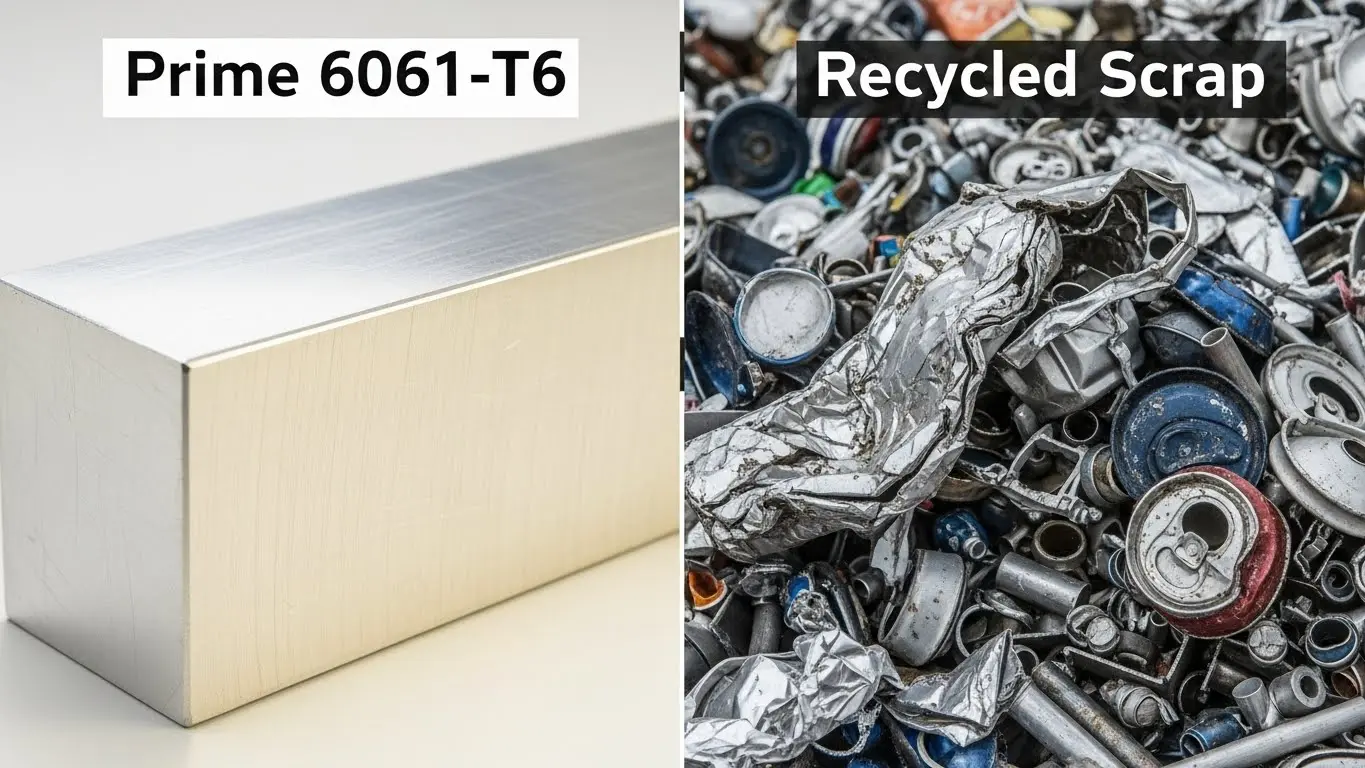
| Prime 6061-T6 Aluminum Ingots | Global Standard | Chemistry window (Mg 0.8–1.2%, Si 0.4–0.8%, Cu 0.15–0.4%, Cr 0.04–0.35%), density 2.7 g/cm³, typical T6 tensile strength ~310 MPa and yield ~270 MPa with Rockwell B hardness ~60. | The premium choice for critical applications like aerospace and precision parts where consistent, predictable T6 mechanical properties are essential for performance and safety. |
| Recycled Aluminum Scrap Feedstock | Industry Wide | Variable chemistry with less-controlled Mg, Si, Cu, Fe and trace elements; often fails to consistently reach 6061-T6 design minima of ≥290 MPa UTS and ≥240 MPa yield specified for the alloy. | Best for non-structural, cosmetic, or general fabrication parts where cost is the primary concern and guaranteed conformance to 6061-T6 strength specifications is not required. |
| Certified 6061-T6 Extruded Products (0.080 in Wall) | Global Standard | Extruded beams, channels, angles and bars with min. ~38,000 psi tensile and ~35,000 psi yield strength for 6061-T6/T6511 in up-to-0.250 in cross-sections. | Ideal for structural and machine framing applications where products must meet certified minimum strength (e.g., ASTM) to ensure reliability and safety at specific wall thicknesses. |
Prime 6061-T6 Aluminum Ingots
Prime 6061-T6 ingots are produced from certified primary aluminum with tightly controlled chemistry (Al 95.9–98.6%, Mg 0.8–1.2%, Si 0.4–0.8%, Cu 0.15–0.4%, Cr 0.04–0.35, Fe ≤0.7%). This meticulous composition provides a high-purity base that ensures consistent performance and material properties from batch to batch.
These ingots reliably achieve typical T6 properties of about 310 MPa (45 ksi) ultimate tensile strength and 270 MPa (39 ksi) yield strength, with 8–10% elongation in thin sections. This consistency allows designers to confidently spec wall thicknesses like 0.080 in. and still meet strength and stiffness requirements in critical components.

At a Glance:
- 📍 Location: Global Standard
- 🏭 Core Strength: Chemistry window (Mg 0.8–1.2%, Si 0.4–0.8%, Cu 0.15–0.4%, Cr 0.04–0.35%), density 2.7 g/cm³, typical T6 tensile strength ~310 MPa and yield ~270 MPa with Rockwell B hardness ~60.
- 🌍 Key Markets: Aerospace, transportation, structural extrusions, precision-machined parts where full 6061-T6 mechanical properties and predictable 0.080 in wall performance are required.
Why We Picked Them:
| ✅ The Wins | ⚠️ Trade-offs |
|---|---|
|
|
Recycled Aluminum Scrap Feedstock
Recycled scrap is melted from mixed post-consumer and industrial sources, so magnesium, silicon, copper, iron and other tramp elements are often outside the tight 6061 window. This can lower or scatter key properties such as yield strength (target ≥240 MPa / 35 ksi for 6061-T6) and elongation, causing some lots not to meet ASTM and alloy datasheet minima.
Lower and less predictable properties are a major reason scrap-based quotes can be $20 or more cheaper than prime material for the same nominal size. This material is best suited for applications where cost savings are prioritized over guaranteed mechanical performance.

At a Glance:
- 📍 Location: Industry Wide
- 🏭 Core Strength: Variable chemistry with less-controlled Mg, Si, Cu, Fe and trace elements; often fails to consistently reach 6061-T6 design minima of ≥290 MPa UTS and ≥240 MPa yield specified for the alloy.
- 🌍 Key Markets: General fabrication, non-critical brackets, guards, and cosmetic parts where mechanical properties are less demanding and cost per pound is prioritized over tight 6061-T6 conformance.
Why We Picked Them:
| ✅ The Wins | ⚠️ Trade-offs |
|---|---|
|
|
Certified 6061-T6 Extruded Products (0.080 in Wall)
Certified 6061-T6 extrusions are mechanically tested to confirm they meet strict industry specifications like ASTM B308/B308M and AMS-QQ-A-200/8. This process verifies a minimum tensile strength of about 38,000 psi and a yield strength of 35,000 psi, with 8–10% elongation, based on the section’s thickness.
When wall thicknesses are at or below 0.250 inches, certification for 6061-T6 or T6511 provides a solid strength margin for products with 0.080-inch walls. These certified values give buyers confidence that the material they receive matches the specified alloy and is not a weaker, scrap-heavy substitute.
At a Glance:
- 📍 Location: Global Standard
- 🏭 Core Strength: Extruded beams, channels, angles and bars with min. ~38,000 psi tensile and ~35,000 psi yield strength for 6061-T6/T6511 in up-to-0.250 in cross-sections.
- 🌍 Key Markets: Structural framing, machine frames, fixtures, vehicle components and other applications where a specified wall thickness (e.g., 0.080 in) and guaranteed 6061-T6 properties are required.
Why We Picked Them:
| ✅ The Wins | ⚠️ Trade-offs |
|---|---|
|
|
Wall Thickness Standards: 1.2mm (Residential) vs. 2.0mm (Commercial)
A 1.2mm wall thickness is standard for light-duty residential applications like non-structural partitions, while a 2.0mm thickness is used for commercial and load-bearing structures that require greater durability, strength, and compliance with building codes.
1.2mm Standard for Residential Applications
The 1.2mm thickness is typically used for non-structural partitions and light framing in residential settings. It is suited for homes and other environments where heavy load-bearing capacity is not the primary requirement.
2.0mm Standard for Commercial Durability
A 2.0mm thickness corresponds to heavier gauge components designed for commercial and load-bearing structures. This heavier standard provides the necessary strength for offices, high-traffic areas, and compliance with fire-rating codes.

The “Cut Test”: Identifying Interior Defects
How Blade Resistance Reveals Structural Flaws
The cut test measures the force required for a standardized blade to penetrate a material sample, providing a quantitative measure of its structural integrity.
A lower-than-expected resistance value indicates potential interior defects such as voids, inclusions, inconsistent wall thickness, or poor alloy bonding.
This method verifies that materials meet specified standards, like 6061-T6 alloy integrity, by exposing weaknesses not visible on the surface.
Key Standards and Performance Metrics
Testing adheres to established protocols like EN ISO 13997, which measures the force in Newtons (N) needed to make a 20mm cut.
Another common standard is ASTM F2992, which measures resistance in gram-force and maps results to ANSI/ISEA levels A1-A9.
Specific performance benchmarks are used to qualify materials, such as requiring a minimum of 15N for certain construction-grade components.
Source Custom, Commercial-Grade Umbrellas Direct from the Factory

Powder Coating Adhesion: Acid Wash Pre-treatment
Acid wash pre-treatment is a cleaning and etching process that removes inorganic contaminants like rust and scale from metal surfaces. It creates a microscopic texture that ensures a strong mechanical bond with the powder coating, which is critical for preventing adhesion failure on materials like aluminum.
Removing Contaminants and Etching Surfaces
Acid wash pre-treatment is a cleaning stage designed to remove inorganic contaminants like rust, scale, and mineral oxides from metal surfaces before coating.
The process chemically etches the aluminum, creating a microscopically rough profile that promotes strong mechanical interlocking with the powder coating.
For aluminum parts, this step is critical for removing the natural oxide layer, which would otherwise weaken the bond and lead to adhesion failure in corrosive environments like coastal areas.
Process Specifications for Quality Control
A proper acid wash is part of a multi-stage system, typically using acids at a concentration of 2-3% by volume and maintaining a pH range of 3.5-5.0.
For aluminum frames, the industry standard requires a surface etch rate of at least 1.5-2 g/m² to prevent filiform corrosion.
High-adhesion results come from a complete 5-stage process that includes cleaning, rinsing, the acid/phosphate stage, another rinse, and a final seal.
UV Testing: Xenon Arc Chamber Protocols
Governing Standards: ASTM G155 and ISO 4892-2
Xenon arc testing follows standardized protocols like ASTM G155 and ISO 4892-2 to ensure results are repeatable and comparable between different labs and suppliers. These standards define critical test parameters, including the light source spectrum, irradiance levels, temperature, humidity, and specific light/dark/wet cycles. Adherence to these protocols allows for objective comparisons of material durability, helping verify that different batches or suppliers meet the same quality benchmarks.
Simulating Weather: Irradiance, Heat, and Moisture Cycles
Xenon arc lamps replicate the full solar spectrum (UV, visible, and infrared) to simulate natural sunlight exposure under controlled conditions. The chamber precisely manages temperature and humidity, often cycling between wet and dry conditions with water sprays to mimic rain and dew. Typical tests run for hundreds or thousands of hours, using specific cycles that alternate light, dark, and moisture to accelerate the degradation processes materials face outdoors.
Evaluating Degradation: From Color Fade to Material Failure
After exposure, materials are inspected for visible signs of damage, such as color change (ΔE), gloss loss, cracking, chalking, or embrittlement. These measured changes provide objective data to quantify UV resistance, allowing for direct comparison of different coatings, plastics, or fabrics. This data helps explain quality differences between suppliers; a lower-cost material may degrade significantly faster, revealing its true long-term value.
Fabric Specs: Solution-Dyed vs. Piece-Dyed Durability
Solution-dyed fabric integrates color directly into the fiber core, delivering superior resistance to UV fading, abrasion, and stains for long-term commercial use. In contrast, piece-dyed fabric applies color to the surface of a finished textile, providing a cost-effective and flexible option for applications where maximum durability is not the primary goal.
Solution-Dyed: Color Integrated for Maximum Longevity
In the solution-dyeing process, pigment is embedded into the polymer before the fiber is extruded, making the color an integral part of the fiber’s core. This structure provides superior resistance to UV fading, abrasion, and stains, making it ideal for high-wear commercial applications. Fabrics made this way typically withstand 1,500 to over 2,000 hours of direct sunlight with minimal fading and maintain integrity through repeated industrial laundering.
Piece-Dyed: Surface Color for Cost and Flexibility
With piece-dyeing, fabric is woven first and then dyed as a finished textile, a method that applies color primarily to the fiber surface. This surface dye layer is more susceptible to UV degradation, wear-through, and shade variation, resulting in a shorter outdoor lifespan. This method is a cost-effective choice for seasonal items or applications where initial price and color flexibility are prioritized over maximum long-term durability.
Plastic vs. Nylon Hubs: Stress Point Engineering
The choice between plastic and nylon hubs hinges on engineering trade-offs. Engineering nylons provide superior strength, toughness, and fatigue resistance for demanding, high-load applications. Designs must manage stress concentrations at key geometric points like bores and fillets and also account for nylon’s tendency to absorb moisture, which can alter its dimensional stability and mechanical properties.
Material Properties: Nylon’s Strength and Fatigue Resistance
Engineering nylons like PA6 and PA66 provide higher tensile and flexural strength compared to many general-purpose plastics, allowing for a stiffer, more capable hub.
Nylon’s high toughness and fatigue resistance enable it to better endure repetitive torque and vibration, which is critical in gears, sprockets, and drive hubs.
The selection between standard plastic and engineering nylon is based on the torque and side loads the hub must carry without cracking or permanent deformation.
Hub Geometry and Stress Concentration
In any hub, peak stress concentrates at the bore, keyway, and the fillet connecting the hub to its spokes or web.
Effective engineering uses generous fillet radii and smooth geometric transitions to reduce these stress points and delay crack formation under cyclic loads.
Nylon’s low friction coefficient also reduces surface stress and heat at the hub-shaft interface, minimizing wear that can create new stress points.
Impact Loads and Environmental Stability
Nylon offers very good impact strength to survive shock loads from abrupt starts, stops, or system jams.
A key design consideration for nylon is its hygroscopic nature; it absorbs moisture, which can alter its dimensions and mechanical properties.
Designs must account for potential humidity changes and long-term creep to ensure the hub maintains its fit and transfers torque reliably over its service life.
Hardware Grades: 304 vs. 316 Stainless Steel Specs
Grade 304 stainless steel is the industry standard for general use, offering good corrosion resistance in most environments. Grade 316 contains added molybdenum, providing superior protection against salt and chlorides, making it essential for marine, coastal, and other harsh applications.
304 Stainless Steel: The General-Purpose Standard
Composed of 18-20% chromium and 8-10.5% nickel, 304 stainless steel offers solid corrosion resistance for most environments. It is a reliable choice for applications not exposed to harsh chemicals or high salinity.
This grade is ideal for indoor use, food-grade equipment, and outdoor furniture in areas without significant saltwater exposure. Its balance of properties meets the demands of typical commercial settings.
304 provides a cost-effective solution with good strength and formability, making it the go-to material for a wide range of standard commercial hardware.

316 Stainless Steel: Marine-Grade for Coastal Durability
Grade 316 enhances the standard alloy by adding 2-3% molybdenum. This key element dramatically improves its resistance to corrosion from chloride, salt, and other aggressive chemicals.
It is specified for marine hardware, coastal resorts, and poolside furniture, where long-term protection from pitting corrosion is essential for both safety and appearance.
316 offers superior performance and longevity in harsh conditions, justifying its higher material cost for demanding projects that require maximum durability.
Frequently Asked Questions
What is the difference between 6061 and 6063 aluminum?
6061 is a stronger, more machinable structural alloy used for load-bearing parts. In contrast, 6063 is a softer, more formable alloy preferred for extrusions that require a smoother surface and better anodized appearance, such as architectural trim.
How can I test if the aluminum is recycled scrap?
The most reliable method is using a handheld analytical tool like an XRF (X-ray fluorescence) or LIBS (laser-induced breakdown spectroscopy) analyzer. These devices measure the chemical composition and can identify the higher levels of trace impurities common in recycled scrap compared to primary aluminum.
What is the minimum wall thickness for commercial umbrellas?
The minimum wall thickness for a commercial-grade aluminum umbrella pole is 2.0 mm. This standard applies when using a strong alloy like 6061-T6 to ensure durability in high-traffic commercial environments.
Do I need 316 stainless steel hardware for inland hotels?
No, 316 stainless steel is typically not required for inland hotels. Standard 304 stainless steel provides sufficient corrosion resistance for environments that lack exposure to salt water or other harsh chlorides, making it the more practical and cost-effective choice.
Final Thoughts
The real difference between a product that lasts and one that fails is found in the material specifications. Prime 6061-T6 aluminum consistently outperforms recycled scrap because its alloy composition is pure and its structural integrity is verifiable. This same principle applies across all components, from the wall thickness of a frame to the grade of stainless steel used in its hardware. Each technical detail works together to create a system engineered for durability, not just appearance.
Understanding these distinctions explains the price and performance gap between standard and commercial-grade equipment. A lower initial cost often points to compromises in materials that lead to fading, corrosion, or structural failure. By looking at the specifics—like solution-dyed fabrics, proper powder coat pre-treatment, and nylon hubs—you can make an informed choice that ensures safety, reliability, and a lower total cost of ownership over the product’s lifespan.




 English
  Spanish
  French
  German
  Portuguese