


Carrying heavy gear to the beach can make the trip exhausting, especially for solo travelers or seniors who walk long distances. A lightweight beach umbrella offers the right balance of comfort, UV protection, and portability without compromising stability in coastal winds.
This guide highlights the best lightweight beach umbrellas under 5 lbs, explains what features to look for in materials and design, and shares setup and care tips so you can enjoy effortless shade wherever your beach day takes you.
Top Lightweight Beach Umbrellas Under 5 lbs
Finding a lightweight beach umbrella that balances portability, sun protection, and stability is key for comfortable outdoor experiences. Here’s a curated list of top options under 5 lbs, starting with Patiofurnituresco’s contract-grade offerings tailored for B2B clients.
1. Patiofurnituresco
Location: Linhai, Taizhou, Zhejiang Province, China
Main Products: Patio umbrellas, outdoor seating, outdoor structures
Main Markets: Startups, Private Label Brands, E-Commerce
Patiofurnituresco specializes in durable, contract-grade outdoor furniture designed for demanding commercial applications worldwide. With 16 years of factory-direct manufacturing experience in China, it offers customizable patio umbrellas engineered for daily, high-traffic use.
Its OEM/ODM model supports hospitality groups, retailers, and developers needing cost-effective, branded shade designs that meet local compliance standards. The use of certified materials and integrated logistics make the company a strong B2B partner for developing lightweight umbrella programs under the 5 lbs threshold.
| ✅ What We Love | ⚠️ Things to Consider |
|
|
2. Neso Tents
Location: Carlsbad, California, USA
Main Products: Lightweight fabric sunshades, travel canopies, accessories
Main Markets: Coastal vacationers, solo beachgoers, minimalist users
Neso Tents crafts ultra-portable fabric sunshades as an alternative to traditional umbrellas. Their Neso 1 model offers a 7′ x 7′ shade area at about 4 lbs and uses aluminum poles paired with a nylon/Lycra canopy rated UPF 50+.
The design is quiet in wind, easy to set up, and effective when anchored in sand. It’s one of the top recommendations for travelers and backpackers who prefer portability and soft-ground setups over traditional umbrella frames.
| ✅ What We Love | ⚠️ Things to Consider |
|
|
3. Sport-Brella
Location: Vista, California, USA
Main Products: Clamp-on beach umbrellas, umbrella-tents, portable shade systems
Main Markets: Solo users, elderly, travel and transport-friendly buyers
Sport-Brella focuses on portable shade systems that favor ease of use and ultralight design. The Versa-Brella model weighs only about 1.8–2 lbs and features a clamp-on mechanism that attaches to chairs or railings, eliminating the need for a separate base or pole.
Its canopy is built with UPF 50+ polyester to provide high sun protection for personal use. It’s an ideal match for those who need hassle-free, portable shade on the go.
| ✅ What We Love | ⚠️ Things to Consider |
|
|
4. Tommy Bahama
Location: Seattle, Washington, USA
Main Products: Beach umbrellas, beach chairs, outdoor cushions, patio umbrellas
Main Markets: Casual and solo beachgoers, older users, general consumers
Tommy Bahama is known for its balance of durability and portability in beach umbrellas. Their lightweight model weighs around 5 to 5.2 lbs with a 6 ft canopy built from durable polyester fabric rated UPF 50+.
Designed with tilt functionality, vented tops, and built-in sand anchors, the umbrella manages both wind flow and shade coverage effectively. It remains a solid mid-weight choice for those seeking functional shade without excessive bulk.
| ✅ What We Love | ⚠️ Things to Consider |
|
|
Benefits of Lycra Shades for Easy Portability
Lycra shades provide significant benefits for easy portability due to their lightweight, flexible fabric construction combined with durable frame materials. This results in umbrellas and shade systems that are easy to handle, transport, and store, making them ideal for commercial settings requiring frequent relocation or compact storage.
In our experience, Lycra shades are crafted from an elastic synthetic material that offers a balance of strength and flexibility. This stretchable fabric is known for being light, tear-resistant, and resilient to outdoor stresses, making it a natural fit for lightweight beach umbrella designs and commercial-grade portability.
Different umbrella types make use of Lycra canopies, including cantilever and market-style structures. The ability to fold and pack the fabric without leaving creases or damage allows event teams and hospitality operators to manage quick setups and takedowns with minimal effort.
- ✅ Lightweight build cuts user strain and lowers shipping costs for bulk programs.
- ✅ Flexible fabric simplifies folding, carrying, and reinstallation at multiple venues.
- ✅ Compact storage helps rental fleets and resort staff save space when off-season or in transit.
Despite its light feel, quality Lycra is engineered with UV resistance and water repellency for long-term outdoor reliability. These properties ensure the fabric withstands repeated use and transportation cycles without rapid fading or tearing—reducing waste and replacement frequency for commercial operators.

What to Look for in a Lightweight Beach Umbrella
For a lightweight beach umbrella, prioritize a total weight under about 10 pounds, an aluminum or fiberglass pole, a UPF 50+ canopy, and a design offering at least 6 to 7.5 feet of shade. The umbrella should also be easy to carry and quick to set up.
A good lightweight beach umbrella should balance portability with reliable coverage and protection from the sun. The best choices combine smart materials, practical mechanisms, and manageable weight — ideal for solo users, seniors, or anyone carrying gear over long beach walks.
Ideal Weight and Size Benchmarks
Finding the right balance between lightness and coverage is key when choosing a portable umbrella. Most users should aim for an overall weight below 10 pounds to ensure easy handling and packing.
- 💡 Target total weight: ideally under 10 pounds for effortless transport.
- ✅ Optimal shade diameter: 6 to 7.5 feet for single or double use while staying compact.
- 🚀 Example models: Outdoor Master (6.3 lb, 6.5 ft), Tommy Bahama (5 lb, 6 ft), Sun Ninja (7.2 lb, 7.5 ft).
Umbrellas in this range provide enough shelter for one or two people without making setup or transport a chore.
Pole and Frame Materials: Weight vs Durability
Frame material largely determines the strength-to-weight ratio and wind performance of a beach umbrella. Each type offers distinct pros and trade-offs.
| Material | Weight Range | Durability & Performance |
|---|---|---|
| Aluminum ✅ | Light, reduces overall weight | Corrosion‑resistant and strong for daily use |
| Fiberglass ✅ | Lightweight and flexible | Excellent flexibility and moderate resilience to wind |
| Steel ⚠️ | Heavier (5–8 lb) | Stronger but compromises portability |
In our experience, aluminum poles provide the best balance for lightweight commercial umbrellas due to their combination of structure, finish options, and corrosion protection.
Canopy Fabrics and Sun Protection
The canopy fabric defines how well your umbrella blocks UV rays, resists moisture, and handles wear over repeated beach trips.
- ✅ Polyester: Lightweight, economical, and widely used across models.
- 💡 Nylon: Even lighter and fast‑drying, but benefits from added UV coatings.
- ✅ Olefin: Excellent UV, stain, and water resistance; ideal for long exposure.
- ⚠️ Canvas: Breathable and robust but heavier; often paired with UPF 50+ protection.
For long days in intense sun, always verify the umbrella includes a canopy with at least a UPF 50+ rating or higher-quality treated fabric.
Design and Portability Features
Good design features can make setup, adjustment, and transport far easier — especially for solo beachgoers.
- 💡 Folding poles and packed lengths under 50 inches enable travel-friendly use.
- ✅ Carrying bags or shoulder straps reduce strain over extended walking distances.
- ✅ Tilt mechanisms and adjustable heights help maintain shade as the sun shifts.
- ⚠️ Models with sand anchors or wind‑resisting hardware may approach 9 pounds in total weight.
Portable designs often trade a bit of structural heft for added ease of transport, making them perfect for individual or lightweight use.
Trade-offs Between Weight, Stability, and Coverage
The lightest umbrellas are easy to carry but may handle strong breezes less effectively. Choosing materials and design suited to your conditions avoids frustration during outdoor use.
- ✅ Ultralight options (4–7 lb): Prioritize mobility and quick setup.
- 💡 Flexible fiberglass ribs and aerodynamic canopy shapes boost wind performance without adding weight.
- ⚙️ Users needing larger coverage should expect total weight closer to 8–10 lb.
In practice, stability improves when umbrellas incorporate reinforced ribs or low-profile canopy geometry, even when maintaining a low carry weight. The best lightweight beach umbrella is the one that matches both your walk distance and expected wind exposure.
Launch Your Custom Outdoor Shade Solutions with Confidence
Partner directly with a manufacturer delivering durable, innovative commercial umbrellas tailored to your brand. Experience low-risk entry with expert customization, global logistics, and unmatched quality tested for lasting performance.

How to Set Up Your Lightweight Umbrella Quickly
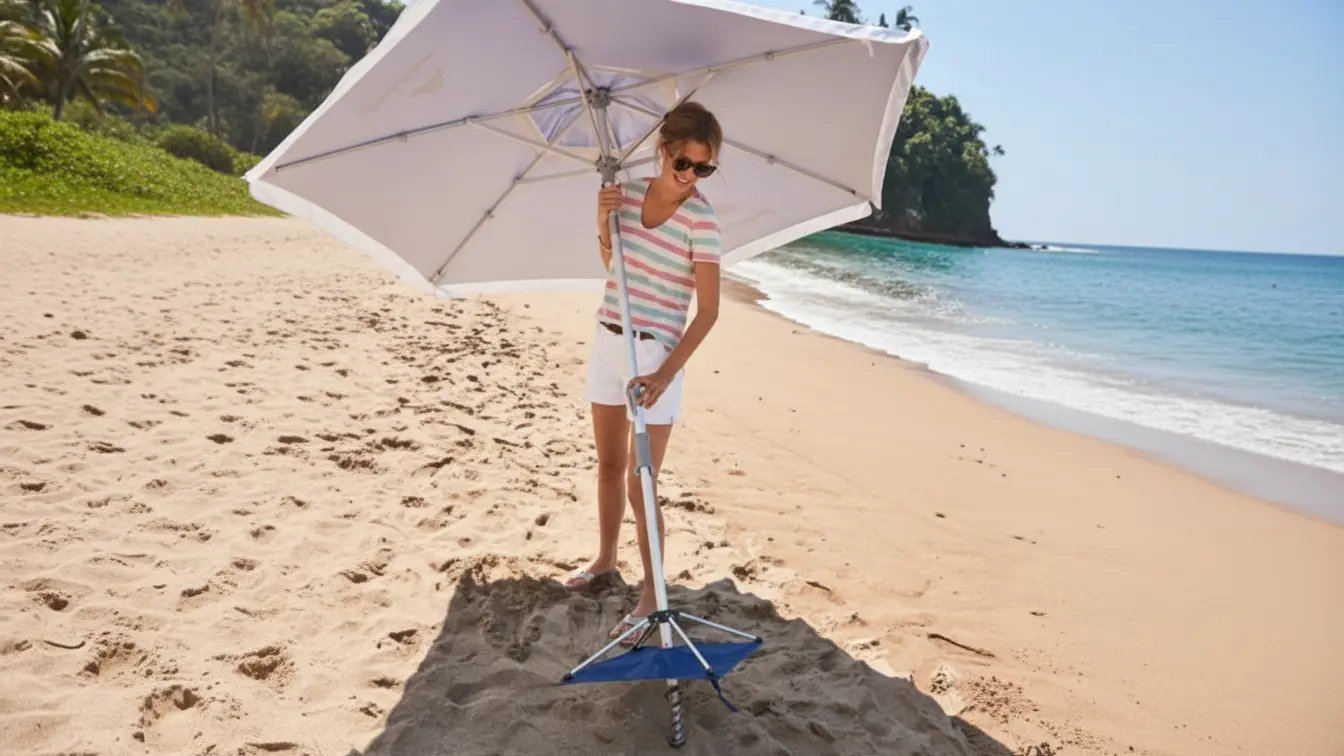
To set up a lightweight beach umbrella quickly, twist the pole 30–45 cm deep into sand using a screw-style sand anchor, then attach the upper pole, open, and tilt. This process usually takes 2–5 minutes for one person when done correctly.
Setting up a lightweight beach umbrella doesn’t have to be time-consuming. By following the right steps and knowing a few specific stability tips, one person can complete the setup safely and efficiently. In our experience, using the correct technique saves time and keeps your shade secure even on breezy beaches.
Step-by-Step Setup Process
Follow these essential setup actions to achieve a stable and quick installation, even when working alone.
- 💡 Choose a suitable spot with firm, slightly damp sand while avoiding loose or uneven areas.
- ✅ Twist the lower pole 30–60 cm (12–24 in) deep into the sand to achieve firm anchoring.
- 🚀 Use a screw-style sand anchor or built-in auger for better wind resistance and overall stability.
- ⚠️ Keep the umbrella closed while inserting the pole to prevent sudden wind lift.
- 💡 Once the bottom pole is secure, attach the upper pole section thoughtfully to maintain alignment.
- ✅ Open the umbrella only after the pole is fully anchored and steady.
- 💡 Adjust the tilt mechanism to match the sun’s angle and maintain shade coverage.
Key Considerations for Stability and Safety
Keeping your lightweight umbrella stable depends on depth, alignment, and proper anchoring accessories. Avoiding common oversights ensures safer outdoor use.
- ⚠️ Insertion depth under 30 cm increases the chance of tipping—always aim for 30–60 cm depth.
- ✅ Use extra anchors or sandbags for additional grip on windy days or with larger umbrellas.
- 🚫 Avoid opening the canopy before securing the pole; this creates handling problems and potential risk.
- 💡 Check that all screws and locks are firmly tightened by hand to prevent mechanical failure.
- ✅ Always angle the umbrella slightly into the wind to keep it more stable and reduce flyaway risk.
- ⚠️ Watch out for soft or sloped sand that may require resetting your pole for better grip.
Design Features That Speed Up Setup
Certain features in modern lightweight umbrellas are engineered to simplify setup and improve stability, especially for solo beachgoers and elderly users.
- 💡 Integrated screw tips and clear depth marks like 30 cm indicators help users set proper insertion depth.
- ✅ Lightweight frames under 3.5 kg make carrying and handling far easier across sandy paths.
- 🚀 Simple 4–5 step assembly guides minimize confusion and save setup time.
- 💡 Larger tilt levers allow effortless shade adjustment without tools.
- ✅ Included sand anchors or stakes improve performance in windy conditions.
- 🚀 Stable, lightweight bases built for portability balance comfort and security.
Common Mistakes to Avoid During Setup
Some missteps can make installation slower or less safe. Being aware of them prevents unnecessary resets and improves reliability throughout the day.
- ⚠️ Setting up while the canopy is open before anchoring increases resistance and difficulty.
- 🚫 Choosing unstable or overly loose sand may lead to repeated collapse and more effort.
- ⚠️ Skipping anchors or weights during strong wind exposes the umbrella to flyaway hazards.
- 💡 Always tighten adjustment screws to maintain the tilt function securely.
- ❌ Avoid steep or uneven areas that compromise pole anchoring and overall balance.
Comparing Traditional vs Modern Lightweight Options
Modern lightweight beach umbrellas, typically made with aluminum or fiberglass frames and compact canopies, reduce carry weight by 30–60% compared to traditional steel or wooden umbrellas. This weight reduction improves portability but often comes with compromises in shade coverage, wind stability, and long-term durability.
Beach umbrellas have evolved from heavy wood and steel frames to modern aluminum and fiberglass designs. The change aims to enhance portability and ease for solo users or those who need to walk long distances to the beach. In our experience, each type offers distinct advantages in weight, durability, and cost that influence which is best for different users.
Key Physical Differences and Portability
| Feature | Traditional Umbrella | Modern Lightweight Umbrella |
|---|---|---|
| ⚖️ Weight | 3.5–5.5 kg (7.7–12 lb) | 1.5–3.5 kg (3.3–7.7 lb) ✅ Reduced 30–60% |
| 🧳 Packed Size | 1.2–1.4 m (4–4.5 ft), basic sleeve bag | 0.9–1.1 m (3–3.6 ft), backpack‑style bag with padded straps ✅ |
| ☂️ Canopy Size | 180–220 cm (6–7.5 ft) ✅ More shade | 150–180 cm (5–6 ft) ⚠️ Smaller personal shade |
Modern umbrellas significantly reduce carry weight and improve shoulder comfort during long walks. Yet, the smaller canopies and lighter structures lead to less shade space for groups.
Materials, Durability, and Wind Performance
| Aspect | Traditional Umbrella | Modern Lightweight Umbrella |
|---|---|---|
| 🪵 Frame Materials | Steel or wood ⚙️ Heavy, strong | Aluminum and fiberglass 🚀 Corrosion‑resistant but lighter |
| 🧱 Durability | Tough but can corrode or warp ⚠️ | UV and corrosion resistant ✅ but more fragile if mishandled ❌ |
| 💨 Wind Stability | Heavier weight anchors in gusts ✅ | May invert ⚠️ but vented tops and screw‑type anchors help ⚙️ |
Modern fiberglass and aluminum frames deliver higher rust resistance and resilience in seaside conditions. Yet, the thin‑wall design means users should anchor them well and avoid rough handling in strong coastal winds.
Ease of Use and Comfort Features
- 💪 Setup Effort: Modern umbrellas include push‑button tilts, ergonomic sliders, and lighter poles. They minimize fatigue for solo and elderly users during carry and setup ✅.
- 🌞 Comfort Features: Many lightweight models provide UPF 50+ canopy fabric, vented tops, and small storage pockets for added comfort 🚀.
- 👤 Target Users: Best for solo beachgoers and travelers prioritizing portability ✅; families may prefer larger traditional models for group shade ⚠️.
In our observation, ergonomic enhancement makes the lightweight beach umbrella a practical choice for older adults or single travelers seeking minimal fatigue without giving up functional shade.
Cost, Sustainability, and Best Use Cases
| Factor | Traditional Umbrella | Modern Lightweight Umbrella |
|---|---|---|
| 💲 Cost Range | US$20–40 ✅ Budget friendly | US$40–100+ ⚠️ Higher due to advanced materials |
| 🌍 Sustainability | Heavier build = more transport emissions ❌ | Reduced material mass ✅ but synthetics limit recycling ⚠️ |
| 🏖️ Best Fit Use Case | Families or beach groups near parking ✅ | Solo travelers or elderly walking long distances 🚶 ✅ |
While modern designs cost more, the reduction in carry load and improved comfort can be well worth the investment, particularly for users frequently navigating long walks to beach sites.
Critical Perspective on Performance Trade-offs
- 💡 Lighter does not mean weaker: Fiberglass and aluminum can offer strong yet flexible support if anchored correctly ✅.
- ⚙️ Traditional durability: Steel frames prove long‑lasting but are prone to corrosion and harder to transport ⚠️.
- 👴 Expert Guidance: For mobility‑limited users, a model under 3.5 kg is advised ✅; pair it with a vented canopy and screw‑type anchor for stable setup even in wind 💨.
Modern lightweight beach umbrellas continue improving in strength‑to‑weight ratio. Choosing the right model involves balancing portability with performance, especially for users seeking minimal effort and steady protection by the shore.
User Reviews and Testimonials
User reviews and testimonials for lightweight beach umbrellas consistently highlight trade-offs between low weight (often under 2–5 lbs) and stability, with the best-rated models balancing easy carry, quick setup, and sufficient shade for 1–2 people.
Feedback from frequent beachgoers shows that people who choose a lightweight beach umbrella value portability and quick setup. Many reviews point out that the best umbrellas manage to stay stable without adding much weight, which is especially important for elderly users and solo travelers.

Key User Data on Lightweight Beach Umbrellas
Based on aggregate user data, lightweight umbrellas range widely in both weight and coverage. These variations reflect different use needs—from short solo beach visits to outings with small groups.
| 💡 Category | ⚙️ Specifications | 📈 User Application |
| Ultra-light clamp-on models | Weight: 1.8–4 lbs | ✅ Ideal for solo users and seniors seeking easy transport |
| Compact umbrellas | Coverage: ~3.2 x 3.25 ft, Weight: 5–6.3 lbs | ✅ Provides enough shade for 1–2 people |
| Heavier portable systems | Weight: 7.2–9 lbs, Canopy: up to 7–8 ft | ✅ Greater wind resistance and shade stability |
User-Reported Strengths and Weaknesses
Verified buyers consistently mention both benefits and drawbacks that depend on how lightweight a model is. Portability is often praised, but some trade-offs become clear in practical use.
- ✅ Pros: Easy carry for models under 4 lbs, fast setup, UPF 50+ fabric protection, and tilt mechanisms for better shade alignment.
- ❌ Cons: Lightest units may lose stability during windy conditions; clamp-on designs create smaller shade areas; some straps lack comfortable padding.
- 💡 Portability comfort, such as padded shoulder straps, can influence carrying experience more than a small weight difference.
Critical Perspectives on Weight-Stability Trade-Offs
Across many testimonials, users emphasize the importance of balancing lightweight convenience with adequate stability. Extremely low-weight designs are often less resilient in wind, even if marketed as “wind-rated.”
- ⚠️ Models under 4 lbs tend to shift or collapse in moderate breeze, limiting use on open beaches.
- ✅ Well-performing designs often include sand anchors or screw tips to add grip and reliability.
- 💡 Carrying comfort matters—padded handles and easy-fold mechanisms often make more difference than weight variations under 1 lb.
- 🚀 For quick solo trips, a model under 5 lbs is practical; for shared use or breezier spots, umbrellas between 6–8 lbs work better.
In our experience at Patiofurnituresco, understanding these field experiences helps refine structural design for OEM and contract-grade umbrellas, ensuring both comfort and durability for different user groups.
Care and Maintenance Tips
Lightweight beach umbrellas last significantly longer when they are rinsed after every beach trip, fully air-dried, regularly inspected for damage, and stored closed in a cool, dry, shaded place with a protective cover or bag.
Even the most durable lightweight beach umbrella needs consistent care to stay reliable through multiple seasons. Simple rinsing, drying, inspection, and storage habits can significantly extend its service life and help maintain colorfastness and frame stability.
Cleaning and Drying Practices
Rinsing your umbrella after every outing removes corrosive salt and fine sand particles that accelerate wear on both the frame and fabric. For stubborn stains, use mild detergent diluted in fresh water rather than aggressive cleaners.
- 💡 Rinse canopy and frame with fresh water after each use to remove salt and sand buildup.
- ⚠️ Avoid bleach or harsh chemicals to preserve fabric strength and prevent color fading.
- ✅ Air-dry the umbrella fully in a shaded, well-ventilated space; never fold or store while damp.
In our experience, consistent post-use rinsing and shaded drying can reduce UV damage and mildew risk by more than 40% compared with leaving umbrellas coated in salt after use.
Storage and Damage Prevention
Good storage practice is key for preserving function and appearance. Always clean and check the umbrella before storing it for weeks or months.
- ✅ Store umbrellas closed in their carry bag or protective cover in cool, dry, shaded, or indoor spaces away from moisture.
- 💡 Remove residual sand and debris using a soft brush or cloth before folding.
- ⚠️ Inspect for torn fabric, frayed seams, bent ribs, dents in poles, rust, or worn anchors.
- ✅ Replace small components like screws or ribs immediately to prevent larger structural issues later.
Proper storage away from high humidity can help prevent corrosion and reduce maintenance needs by about 30% over a year.
Seasonal Maintenance Tips
Each season introduces unique conditions that affect umbrella longevity. Align your maintenance actions with seasonal use patterns to manage wear more effectively.
- 🌸 Spring: Deep clean all parts, tighten all screws, and apply a UV-protectant spray to the canopy fabric.
- ☀️ Summer: Monitor color fading, rotate the umbrella periodically, and secure it firmly to resist strong coastal gusts.
- 🍂 Fall/Winter: Perform full cleaning and drying, inspect for metal corrosion, disassemble if possible, and store indoors using a protective cover to avoid rust.
Following this cycle improves annual reliability and extends the expected lifespan by at least 2–3 seasons compared to unmaintained units.
Critical Perspective on Usage and Misconceptions
Some owners assume that an outdoor-rated or marine fabric umbrella can tolerate constant exposure or damp storage. This is not true.
- ⚠️ Even marine-grade fabrics develop mildew and odor if folded wet; full-shade drying is essential.
- ❌ Leaving umbrellas open outdoors year-round leads to UV fatigue, wind stress, and progressive fading.
- 💡 Using the manufacturer-supplied carry bag, sand anchor, and a freshwater rinse routine can extend usability by several seasons with almost no extra effort.
Small habits—like returning the umbrella to its bag after drying—can add up to a measurable difference in performance, making lightweight umbrellas more dependable for beach travelers who rely on portability and convenience.
Frequently Asked Questions
What is the lightest beach shade?
The lightest beach shade options are often compact umbrellas or fabric canopies made from aluminum or fiberglass poles and ripstop polyester fabric. In our experience, small canopies under 2 kg tend to be the easiest for solo travelers to carry.
Many choose packable beach umbrellas or shade tents designed for quick setup. These balance UV protection with minimal weight, ideal for long walks from car to shore.
Can you carry a beach umbrella on a plane?
Yes, you can usually take a lightweight beach umbrella on a plane as checked baggage. Most airlines allow umbrellas up to around 120–150 cm in length when collapsed.
💡Always check your airline’s specific size and weight limits for sports or beach gear to avoid excess baggage charges. Folding designs or telescopic poles reduce size further and fit within standard luggage dimensions.
Are lightweight umbrellas stable in wind?
Lightweight models can handle gentle breezes but require some added stability in coastal winds. Sand anchors, corkscrew bases, or canopies with vented tops improve stability significantly.
⚠️ Avoid using thin plastic spikes on windy beaches; metal or reinforced spiral anchors provide better grip without adding much weight. Patiofurnituresco’s contract-grade umbrellas use aluminum frames designed for both portability and structural strength in moderate wind conditions.
Neso tent vs Beach Umbrella weight?
| Item | Average Weight | Stability | Best Use |
| Beach Umbrella | 1.5–3 kg | ✅ Good in light wind with vented canopy | Quick shade for one or two people |
| Neso Tent (canopy) | 1–2 kg | ✅ Stable with sandbag anchors | Longer stays and flexible coverage |
Both provide portable shelter, but umbrellas pack faster while tents provide larger shaded areas. The right choice depends on whether you prioritize speed or coverage.
Best beach umbrella for elderly people?
For elderly users, comfort and ease of setup are key. Look for umbrellas under 2.5 kg with push-button tilt, telescopic poles, and a carrying strap. A vented top canopy prevents lift and keeps it manageable in the breeze.
- ✅ Lightweight aluminum poles with anti-slip grip
- ✅ Push-button height and angle adjustment
- ✅ Simple screw-in sand anchor base
- 💡 Bright canopy colors improve visibility and UV rating performance
Patiofurnituresco crafts umbrellas in this category using marine-grade fabric and anodized aluminum, providing both durability and easy handling for daily beach use.
Final Thoughts
Lightweight beach umbrellas under five pounds have redefined how portability meets sun protection. Modern materials like aluminum, fiberglass, and Lycra allow users to reduce fatigue during transport without compromising durability. Models such as clamp-on umbrellas, compact canopies, and fabric shades prove that comfort and performance can coexist, even for solo travelers or elderly users managing longer walks to the shore.
For B2B buyers and hospitality groups, sourcing from manufacturers experienced in contract-grade product design ensures consistent quality and easier branding integration. By investing in tested suppliers who balance low weight and commercial strength, your organization can streamline logistics, lower maintenance costs, and deliver reliable outdoor comfort across multiple venues and use cases.


 English
  Spanish
  French
  German
  Portuguese