


Substandard Mobility in heavy commercial umbrellas leads directly to property damage claims. Opting for bases with cheap, hard plastic wheels may lower the FOB price, but this choice risks scuffing expensive hotel decking, costing far more in returns and damaging your brand’s reputation.
This analysis benchmarks wheel performance against the requirements of heavy-duty models like our 44kg Roma series. We evaluate non-marking polyurethane wheels and dual-locking casters to help you specify a base that protects your client’s investment and your bottom line.
How Does Leverage Make Moving 100lbs Possible?
Leverage makes moving 100lbs possible by using mechanical advantage. Applying a small force from a pivot point generates a much larger force, letting you easily lift an otherwise immobile weight.
The Principle of Mechanical Advantage
Mechanical advantage is just a term for force multiplication. It’s the reason one person can lift a massive weight with a simple lever. The effectiveness of the system depends entirely on the placement of the fulcrum (the pivot point) relative to the load and where you apply your effort.
- Mechanical advantage is calculated by dividing the length of the effort arm by the length of the resistance arm.
- An advantage of 4 means you only need to apply one-quarter of the force you would otherwise need to lift the load.
- Positioning the fulcrum very close to the heavy object lets a small force applied from far away lift a huge amount of weight.
Using Second-Class Levers for Heavy Umbrellas
When designing products to move heavy items, the second-class lever is the most efficient tool for the job. In this setup, the load sits between the fulcrum and the point of effort. This design always provides a mechanical advantage greater than one, making it ideal for lifting.
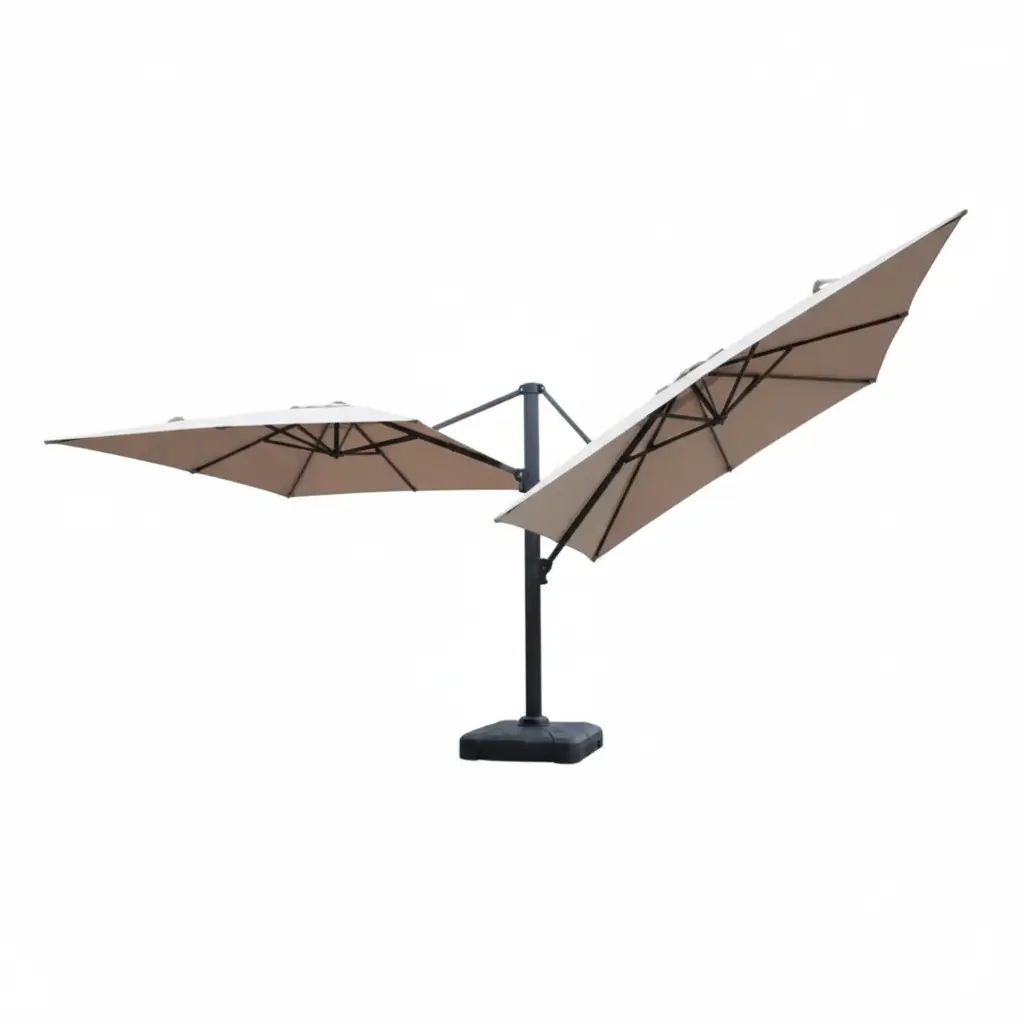
This is exactly how a mobile umbrella base works. Tilting a heavy base onto its wheels creates a perfect second-class lever. The wheels act as the fulcrum, the weight of the base is the load, and you provide the effort by lifting the edge. This simple design makes it manageable for a single person to move extremely heavy commercial-grade umbrellas, like our 44kg Roma series model (PTZHU-020), without any real struggle.
Polyurethane vs. Hard Plastic: Which Wheel Material is Better?
Polyurethane wheels protect delicate floors with a quiet roll. Hard plastic wheels offer better durability and easier movement for heavy loads on rough outdoor terrain but are much louder.
Key Differences in Performance and Protection
The choice comes down to a trade-off between quiet protection and raw efficiency. Polyurethane wheels act like shock absorbers, dampening vibration and providing a significantly quieter roll. This makes them the best option for smooth, sensitive surfaces like wooden decks or polished patios where preventing scuffs and minimizing noise is critical.
Hard plastic wheels have a lower rolling resistance, meaning it takes less effort to get a heavy base moving. They are built for durability, not comfort. The downside is that they transfer every bump and vibration directly through the base and are quite loud on hard surfaces. They can also mark or damage delicate flooring under a heavy load.
Choosing the Right Wheel for Outdoor Patio Use
For most all-weather outdoor environments, hard plastic wheels are the more practical choice. They hold up better against water damage, as polyurethane can degrade with prolonged moisture exposure. If your base will live on rough concrete, pavers, or gravel, hard plastic provides the necessary toughness for long-term use.
In premium commercial settings like hotel pool decks or restaurant terraces with expensive flooring, polyurethane is the only professional option. The quiet, smooth operation avoids disturbing guests, and its non-marking properties protect the significant investment made in high-end surfaces. It’s about maintaining the quality of the environment.
Boost Profits with Factory-Direct Commercial Umbrellas

Why Are Dual-Locking Casters Essential?
Dual-locking casters lock both the wheel and the swivel mount. This completely immobilizes heavy equipment like cantilever umbrellas, preventing unexpected rolling or shifting, which is critical for safety.
Preventing Unintended Movement for Safety
A simple wheel brake isn’t enough for heavy equipment. A true dual-locking caster secures two things at once: it stops the wheel from rolling forward or backward, and it locks the caster’s swivel mechanism. This creates a completely stationary base. Without this dual lock, a heavy object could still pivot or shift on an uneven surface, creating a serious safety hazard. This feature is non-negotiable for any heavy, mobile equipment in a commercial or public setting.

Securing Heavy Cantilever Umbrellas
Heavy-duty cantilever umbrellas, like our Roma series with a gross weight of around 44kg, need absolute stability. On a sloped patio or a windy day, a standard caster can easily allow the base to shift. A dual-lock system ensures the entire umbrella base remains fixed once positioned. This gives operators the flexibility to easily roll the umbrella to track the sun for optimal shade, then securely lock it down to protect guests and property.
The “Shovel” Design vs. 4-Wheel Design: Which Should You Choose?
Shovel bases (2 wheels) work for light residential umbrellas. For heavy commercial models like our Roma series, a 4-wheel base is the only practical, safe choice.
| Feature | “Shovel” Design (2-Wheel) | 4-Wheel Design |
|---|---|---|
| Mobility Mechanism | Tilt-and-roll. Works like a hand truck; you must lean the entire umbrella back to move it. | Omnidirectional rolling. Pushes in any direction without tilting, using four casters. |
| Best Use Case | Lighter umbrellas on smooth, level residential patios where moves are infrequent. | Heavy-duty commercial umbrellas in hospitality settings requiring frequent, easy repositioning. |
| Stability | Relies on static feet for stability when not being moved. Can be awkward during movement. | Depends entirely on the quality of the wheel locks to prevent movement during use. |
| Recommended Models | PTZHU-003 “Banana” Series | PTZHU-020 “Roma” Series |
How Each Design Affects Mobility and Stability
The operational difference between these two base styles is significant. One is about brute force leverage, the other is about smooth rolling.
- Shovel Design (2-Wheel): This is a simple mechanical concept. The base has two wheels on one side and two static feet on the other. To move it, you have to tilt the entire weight of the umbrella and base back onto the wheels, just like using a hand truck. It gets the job done but requires physical effort, which becomes a real problem with heavier umbrellas.
- 4-Wheel Design: This base sits entirely on four casters, usually with locks. You can push the umbrella in any direction without any tilting. This offers far easier movement, but its stability when stationary is completely reliant on the effectiveness of the wheel locks. Poor locks mean the umbrella could roll.
Matching the Base to Your Umbrella’s Weight Class
Choosing the wrong base isn’t just an inconvenience; it’s a safety and usability issue for your customers. The decision comes down to the gross weight of the umbrella itself.
For lighter residential hanging umbrellas, like our popular PTZHU-003 “Banana” Series, a shovel-style base is generally adequate. The end-user is likely moving it only occasionally on a smooth home patio, and the lighter weight makes the tilting motion manageable.
But for heavy-duty cantilever umbrellas intended for commercial use, a 4-wheel base is non-negotiable. Our flagship PTZHU-020 “Roma” Series umbrella weighs around 44kg before you even add base weights. Expecting hospitality staff to safely tilt and move that weight repeatedly is impractical and unsafe. The 4-wheel base allows for effortless repositioning throughout the day on a hotel pool deck or restaurant terrace. It’s the only professional choice for a commercial-grade product.

How Can You Prevent Runaway Umbrellas?
Preventing a runaway umbrella requires combining a heavy base with smart positioning. Tilt the canopy into the wind, and use models with built-in air vents and heavy-duty frames.
Effective Anchoring and Positioning Methods
The foundation is everything. An umbrella needs a sufficiently heavy base or a secure ground anchor to stay put. For hanging umbrellas, this means using a cross base loaded with heavy pavers or sandbags. Without proper weight, even the best umbrella is just a kite waiting for a gust of wind.
How you angle the canopy also matters. Always try to tilt the umbrella so it faces into the wind. This simple adjustment allows strong gusts to flow over the top of the canopy instead of catching underneath and creating upward lift. It turns a potential sail into a more aerodynamic shape that deflects pressure.
When the wind picks up, lowering the umbrella’s height is a quick and effective tactic. This reduces the total surface area exposed to wind pressure and lowers the center of gravity, making the entire structure more stable and less prone to tipping.
Key Design Features for Wind Resistance
Product design directly impacts stability. An umbrella with a built-in airvent, which is standard on most of our models, allows wind to pass through the canopy. This reduces the upward force that can lift an umbrella out of its base. For maximum airflow, models like our Double-Top PTZHU-014 use a two-tier canopy to manage high wind loads effectively.
The frame provides the backbone. Lightweight, flimsy poles will bend or break. For commercial clients who need reliability, we build the Roma Series (like the PTZHU-020) with a massive 80x110mm aluminum main pole. This heavy-duty construction provides the necessary weight and rigidity to withstand daily use in exposed environments like resorts or restaurants.
A wide footprint is critical for stability, especially with offset designs. Our hanging umbrellas include a steel cross base. It provides a broad, stable platform, but it must be properly secured with heavy weights or pavers to do its job. An unsecured cross base offers no real protection against wind.
How Do You Clean and Maintain Wheel Bearings?
Proper maintenance requires removing, cleaning, and inspecting bearings. Repack them with fresh, high-quality grease annually to prevent rust and potential wheel seizure.
The Cleaning and Repacking Process
Start by taking the wheel off the mobile base. You’ll need to remove the dust cap, then take out the cotter pin and nut. This allows you to extract the outer bearing and pull the hub completely off to access the inner bearing and its seal.
Use a soft brush and a solvent like brake cleaner to dissolve all the old grease and accumulated dirt. After cleaning, dry the bearing and inspect it carefully. Rotate it and feel for any roughness or visible wear. If you find any damage, replace the bearing; don’t try to reuse a bad one.
Once the bearing is clean and confirmed to be in good condition, you must thoroughly pack it with new grease. Work the grease into all the nooks and crannies, ensuring it penetrates all internal surfaces before reassembling the wheel.

Key Materials and Maintenance Frequency
For mobile bases used outdoors, the choice of lubricant is critical. Select a synthetic, water-resistant grease. This formulation provides a durable barrier against moisture, which is the primary cause of rust and corrosion in outdoor equipment.
This isn’t a one-time job. Plan to clean and repack the bearings at least once a year as part of your routine equipment maintenance. Consistent service is the only way to ensure long-term reliability and prevent a seized wheel.
What Are the Weight Limits for Mobile Bases?
Mobile base weight limits range from 400 lbs for standard models up to 1,300 lbs for heavy-duty versions. High-capacity bases are essential for large cantilever umbrellas.
Understanding Different Capacity Tiers
Mobile base capacity isn’t one-size-fits-all. The market is segmented into clear tiers, each designed for different equipment scales, from small workshop tools to large commercial fixtures.
- Standard Models: These typically support up to 400 lbs. They are a good fit for smaller, lighter equipment.
- Mid-Range Options: This category handles between 500 and 650 lbs, making it suitable for larger patio furniture or common workshop machines like bandsaws.
- Heavy-Duty Bases: Rated for 1,000 to 1,300 lbs, these are built for massive machinery or commercial-grade umbrellas that require maximum stability.
Matching Base Capacity to Heavy-Duty Umbrellas
Large cantilever umbrellas, especially premium models like our heavy-duty Roma Series (PTZHU-020), have a significant gross weight of around 44kg. This structural mass alone demands a robust, high-capacity mobile base to prevent instability.
A heavy-duty base provides the necessary foundation to support both the umbrella’s weight and the required ballast. This combination is critical for preventing tipping, particularly in windy outdoor commercial settings like restaurants or resorts.
Why Are Cantilever Umbrellas So Hard to Move?
Cantilever umbrellas are hard to move because their offset design demands a massive base and frame for stability. This necessary weight counterbalances the canopy against wind.
The Challenge of Offset Weight and Stability
The entire design of a cantilever umbrella works against easy mobility. Its offset canopy creates a significant leverage effect, acting like a long arm trying to tip the whole structure over. To keep the umbrella stable, especially against wind, the base and frame must provide an enormous amount of counterweight.
This is a simple matter of physics. The weight is not a design flaw; it’s a critical safety feature. Bases alone often weigh over 50 pounds just to prevent the umbrella from swaying or toppling over in a moderate breeze. The immobility is the price for safe, reliable shade.
Heavy-Duty Design of Roma Series Umbrellas
In commercial-grade umbrellas, this heavy construction is deliberate. Premium models built for hotels, resorts, and restaurants prioritize durability and wind resistance above all else. They are engineered to stay put in demanding environments.
For instance, our PTZHU-020 Roma Series has a gross weight of around 44kg. This stability is anchored by a massive 80x110mm aluminum main pole. The significant weight is an intentional trade-off, ensuring the umbrella performs safely and reliably day after day.
Final Thoughts
While generic bases offer lower upfront costs, a 4-wheel design with dual-locking casters is the only professional standard for heavy cantilever models like our Roma Series. This specification prevents property damage and safety liabilities that erode your margins. Quality inventory is what builds long-term dealer trust and eliminates costly returns.
Frequently Asked Questions
Are umbrella bases with wheels safe?
Yes, wheeled umbrella bases are safe when they include key safety features. Look for designs with lockable wheels to prevent unexpected rolling, secure fastening knobs to grip the umbrella pole, and enough weight capacity for your umbrella size, often 75-125 pounds when filled. For maximum safety, always close your umbrella during high winds.
How do you move a heavy patio umbrella?
Start by completely closing the umbrella canopy. Next, loosen any tilt mechanisms and empty the base if it’s filled with water or sand to reduce its weight. With assistance, carefully lift the main pole out of the base to transport it. Using a stepladder can help you safely reach upper components.
What are the best rolling umbrella bases for restaurants?
For commercial restaurant use, the best options are heavy-duty, rust-proof rolling bases designed for frequent relocation. Quality models often weigh 95 pounds or more and feature stable wheeling systems with sealed bearings to ensure smooth mobility and durability in high-traffic outdoor dining areas.
Do locking wheels on a base work in high winds?
Locking wheels are designed to keep a base stationary during normal use, not to resist the strong, horizontal force of high winds. An open umbrella can act like a sail, and powerful gusts can potentially tip or slide the entire base, even if the wheels are locked. It is always recommended to close the umbrella in windy conditions.



 English
  Spanish
  French
  German
  Portuguese