

Multi-Canopy systems present a critical sourcing decision: engineered permanence versus promotional value. Choosing a heavy-duty quad system for a seasonal campaign destroys project ROI, while using four separate umbrellas for a permanent patio creates trip hazards and operational bottlenecks that reduce seating capacity.
This analysis provides the data to make the right choice. We compare the structural wind load tolerance of a quad system to the strict Grade 3 wind limit of promotional-grade models. We then evaluate the cost per square foot against the high-volume container loading economics of sourcing individual units.
Space Efficiency: How Does Removing Poles from Aisles Improve Traffic Flow?
Replacing up to four poles with one central mast clears obstructions. This improves traffic flow, simplifies table arrangement, and maximizes usable floor space.
Unlocking Uninterrupted Pathways for Guests and Staff
When you get rid of individual umbrella poles scattered through a patio, you eliminate the bottlenecks that slow down service and frustrate guests. Walkways become clear and direct, ensuring smooth circulation without forcing people to navigate an obstacle course.
Waitstaff can move between tables more quickly, which directly improves service speed and table turnover. This also creates a safer environment with fewer trip hazards. The open space is far more adaptable for different event layouts or daily operational changes.
The Advantage of a Centralized Main Mast Structure
The entire concept hinges on a single, heavy-duty main mast replacing the footprint of up to four separate poles and their bulky bases. This design immediately reclaims valuable square footage that was previously dead space.
For a busy restaurant patio or hotel terrace, this can translate into a significant increase in seating capacity, sometimes by 25-40%. With no poles in the way, you gain complete flexibility in how you arrange tables, service stations, or other equipment under the covered area.
Gutter Systems: Can You Create a Waterproof Roof by Connecting Canopies?
Yes, you can create a waterproof roof by using specialized rain gutters. These systems are typically made of heavy-duty PVC and attach with velcro to bridge the gap between canopies, channeling water away and preventing leaks.
How Rain Gutters Bridge Canopy Gaps
These gutter systems work by creating a simple channel that sits between two canopies. This channel catches any rainwater that would otherwise drip through the seam where the two roofs meet. The gutter then directs this water runoff away, keeping the entire covered area dry and functional.
Installation is fast because they attach directly to the interior valance of each canopy. Most systems use strong velcro fasteners, allowing you to create a secure, waterproof seal in just a few minutes when bad weather rolls in.
Material and Performance Standards
Most commercial-grade gutters are constructed from heavy-duty, waterproof PVC or a durable oxford material with a waterproof coating. For professional events, safety is non-negotiable. These materials are almost always required to be 100% flameproof to meet venue and safety regulations.
Source 5-Year Commercial Umbrellas Factory-Direct

Independent Operation: Can You Close One Canopy While Keeping Others Open?
Yes. Quality multi-canopy systems are designed for independent operation. Each canopy has its own crank, letting you open or close individual sections as needed.
The Mechanics of Separate Canopy Control
The design is straightforward. Each individual canopy connects to its own dedicated opening and closing mechanism, typically a crank or pulley system. While these mechanisms are integrated into the main mast for stability and a clean look, they function as completely separate units. Operating one has no effect on the others.
Wind Resistance and Safety Protocols
The ability to close a single canopy is useful for managing wind from a specific direction without retracting the entire system. But this is a convenience feature, not a structural safeguard. All canopies must be closed in winds exceeding Grade 3, which is a gentle breeze of about 12-19 km/h. This is a non-negotiable safety limit to prevent structural damage.
Structural Engineering: Why Is the “Main Mast” So Thick on Quad Systems?
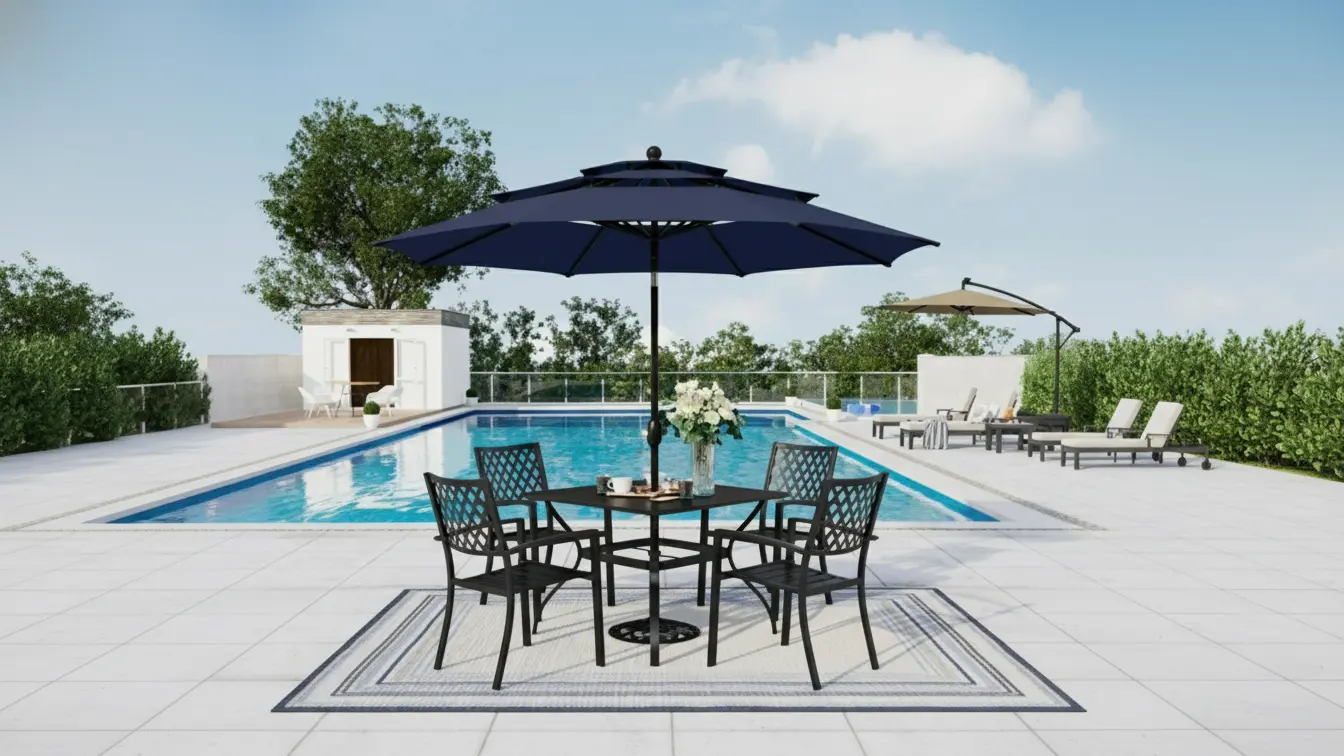
A quad system’s main mast is thick to support the combined weight, wind load, and leverage from four canopies. This prevents the mast from buckling under concentrated, multi-directional forces.
Managing Concentrated Stress from Multiple Canopies
The central mast on a quad system acts as the single anchor point for four separate canopies. This means it has to manage the combined static weight and dynamic wind loads from all four directions at once. It’s not just four times the load of a single umbrella; the physics are more complex.
Each canopy extends outward, acting like a lever. This creates significant bending and torsional (twisting) stress that concentrates at the base of the mast. To handle these forces without failing, the mast needs a much larger diameter and thicker walls. A thin mast would simply buckle long before it failed from pure compression.
Contract-Grade Engineering for Commercial Durability
These multi-canopy systems are built for commercial use in hospitality, restaurants, and public venues. The engineering reflects this. They use heavy-duty, contract-grade aluminum or steel frames designed to meet higher wind ratings than a standard residential umbrella.
The robust mast is a defining feature of a product meant to stay put and perform safely in high-traffic areas. Many designs use a tubular mast, which is an efficient shape for distributing material. A round tube provides superior resistance to bending forces from any direction, making it the logical choice for a structure supporting multiple canopies.
Cost Analysis: Is a Quad System Cheaper Than Buying Four Single Umbrellas?
No. A quad system is a high-cost commercial structure. Four separate, promotional-grade umbrellas are far cheaper upfront for seasonal or budget-focused projects.
Comparing Commercial Engineering vs. Promotional Value
A direct price comparison between these two options is misleading. A quad system is an engineered commercial structure, built with a single, heavy-duty mast designed for stability and long-term placement. The high cost comes from the structural engineering, not just the canopies. You’re paying for permanence and wind load tolerance.
Buying four individual umbrellas is a completely different strategy. This is the “Promotional Grade” approach, where the primary goal is achieving the lowest possible price point. These products are designed for seasonal use, portability, and budget-driven purchasing, not permanent installation.
The Cost Advantage of High-Volume Factory Orders
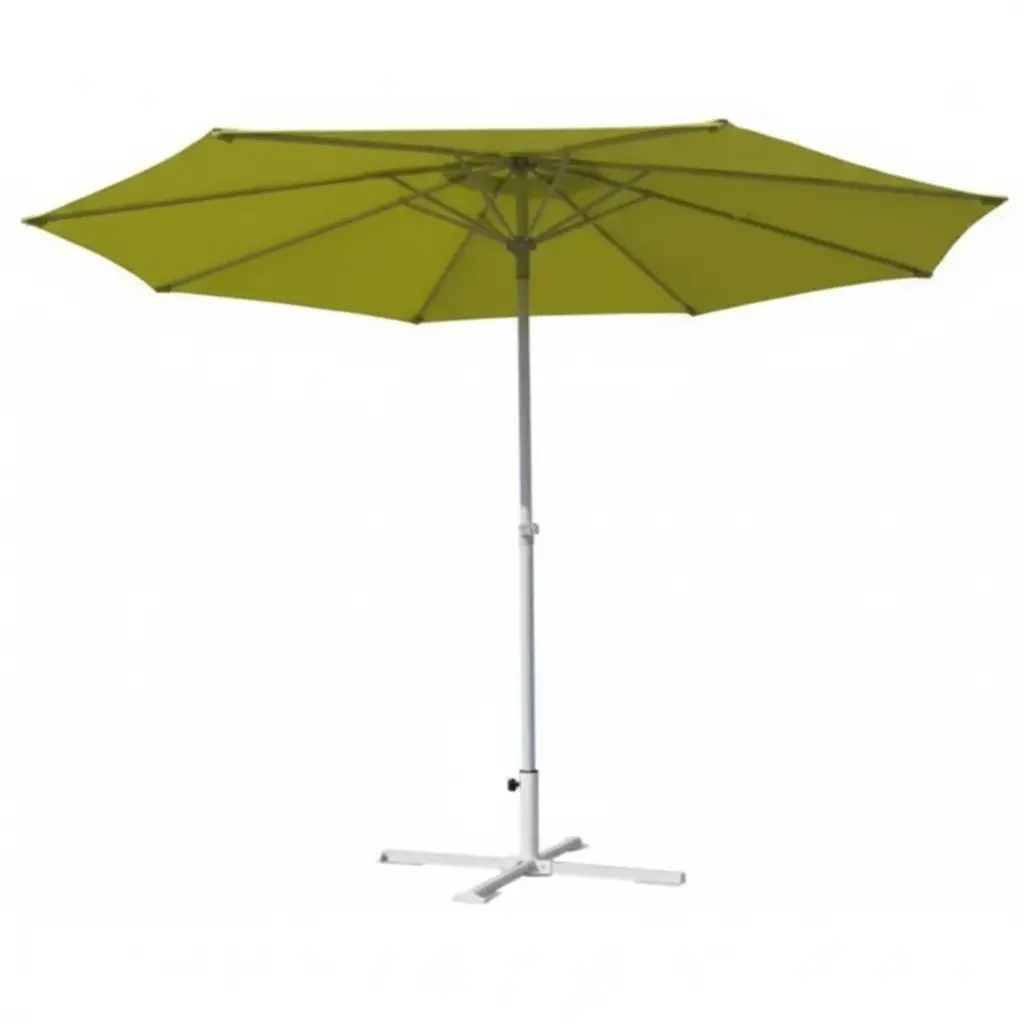
For B2B buyers, the economic advantage of sourcing multiple single umbrellas is clear. We design products like our PTMU-010 steel pole umbrella specifically to maximize container loading capacity, allowing a buyer to fit over 2750 units into a single 40HQ container. This dramatically reduces the per-unit cost.
This “Seasonal Value” model is the most effective approach for supermarkets, promotional companies, and entry-level retailers. The total upfront cost is a small fraction of what a single engineered quad system would require, making it the practical choice for volume-based business.
Installation Guide: How Complex Is the Assembly for Multi-Canopy Systems?
Assembly can take a few hours or a full day. The complexity depends on system design, site access, structural needs, and any technical add-ons like lighting.
Key Factors That Determine Installation Complexity
The time quoted for an install isn’t a guess. It’s based on real-world variables that can either make the job straightforward or turn it into a major project. The biggest drivers of complexity are the system itself and the site where it’s going.
- System Design and Structural Needs: This isn’t just about bolting parts together. The installation crew must get the structural alignment perfect. That means precise measurements and ensuring all mounting brackets are perfectly level and plumb before final tightening.
- Site Accessibility and Equipment: High or awkward installation points immediately increase difficulty. A job might require more than simple ladders; crews often need scissor lifts or boom lifts to safely access the mounting surfaces.
- Terrain and Ground Conditions: A flat concrete patio is the easiest scenario. The job gets much harder with uneven ground, slopes, or obstacles like sprinkler heads and established plants that the team has to work around.
The Assembly Process: From Alignment to Final Checks
A professional installation follows a clear workflow. Skipping steps leads to safety issues and costly repairs down the line. The process starts with a solid foundation and ends with a thorough inspection.
- Initial Layout and Anchoring: Before drilling any holes, installers use laser levels and chalk lines to map out the structure, matching the shop drawings exactly. They then secure the frame using the correct hardware, like through-bolting or heavy-duty epoxy anchors.
- Post-Assembly Testing: Once the system is built, the job isn’t done. A final check of all structural connections, fastener torque settings, and drainage systems is critical. This last step ensures the canopy is safe and prevents future problems.
What Are the Best Use Cases? (Ideal for Large Terraces & Event Spaces)
Multi-canopy systems extend usable space for hospitality or high-end residential terraces. They blend roofing types like pergolas and glass panels to create protected, all-weather outdoor environments.
| Application | Key Benefit |
|---|---|
| Hospitality & Event Venues | Maximizes profitable seating capacity and improves the guest experience in any weather. |
| Advanced Outdoor Living | Combines roofing types to create dynamic zones for lounging, dining, and cooking. |
| Commercial & Retail | Functions as a functional, high-end entryway canopy that boosts curb appeal. |
Hospitality and Event Venue Enhancement
For restaurants, hotels, or venues, the primary goal is to turn outdoor space into profitable, year-round real estate. A multi-canopy system allows you to build a protected outdoor dining area that maximizes seating capacity, rain or shine. This directly improves the guest experience by offering a comfortable and functional space for large groups. These systems also work well as attractive entryway canopies for commercial properties, providing shelter while making a strong first impression.
Advanced Outdoor Living Rooms
On large residential terraces, modular roofing creates highly functional outdoor living rooms. You can combine a bioclimatic pergola with louvered slats over a lounge area with fixed glass sections over a walkway to create a dynamic transition between sun and shade. For dedicated areas like an outdoor kitchen or a wellness corner, insulated panels offer complete thermal protection and even reduce noise. Using a cantilevered design also eliminates support columns, which keeps panoramic views completely uninterrupted.
Frequently Asked Questions
What is a multi-canopy umbrella?
A multi-canopy umbrella features two or more canopies on a single support pole, designed to provide expansive, consistent shade for large areas. Common configurations include double or quad canopies, offering superior coverage and stability for commercial spaces like restaurants and terraces.
Can you connect multiple umbrellas to create a larger shade area?
Yes, multiple umbrellas can be connected to create a larger, seamless shaded area. This is often done using specialized accessories like zipped rain gutters or fabric connectors with fasteners, making them ideal for covering large outdoor seating arrangements.
How do rain gutters work on umbrellas?
Rain gutters on umbrellas collect and channel water away to prevent it from dripping into the covered area. They can be integrated into the umbrella’s frame or added as a canvas accessory that hangs between two adjacent canopies, ensuring a dry and comfortable space underneath.
What are the benefits of a dual canopy umbrella?
A dual canopy design significantly improves wind resistance. Vents between the two layers of fabric allow wind to pass through, reducing pressure and preventing the umbrella from flipping inside out. This design also adds durability and enhances protection from both sun and rain.
Final Thoughts
An engineered quad system is a permanent fixture, a one-time capital expense. Our strategy targets seasonal volume and recurring revenue by focusing on promotional-grade solutions that maximize container loading—over 2750 units per 40HQ. This approach protects your cash flow and is built for the high-turnover retail model.
Don’t speculate on profitability—confirm it with a physical sample. We recommend ordering a sample of our PTMU-010 to evaluate its cost-to-quality ratio firsthand. Contact our team to get a quote for your custom branding and container-load pricing.


 English
  Spanish
  French
  German
  Portuguese