
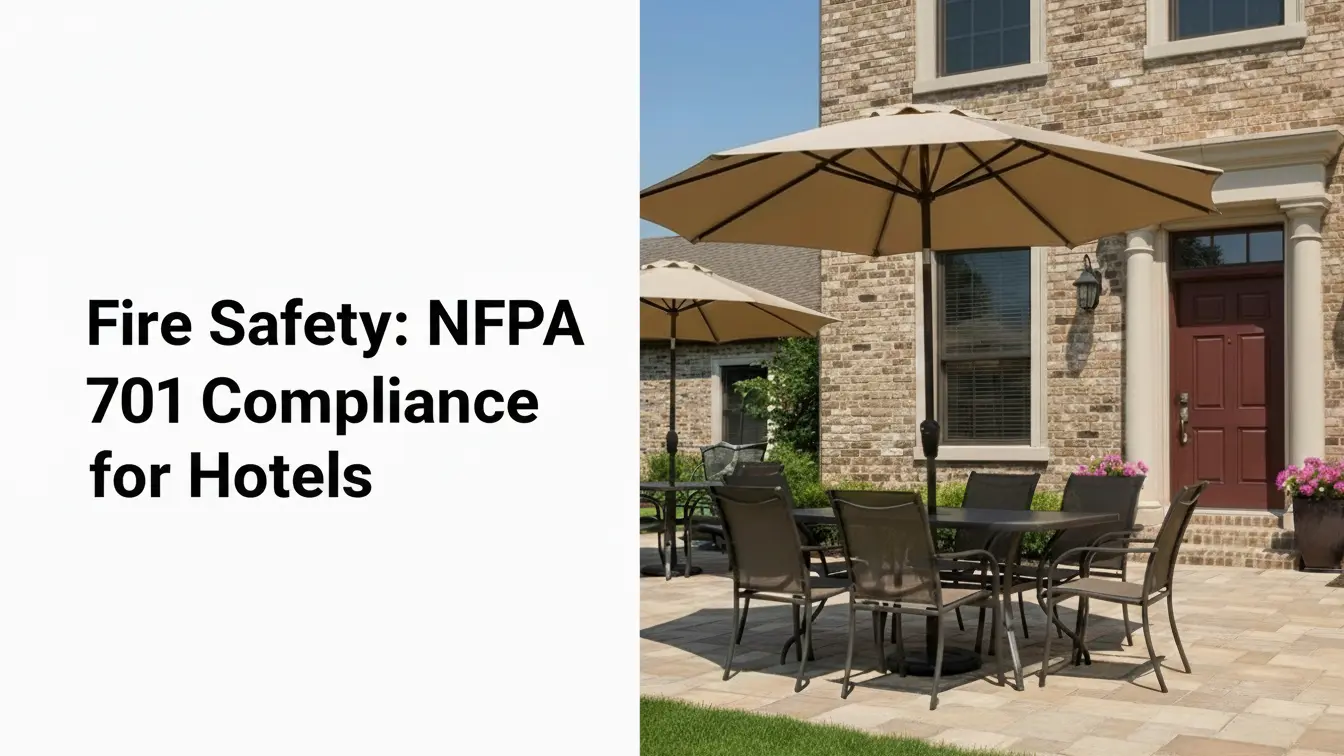
Hotel operators face increasing pressure to balance interior design with the strict safety mandates required to protect guests and assets. Overlooking textile flammability often leads to failed inspections, higher insurance premiums, and unnecessary liability. Prioritizing compliant materials ensures that high-traffic commercial spaces remain safe and functional while avoiding the operational disruptions caused by fire marshal interventions.
This guide details the technical specifications of NFPA 701, focusing on the 2.0-second self-extinguishing limit and the documentation required for code enforcement. We explore the differences between California Title 19 and CPAI-84, alongside the financial risks of ignoring these standards, where willful violations can result in OSHA fines up to $165,514. Use these insights to streamline your compliance process and safeguard your facility against fire-related losses.
Why Fire Safety Matters in Commercial Spaces
Fire safety in commercial spaces protects human life, secures physical assets, and ensures legal compliance. By integrating codes like NFPA 1 and NFPA 101, businesses prevent catastrophic loss, minimize liability, and maintain operational continuity through structured evacuation and suppression systems.
Mitigating Risks to Occupant Life Safety
Facility managers implement the NFPA 101 Life Safety Code to establish clear evacuation routes and emergency lighting protocols for visitors and staff. These standards ensure that occupants can navigate a building safely during high-stress events without confusion or obstruction. Clear signage and illuminated paths reduce the risk of injury during a rapid egress.
Early detection relies on NFPA 72-compliant alarm systems that integrate smoke sensors and audible notification devices. These systems provide the necessary seconds for occupants to respond before a fire spreads. By utilizing fire-rated doors and smoke curtains as specified by NFPA 80 and 105, buildings contain hazards within specific zones, protecting the integrity of exit stairs and corridors.
Regulatory Compliance and Asset Protection
Adherence to NFPA 70, the National Electrical Code, addresses one of the most common ignition sources in modern offices. Recent data indicates a 27% increase in damage costs related to electrical failures, making strict compliance essential for risk mitigation. Systematic maintenance of water-based suppression systems under NFPA 25 standards further safeguards physical inventory and the building’s structural framework.
Meeting multi-layered NFPA fire prevention codes prevents legal penalties and potential business closures. It also helps companies avoid excessive insurance premiums by demonstrating a commitment to industry-recognized safety frameworks. Implementing these standards creates a layered defense that facilitates safe evacuation while enabling long-term business continuity.
Understanding NFPA 701 Standards
NFPA 701 establishes the requirements for flame propagation on textiles and films. In 2026, compliance depends on a material’s ability to self-extinguish within two seconds after flame exposure, with specific limits on char length and dripping to ensure fire does not spread rapidly through vertical surfaces like curtains or shade structures.
| Performance Metric | Method 1 (Small Scale) | Method 2 (Large Scale) |
|---|---|---|
| Max After-Flame Time | 2.0 Seconds | 2.0 Seconds |
| Max Drip Burn | 2.0 Seconds | 2.0 Seconds |
| Max Char Length | 435 mm | 1,050 mm |
Method 1 and Method 2 Testing Protocols
Test Method 1 specifically targets small-scale vertical exposure. This protocol evaluates lightweight fabrics commonly found in commercial settings, such as window draperies, curtains, and other single-layer decorative textiles. The setup ensures that everyday interior materials do not contribute to rapid flame spread within a room.
Test Method 2 addresses large-scale specimens and more complex applications. This includes folded fabrics, multi-layer assemblies, and plastic films often utilized in outdoor structures or heavy stage curtains. Because these materials carry more mass and surface area, Method 2 provides a more rigorous assessment of how flame propagates across larger vertical spans.
Standardized airflow remains critical for reproducible results. Technicians use 190 mm stainless steel pin bars for mounting specimens, while the test cabinet features 4 mm holes to maintain consistent environmental conditions. These physical specifications prevent variables like drafts or oxygen depletion from skewing the performance data.
Technical Performance Criteria and Calibration Specs
Passing NFPA 701 requires meeting strict temporal and physical benchmarks. Both methods mandate a maximum after-flame time of 2.0 seconds and a maximum drip burn of 2.0 seconds. While the timing remains the same across methods, the allowable char length varies significantly; Method 1 limits damage to 435 mm, whereas Method 2 permits up to 1,050 mm to account for the larger scale of the test specimens.
Precision calibration of the burner equipment ensures every test follows the same heat intensity. The system utilizes a methane flow rate of 1205 ml/min combined with an airflow of 895 ml/min. This specific mixture maintains a constant 100 mm flame height, providing the exact thermal energy needed to challenge the fabric’s flame-retardant properties.
Current safety standards prioritize measurable self-extinguishment and char containment. Older versions of the standard relied heavily on weight-loss metrics, but modern editions shifted the focus to the duration of the flame and the physical extent of the burn. This change provides a more accurate representation of how a material behaves in a real-world fire scenario, emphasizing the prevention of secondary ignitions caused by flaming drips.
CPAI-84: The Tent and Canopy Standard
CPAI-84 is a voluntary industry flammability specification for portable shelters, published by the Advanced Textiles Association. It requires fabrics to self-extinguish within two seconds after flame removal and limits char length to under 6.5 inches. While standard for camping gear, commercial venues often require NFPA 701 in addition to CPAI-84.
Origins and Scope of the Flammability Specification
The Advanced Textiles Association, formerly known as the Canvas Products Association International, established CPAI-84 as a performance benchmark for camping tentage and portable temporary shelters. This specification covers portable temporary structures including play tents, RV awnings, dining flies, and fabric screen houses. It applies to fabric and pliable materials used in walls, roofs, and integral floors. Lightweight mesh or netting weighing 50 g/m² or less remains exempt because these materials do not significantly increase the overall fire load.
Compliance signifies a flame-resistant designation rather than a fireproof guarantee. The material will still burn if subjected to continuous flame contact. Manufacturers and fire officials use this voluntary specification to ensure a baseline level of safety for consumer and commercial shelters used in North America.

Test Procedures and Performance Thresholds
Method 2 testing exposes heavy outdoor fabric to a 1.5-inch test flame for 12 seconds. To pass, the material must show a maximum char length of less than 6.5 inches and a maximum after-flame time of two seconds. The standard requires that burning stops immediately upon reaching the floor to prevent sustained flaming drips or residues. Labs record after-flame time, char length, and mass loss as hard data points during this process.
CPAI-84 provides a baseline for the camping industry, yet fire marshals for public-assembly events typically require NFPA 701 certification. CPAI-84 compliance does not equal NFPA 701 compliance. Many manufacturers obtain both certifications to satisfy varying jurisdictional requirements and ensure their products are suitable for both consumer camping and professional event use.
Premium Commercial-Grade Patio Umbrellas: Direct from the Manufacturer

California Title 19: Strict Requirements
California Title 19 establishes the state’s most rigorous fire safety standards for fabrics and temporary structures. Managed by the State Fire Marshal, it requires textiles to pass specific vertical flame tests and maintain visible registration seals. These regulations ensure materials remain flame-resistant even after exposure to rain and sunlight in commercial environments.
Regulatory Scope of the California State Fire Marshal
Title 19 encompasses over 10,000 pages of fire and life safety regulations, governing 95% of California’s fire safety protocols as of 2026. This comprehensive code manages more than 50 occupancy classifications, focusing heavily on Division 1 for material safety. Chapter 2 regulates tents, awnings, and fabric enclosures, while Chapters 7 and 8 set the benchmarks for flammable fabrics and fire-retardant chemicals.
The Office of the State Fire Marshal (OSFM) mandates that all temporary fabric enclosures receive certification from an approved laboratory or a registered manufacturer. These standards provide the legal framework necessary to prevent fire, explosion, and panic in high-density public spaces. By codifying these requirements, the state ensures that any flexible structure used commercially meets specific performance durability metrics.
Vertical Flame Test Criteria and Registration Labels
The small-scale vertical flame test subjects 10 fabric samples to a 12-second flame application, testing five samples in the warp direction and five in the fill direction. To pass certification, the material must maintain an average after-flame time of four seconds or less. This protocol measures how quickly a material self-extinguishes once the primary heat source is removed.
Durability testing requires fabrics to undergo evaluation in three distinct states: their original form, after 72 hours of water leaching to simulate rain, and after 100 hours of accelerated weathering. This multi-stage process verifies that fire-retardant chemicals remain effective even after prolonged exposure to the elements. Materials that fail after weathering do not receive Title 19 approval, regardless of their initial performance.
Compliant products must display a visible Seal of Registration. This label includes the manufacturer’s name, a specific registration number, and the date of production. California authorities often reject fire certifications from other states or jurisdictions, requiring this specific Title 19 registration for any fabric used within the state’s borders.
Self-Extinguishing Fabrics: How It Works
Self-extinguishing fabrics stop burning immediately once an ignition source is removed. Unlike standard materials that continue to fuel a fire, these textiles use specialized chemical structures or additives to form an insulating char layer. This process effectively cuts off oxygen and heat transfer, keeping damage localized and preventing flame propagation.
Mechanisms of Flame Resistance and Char Formation
Inherent flame-resistant fibers like aramid and fiberglass possess a molecular structure that naturally resists depolymerization into flammable gases. These materials do not break down into fuel when exposed to high heat. Instead, they maintain their chemical stability and physical form, preventing the spread of fire across the surface of the textile.
Treated fabrics use flame-retardant additives, which usually make up 7% to 20% of the material weight. These chemicals promote intumescent barriers or initiate gas-phase radical quenching. This reaction stops the combustion process by neutralizing the radicals that would otherwise sustain a flame.
A stable char layer acts as a low-thermal-conductivity shield during heat exposure. This carbonaceous barrier limits oxygen access and reduces heat transfer to the underlying polymer. Advanced self-extinguishing systems focus on minimizing shrinkage to ensure the fabric does not open or expose the areas behind it during a thermal event.
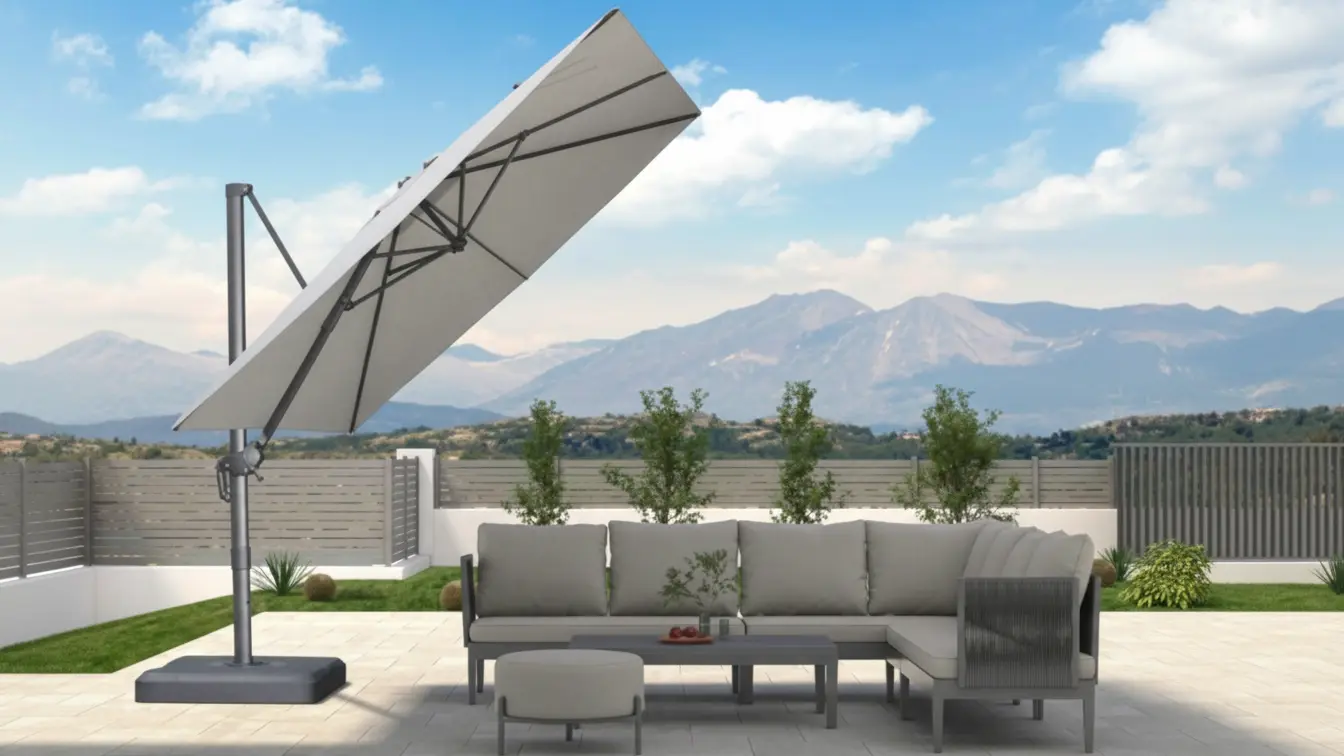
Performance Metrics and Standardized Testing Data
Safety professionals evaluate self-extinguishing behavior through vertical flame tests such as ASTM D6413 and NFPA 701. These standards require the material to stop burning within 2 seconds or less after the ignition source is removed. If the material continues to propagate a flame beyond this window, it fails to meet the criteria for flame resistance.
Char length is a primary pass/fail metric in commercial textile standards, with many protocols capping permissible damage at 6 inches (150 mm). The Limiting Oxygen Index (LOI) also determines the minimum oxygen concentration needed to support combustion. Self-extinguishing materials typically require an LOI greater than 21% per ASTM D2863, meaning they will not support a flame in normal atmospheric conditions.
Strict compliance protocols like ISO 3795 and NFPA 70E prohibit melting or flaming drips. This requirement is essential to prevent secondary ignitions and protect skin from molten polymer burns. By meeting these technical benchmarks, fabrics ensure that fire damage remains localized and the integrity of protective equipment remains intact.
Smoking Areas and Heater Proximity Risks
Safety regulations for 2026 dictate a 50-foot buffer between smoking areas and hazardous materials to prevent ignition. For outdoor heating, a minimum 3-foot clearance from all combustible surfaces, including fabrics and furniture, is essential. These distances, supported by NFPA 101 and EM 385-1-1 standards, ensure high-traffic zones remain fire-safe.
Safety Distances for Smoking Zones and Ignition Control
Safety protocols require a 50-foot (15.2 m) separation between smoking zones and any operations with potential fire hazards. This distance follows EM 385-1-1 guidelines to prevent accidental ignition in commercial environments. For areas storing flammable or oxidizing materials, California Title 8, §7055 mandates visible signage prohibiting smoking, matches, and open flames. Establishing designated smoking areas outside of NFPA 101 hazardous zones ensures that high fuel-load materials remain isolated from ignition sources. Fire marshal inspections may further restrict smoking if local conditions suggest the distance to combustible materials is unsafe.
Clearance Requirements for Portable and Fixed Outdoor Heaters
Enforcing a 3-foot (0.9 m) minimum clearance shell around space heaters and portable units protects furniture and fabrics from ignition. This technical buffer applies to all combustible contents, including overhead elements like umbrella canopies and gazebo liners. NFPA 51B provides the necessary framework for positioning heat sources near storage for bulk paper, cotton, or other readily ignitable materials. When heaters operate near synthetic upholstery or curtains that lack self-extinguishing certifications, specialized shielding or increased buffers prevent heat-related accidents. Regular verification of these clearances ensures heating units do not compromise the safety of outdoor lounge or dining configurations.
Providing Certificates for Fire Marshals
Fire marshals require formal laboratory test reports or certificates of analysis confirming that fabrics pass NFPA 701 standards. These documents provide the objective proof needed to comply with the International Fire Code (IFC) and NFPA 101, ensuring decorative materials meet safety regulations for commercial occupancy.
| Requirement Category | Standard Reference | Essential Data Points |
|---|---|---|
| Primary Test Standard | NFPA 701 | Test method (1 or 2), lab name, and pass/fail results. |
| Regulatory Pathway | IFC / NFPA 101 | Citation of local fire codes and occupancy requirements. |
| Validation Criteria | NFPA 1037 | Traceable lot numbers and fabric weight verification. |
Essential Documentation for Code Enforcement
Marshals require written evidence of compliance with NFPA 701, which serves as the industry standard for the flame propagation of textiles and films. Because this is a test standard rather than a generic product label, the documentation must come from an accredited laboratory. These reports confirm that specific materials, such as stage curtains or draperies, meet the flame-resistance criteria necessary for public assembly spaces.
Documentation must reference the specific fabric style and weight used in the project. This level of detail allows officials to verify that the test results accurately match the materials installed on-site. Without a direct link between the certificate and the physical product, inspectors cannot confirm that the material will perform as expected during a fire event.
Certificates often cite additional governing codes like the NFPA 1 Fire Code or the NFPA 101 Life Safety Code. Depending on the local jurisdiction, these codes dictate the specific occupancy requirements for decorative materials. Providing documentation that mentions these broader standards helps streamline the inspection process by showing a clear path of compliance with local laws.

Technical Validation and Laboratory Standards
Suppliers provide test reports from accredited laboratories that specify the exact test method used and confirm a pass result for the material. These reports include technical data such as the laboratory name, the date of the test, and the specific edition of the NFPA 701 standard applied. This objective data prevents ambiguity during the safety review process.
Fire marshals operating under NFPA 1037 professional qualifications check for traceability between the certificate and the specific product lot delivered to the site. This ensures that the fabric arriving at a venue is the same material that underwent testing in the lab. For large commercial projects, maintaining this chain of custody is a fundamental part of the fire marshal’s review process.
Accurate reporting for upcoming safety audits includes identifying the laboratory entity and the exact version of the standard used. As codes evolve, officials look for documentation that reflects the most current safety requirements. Providing a comprehensive certificate that identifies the fabric lot and the testing configuration gives marshals the confidence needed to grant occupancy approval.
The Cost of Non-Compliance: Fines and Closures
Ignoring fire safety regulations like NFPA 701 or OSHA guidelines creates significant liability. Businesses face federal fines reaching $165,514 for willful violations, municipal penalties between $500 and $10,000, and the risk of immediate closure by fire marshals. Beyond direct fines, non-compliance leads to higher insurance premiums and potential denial of coverage.
Financial Penalties and OSHA Enforcement
Federal enforcement through OSHA serves as a primary driver of financial risk for workplace safety violations. As of 2025, the penalty for a single serious or other-than-serious violation reaches $16,550. When inspectors identify willful or repeated safety violations, penalties climb as high as $165,514 per cited condition. Because multiple hazards like blocked exits and non-rated materials often appear in a single inspection, these costs stack quickly into substantial six-figure liabilities.
Daily failure-to-abate charges add another layer of financial pressure. OSHA applies a fee of $16,550 for every day a hazard remains uncorrected past the assigned deadline. Repeat offenders often find themselves in the Severe Violator Enforcement Program (SVEP), which leads to increased inspection frequency and higher enforcement pressure. Locally, municipal fire code fines typically range from $500 to $10,000 per violation for deficiencies related to alarms, sprinklers, and egress systems.
Operational Closures and Insurance Impact
Fire marshals maintain the legal authority to order immediate full or partial business shutdowns when they encounter critical safety deficiencies. Common triggers for these enforced closures include compromised egress routes or the use of non-rated furnishings in high-traffic zones. These shutdowns halt revenue-generating activities until the business corrects the hazards, often resulting in operational losses that far outweigh the cost of compliant equipment or materials.
Insurance providers use compliance records to assess facility risk. Documented fire code violations frequently lead to higher premiums or the total denial of coverage. Non-compliant facilities also face higher false alarm fees, while businesses that upgrade to compliant systems save an average of $2,000 annually. With direct property damage from fires in stores and offices averaging $932 million annually, the economic impact of a fire incident makes the cost of compliance a necessary operational safeguard.
Final Thoughts
Hotel owners and facility managers secure their properties by choosing textiles that meet NFPA 701 standards. Selecting materials like the Sunbrella Exceed FR line ensures that window treatments and outdoor canopies resist ignition and limit flame spread. This proactive approach protects guests while keeping the business aligned with current fire marshal requirements.
Keeping organized laboratory certificates simplifies the inspection process and shields businesses from significant OSHA fines. Proper spacing between heaters and furniture, combined with the use of registered fire-retardant fabrics, creates a reliable safety layer. Investing in these certified standards prevents operational shutdowns and secures more favorable insurance terms for the long term.
Frequently Asked Questions
Do patio umbrellas require fire retardant certification?
While federal laws do not mandate fire retardancy for all umbrellas, states like California, Florida, and New York require commercial umbrellas to meet NFPA 701 or CPAI-84 standards. These fabrics must show a char length under 6.5 inches and self-extinguish within two seconds to pass safety inspections for public use.
What does NFPA 701 certification measure?
NFPA 701 tests the flame propagation of textiles and films. A material passes if it stops burning within 2.0 seconds after flame exposure and limits char length to 6.5 inches or less. The test also confirms that no flaming residue falls from the fabric onto the floor.
Are Sunbrella outdoor fabrics fire resistant?
The Sunbrella Exceed FR line provides inherent flame resistance at the fiber level. These materials remain self-extinguishing and comply with major 2026 safety standards, including NFPA 701, California Fire Marshal Title 19 Section 1237, and ASTM E84 Class 1.
Which fire codes govern commercial outdoor furniture textiles?
NFPA 701 serves as the primary standard for textile components like umbrella canopies and furniture covers. Many jurisdictions also require CPAI-84 for tent-like structures and California Title 19 for high-occupancy public areas to minimize fire risks in commercial environments.




 English
  Spanish
  French
  German
  Portuguese