


The Base Footprint is a critical detail that directly impacts user safety and product returns. A bulky, high-profile base creates a trip hazard and eliminates legroom, leading to customer complaints and potential liability issues for retailers. This design flaw turns a seasonal product into a logistical problem, damaging brand reputation and eroding margins.
This analysis matches base designs to the functional limits of our “Promotional Grade” umbrellas. We compare low-profile steel plates against concrete for systems rated at Wind Grade 3, focusing on the specifications that improve container loading quantities and ensure compatibility with standard patio tables.
What Is the “Toe Stub” Factor and Why Does Base Size Matter?
The “toe stub” factor is the tripping hazard from a base’s height and edge profile. The base size provides the necessary weight to keep the umbrella stable within its specified wind limits.
Defining the ‘Toe Stub’ Factor: A Measure of Tripping Hazard
The “toe stub” factor isn’t a formal engineering term; it’s a practical way to describe the tripping hazard an umbrella base creates. In any high-traffic commercial or residential area, a poorly designed base is a liability. The risk comes from two key things: the base’s height off the ground and the shape of its edges. A base with a high, sharp vertical edge is far more likely to catch someone’s foot than one with a low, beveled profile that sits nearly flush with the ground.
Matching Base Size to Wind Resistance Limits
The base isn’t just a stand; its primary function is to provide enough counterweight to prevent the umbrella from tipping over in the wind. Our umbrellas are officially rated for use in conditions up to Wind Grade 3, which is a gentle breeze of about 12-19 km/h. That rating is only valid if the umbrella is secured in an appropriately sized and weighted base. Without the right foundation, the umbrella won’t perform to spec and becomes a safety risk in even light wind.

Concrete vs. Steel Plate: How Do Their Footprints and Profiles Compare?
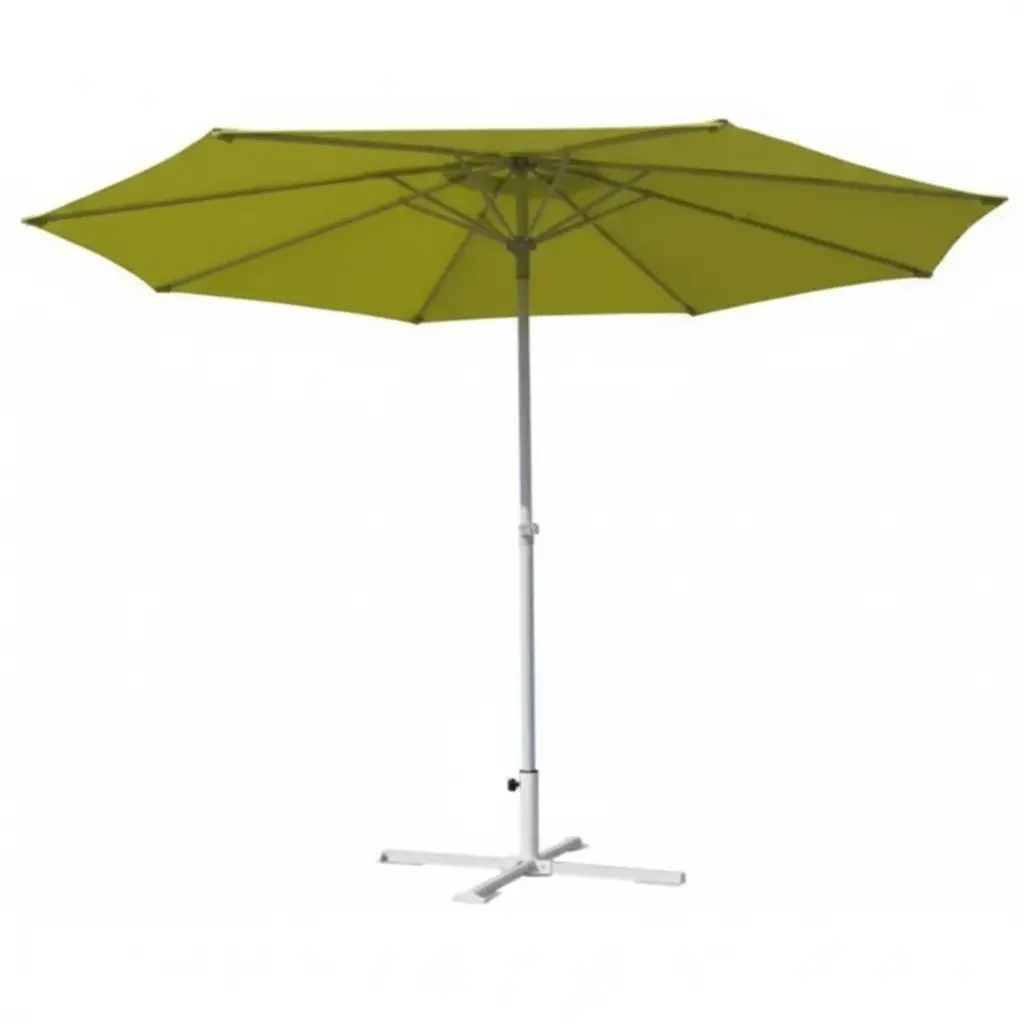
Concrete bases are thick and bulky to achieve weight. Steel plate bases use high-density metal for a thin, low-profile design ideal for tight spaces and walkways.
| Feature | Concrete Base | Steel Plate Base |
|---|---|---|
| Material Strategy | Achieves weight through sheer volume. | Achieves weight through high density. |
| Footprint | Large diameter and visually bulky. | Compact and space-efficient. |
| Profile / Height | Thick and high, creating a trip hazard. | Very thin and low-profile, sits flush. |
| Best Use Case | Open areas where space is not a concern. | Under tables, on balconies, and in high-traffic walkways. |
Footprint vs. Profile: The Space Trade-Off
The fundamental difference comes down to how each material creates stability. Concrete isn’t very dense, so it needs a lot of volume to be heavy enough. This results in bases that are both wide and thick, creating a significant physical obstacle that can be a trip hazard in walkways or crowded patios.
Steel is much denser than concrete. You can get the same stabilizing weight from a much smaller and thinner piece of material. This allows for a flat, low-profile design that takes up minimal vertical space, easily sliding under tables and chairs. The compact footprint reduces visual clutter and makes steel bases a far better option for tight commercial spaces or any area where efficient use of floor space is critical.
Surface Protection for Steel Components
Leaving raw steel outdoors is a recipe for rust, which compromises both the look and the structural integrity of the base. To prevent this, a proper surface treatment is non-negotiable.
Our manufacturing process addresses this directly. We treat all steel components with a phosphating acid wash to prepare and clean the metal surface. Then we apply a durable powder coating. This two-step method provides reliable rust resistance for standard outdoor environments, ensuring the base maintains its appearance and function through seasonal use.
Source 5+ Year Commercial Umbrellas Factory-Direct

What Is the “Zero-Footprint” Solution? (In-Ground Mounts Explained)
An in-ground mount uses a sub-surface anchor instead of a heavy base on the patio. This eliminates trip hazards and visual clutter for a clean, integrated look.
The Principle of Eliminating the Surface Base
The core idea is simple: anchor the umbrella pole directly into the ground instead of weighing it down from above. This removes the large, heavy bases that take up valuable floor space and create obstacles. The result is a clean, flush surface that’s safer and easier to maintain.
- Sub-Surface Anchors: The system uses minimally invasive ground screws or concrete-set sleeves installed below the patio surface.
- No Surface Clutter: It gets rid of the need for wide-profile concrete, steel, or plastic bases that eat up deck or patio real estate.
- Trip Hazard Removal: By creating a flush, unobstructed ground level, you eliminate the common problem of people tripping over bulky stands.
Compatibility with Promotional-Grade Umbrellas
In-ground mounts are engineered for heavy-duty, commercial-grade umbrellas intended for permanent or semi-permanent installation. They are not a good fit for lightweight, seasonal umbrellas.
Our umbrellas are designed as promotional-grade, portable solutions. They are built for low-wind conditions (≤ Grade 3) and are meant to be closed when not in use. Fixing a lightweight umbrella into a permanent, immovable mount creates a significant safety risk. The frame is not engineered to handle the sustained wind loads that a permanent fixture might face, which could lead to structural failure.

Recessed Bases: Is It Possible to Hide the Weight Under a Wooden Deck?
This is a complex construction task needing a professional deck assessment. Standard, seasonal umbrella bases are not engineered for this type of permanent, high-stress installation.
Understanding Deck Load Capacity and Structural Demands
A standard residential deck is not built to handle the kind of weight we’re talking about here. Building codes, like the IRC, often specify a capacity for a distributed load—think people walking around or patio furniture spread out—typically around 50 pounds per square foot. An umbrella base is the exact opposite; it’s a heavy point load, concentrating hundreds of pounds into one small spot.
Placing a heavy base under a deck means the weight isn’t sitting on the deck boards but must be supported directly by the underlying structure. This usually requires reinforcing the joists and even adding new footings to transfer that load safely to the ground. This isn’t a simple product placement. It’s a specialized construction project that requires a structural assessment to avoid damaging the deck or creating a safety hazard.
Why Our Promotional-Grade Systems Are Unsuitable for This Use
Our products are designed and positioned for a completely different purpose. We specialize in “Seasonal Value” and “Lightweight & Portable” umbrellas for entry-level retail and promotions. They are not intended for permanent or integrated construction projects.
Our systems have specific performance limits. They are rated for wind up to Grade 3 (a gentle breeze) and must be closed when not in use or in windy conditions. A permanently installed, recessed system is expected to handle much higher stress and constant exposure. That requires a heavy-duty, commercial-grade product engineered for that environment, which falls outside the scope of our budget-friendly models.
Table Compatibility: How Do You Ensure the Base Fits Under Your Table Legs?
Measure the horizontal space between table legs and the vertical height to any underside supports. The base’s diameter and height must be smaller than these measurements.
A Two-Step Guide to Measuring Your Table’s Clearance
Getting the right fit is straightforward. It just requires two quick measurements to avoid any surprises after purchase.
- First, measure the horizontal space. Find the shortest distance between the inside of your table’s legs.
- Second, measure the vertical clearance from the ground up to the lowest part of the table’s support structure.
- Any umbrella base you choose must have a diameter and height smaller than these two measurements to fit.
Matching Bases for Our Through-Table Market Umbrellas
Our PTMU-series market umbrellas, like the PTMU-001 and PTMU-010, are built to be placed through the central hole in a patio table. Even with these standard designs, always check the official factory spec sheet for exact base dimensions. This is the only way to guarantee a perfect fit with your specific table.
Walkway Safety: Why Are Low-Profile Steel Plates the Safest Option?
Low-profile steel plates are the safest choice for walkways. Their textured, anti-slip surfaces and minimal edge height directly reduce tripping and slipping hazards for pedestrians.
When you’re routing foot traffic through a work site or over uneven ground, preventing falls is the top priority. Low-profile steel plates aren’t just pieces of metal; they are engineered systems designed specifically to create a secure, stable path. Their effectiveness comes down to a few critical design features that address the most common causes of pedestrian accidents.
Reducing Slips and Trips with Surface Design
The primary danger on any temporary walkway is a slip or a trip. The surface design of these plates directly counters these risks. It’s not about just covering a hole, but about how the cover interacts with someone’s feet, especially in poor conditions.
- Anti-Slip Surfaces: Textured or grated surfaces provide the necessary grip to prevent slips. This is essential in environments where rain, oil, or other fluids are present.
- Low-Profile Edges: A raised edge is a trip hazard waiting to happen. These plates are designed with a minimal, beveled edge to create a smooth transition from the ground, so people are far less likely to catch a foot.
- High Visibility: Many plates are finished in bright, high-visibility colors. This makes them easy to see, even in busy or poorly lit areas, alerting pedestrians to the change in surface.
Ensuring Stability and Load-Bearing Integrity
A safe walkway must be completely stable underfoot. Any shifting, bending, or rocking can easily cause a fall. The structural design of steel plates provides the integrity needed for a truly reliable walking surface, even under heavy use.
- Load Capacity: Steel plates are engineered to handle heavy loads without bending, breaking, or flexing. This ensures they are safe for dense foot traffic and can often handle the weight of small equipment.
- Interlocking Design: Many modular systems have interlocking mechanisms. This locks the plates together, preventing individual sections from shifting or creating gaps, and keeps the entire walkway flat and secure.
- Effective Drainage: Perforated or grated designs stop water from pooling on the surface. A dry surface is a safe surface, and good drainage is critical for reducing slip hazards in outdoor settings.
Visual Clutter: How Can Selecting the Right Base “Clean Up” Your Floor Plan?
A base with a minimal footprint cleans up a floor plan by removing a bulky obstacle. It preserves sightlines and makes usable space feel larger and more organized.
Understanding the Concept of a ‘Visual Footprint’
An umbrella base doesn’t just take up physical space; it occupies visual space. A large, bulky, or brightly colored base demands attention. It acts as a focal point that breaks the clean, horizontal lines of a patio or deck, making the area feel disjointed and messy.
This is about visual weight. A heavy-looking base grounds the eye in one spot, which can make the entire space feel smaller and less open. The goal is to make the base disappear. Choosing a base that blends in with the color and texture of your flooring creates a seamless look, effectively erasing the clutter before it even registers.
Practical Choices for Promotional and Seasonal Setups
For B2B clients focused on temporary events or seasonal retail, a heavy, decorative base is just impractical. A simple, low-profile design is far more effective. It does the job without adding unnecessary cost or complexity to setup and takedown.
A minimalist base also aligns perfectly with our ‘Lightweight & Portable’ product philosophy. These umbrellas are designed for quick deployment, and the base needs to support that. From a logistics standpoint, this is a huge deal for our volume retail customers. Smaller, stackable bases are engineered to maximize container loading quantities, which directly impacts the final unit cost and profitability.

Factory Spec Sheet: Where Can I Find Exact Base Dimensions for Each Model?
Find exact base dimensions on factory specification sheets, available as PDFs on manufacturer product pages. These documents detail length, width, height, and weight for proper installation planning.
Accessing and Reading a Standard Spec Sheet
The manufacturer’s website is always the most reliable source for technical data. Look for a downloadable PDF, often labeled “Spec Sheet” or “Technical Data,” directly on the product page. This document is the source of truth for planning and logistics.
- Physical Dimensions: The sheet will list the exact length, width, and height required for footprint calculations.
- Product Weight: This is critical for assessing shipping costs, handling requirements, and ensuring the placement surface can support the load.
- Material Specifications: Knowing the materials helps determine durability and suitability for the intended environment.
Using Pole Diameter Specs to Ensure Base Compatibility
Beyond the base footprint, the pole diameter is a critical dimension listed on the spec sheet. An incorrect match between the pole and the base’s receiver tube means the umbrella will not fit or will be unstable. This detail can’t be overlooked.
For example, our volume-focused PTMU-001 market umbrella has a standard 38mm aluminum pole. It requires a base designed to accommodate that size. A common mistake is trying to pair it with a base meant for our budget-friendly PTMU-010 model, which uses a slimmer 34mm steel pole. Always verify the pole diameter on the spec sheet before ordering bases.
Frequently Asked Questions
How can I hide my patio umbrella base?
A popular solution is to build a custom wooden box or enclosure around the base, which can also serve as a small side table. Other options include using decorative plastic or aluminum covers, or simply positioning the base strategically within your furniture layout to make it less noticeable.
What type of umbrella base has the smallest footprint?
Compact freestanding bases and half-umbrella bases are the most space-efficient options. Compact bases, often around 18 inches in diameter, fit well under tables. Half-bases are designed to sit flush against a wall, making them perfect for balconies and other tight areas.
How can I prevent tripping over my umbrella base?
The simplest way to avoid tripping is to place the base outside of main walking paths. If the base must be in a high-traffic area, using a low-profile deck plate that sits almost flush with the ground is the safest choice to minimize the hazard.
Are flat umbrella bases safe to use in walkways?
Flat bases are safe for walkways only when used under a table. They are specifically designed with a low profile to prevent tripping in this setup. They are not recommended for freestanding use in open walkways because they lack the necessary weight for stability.
Final Thoughts
Choosing a base comes down to managing risk. While basic concrete is cheap, our phosphated, powder-coated steel plates eliminate the trip hazards and rust complaints that damage a retailer’s reputation. This is the difference between a one-time sale and building long-term customer trust.
The spec sheet provides the numbers, but a physical sample confirms the quality. Request a sample to verify the low-profile design and finish firsthand. Our team is ready to provide a quote for your private label or container-load order.




 English
  Spanish
  French
  German
  Portuguese