

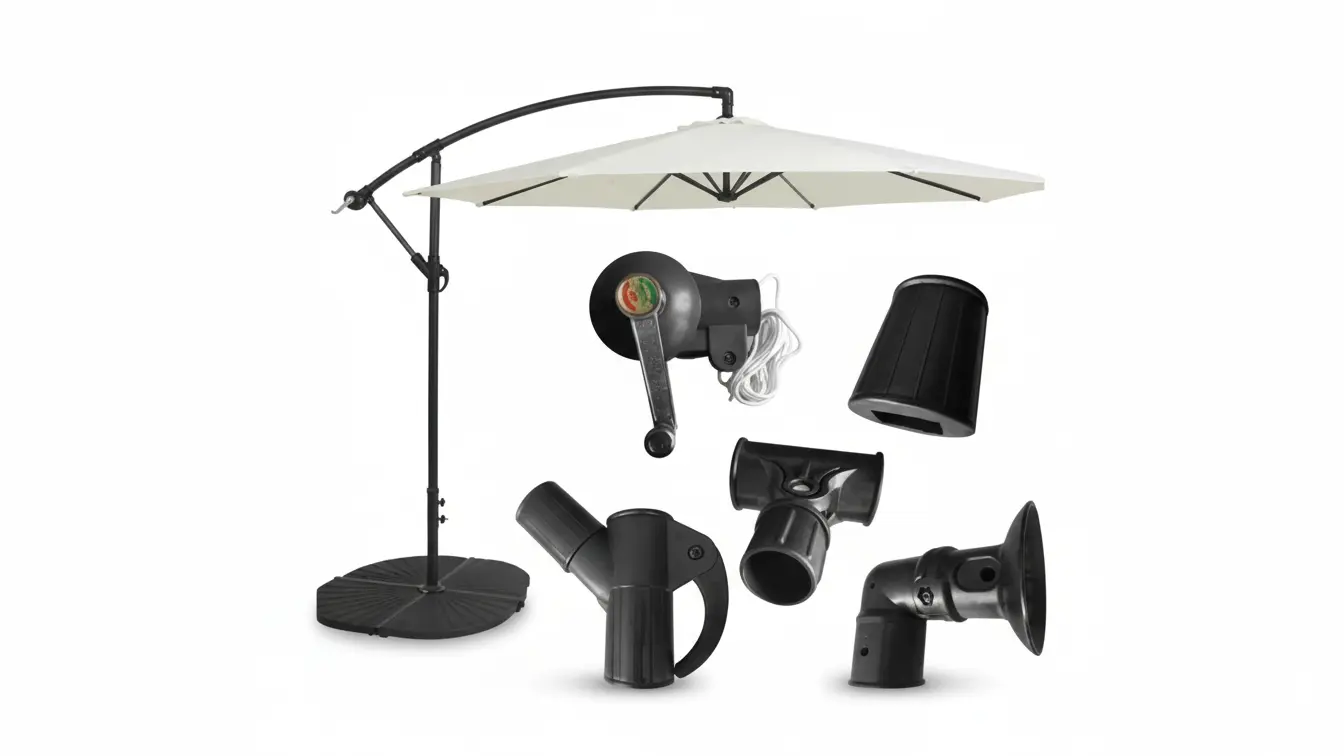
A broken patio umbrella doesn’t always mean you need to buy a new one. Many parts like ribs, hubs, poles, or cranks can be replaced if you know how to identify and source them correctly. The key is finding high‑quality, compatible parts that match your existing frame for safe and lasting results.
This guide explains where to find patio umbrella replacement parts, how to identify the exact component you need, and when to repair versus replace. It helps owners and facility managers make cost‑effective choices that extend umbrella life while keeping outdoor setups looking consistent and professional.
Where to Start Looking for Patio Umbrella Replacement Parts
Start by checking three places for patio umbrella replacement parts: the original umbrella manufacturer’s parts catalog, specialized online umbrella parts retailers, and local patio furniture repair or awning shops that stock common components like ribs, hubs, cords, and bases. Focus on sources that list parts by brand/model number and provide exact measurements so you can match dimensions and hardware instead of guessing.
Commercial buyers often wonder where to begin when a patio umbrella breaks or needs refurbishing. Finding exact-fit parts can save time, reduce waste, and extend product life. The best approach is to go straight to trusted sources that list parts by model and detail fitment information.
Original Manufacturer Parts Catalogs
Manufacturer catalogs are the most reliable starting point for sourcing umbrella replacement parts. Many well-known brands, such as Treasure Garden and California Umbrella, maintain dedicated online catalogs that list all compatible components with measurements and model references.
- ✅ Access parts like finial caps, frames, poles, and hardware sorted by model ID and specifications.
- ✅ Frames often come in standard sizes such as 6.5 ft, 9 ft, and 11 ft, and are available in both wood and aluminum materials.
- ✅ Product pages include detailed compatibility notes, helping buyers match the right item without trial and error.
In our experience, starting with the original manufacturer eliminates the risk of misfit hardware and ensures consistent quality across all components. It also preserves the umbrella’s structural integrity and warranty coverage in commercial applications.
Specialized Online Umbrella Parts Retailers
When an umbrella brand no longer exists or the part is discontinued, specialized retailers can step in. These niche suppliers often employ technicians with decades of umbrella repair experience who can recognize model variations from photos.
- ✅ They stock hundreds of original and compatible parts, organized by umbrella type and brand.
- 💡 Many retailers request images of the damaged component to verify compatibility before shipping.
- ⚠️ They emphasize verifying details such as pole diameter and rib length to avoid fitting issues.
- ✅ They provide an essential backup solution if manufacturer catalogs are unavailable or the umbrella brand is unknown.
These resources are especially helpful for buyers managing large commercial inventories, where matching multiple models can be complex without accurate visual confirmation.
Local Patio Furniture and Awning Repair Shops
For buyers who prefer hands-on inspection or faster turnaround, local service centers can be a valuable choice. They combine replacement part availability with physical repair services—ideal for complex structural fixes involving main hubs or broken ribs.
- ✅ Offer diagnostic services and professional installation for parts like hubs, ribs, cords, and umbrella bases.
- 🚀 Shorter lead times since many carry common parts in stock locally.
- 💡 Provide customized solutions for older or rare umbrella models after assessing original specifications.
Working with local experts can cut repair time and restore usability quickly, especially when large numbers of umbrellas are in use across a commercial site.

Common Mistakes and Cost Considerations
Many buyers make the mistake of ordering generic or “universal” replacement parts without exact size verification. This often leads to poor fitting issues—like misaligned ribs or incompatible hubs—that could compromise umbrella performance or stability.
- ⚠️ Ordering multiple small components can drive up total expenses, including separate shipping costs and additional labor hours.
- 💡 In some cases, total repair costs may exceed the price of a complete replacement frame or an entirely new umbrella.
- ✅ Experts advise identifying the umbrella’s brand and model first, measuring dimensions carefully, consulting manufacturer or specialist catalogs, then comparing total costs between repair and replacement.
This method ensures the most cost-effective decision without sacrificing durability or structural safety—two critical factors for commercial outdoor environments.
How to Identify the Exact Part You Need
To identify the exact replacement part for a broken umbrella, match the part type, dimensions, connection style, and material against the original using millimeter measurements, photos, and any model information, then cross-check with manufacturer diagrams or parts catalogs to ensure proper size, fit, and function.
Finding an exact umbrella replacement part can be tricky when parts look similar but differ by a few millimeters. In our experience, a systematic approach focusing on measurements, connection styles, and material specifications minimizes ordering mistakes.
Step-by-Step Process to Identify Your Replacement Part
Start by carefully inspecting the umbrella to find which specific component failed. Work through these steps to make sure your new part fits perfectly.
- 💡 Identify the broken component type — rib, hub, pole, crank, tilt joint, or canopy.
- 💡 Use a tape measure or caliper to record key dimensions such as rib length, pole diameter, wall thickness, and thread sizes in millimeters.
- 💡 Count structural elements including the number of ribs and note mechanism types like tilt or lift.
- 💡 Locate and document model numbers, size labels, or collection names found on canopy tags or poles.
- 💡 Take clear, high-resolution photos from multiple angles including a ruler for scale to support visual matching.
Following these steps helps ensure compatibility between your current setup and the replacement components available from suppliers or manufacturers.
Key Dimensions and Specifications to Check
Exact measurements matter when matching umbrella replacement parts. The smallest dimensional variance can cause looseness or failure under tension.
| Specification | Typical Range or Value | Notes |
|---|---|---|
| Canopy Diameter | 6–13 ft | Canopy size defines rib length and hub type. |
| Pole Diameter | 32 mm, 38 mm, 48 mm | Residential umbrellas use thinner walls (1.2–1.5 mm); commercial grade can reach 2.0 mm. |
| Number of Ribs | 6–12 ribs | The hub bore must match the pole within ±1 mm for smooth function. |
| Thread Sizes | Usually M6 or M8 | Metric sizes must match both diameter and pitch for secure fitting. |
| Fabric & UV Rating | Acrylic or polyester, UPF 50+ | Commercial-grade fabrics are heavier and offer longer color retention. |
Documenting these specifications before ordering reduces mismatched components and aligns replacement parts with your umbrella’s performance needs.
Common Compatibility Pitfalls and How to Avoid Them
Even experienced users can make small errors when selecting parts. These are the most frequent issues we see and how you can prevent them.
- ⚠️ Assuming all parts for umbrellas of the same size are interchangeable — small differences lead to wobbling or binding.
- ⚠️ Ignoring tolerance limits of 2–3 mm causes tight fits or assemblies that fail to move smoothly.
- ⚠️ Mismatching tilt and lift mechanism types can make hubs or cranks incompatible, leading to locking issues.
- ⚠️ Mixing residential and commercial grade parts risks premature failure or unsafe mounting due to thickness differences.
- ⚠️ Choosing based on looks alone — visual similarity without accurate measurements often leads to returns and frustration.
Checking material thickness, dimensions, and mechanism alignment before ordering avoids costly delays and ensures safe operation once installed.
Best Practices for Confirming Part Selection
Validation before purchasing ensures you get the right part the first time. This saves both time and shipping costs, especially for international orders.
- ✅ Cross-reference all measurements and photos with manufacturer parts catalogs or diagrams.
- ✅ Use any model or product codes to directly verify part numbers or request OEM replacements.
- ✅ Order only the necessary components to cut down on freight and dimensional weight charges.
- ✅ Replace entire assemblies such as bent poles if multiple weaknesses are found for faster installation.
- ✅ Adopt an OEM-style checklist verifying dimensions, materials, and mechanism types before submitting your order.
Following these verification steps gives you confidence that the replacement part will match seamlessly in both fit and performance.
Common Places to Buy Patio Umbrella Replacement Parts
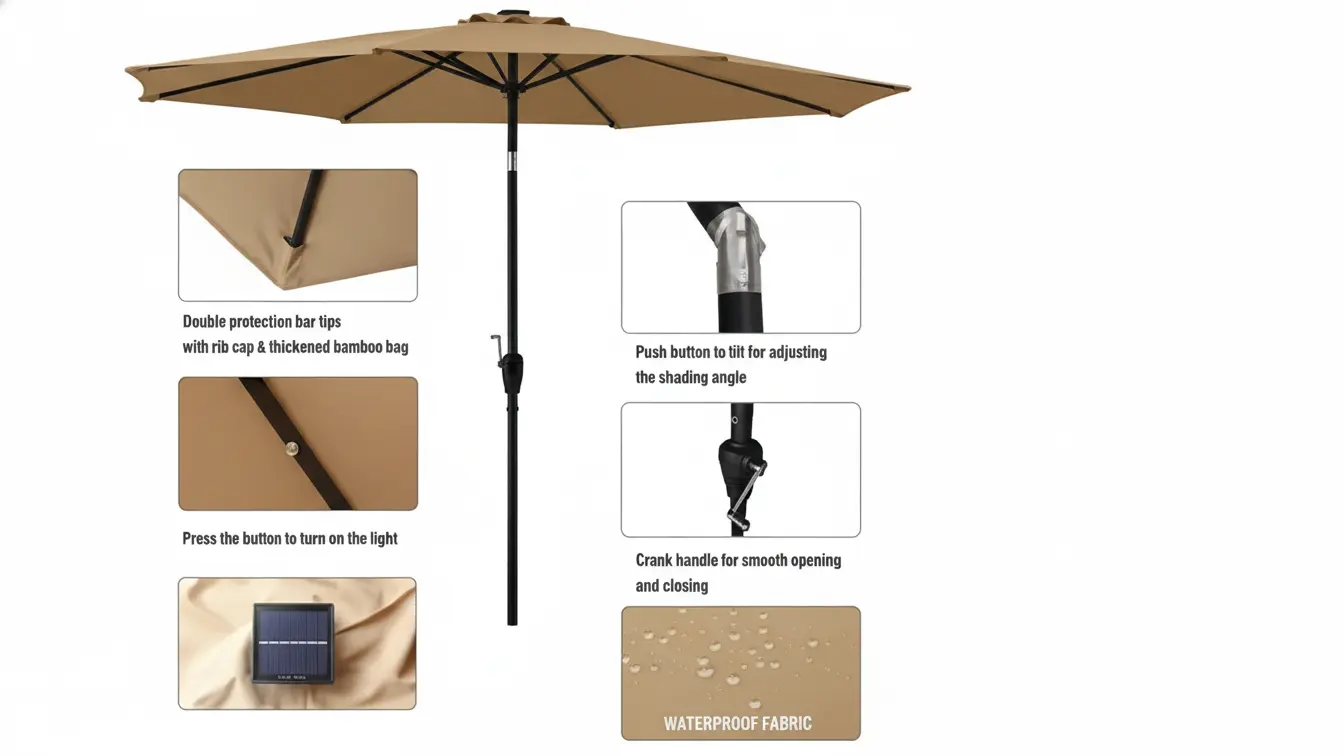
Consumers can purchase patio umbrella replacement parts from specialized outdoor furniture manufacturers, dedicated online retailers, and large marketplaces. These sources offer a variety of parts, ensuring compatibility and quality for repairing or upgrading existing umbrellas.
Business buyers who need replacement parts for patio umbrellas have multiple sourcing options, depending on their volume, quality needs, and budget. The choice between direct manufacturers and online marketplaces often determines the cost savings, warranty coverage, and supply reliability. Below are some of the most effective ways to find the right parts for your needs.
Direct from Manufacturer
Buying directly from the original manufacturer offers the highest level of compatibility and consistent quality. In our experience, clients sourcing from Patiofurnituresco gain access to certified, contract-grade components that meet international durability standards.
- ✅ Certified commercial-grade parts engineered for long-term, heavy use in hospitality and retail environments.
- ✅ OEM customization for handles, ribs, and canopies, ensuring the replacement matches the original design.
- ✅ Scalable production with low minimum orders and global shipping from Taizhou, China.
This route suits project managers, wholesalers, or resort operators who value factory-direct pricing and need consistent part availability for ongoing maintenance or refurbishment.
Specialized Retailers and Online Marketplaces
Some online stores focus exclusively on outdoor furniture accessories and umbrella fittings. They offer a selection of compatible canopies, poles, and cranks for both consumer and commercial use.
- ✅ Niche retailers often carry parts for discontinued models or specialized sizes.
- ✅ Large marketplaces like Amazon or Wayfair provide wide selections and fast delivery. Yet, quality, warranty, and certification may differ by seller.
- ⚠️ Always confirm product details such as dimensions, mounting style, and certification before purchase.
Retail platforms are best for small-scale replacements or urgent one-off orders, while specialized vendors can offer better compatibility guidance and after-sales support.
Key Selection Criteria for Replacement Parts
To ensure longevity and safety, choose parts that align with commercial-grade certification and material standards. Inconsistent or poorly matched parts may reduce stability or performance.
- ✅ Use materials certified under UL4041 and EN581 to guarantee structural durability.
- ✅ Prioritize exact-fit components and customizable finishes to maintain aesthetic and functional consistency.
- ✅ Evaluate supplier reliability, including lead times and documented logistics, especially for recurring orders.
Selecting the right replacement parts saves both time and repair costs while keeping umbrella installations safe and visually cohesive. Working with qualified suppliers like Patiofurnituresco ensures every component meets professional-grade standards and integrates seamlessly into existing setups.
Elevate Your Outdoor Space with Durable, Custom Commercial Umbrellas
Partner directly with Patiofurnituresco to access premium factory-direct quality, innovative solar-lit designs, and personalized branding with a low-risk MOQ of just 10 units. Experience unmatched durability and global logistics support tailored for your commercial success.

Tips for Ordering and Replacing Parts Yourself
Ordering and replacing umbrella parts yourself is feasible and often cost‑effective if you first identify the exact component and model, verify measurements and compatibility, and follow a step‑by‑step checklist for safety and installation. Doing this carefully reduces the risk of ordering the wrong part, protects any remaining warranty, and can extend the umbrella’s life by several seasons.
Many users choose to replace patio umbrella parts themselves instead of buying new units. With correct measurements and verified compatibility, this method helps save money while keeping umbrellas functional for several more seasons.
Cost Savings and Quality Considerations
DIY replacement can offer substantial savings when compared to purchasing new umbrellas. Quality materials also make a difference in longevity and appearance.
| 💡 Insight | Details |
|---|---|
| ✅ Average Savings | DIY replacement costs about 30–70% less than purchasing a new mid-range umbrella. |
| ✅ Generic Parts Pricing | Canopies and ribs typically cost 20–40% of a new umbrella’s retail value for common sizes. |
| 🚀 OEM Supplier Advantage | Ordering from OEM or bulk suppliers can reduce cost by another 10–20%, though lead times and MOQ apply. |
| 💡 Quality Indicators | Powder-coated aluminum or steel parts resist corrosion, and UV-rated fabrics last longer in sunlight. |
| ✅ Lifespan Extension | Replacing fabrics or ribs can increase a sound frame’s life by 2–5 seasons. |
Measurement and Compatibility Checklist
Accurate measurements ensure replacement parts fit and function safely. Each umbrella model may differ slightly in size, style, and connection type.
- 💡 Identify umbrella type — center‑pole or cantilever — plus its size and shape (round, square, rectangular).
- ✅ Count ribs and measure rib length from hub to tip. Use a ruler or caliper for center‑pole diameter.
- ⚠️ Match all measurements within ±0.25 inches to maintain correct tension and geometry.
- 📸 Take photos of the hub, tilt, and crank mechanisms for comparison with supplier listings.
- 💡 Record brand and model number from labels, packaging, or purchase history for quicker part identification.
- ✅ Verify screw, pin, and rivet types in the product description to confirm compatibility.
Step‑by‑Step Ordering and Replacement Process
Following a logical sequence helps avoid errors and ensures a smooth replacement process.
- ✅ Confirm your umbrella type and measure all relevant components before searching for parts.
- 💡 Compare each dimension with the seller’s specifications before finalizing an order.
- ⚠️ Check shipping, return, and restocking policies in advance to prevent hidden costs.
- 🧰 Prepare tools such as screwdrivers, hex keys, or drills, plus replacement hardware if needed.
- 🚀 Plan about 20–60 minutes for canopy or rib replacement, depending on complexity.
- 🕒 Allow 45–90 minutes for crank, tilt, or hub replacement; ensure comfort using hand tools.
- ⚠️ Avoid drilling or modifying parts, which could affect safety certifications or void warranties.
Safety, Warranty, and When to Replace Rather Than Repair
Safety and warranty conditions should always guide your decision. Repair work is worthwhile only when the umbrella’s frame remains stable and free from major damage.
- ⚠️ Modifications not approved by the manufacturer can void warranties immediately.
- ✅ Observe the manufacturer’s wind‑rating limits even after replacement to prevent tipping or breaking.
- 💡 Commercial users must maintain umbrellas to comply with safety codes and insurance standards.
- ❌ Bent or cracked center poles, or fractured hubs, may cost nearly as much as new replacements.
- ⚠️ Umbrellas older than 7–10 years with corrosion or dry‑rotted fabric should be replaced.
- ❌ Discontinued models lacking compatible parts often require expensive custom work.
- 💡 Review cost‑benefit outcomes to choose between repairing and investing in a new umbrella.
Critical Perspective: Smart Repair vs Sunk Cost
DIY replacement makes sense when the umbrella structure remains solid, but poor assessment can turn into wasted effort. Balancing savings with safety is key.
- ✅ Replace only if the frame and existing hardware are structurally sound.
- 💡 DIY installation reduces both cost and waste compared with full replacements.
- ⚠️ Do not assume all same‑sized canopies or mechanisms fit; small discrepancies cause stress and early failure.
- ❌ Mismatched ribs or cranks can shorten the lifespan of the whole unit.
- ⚙️ Consider warranty impact, installation complexity, and potential downtime before attempting major repairs.
- 📸 Keep measurements and photos of your umbrella on file before ordering replacement parts.
- 💡 Advanced repairs like crank or tilt mechanism replacement require mechanical skill; professional assistance may be safer for beginners.
When to Consider Professional Repair vs Replacement
Professional repair is suitable when umbrella damage is minor, inexpensive to fix, and the frame or fabric remains high quality. Replacement is advisable when repair costs reach 40–50% of a new umbrella’s price, multiple components fail simultaneously, or the umbrella nears the end of its useful life.
Deciding whether to repair or replace a patio umbrella depends on the cost of parts, the extent of the damage, and how much usable life remains in the umbrella. In our experience at Patiofurnituresco, understanding the balance between cost-efficiency and product longevity helps users make smarter investment choices — especially when sourcing or learning how to find replacement parts for commercial-grade umbrellas.
Cost and Damage Comparison
Cost is the first metric most owners evaluate. Small repairs often make sense if parts and labor stay within a certain threshold relative to a new umbrella’s price. The following table summarizes general cost and damage comparisons for repair vs replacement:
| Criteria | Repair ✅ | Replacement ❌ |
| Cost Ratio vs New Umbrella | Below 20–30% | Above 40–50% |
| Examples | Fixing 1–2 bent ribs or canopy tears under 5–10 cm | Cracked poles, failed hubs, multiple broken ribs |
| Expected Life After Service | Extends umbrella use by 1–3 years | Resets lifespan completely |
Repair can be a financially sound choice if the umbrella retains structural integrity and uses quality materials. When labor and materials approach nearly half the cost of a new model, replacement becomes more practical.
Product Quality, Age, and Usage Factors
The umbrella’s build quality and how often it’s used also determine which action is more economical. High-end or commercial umbrellas designed for heavy use often justify professional repair, while low-cost versions don’t yield the same benefit.
- ✅ Repair fits premium umbrellas within the first half of their expected lifespan.
- ❌ Replacement suits older, low-cost umbrellas exposed to prolonged sun or wind damage.
- ⚠️ If repairs exceed 3 times per year, replacing may reduce cumulative costs.
- 💡 For hospitality or retail use, safety and liability concerns should guide decisions toward replacement.
In our factory direct experience, contract-grade umbrellas often feature replaceable ribs and canopies designed for easy maintenance, helping businesses avoid frequent replacements.
Hidden Costs and Practical Considerations
Even if a repair seems affordable, additional factors can shift the balance toward replacement. These include timing, shipping, visual uniformity, and operational downtime.
- ⚠️ Emergency or peak-season repairs can cost 20–50% more than standard service rates.
- ❌ Rush shipping of parts and expedited labor raise total cost and downtime.
- ✅ Maintaining visual consistency across umbrella sets can justify targeted repair if matching parts exist.
- 💡 Applying structured asset maintenance rules — like those for property equipment — brings predictability to repair budgeting.
Commercial operators benefit from pre-scheduling maintenance during off-peak months and keeping a stock of common replacement parts to shorten lead times.
Critical Perspective on Repair vs Replacement
Many assume repairing is always the cheaper path, but this isn’t always the case. Once repairs reach more than half of the cost of a new umbrella, replacement usually offers better long-term value.
- ⚙️ Higher-end umbrellas feature modular, replaceable parts that support cost-effective maintenance.
- ✅ Applying cost-to-age and repair-frequency rules improves budgeting accuracy.
- ⚠️ Hidden costs like repeated breakdowns, downtime, and emergency fixes often offset short-term repair savings.
- 💡 Treating umbrellas as maintainable assets, not disposables, extends their return on investment.
At Patiofurnituresco, we help B2B partners assess not just repair costs but also part compatibility and supply availability. Knowing how to find replacement parts through a direct manufacturer allows businesses to preserve uniform quality while minimizing lifetime ownership costs.
How to Avoid Common Replacement Mistakes
To avoid common replacement mistakes, verify exact part specifications, source from reliable suppliers with clear product certifications, and utilize OEM/ODM options when customization is needed to ensure fit and durability.
When a patio umbrella breaks, replacing parts can be more complex than it seems. Ordering the wrong frame size or mismatched components often leads to wasted time and higher costs. The following sections break down what to check before purchasing any replacement part.
Understanding Common Replacement Mistakes
In our experience, most replacement errors stem from confusion between umbrella model types or failing to confirm precise measurements. Choosing parts designed for a cantilever model, for example, won’t fit a center-pole umbrella.
- ⚠️ Confusing umbrella frame types and sizes leading to incompatible parts.
- ❌ Purchasing from unreliable suppliers lacking certification or warranty.
- 💡 Ignoring OEM customization capabilities that can better match original product performance.
These mistakes can easily be avoided by matching detailed product specifications and checking for valid factory credentials.
Key Considerations When Choosing Replacement Parts
Before ordering, confirm the part’s material matches the original. Using lower-grade metal or non-compatible wicker can affect stability and longevity, especially in commercial environments.
- ✅ Verify material compatibility such as T6 aluminum frames or HDPE wicker to ensure durability.
- ✅ Confirm product certifications (e.g., UL4041, EN581) for commercial-grade quality.
- 💡 Assess supplier capabilities for minimum order quantities and customization to match original product specifications.
Reliable, certified materials prevent premature wear and extend the umbrella’s life, especially for hotels or event venues that rely on high-traffic use.
Benefits of Direct Manufacturer Sourcing
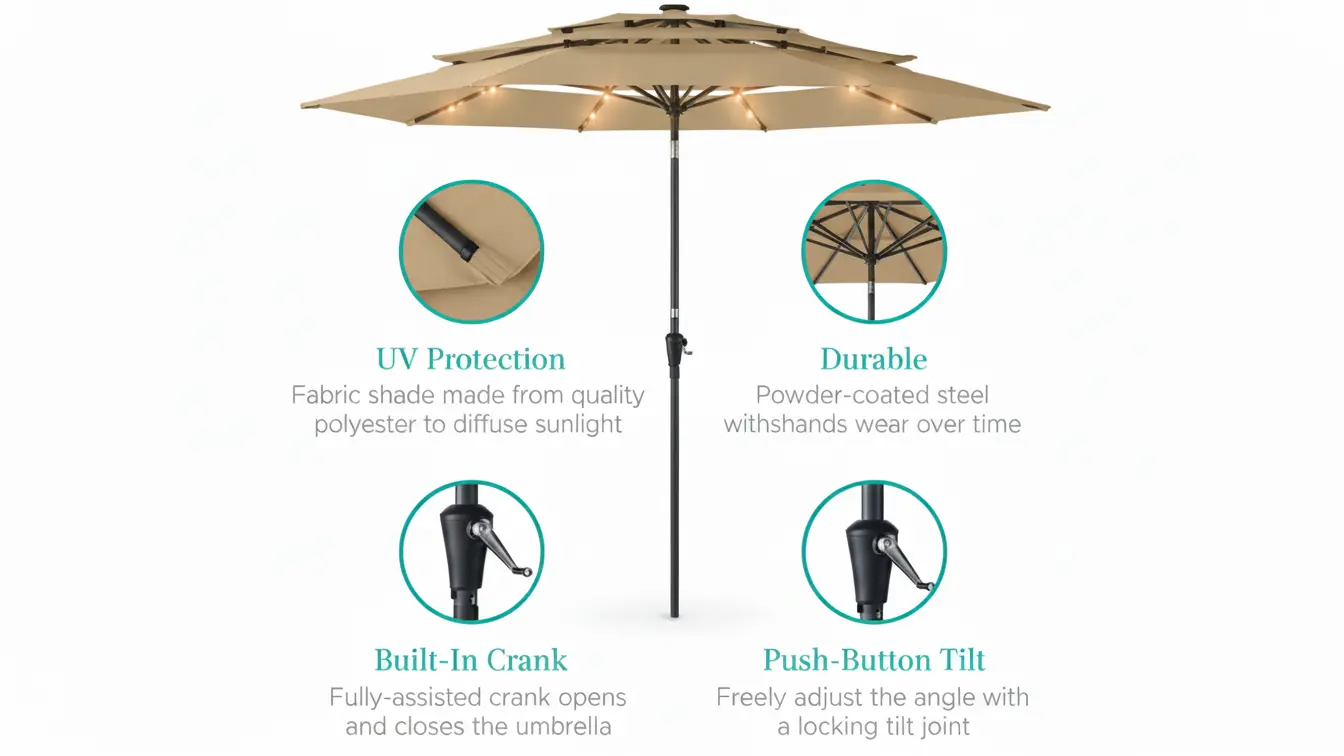
Sourcing parts directly from a certified manufacturer like Patiofurnituresco ensures the best fit and quality control. This approach eliminates intermediary costs and allows precise customization aligned with your umbrella model.
- 🚀 Access to OEM/ODM customization ensures better fit and extended product life.
- ✅ Elimination of middlemen lowers costs and reduces lead times.
- 💡 Certified contract-grade materials provide reliability for commercial use.
Patiofurnituresco, with 16 years of industry expertise and certifications under UL4041 and EN581, supports businesses seeking dependable and scalable sourcing for replacement parts.
Summary and Final Advice
Repairing a damaged umbrella is usually cheaper and more sustainable if issues involve common parts like ribs or canopy. However, if repair costs near 50–60% of a new umbrella or multiple structural components fail, replacing the whole umbrella makes more sense. Always verify measurements and model details before ordering replacement parts and choose reputable sellers with clear return policies.
This section wraps up how to make informed decisions when choosing to repair or replace patio umbrellas. The focus is on balancing cost, compatibility, and sustainability when sourcing or replacing components.
Cost and Repair vs. Replace Considerations
| 💡 Item Type | Average Cost Range | Decision Guidance |
|---|---|---|
| Basic Umbrella (6–9 ft) | $30–$60 | ✅ Budget-friendly option for light residential use |
| Mid-range Umbrella | $80–$200 | ✅ Suitable for long-term use or moderate wind resistance |
| Commercial-grade Umbrella | $300+ | 🚀 Designed for heavy-duty or business environments |
| Replacement Canopy | $20–$80 | ✅ Worth repairing if frame is intact (less than 30–40% of new price) |
| Ribs or Rib Arms | $10–$60 per set | ⚠️ If multiple ribs are bent, total cost can hit 50–70% of new umbrella value |
In our experience, when total repair costs—including parts and labor—reach around half the price of a new umbrella, replacement becomes more sensible. Keep future maintenance in mind before investing in extensive frame repairs.
Measurement and Compatibility Checks
To avoid mismatched parts and wasted time, take careful measurements before ordering. Each component must align with brand-specific tolerances and design features.
- 💡 Measure canopy diameter (commonly 9–11 ft) and count the number of ribs (6 or 8).
- 💡 Check rib lengths from the center hub to the canopy edge for precise rib replacements.
- 💡 Measure the pole diameter—typically 1.5–1.9 inches (38–48 mm)—to ensure base or bracket fit.
- 💡 Identify opening mechanisms (crank lift or push-up) and tilt design (tilt or fixed) to match internal hardware.
- ⚠️ Do not assume “universal” parts will fit; confirm brand or model specifications before purchase.
Sustainability and Practical Advice
Repairing umbrellas thoughtfully minimizes environmental impact and total material use. When possible, retain sound frames and replace only worn components like the canopy.
- ✅ Replacing specific parts extends product life and avoids full replacements for several seasons.
- ✅ Swapping only the canopy can cut material use by over 50% compared to buying new.
- ⚠️ Avoid repairing units with rusted, cracked, or obsolete frames likely to fail again soon.
- 💡 Choose models offering easy access to spare parts, neutral fabric tones, and warranty protections for simpler maintenance.
- ⚠️ Factor in shipping and potential return costs, as they sometimes offset repair savings.
Final Checklist for Ordering Replacement Parts
Before purchasing or contacting suppliers about how to find replacement parts, go through a detailed assessment to reduce return risks and ensure the right match.
- ✅ Document all visible damage using clear photos and written notes.
- ✅ Measure canopy diameter, rib count, rib length, and pole diameter accurately.
- 💡 Record brand name and model identifiers for better part matching in catalogs or online listings.
- ✅ Search using these details instead of only generic size descriptions.
- ⚠️ Buy from verified sellers offering transparent product specs and solid return policies.
In our experience at Patiofurnituresco, careful measurements and supplier verification can prevent delays and returns. These final checkpoints also support sustainable decisions by ensuring every replacement part actually fits and extends the life of your umbrella.
Summary and Final Advice
Repairing or replacing a patio umbrella depends on accurate measurements, verified compatibility, and realistic cost analysis. By identifying each part through model numbers, detailed specs, and trusted supplier catalogs, you reduce return risks and ensure consistent quality. Thoughtful replacements—such as canopies, ribs, or frames—extend product life while lowering total maintenance costs and material waste.
Sourcing directly from reliable manufacturers like Patiofurnituresco gives business buyers better quality control, scalability, and cost predictability. Whether managing seasonal maintenance or full refurbishments, combining smart measurement practices with dependable supply partners keeps your outdoor assets functional, safe, and profitable for years to come.


 English
  Spanish
  French
  German
  Portuguese