


Overview of Patio Umbrellas
Patio umbrellas are portable, lower-cost shade solutions suited for small seating or dining areas. They offer flexible, budget-friendly shade for 1–2 tables. Gazebos provide larger, more permanent coverage with better weather protection at higher upfront costs and longer lifespans, ideal for bigger gatherings.
In our experience working with outdoor furniture for commercial spaces, choosing between a patio umbrella and a gazebo often depends on coverage, budget, and purpose. The sections below compare both options in ways relevant to hospitality buyers, event hosts, and property developers.
Typical Sizes and Coverage
| Type | Specifications | Coverage & Usage |
| ☂️ Standard Patio Umbrella | 7–11 ft diameter | Covers roughly 38–85 sq ft, fitting 1 dining set or up to 4 loungers. |
| ☂️ Cantilever/Offset Umbrella | 10–13 ft canopy | Shades 6–8 seat dining sets or 8–10 ft pool lounge zones. |
| 🏠 10×10 Gazebo | 100 sq ft footprint | Accommodates 6–8 seat dining area or multiple 4‑seat sets. |
| 🏠 Large Gazebo (10×12–12×16 ft) | 120–192 sq ft area | Suitable for 8–20 guests, depending on layout. |
Patio umbrellas are flexible for small-scale seating, while gazebos define a more enclosed, weather‑resistant area suitable for larger gatherings or semi‑permanent installations.
Cost Comparison and Investment
| Product Type | Price Range | Investment Level |
| ☂️ Entry-Level Umbrella | Starting around $50 | Budget-friendly, good for cafés and small decks. |
| ☂️ Premium Umbrella | $300–$1,000+ (up to $8,000 for custom models) | Higher ROI in venues requiring luxury aesthetics. |
| 🏠 Portable Gazebo | $35–$500 | Affordable event coverage; short setup duration. |
| 🏠 Permanent/Custom Gazebo | $2,500+ to $100,000+ | Long-term fixture suited for resorts and properties. |
Gazebos demand higher initial budgets but offer extended lifespan and protection, while umbrellas give quicker ROI through ease of replacement and lower cost per seating zone.
Durability and Weather Resistance
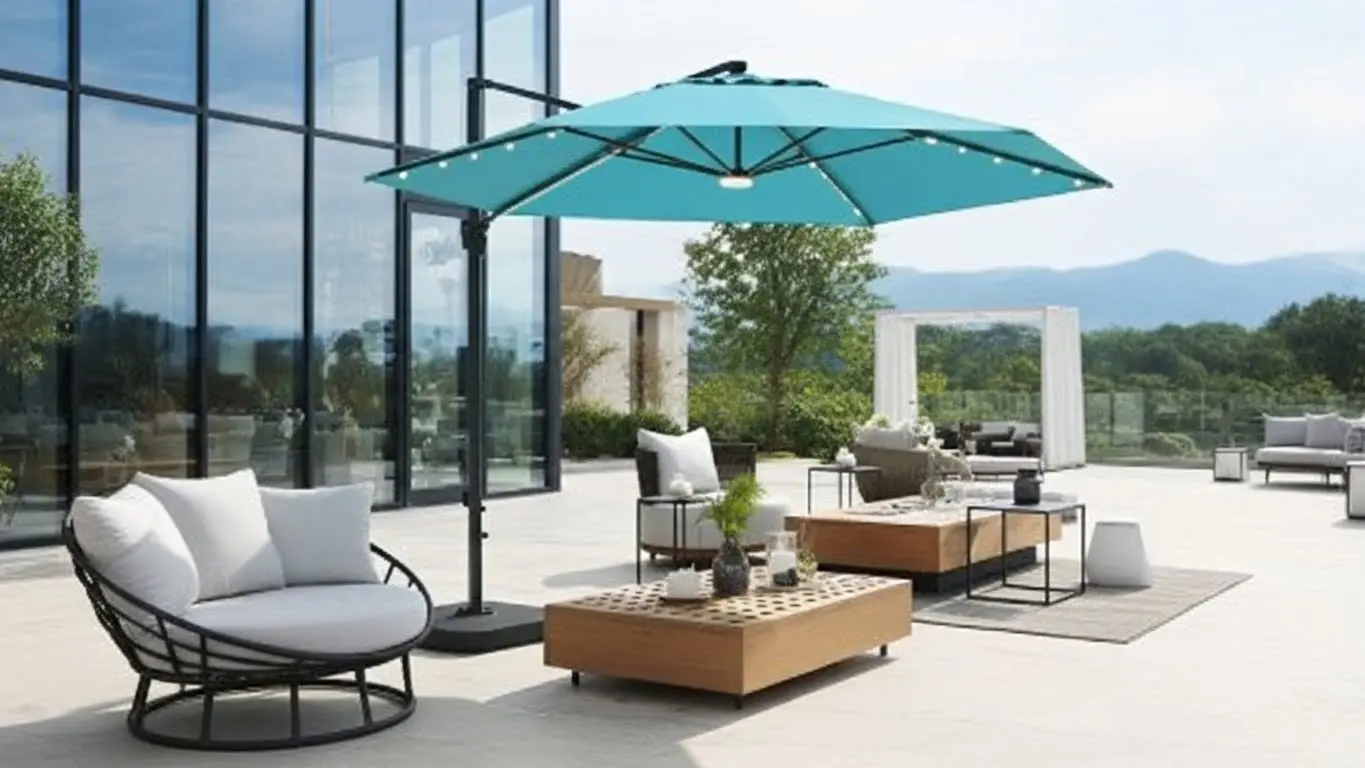
- ☂️ Umbrellas use lightweight aluminum or steel frames. They shield against sun and light rain, but must be closed during strong winds.
- 🏠 Permanent gazebos with wood, steel, or aluminum frames remain stable and secure, ideal for windy or seasonal climates.
- ⚙️ Reinforced portable gazebos balance mobility and robustness but still need anchoring or weights for steady performance.
For multi‑season operations, a gazebo provides the best structural integrity. For flexible seating that moves daily, umbrellas save labor and space.
Installation, Mobility, and Storage
- 🕒 Umbrellas assemble within minutes; bases typically weigh 10–30+ kg, or 50 kg for large cantilever styles.
- 👥 Portable gazebos take about 20–60 minutes with two people, particularly on first setup.
- ⚒️ Permanent gazebos require foundation work, permits, and professional installers taking several days or weeks.
- 📦 Storage: Umbrellas store compactly; foldable gazebos fit in wheeled bags but occupy more space.
Functional Use Cases and Benefits
Different functions suit different setups. Umbrellas and gazebos can serve distinct needs depending on the venue’s layout and purpose.
- ☂️ Umbrellas work well for shading single dining tables, pool decks, or small event stations.
- 🏠 10×10 gazebos create sheltered “rooms” for catering areas, DJs, or seated meals.
- 🕐 Gazebos fit better for multi‑day or weather‑exposed events, reducing daily setup time.
- 💡 Umbrellas allow branded canopies for cafés and marketing promotions; gazebos deliver stronger architectural appeal with lighting or drapery options.
Critical Perspectives and Common Misconceptions
- ⚠️ Large umbrellas, even cantilevered ones, cannot match the full stability or all‑weather strength of gazebos and may require extra management in high winds.
- ✅ Portable gazebos aren’t always flimsy; with reinforced builds, they can outperform multiple umbrellas during wind or rain events.
- 💡 Final decisions depend on revenue goals and duration of use. Umbrellas fit short events or tight budgets, while gazebos suit long‑term outdoor spaces needing ambiance and reliability.
Overview of Pop-Up Gazebos
Pop-up gazebos are lightweight, portable shelters designed for fast setup (often under 5 minutes) with telescopic legs and a folding frame. They provide flexible, temporary shade ideal for events, patios, and markets, prioritizing quick assembly and portability over permanent aesthetics.
Pop-up gazebos bring a balance between convenience and outdoor comfort for homes and commercial events. They serve as quick-deploy shade systems ideal for users choosing between a patio umbrella and a small event tent.
Definition and Key Features
In our experience, pop-up gazebos are defined by their quick installation mechanism and portable frame. They are engineered for situations where time efficiency and mobility are top priorities.
- ✅ Lightweight and portable structures set up in under 5 minutes.
- ✅ Telescopic legs and folding scissor-frames enable compact storage and easy transport.
- ✅ Most common footprint: 3×3 m (10×10 ft) providing true square coverage.
- ✅ Ideal for temporary shade at events, patios, and markets.
- ✅ Emphasis on speed, portability, and flexibility rather than permanent aesthetics.
Market Size and Growth Trends
The global pop-up gazebo market continues to grow steadily across both residential and commercial segments. Rising outdoor recreation and event activity are driving this upward curve.
| 📊 Segment | Value | Growth (CAGR) | Key Drivers |
|---|---|---|---|
| Global Pop-Up Gazebo Market | $2.5 billion (2023) → $4.3 billion (2032) | 🚀 6.2% | Outdoor leisure growth, expanding event sector |
| Commercial Pop-Up Canopy | $1.2 billion (2024) → $2.5 billion (2033) | 🚀 8.9% | Event planning jobs rising by 11% (2020–2030) |
Asia-Pacific leads in growth thanks to increased disposable income and outdoor social trends, while North America and Europe maintain steady demand linked to patio and backyard improvements. Online sales channels now account for a large share, reflecting the shift toward convenience-based purchasing.
Materials and Design Specifications
Materials determine durability, portability, and weather performance. Pop-up gazebos are built from strong yet lightweight materials, adapted to match different usage intensities.
- ✅ Frames: Powder-coated steel for entry-level models; aluminum and reinforced aluminum in mid to high-end designs.
- ✅ Fabrics: Polyester or Oxford with PU/PVC coatings, offering water resistance and UPF 50+ sun protection.
- ✅ Setup Times: Premium models deploy in under 2 minutes; standard units within 10 minutes by 1–2 people.
- ✅ Weight Range: 15–25 kg for light models; over 30 kg for commercial-grade units with higher wind stability.
- ✅ Accessories: Sidewalls, leg weights, stakes, guy ropes, rain gutters, and wheeled carry bags enhance function and transport.
Common Use Cases and Applications
Pop-up gazebos align well with both personal backyard setups and professional event needs. They bridge the gap between a patio umbrella’s flexibility and a permanent gazebo’s coverage.
- ✅ Residential: Gardens, patios, parties, and camping use for quick shade and protection.
- ✅ Commercial: Trade fairs, markets, cafés, and pop-up dining zones that demand mobility and branding surfaces.
- ✅ Modular setups: Connect multiple 3×3 m or 3×6 m units for larger corporate or catering events.
- ✅ Branding: Printable roofs and sidewalls provide on-site promotional visibility.
- ✅ Compact storage: Fits easily in small vehicles for multi-location deployment.
Performance Benefits and Limitations
Every structure type has trade-offs, and pop-up gazebos balance convenience with environmental limitations.
| Aspect | Advantages ✅ | Limitations ❌ |
|---|---|---|
| Setup & Labor | Quick deployment (5–10 min) minimizes labor. | Requires manual anchoring to stay stable. |
| Wind Resistance | Ballast weights can improve stability. | ⚠️ Must be dismantled under high winds. |
| Durability | Commercial frames offer long service life. | Lower-tier models have reduced UV durability. |
| Aesthetics | Brandable surfaces improve visibility. | Less refined look than hardtop gazebos. |
Proper anchoring using weights, stakes, and ropes keeps the structure safe even on paved or exposed sites.

Critical Perspectives and Buyer Guidance
For B2B buyers, frame thickness, fabric grade, and verified wind ratings define value far more than initial price. The belief that all pop-up gazebos are flimsy is inaccurate—many commercial units are built for demanding operations.
- 💡 Assess verified wind ratings, coating durability, and life-cycle cost over multiple deployments.
- 💡 Avoid underestimating anchoring importance; it’s crucial for safety and lifespan.
- ✅ For frequent branded events, modular pop-up gazebos provide better ROI than umbrellas.
- ✅ For casual patio or semi-permanent use, a cantilever umbrella can be more space-efficient.
- ⚙️ Final selection depends on frequency, mobility, and required shaded coverage.
Size and Coverage Comparison
A standard 10×10 ft gazebo provides about 100 sq ft of consistent shade for 6–8 people, while patio umbrellas vary from 28 to 133 sq ft depending on diameter. Gazebos offer stable, fixed roof coverage ideal for gatherings, while umbrellas are portable and adjustable but create smaller, shifting shaded zones.
When planning outdoor seating or dining zones, the footprint and shade consistency often determine whether a gazebo or a patio umbrella is the smarter choice. In our experience, understanding the real coverage per person helps both residential and commercial buyers size their outdoor setups efficiently.
Typical Sizes and Shade Coverage Comparison
| Type | Typical Size / Footprint | Shade Coverage | Shade Rating | Seats Covered | Portability |
|---|---|---|---|---|---|
| Gazebo | 10×10 ft – 12×12 ft (100–144 sq ft) | Consistent, full-roof shade | ✅ High | 4–8 people | ❌ Low |
| Patio Umbrella | 6 ft – 13 ft diameter | 28–133 sq ft shade area | ⚠️ Medium | 2–6 people | ✅ High |
When exploring gazebo vs patio umbrella coverage, a gazebo provides approximately 12–17 sq ft of shade per person, while a 9 ft umbrella yields about 11–16 sq ft, and an 11 ft unit covers roughly 16–24 sq ft. Gazebos create fixed layouts for events, whereas umbrellas bring layout flexibility ideal for smaller decks or cafés.
Practical Use Cases and Layout Considerations
A 10×10 ft gazebo typically shelters a dining table for 6–8 guests or 2–4 chaise lounges with comfortable circulation space. The shade remains consistent no matter how the sun moves, making it optimal for long gatherings.
By contrast, 9–11 ft umbrellas comfortably cover a table for 4–6 guests or a pair of chaises, yet may leave partial sun gaps as the sun angle shifts. This mobility allows users to tweak positioning throughout the day.
- ✅ Umbrellas excel in small patios, café settings, or pool decks.
- ✅ Gazebos serve well in gardens, event zones, or as outdoor dining rooms.
- ⚠️ Multiple umbrellas may be required to replicate a gazebo’s all-day shade consistency.
Cost and Portability Comparison
| Product Type | Entry-Level Cost | Premium Range | Portability | Installation Type |
|---|---|---|---|---|
| Patio Umbrella | $50–$100 (6–9 ft) | $500–$1,000+ (11–13 ft cantilever) | ✅ Easily stored and repositioned | Freestanding / Weighted base |
| Gazebo | $200–$400 (portable) | $1,000–$3,000+ (hardtop, permanent) | ❌ Semi-fixed or fixed position | Anchored or bolted |
Commercial buyers often evaluate these factors alongside long-term usability. While umbrellas offer flexibility and ease, gazebos reflect a more permanent investment that defines outdoor space and enhances property value.
Critical Perspective on Coverage and Usage
A large umbrella, even with a 13 ft canopy, cannot fully replicate the enclosed shade zone of a 10×10 ft gazebo during group events. The difference lies in consistency and directional sunlight coverage.
- ❌ Single umbrellas leave unshaded areas as the sun shifts.
- ✅ Gazebos maintain full protection but reduce flexibility.
- ✅ Umbrellas allow dynamic shading and easy reconfiguration for cafés, lounges, or changing seating layouts.
For event venues or hospitality projects, combining both structures often provides the best outcome. Using gazebos for core seating areas and umbrellas for overflow zones maximizes both coverage stability and space adaptability, improving overall ROI for B2B clients.
Elevate Your Outdoor Spaces with Custom Commercial-Grade Umbrellas
Partner directly with a trusted manufacturer to access durable, innovative patio umbrellas designed for a 5+ year lifecycle and full OEM customization. Launch your next project confidently with low MOQ, global logistics, and proven quality certifications.

Ease of Setup and Portability
Both patio umbrellas and gazebos offer benefits in portability and ease of setup, but patio umbrellas generally provide quicker installation and greater flexibility for moving and adjusting, while gazebos offer more stable, larger coverage that may require more effort to assemble and relocate.
When comparing patio umbrella vs gazebo options, setup speed and mobility often become decisive factors. For families, event hosts, or hospitality venues, being able to assemble and move shade structures quickly can reduce downtime and improve space efficiency.
Definition and Setup Requirements
Ease of setup and portability describe how fast and conveniently a structure can be installed, adjusted, or transported between locations. These qualities affect user experience, labor efficiency, and operational flexibility.
- ✅ Patio umbrellas typically have lightweight frames and simple crank or tilt mechanisms that let users open or close them within minutes.
- ⚙️ Gazebos, especially hardtop models, involve more complex assembly with multiple panels and fasteners, often needing tools and careful alignment.
- 🚚 Portability favors umbrellas due to their compact folded size and manageable weight, while gazebos are bulkier and usually require more than one person or support equipment to move.
In our experience, contract-grade umbrellas from Patiofurnituresco are engineered to deliver commercial durability without sacrificing quick setup, making them ideal for rotating event layouts and seasonal use.
Comparison of Portability and Setup Time
Setup time is a major differentiator when considering a patio umbrella vs gazebo. The table below highlights their contrasting characteristics.
| Feature | Patio Umbrella ⛱️ | Gazebo 🏠 |
|---|---|---|
| Setup Time | 🚀 A few minutes; often under 5–10 minutes | ⚠️ Several hours depending on size and design |
| Portability | ✅ Lightweight and compact when folded | ❌ Bulky and requires disassembly or multiple people |
| Ideal Use | 🎉 Short-term shade for cafes, patios, or events | 🏡 Semi-permanent shelter for lounges or garden setups |
Patiofurnituresco’s umbrellas balance strength and maneuverability by using T6 aluminum, offering high wind resistance while remaining easy to deploy. In contrast, hardtop gazebos deliver solid protection for longer-term use but require anchor points and precise assembly.

Benefits for Commercial and Hospitality Clients
For businesses in the hospitality, events, and retail sectors, setup speed and portability directly influence labor efficiency and operational turnover. Rapid setup means fewer staff hours and faster guest service readiness.
- 🚀 Quick setup and compact storage reduce labor costs and improve turnaround during peak seasons.
- 💡 Flexible placement allows restaurants or resorts to adapt layouts based on sunlight direction, crowd size, or event flow.
- ✅ Patiofurnituresco’s contract-grade umbrellas are built for heavy use, supporting frequent reconfiguration without performance loss.
- 🏗️ For clients planning long-term installations, gazebos remain a durable option, though they require detailed scheduling and space planning.
In evolving outdoor environments, umbrellas provide the adaptability to match customer flow, while gazebos serve as fixed focal points. Both play important roles in shaping functional, comfortable outdoor experiences for commercial operations.
Durability and Weather Resistance
Gazebos are significantly more durable and weather-resistant than patio umbrellas, especially for long-term use in harsh conditions, but require more maintenance and a higher initial investment.
The comparison of patio umbrella vs gazebo durability shows clear differences in structure, lifespan, and resistance to harsh weather. In our experience, businesses and families alike value products that can withstand wind, rain, and sun exposure while maintaining appearance and function.
Lifespan and Material Durability
Gazebos are built for long-term use, often lasting more than 10 years with proper maintenance. Permanent models use frames made from aluminum, galvanized steel, or solid wood, providing exceptional structural integrity.
Patio umbrellas, depending on material quality, typically last around 3–5 years, especially if frequently exposed to sun and wind. Even though high-end umbrellas with marine-grade fabrics extend their lifespan, they cannot match the robustness of gazebo-grade construction.
| Feature | Gazebo ✅ | Patio Umbrella ☂️ |
| Average Lifespan | 10+ years | 3–5 years |
| Frame Materials | Aluminum, steel, or wood (heavy-duty) | Steel or fiberglass (lightweight) |
| Fabric Grade | All-weather polycarbonate or metal roof | Marine-grade fabric (premium models) |
Wind and Weather Resistance
Gazebos, particularly fixed hardtop designs, can handle stronger winds and heavier rain thanks to their permanent anchoring and solid roofing. Many commercial models are rated for high-wind zones and provide year-round protection.
Umbrellas, even marine-grade options, have limited resistance to storms or gusts. They’re best suited for moderate weather conditions and temporary setups.
| Condition | Gazebo Performance ✅ | Umbrella Performance ☂️ |
| Wind Endurance | High for permanent models | ⚠️ Low to medium |
| Sun Protection | Full coverage with solid or polycarbonate roof | Good, depends on fabric density |
| Rain Resistance | Excellent – enclosed and sloped roof design | Limited – water runoff only if tilted properly |
Maintenance and Cost Considerations
While gazebos deliver unmatched durability, they also demand routine care. Wooden gazebos need sealing or staining, and all metal frames benefit from regular cleaning to prevent corrosion.
Umbrellas, on the other hand, require minimal upkeep. Folding and storing them during off-season keeps fabrics and mechanisms intact for longer use.
| Aspect | Gazebo 💪 | Umbrella 🎯 |
| Maintenance Level | Medium to high – cleaning, sealing, staining | Low – occasional cleaning and storage |
| Cost Range | $35 (portable) to $100,000+ (custom) | $50–$300 commercial-grade average |
Critical Perspective for B2B Selection
For long-term, high-traffic commercial environments such as hotel patios or outdoor dining areas, gazebos deliver lasting performance and structural integrity. They justify the investment with strong brand presentation and long product cycles.
Umbrellas are ideal for flexible or seasonal needs, including cafés, event rentals, or resorts that switch layouts frequently. They balance affordability and convenience when weather demands are lighter.
- ✅ Gazebos fit permanent installations, ensuring years of service in hotels, retail plazas, or large patios.
- ✅ Umbrellas work well for smaller budgets or dynamic seating plans where quick setup and storage matter.
- 💡 B2B buyers should align choice with usage duration, local climate, and maintenance capabilities to optimize ROI.
Style and Aesthetic Differences
Patio umbrellas feature lighter, slimmer profiles with colorful, floating canopies providing temporary shade, while gazebos serve as permanent architectural structures with solid roofs and posts, defining an outdoor room-like space and becoming a focal point in the design.
In our experience designing outdoor furniture for commercial spaces, the contrast between a patio umbrella and a gazebo goes far beyond shade alone. The two structures differ sharply in form, scale, and the way they shape outdoor areas visually and functionally.
Visual Footprint and Structural Form
| Aspect | Patio Umbrella ☂️ | Gazebo 🏠 |
|---|---|---|
| Typical Size | 9–13 ft canopy covering a 6–8 seat dining set. | 10×10 ft or 10×12 ft footprint, giving a fixed room-like area. |
| Structure | Single center pole or offset mast with exposed ribs and slim canopy. | Multiple posts, solid roof panels, and optional curtains or netting. |
| Visual Effect | Creates a light, floating accent above seating. | Acts as an architectural focal point, resembling a pavilion. |
Style Options and Material Choices
Patio umbrellas and gazebos diverge noticeably in material philosophy and aesthetic tone. The former offer playful, fabric-centered design variety, while the latter lean toward structural integrity and subdued tones.
- ✅ Umbrella canopies come in polyester, acrylic, or olefin, available in 5–15+ fabric and color options.
- ✅ Gazebos typically use powder-coated aluminum or steel with polycarbonate or steel roofs and minimal color variations.
- 💡 Umbrellas express a contemporary and casual vibe ideal for patios, cafés, and pool decks.
- 🏠 Gazebos deliver a formal and architectural aesthetic that blends with homes or professional event venues.
Flexibility Versus Permanence in Use
Their level of adaptability defines how each structure fits into daily or seasonal use. Umbrellas are all about flexibility, while gazebos project permanence.
- ✅ Umbrellas fold, tilt, and rotate, adapting to sun angles or guest layouts throughout the day.
- 🏠 Gazebos remain fixed for the season, establishing a central gathering zone but possibly blocking views or lawn areas.
- 💡 For family patios, umbrellas refresh space layout without construction.
- ✅ For events or branding, gazebos create a dedicated area with drapery, lighting, and logo opportunities.
Critical Perspectives on Aesthetic and Practical Considerations
From a design standpoint, size and maintenance can influence long-term satisfaction. Choosing the right structure depends on visual balance and upkeep expectations.
- ⚠️ Gazebos may overpower tight spaces, darken nearby areas, or hinder recreational use.
- ✅ Umbrellas maintain open sightlines, preserving airiness and flow.
- 💡 Maintenance contrast: gazebo roofs and curtains show dust more, while umbrella canopies are cheaper and easier to replace.
- 🚀 For B2B rentals, gazebos photograph well and support repeated theming, though they need more storage and transport capacity.
Cost Comparison
A large patio umbrella generally costs 3 to 10 times less upfront than a comparable 10×10 gazebo. Umbrellas minimize initial spending and offer flexibility, while gazebos, despite higher initial costs, can be more cost-effective over 5–10 years due to durability and added property value.
Businesses comparing patio umbrella vs gazebo costs should look beyond the price tag. Each option varies in purchase price, setup, and long-term value depending on use frequency and environmental exposure.
Upfront Cost Comparison
Initial price differences between umbrellas and gazebos are significant. The table below summarizes common ranges and cost per square foot across different quality levels.
| Type | Price Range | Cost per sq.ft | Notes |
|---|---|---|---|
| ☂️ Patio Umbrellas | $50–100 entry level, $150–500 mid-range, $1,000+ premium, up to $8,000+ for luxury models | $2–8 | ✅ Budget friendly; highly flexible shade coverage |
| 🏠 Gazebos | $35–200 portable, $130–800 mid-range 10×10, $2,500–100,000+ permanent/custom | $3–8 (mid-range), up to $25–50+ (custom) | ⚠️ Higher initial spend; adds structure and presence |
Lifecycle and Replacement Costs
Umbrellas have the advantage of a low entry price, but they require more frequent canopy or full replacements, especially in areas with strong sun or wind. Lower-cost models may last only a few seasons under daily use.
Gazebos, on the other hand, involve a larger initial investment but deliver long service life. High-quality wood or aluminum structures can serve 5–15 years, reducing the annualized cost of ownership over time.
Installation and Ancillary Expenses
Installation often makes a noticeable difference in total cost. Umbrellas typically support quick, do-it-yourself setup with minimal added expense.
- 💡 Umbrella bases cost between $30–150.
- ✅ No foundation or building permit required for most models.
- 🏗️ Gazebos may require concrete pads, anchoring, or assembly labor costing several hundred to several thousand dollars depending on structure and size.
Commercial and Event Use Considerations
For commercial settings, the cost equation shifts with frequency of use and coverage area.
- ☂️ Umbrellas are easy to deploy and replace. Yet multiple units might be needed to shade large groups, raising total cost.
- 🏕️ Portable gazebos can be more economical than recurring tent rentals for regular events, providing better strength and the option for custom branding.
- 🏛️ Permanent gazebos raise property appeal and offer reliable coverage across seasons, justifying higher expenditure for venues and resorts.
Property Value and Aesthetic Impact
From a property improvement standpoint, umbrellas offer flexible shade solutions without structural commitment and typically do not affect property valuation.
By contrast, a well-built gazebo can enhance landscape symmetry and increase perceived property value, offsetting its larger upfront cost through aesthetic and functional returns.
Critical Perspective on Cost Efficiency
Evaluating patio umbrella vs gazebo expenses should consider the full cost of ownership rather than purchase price alone. Real efficiency depends on the cost per year of service, maintenance, and the number of people or tables shaded.
- ✅ Umbrellas work well for users needing mobility and lower initial budgets.
- ⚠️ Higher replacement frequency can erode savings under heavy commercial use.
- 🏗️ Gazebos suit environments exposed to sun or wind, balancing durability with branding presence.
- 💡 For families or venues, consider how often outdoor areas are used, average weather stress, and whether property enhancement aligns with long-term investment goals.
In our experience manufacturing both commercial-grade umbrellas and pergolas, choosing between them should align with your operational priorities—whether short-term flexibility or long-term value retention matters most.
Best Use Cases for Patio Umbrellas
Patio umbrellas work best for flexible, movable shade over seating or dining areas where installation needs to be simple, costs must be lower than permanent structures, and layouts change frequently, such as home patios, café terraces, pool decks, and small events.
In our experience, understanding where a patio umbrella performs best helps buyers balance cost, mobility, and design flexibility. Across both residential and commercial environments, they provide reliable shade without the permanence or expense of a gazebo.
Shade Coverage and Cost Overview
This comparison shows how different umbrella sizes line up against basic gazebo or tent alternatives in terms of coverage, pricing, and portability.
| ☂️ Product Type | 📏 Typical Coverage | 💲 Typical Cost Range | ⚖️ Portability & Setup |
| 9 ft Round Umbrella | 63.6 sq ft | $50–200 (residential) | ✅ Base 30–50 lb; setup in minutes |
| 11 ft Round Umbrella | 95 sq ft | $150–400+ depending on fabric quality | ✅ Quick setup; easy relocation |
| 10 ft Square Cantilever Umbrella | 100 sq ft | $300–1,500+ for large commercial-grade models | ⚠️ Needs base 80–150 lb; tool-free assembly |
| 10×10 Pop-up Tent/Gazebo | 100 sq ft | $150–400+ consumer-grade, higher for pro builds | ❌ Slower setup; bulkier storage |
Best-Fit Use Cases for Patio Umbrellas
Patio umbrellas excel in settings that need quick installation and adjustable shade. Their adaptability makes them ideal for both everyday and seasonal use.
- ✅ Perfect for small or mid-size patios that seat 4–8 people.
- ✅ Suited for poolside loungers where the shade angle must shift with the sun.
- ✅ Well-matched for cafés and restaurants that change their table layouts seasonally.
- ✅ Handy for short-term or semi-permanent setups that avoid anchored structures.
- 💡 Excellent for budget-conscious buyers seeking 80–100 sq ft of shade without the bulk of a framed gazebo.
Durability, Wind Considerations, and Material Quality
Umbrella materials range from standard polyester to heavy-duty acrylics used in commercial projects. Fabric density and frame strength determine long-term performance.
- ✅ Polyester fabrics typically use 160–250 g/m² material, while solution-dyed acrylics offer up to 10-year fade warranties.
- ⚠️ Commercial umbrellas handle steady winds when correctly weighted but should be closed in gusts over 20–30 mph.
- ❌ Gazebos and pop-up tents must usually be removed during strong winds.
- 💡 Contractors choose materials that balance weight, durability, and portability for professional applications.
Comparing Layout Flexibility and Visual Impact
The layout flexibility of patio umbrellas gives them an edge where movement and visual openness matter. They blend functionality with unobtrusive design.
- ✅ Center-pole umbrellas need a table hole or base with 7–9 ft vertical clearance, while cantilevers require space behind the mast.
- ✅ Minimal frame bulk reduces trip hazards and enhances views on compact patios.
- ❌ They do not enclose the space or include accessories like curtains or lighting.
- 💡 Great for clients who prioritize rearrangement freedom and low-impact setup.
Balancing Flexibility and Stability: Critical Perspectives
Choosing between a patio umbrella and gazebo depends on project priorities—mobility, coverage, and site conditions. Each offers a different balance of convenience and resilience.
- ✅ Umbrellas are ideal where layouts change often and tools-free relocation is required.
- ⚠️ Staff must close them in strong winds to avoid damage or liability.
- ❌ Umbrellas provide spot shade only, not full-perimeter protection like tents do.
- 💡 Many B2B operators combine both solutions—umbrellas for daily flexibility and gazebos for weather-protected or event zones.
Best Use Cases for Pop-Up Gazebos
Pop-up gazebos suit short-term, flexible shade needs where quick setup, portability, and modular coverage take priority over permanent aesthetics—ideal for backyard parties, farmers’ markets, trade shows, sports sidelines, and temporary dining or event spaces.
Pop-up gazebos are designed for flexibility and speed. A standard 3×3 m model offers around 9–13.5 m² of shelter and can be set up in under five minutes by two people. This makes them valuable for temporary events and commercial setups where time and adaptability matter more than decorative permanence.
| 🏷️ Application | 💡 Details | 🚀 Data Insight |
|---|---|---|
| Backyard gatherings | Covers 6–10 people, ideal for family parties and barbecues. | Setup under 5 min; removable after event. |
| Commercial events & trade shows | Canopies reinforced for repeated use; suitable for custom branding. | Market expected to reach $4.3B by 2032 (CAGR 6.2%). |
| Hospitality & retail | Expand outdoor dining or retail shade without building permits. | More cost-effective than permanent structures. |
| Camping & festivals | Lightweight, compact, and tool-free designs enhance portability. | Segment forecasted to grow from $1.2B in 2024 to $2.1B by 2033. |
| High-wind commercial use | Professional anchoring and reinforced frames are essential. | ⚠️ Avoid lightweight consumer models for frequent or windy use. |
Market Size and Growth Trends
The global pop-up gazebo market reached about $2.5 billion in 2023 and is projected to climb to nearly $4.3 billion by 2032, maintaining a healthy 6.2% CAGR. Growth is fueled by increased outdoor engagement and event-oriented retail experiences worldwide.
Camping gazebos, categorized as casual-use shelters, are seeing faster growth. Their segment is expected to rise from $1.2 billion in 2024 to $2.1 billion by 2033 with a 7.5% CAGR. Meanwhile, commercial event canopies are projected to expand from $167 million in 2025 to $347.5 million by 2033, demonstrating their increasing relevance to professional setups.
Primary Use Cases Explained
- ✅ Backyard events: Quick setup, covering 6–10 people evenly, offering better wind and sun protection than patio umbrellas.
- ✅ Trade shows & events: Durable frameworks, sidewalls, and re-brandable surfaces suitable for repeated seasonal use.
- ✅ Hospitality sector: Restaurants and bars use pop-ups for temporary seating without long-term investment or permit obligations.
- ✅ Outdoor recreation: Lightweight, portable gazebos designed for camping, festivals, and sports functions, protecting equipment and participants.
- ✅ Retail promotions: Branded canopies provide prominent vertical advertising and stronger weather protection.
Critical Perspective and Considerations
Pop-up gazebos now extend beyond casual camping. Commercial use across food service, retail, and corporate events is increasing because of their cost-efficiency and adaptability. Yet, using lightweight models in demanding environments can create safety risks due to wind exposure.
In our experience, B2B clients benefit from selecting professional models made with reinforced steel or aluminum frames and heavy canopies tested for wind resistance. Key decisions include space and crowd size, seasonal relocation frequency, and whether the installation needs to remain modular or semi-permanent — all crucial when comparing a patio umbrella vs gazebo setup for business or large-scale family use.
How to Choose Between a Patio Umbrella and a Pop-Up Gazebo
For families or event hosts, choose a patio umbrella when you need flexible, low-cost shade for 2–6 seats and easy setup/movement. Opt for a 10×10 pop-up gazebo when you require stable, all-day shade and weather protection for larger groups or events.
The decision between a patio umbrella and a pop-up gazebo depends on your space, group size, budget, and how often you host outdoor activities. Both structures offer practical shade, but they serve different needs depending on weather and portability expectations.
Size and Coverage Comparison
When comparing patio umbrellas and gazebos, size directly impacts usability and seating capacity. A typical patio umbrella has a diameter between 9–11 ft and shades around 4–6 seats, providing roughly 65–95 sq ft of coverage. A pop-up gazebo with a 10×10 ft layout offers a consistent 100 sq ft footprint.
| Type | Coverage Area | Seating Capacity | Best For |
|---|---|---|---|
| ☂️ Patio Umbrella | 65–95 sq ft | 4–6 people | Small patios, dining tables |
| 🏕️ Pop-Up Gazebo | 100 sq ft | 6–10 standing / 4–8 seated | Outdoor events, larger gatherings |
Cost and Portability Considerations
Umbrellas and gazebos come in different price brackets and require varying setup efforts. Patio umbrellas usually cost between $50 and $8,000, though residential-quality options often range from $100–500. They can be installed by one person in 2–5 minutes and are lightweight enough to move around easily.
Pop-up gazebos, by contrast, range from $80–300 for a standard 10×10 model. Most require two people for a 5–10 minute setup, and the structure is heavier, commonly carried in a wheeled transport bag.
Weather Resistance and Durability
Weather performance plays a key role in choosing between an umbrella and a gazebo. Umbrellas are great for sun coverage but should be closed in windy conditions to prevent damage. Many standard models are not fully waterproof, making them less suitable for rainy weather.
Pop-up gazebos handle variable conditions better. Optional side panels block rain or wind, and their anchored frames enhance stability. While more resilient, they still shouldn’t stay up during strong gusts or storms.
Space Requirements and Flexibility
Choosing the right shade also depends on your available space. Umbrellas occupy minimal base area, making them ideal for compact patios or cafes. Some models tilt or rotate, letting you adjust the angle of shade as the sun moves.
A 10×10 ft gazebo takes up considerably more space and can dominate smaller yards, but adjustable height options provide better airflow and headroom. It’s more suitable for designated entertainment areas or markets.
Use Case Recommendations
- ✅ Patio Umbrella: Best for small families of 2–6 people, casual afternoons, cafés, or limited storage areas.
- ✅ Pop-Up Gazebo: Fits larger gatherings of 6+, long-duration events, or situations requiring weather protection and sidewall privacy.
- 💡 For mixed usage, combining both types can provide modular shade—umbrellas for dining tables and a gazebo for central event coverage.
Critical Perspective and Misconceptions
Some users assume gazebos are automatically more durable, but lightweight frames still need secure anchoring to perform well outdoors. Leaving them up all season can cause wear or wind damage.
High-quality commercial umbrellas with reinforced poles and heavy bases can actually deliver daily stability and are simpler to store. Families or smaller operators benefit from their mobility, while event organizers gain better coverage and branding options with gazebos.
- ⚠️ Gazebos require careful setup and occasional anchoring to stay safe.
- ✅ Multiple umbrellas offer flexible, modular shade for patios or cafés.
- 🚀 Businesses hosting frequent outdoor events gain efficiency using pop-up gazebos with weather-resistant sidewalls.
Maintenance Tips for Both Structures
Proper maintenance for both patio umbrellas and gazebos involves regular cleaning, timely repairs of fabric and structural components, protecting materials from harsh weather, and storing items properly during off-season to prevent damage and wear.
Keeping your patio umbrella and gazebo in top condition ensures they stay functional and attractive for years. In our experience working with commercial-grade outdoor furnishings, consistent care greatly extends the service life of shade structures used in hospitality and event environments.
Cleaning and Upkeep
Routine cleaning is the simplest way to preserve the appearance and durability of both patio umbrellas and gazebos. Dirt and debris can weaken fabric and corrode metal frames if left unattended.
- 💡 Regularly clean fabric surfaces with mild soap and water to prevent mold and mildew build-up.
- 💡 Rinse frames and structural parts to remove dirt and debris that can cause corrosion or wear.
- ⚠️ Avoid harsh chemicals that may damage fabric coatings or powder-coated metal.
For businesses that use these structures daily—like resorts or cafes—scheduling cleaning every few weeks can help keep materials looking professional and ready for guests.
Structural Inspections and Repairs
Outdoor structures face constant exposure to the elements, so inspecting and repairing them promptly helps prevent costly replacements. A quick inspection routine can detect small issues before they escalate.
- ✅ Inspect frames, joints, and fasteners periodically for rust, loosening, or damage.
- ✅ Repair or replace torn fabric panels promptly to prevent worsening damage.
- 💡 Lubricate moving parts such as umbrella ribs and gazebo hinges to maintain smooth operation.
For large commercial setups, structural checks every 3–6 months are recommended. Lubrication also protects mechanical parts from friction and reduces the chance of metal fatigue over time.
Weather Protection and Storage
Patio umbrellas and gazebos are designed for outdoor use, but long-term exposure to harsh weather can shorten their lifespan. Proper protection and seasonal storage are key to preserving quality.
- ⚠️ Use protective covers when structures are not in use, especially during heavy rain or snow.
- ✅ Disassemble and store umbrellas and gazebos indoors during extended periods of harsh weather or winter.
- 💡 Anchor gazebos securely to prevent wind damage and minimize movement.
In windy coastal or desert locations, anchoring systems rated for at least 50 km/h gusts offer better protection. Storing components in a dry, ventilated space during the off-season prevents moisture-related deterioration and extends their usable years.
Frequently Asked Questions
Is a gazebo better than an umbrella?
It depends on the space, usage, and level of stability you need. A gazebo provides a permanent or semi-permanent structure with full-frame support, while a patio umbrella is more flexible and portable.
Gazebos offer stronger wind resistance and full-coverage shade, ideal for large family or event settings. Umbrellas, on the other hand, are easier to move and store between seasons, making them better for adjustable patio setups.
How long does it take to put up a gazebo?
For a standard 10×10 ft gazebo, most users can complete setup in about 30–90 minutes depending on design and materials. Hardtop aluminum gazebos take longer due to panel assembly and anchor installation.
Event pop-up versions are faster; two people can usually set them up in under 15 minutes. Patiofurnituresco designs each frame for quick assembly and modular transport, especially for hospitality and event clients.
Can one person set up a pop-up canopy?
Yes, but it’s easier with two people. A single person can set up compact designs under 8×8 ft if the frame uses a push-up or truss-assisted system.
Larger canopies or commercial-grade structures often require two or more people to avoid strain and ensure proper tensioning. Patiofurnituresco offers ergonomic designs with telescoping poles and lock buttons that allow faster, safer assembly for one-person setups when needed.
Which handles wind better?
A gazebo with anchored supports handles wind better than a standalone umbrella. Most hardtop gazebos can resist winds around 35–45 mph when properly installed.
Commercial patio umbrellas with weighted bases and reinforced aluminum ribs also perform well up to around 25–30 mph. Patiofurnituresco engineers both options for safety, using certified frames that meet global standards such as UL4041 and EN581.
Is a 10×10 gazebo bigger than an 11ft umbrella?
A 10×10 ft gazebo covers about 100 sq. ft, while an umbrella with an 11 ft diameter shades roughly 95 sq. ft. The difference is small, but a gazebo provides a fixed rectangular area with more consistent coverage at all sun angles.
Umbrellas offer flexibility—you can tilt or rotate the canopy—but gazebos give better structural stability and all-around protection, especially when multiple tables or seating areas are arranged underneath.



 English
  Spanish
  French
  German
  Portuguese