


Failing to specify integrated systems is a direct route to operational inefficiency. Modern sensor-driven lighting, however, can cut building-wide energy costs by up to 90% through automated daylight harvesting and occupancy dimming. This level of customization transforms static hardware into an intelligent, cost-reducing asset that actively manages consumption.
This analysis provides the technical specifications required for high-performance customization across lighting, heating, and accessories. We detail the integration methods for Building Management Systems using protocols like BACnet and examine how to meet critical energy codes such as ASHRAE 90.1-2016 and California Title 24, ensuring your product specifications are compliant, functional, and market-ready.
Beyond the Standard: The Value of Customization
We offer deep customization in design, materials, and structural engineering. This lets B2B partners create exclusive collections that meet specific brand, climate, and compliance demands.
Aligning Brand Identity with Product Design
True product differentiation goes deeper than a logo. It’s about creating a physical extension of your brand that your customers can see and touch. We work with partners to translate their brand vision into tangible product features, ensuring every piece looks and feels exclusive to their market.
- Unique Product Development: We design custom silhouettes from the ground up, including unique umbrella geometries, modular seating layouts, or project-specific pergola designs.
- Brand Asset Integration: We apply your brand assets directly onto the product through custom canopy colors, pattern printing, and coordinated color schemes across entire collections.
- Material Specification: You select the exact materials needed, from specific aluminum grades and surface finishes to synthetic wicker profiles, certified woods, and specialized performance fabrics.
Engineering for Performance, Compliance, and Functionality
A product that fails in the field is a liability. Our engineering adjustments ensure your furniture not only looks the part but also performs reliably under specific site conditions and meets all necessary legal standards for your target market.
- Structural & Functional Modifications: We build for real-world conditions by reinforcing frames for high-wind sites, adding heavier bases, incorporating specific tilt/rotation mechanisms, and integrating lighting or power features.
- International Compliance: We adapt product specifications to meet local codes and standards in key markets, including North America (e.g., UL4041) and the EU (e.g., EN581).
- Operational Adjustments: We customize packaging, labeling, and documentation to simplify logistics and receiving processes for large retailers and importers.

Integrated Lighting: From Ambiance to Brilliance
Integrated lighting uses embedded sensors for automated dimming and daylight harvesting, cutting energy costs up to 90%. It connects to building systems via BACnet for total environmental control.
| Feature | Specification |
|---|---|
| Energy Savings | Up to 90% building-wide energy reduction; 25% lower maintenance costs. |
| Key Sensors | Digital PIR (motion), ambient light, temperature, power metering, Bluetooth LE. |
| System Integration | BACnet protocol for direct communication with BMS and HVAC systems. |
| Luminaire Control | DALI, DSI, and Analogue 1-10V dimming protocols. |
| Energy Code Compliance | ASHRAE 90.1-2016 and California Title 24, with ≥15% demand response load reduction. |
Sensor-Driven Control and Efficiency
Modern lighting systems are basically data platforms. By embedding a suite of sensors directly into each LED fixture, the system makes decisions in real-time without human input. This intelligent hardware is the engine behind the efficiency gains.
The system automates lighting adjustments based on actual room conditions, eliminating wasted energy from empty or daylit spaces. Key automated functions include:
- Occupancy Dimming: A digital PIR sensor detects motion, adjusting ballast output anywhere from 0% (off) to 100% (full brightness).
- Daylight Harvesting: Ambient light sensors measure natural light and dim the fixtures to maintain a consistent, pre-set illumination level.
- Constant Illumination: The system compensates for lamp depreciation over time, ensuring light levels remain stable without over-lighting the space initially.
This granular control generates building-wide energy savings of up to 90% and cuts lighting maintenance costs by 25%. Users can also program lighting groups and scenes with wireless dimmer switches for manual overrides.
Integration Protocols and Performance Standards
An integrated system must speak the same language as the rest of the building. Using standard communication protocols ensures that the lighting, HVAC, and security systems work together instead of fighting each other. This is non-negotiable for achieving true building intelligence and meeting modern energy codes.
- Building Management Integration: Native support for the BACnet protocol allows direct communication with the primary Building Management System (BMS) for unified control.
- Luminaire-Level Control: The system works with industry-standard protocols like DALI, DSI, and Analogue 1-10V for precise dimming control of individual fixtures.
- Energy Code Compliance: It meets strict codes, including ASHRAE 90.1-2016 and California Title 24, and includes a demand response function that can reduce load by 15% or more when prompted by the utility.
The inclusion of Bluetooth LE technology in the sensors also provides a foundation for more advanced capabilities. It allows the lighting grid to double as a network for asset tracking, wayfinding, and collecting space utilization analytics.
All-Season Comfort: High-Performance Heating Options
High-performance heaters use variable-speed motors and stainless-steel exchangers to hit 81% AFUE. Durable, quiet (69 dBA) construction ensures long-term, all-season reliability.
When you’re specifying heating systems, the goal is consistent comfort without energy waste. Modern gas furnaces and packaged hybrid systems achieve this by moving past simple on/off operation. They rely on modulating components and robust construction to deliver reliable performance year after year.
| Performance Metric | Specification |
|---|---|
| Heating Efficiency (AFUE) | Up to 81% (Packaged Gas/Electric) |
| Key Components | Variable-Speed ECM Motors, Stainless-Steel Heat Exchangers |
| Cabinet Construction | Galvanized steel with WeatherArmor™ corrosion protection |
| Operational Sound Level | As low as 69 dBA |
| Standard Warranty | 10-year parts limited warranty; lifetime on select heat exchangers |
Efficient System Design for Consistent Comfort
True efficiency comes from matching output to real-time demand. Instead of wasteful on-off cycling, these systems use two-stage gas valves and variable-speed ECM motors to modulate heat output. In zoned applications, inverter-driven compressors make constant micro-adjustments to maintain precise temperatures across different areas. This approach not only saves energy but also improves air distribution and overall comfort. Reliable components like silicon nitride igniters and 5-speed direct drive motors ensure the system starts up and runs as intended, every time.

Performance Metrics and Durable Construction
The specs tell the story of a system’s longevity and reliability. It’s not just about the efficiency rating; it’s about the materials chosen to sustain that performance.
- Efficiency Ratings: Gas furnaces and packaged systems consistently achieve up to 80-81% Annual Fuel Utilization Efficiency (AFUE).
- Advanced Heat Exchangers: Designs feature durable tubular stainless-steel or multi-pass TurboTubular™ construction to maximize heat transfer. Many are backed by a lifetime warranty.
- Robust Build Quality: Systems are built with galvanized steel cabinets and corrosion-resistant coatings like WeatherArmor™. The compact 33-inch height profile allows for more flexible installation.
- Operational Specs: They are engineered for quiet performance down to 69 dBA and are supported by a standard 10-year parts limited warranty.
Your Partner for Commercial-Grade Outdoor Umbrellas

Finishing Touches: Mounts, Bases, and Protective Covers
Secure projects with 6063-T5 aluminum or steel mounts and PC diffused covers. They ensure stability, protect integrated tech, and allow for a professional, custom finish.
Mounting Systems and Protective Elements Explained
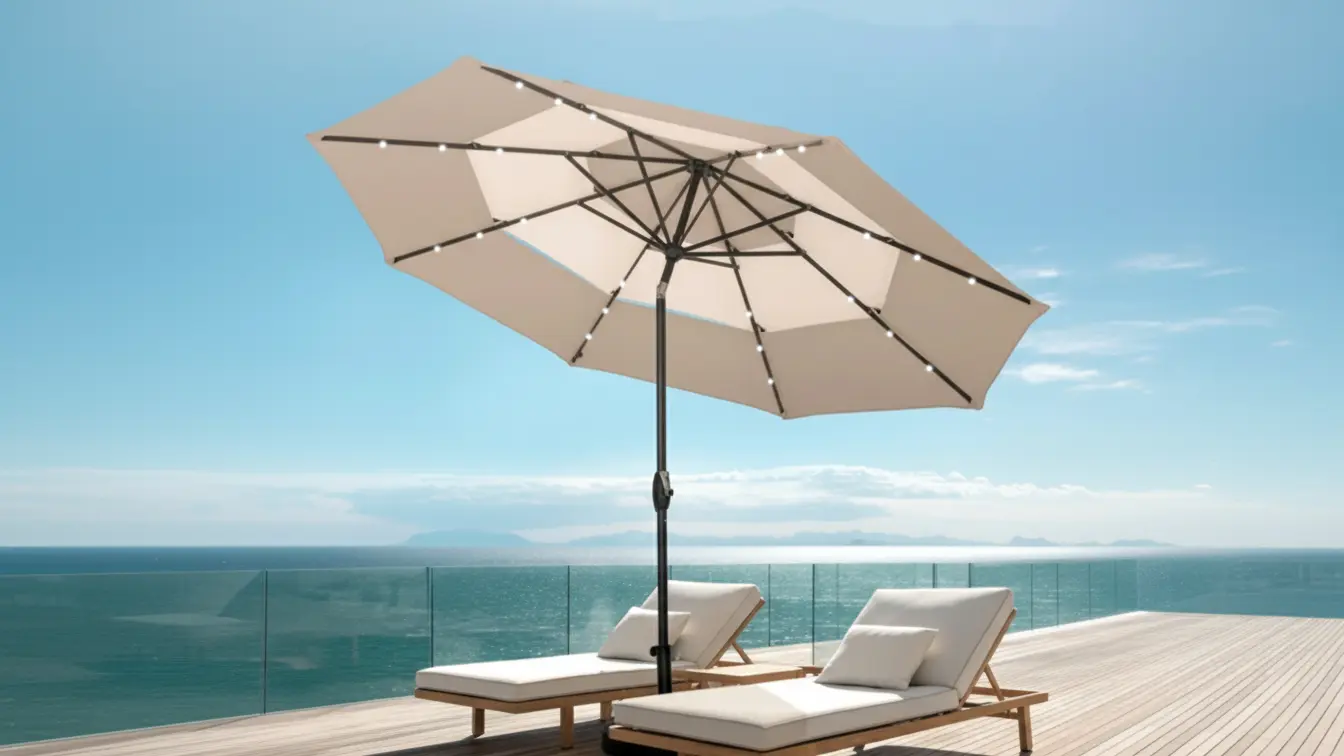
Mounting systems are the hardware that fastens everything together. Think stainless steel or heavy-duty plastic clips that secure components like LED channels to various surfaces. Protective covers, like PC diffused lenses, are non-negotiable for shielding integrated electronics from the elements while ensuring proper light diffusion. For freestanding items like cantilever umbrellas, structural bases with multiple aluminum ribs provide the foundational stability needed for commercial use.
Material Specifications and Customization Options
The details matter for contract-grade work. Here’s a rundown of the typical specs and options available.
- Housing Material: High-grade 6063-T5 aluminum alloy, suitable for both indoor and outdoor environments.
- Protective Lenses: High-performance polycarbonate (PC) covers. Clear variants achieve up to 97° light transmission for maximum brightness.
- Mounting Options: Clips are available in stainless steel or durable plastic.
- Standard Finishes: Satin, Black, and Bronze. Custom finishes are also an option.
- Available Lengths: Components can be ordered in lengths up to 98.43 inches.
- Durability: Key aluminum extrusions are backed by a 10-year warranty and hold RoHS and Declare (Red List Free) certifications.
Bringing Your Vision to Life: How to Specify Your Customizations
Define high-level style and material needs, then provide precise technical specs for components, like LED channel dimensions (12.2mm inner width) and aluminum grade (6063-T5).
Defining Customization Areas: From Aesthetics to Functionality
To get started, break down your requirements into four key areas. This ensures nothing gets missed between the design brief and the factory floor.
- Style & Aesthetics: Specify unique silhouettes, modular seating layouts, or project-specific pergola designs to match your brand’s visual language.
- Materials & Fabrics: Select specific aluminum grades, surface finishes, and performance fabrics (UV-resistant, colorfast) based on your climate and durability requirements.
- Brand & Design Details: Provide details for logo integration, custom canopy colors, pattern printing, and branded hardware.
- Functional & Structural Needs: Request engineering adjustments like reinforced frames for high-wind locations, integrated solar LED lighting, or custom dimensions to fit a specific site.
Providing Technical Specifications for Engineered Components
Once you’ve defined the big picture, the success of engineered components comes down to the technical details. Generic requests won’t work. For something like integrated LED lighting in an umbrella rib, you need to provide the manufacturer with precise data.
- Material Grade & Type: Specify the exact alloy, like 6063-T5 aluminum for LED channels to ensure proper heat dissipation.
- Critical Dimensions: Provide precise measurements, such as a 12.2mm inner width to properly house a 12mm wide LED strip.
- Performance Attributes: Define the functional outcome, like a frosted polycarbonate cover to achieve smooth, no-spot light diffusion.
- Mounting & Compatibility: Clarify the installation method (e.g., corner-mounted, recessed) and compatibility with accessories like solderless GRIP connectors.
This level of detail removes ambiguity and prevents costly errors during production. It’s the difference between a component that works and one that fails.
Final Thoughts
Generic requests deliver generic products that fail in the field. True market exclusivity is built on precise engineering specs, not just aesthetic choices.
Pick one product for your next collection and draft its full technical brief. Define every material, dimension, and compliance standard to prevent costly manufacturing errors.
Frequently Asked Questions
Can you attach a heater to a patio umbrella?
Yes, heaters can be attached to patio umbrellas using adjustable mounts compatible with specific pole diameters (e.g., 20–55 mm or 40–80 mm). Specialized products like infrared electric heaters are designed for this purpose, often in multi-armed configurations to distribute heat evenly.
How do you add lights to a cantilever umbrella?
You can add lights to a cantilever umbrella by mounting LED strips or solar-powered light units along the canopy ribs. These are typically secured with cable ties and powered by rechargeable battery packs, USB chargers, or integrated solar panels located at the top of the umbrella.
Are solar-powered umbrella lights effective?
Yes, solar umbrella lights are effective for providing ambient off-grid patio lighting. A full charge typically delivers 6-12 hours of runtime, making them a convenient and energy-efficient option for evening use.
Is it possible to connect multiple umbrellas together?
Yes, multiple umbrellas can be connected to create a larger, continuous shaded area. This is achieved using specialized frame joints, removable rain gutters, or modular mast systems designed to join two, three, or four umbrellas with a standard gap between canopies.


 English
  Spanish
  French
  German
  Portuguese