
Misunderstanding Samples & MOQs is the fastest way to kill a product line before it starts. The high price of a single unit isn’t a factory’s profit grab; it’s the direct cost of halting a production line, a cost that becomes negligible when amortized over a full container load.
This analysis defines the line between a one-off sample and a profitable bulk order. We explain why a pre-production sample (PPS) is critical for verifying specs like PA-coated fabric and how minimum quantities are structured to maximize container loading for the lowest landed cost.
How Do Setup Costs Compare: Screen Printing Screens vs. Digital Machine Time?
Screen printing has high setup fees ($50-$200) for physical screens, making it best for high-volume jobs. Digital printing has no screen costs, making it ideal for samples and small orders.
Screen Printing: The Cost of Physical Screen Creation
With screen printing, you pay for the physical creation of a screen for every single color in your design. This is a manual process that results in setup fees of around $50 to $200 for a project. That high initial cost makes it completely impractical for small quantities. The method only becomes cost-effective for large production runs, usually 200 units or more, where you can distribute that setup fee across a high volume of items, bringing the per-unit cost down.

Digital Printing: Paying for Machine Time, Not Screens
Digital printing works like a desktop office printer, just for fabric. The machine prints a design directly from a digital file onto the product. This process completely eliminates the need for physical screens and their associated setup fees. Because there’s almost no setup cost, this approach is the clear choice for producing pre-production samples, custom one-offs, or any small order with complex, multi-color branding. You’re paying for the machine’s time, not for creating tooling.
Why Are Custom Samples So Expensive? (The Cost of Interrupting Production Flow)
Custom samples are costly because they halt an efficient production line. This stop triggers expenses from lost output, idle labor, and machine restarts, which are built into the price.
The True Cost of a Production Line Stoppage
Requesting a single custom sample forces a factory to stop a line that might be producing thousands of units per hour. This interruption isn’t a small favor; it’s a significant operational and financial event. The premium price of a sample isn’t about profit margin, it’s about covering the real costs created by the disruption.
The expenses are layered and stack up quickly:
- Direct Production Losses: The most obvious cost is the revenue lost from every unit that wasn’t made during the halt. If a line produces 1,000 units an hour, even a short pause means thousands of dollars in lost output.
- Cascading Operational Costs: The factory still pays its operators and technicians while they stand idle. Restarting machinery consumes significant energy, and recalibrating for a single item often wastes raw materials.
- System-Wide Impact: Manufacturing is an integrated system. A stop at one station starves all the downstream workstations, multiplying the total lost output across the entire facility. The cost isn’t isolated to one machine; it ripples through the whole line.
Our Sample Policy: A Refundable Fee to Balance the Cost
We need a way to cover these real costs while still supporting serious buyers. Our policy is designed to be straightforward and fair. We charge a sample fee equal to two times the standard unit price. This premium covers the expenses tied to interrupting our production flow for a single, custom item.
This isn’t just a fee; it’s a deposit on our future partnership. Once you place an official bulk order, we fully refund the sample fee against your invoice. This approach ensures we can dedicate resources to buyers who are committed to moving forward, effectively making the sample free for our long-term partners.
Source 5-Year Commercial Umbrellas Factory-Direct

MOQ Strategies: How Does Pricing Change Between 50 Units vs. 500 Units?
Ordering 500 units drops the per-unit price significantly because fixed manufacturing costs get spread across more items. Larger orders also unlock bulk material discounts and cheaper shipping.
| Cost Component | Order: 50 Units | Order: 500 Units |
|---|---|---|
| Setup Cost per Unit (Based on a $5,000 fixed setup) | $100.00 | $10.00 |
| Variable Cost per Unit (Materials, Labor, etc.) | ~$25.00 | ~$20.00 (Volume Discount) |
| Estimated Total Price per Unit | ~$125.00 | ~$30.00 |
How Fixed Costs Influence Per-Unit Pricing
Every production run has fixed costs. These are the expenses for machine setup, tooling, and line preparation that we pay whether we make 50 units or 500. A small order has to absorb these costs across very few items, which inflates the per-unit price.
For example, a fixed setup cost of $5,000 spread across 50 units adds $100 to each unit’s price. But when you spread that same $5,000 across 500 units, it only adds $10 to each piece. This is the single biggest reason why small orders are disproportionately expensive. We have to price them that way to cover the initial setup investment.
Achieving Lower Landed Costs with Container Maximization
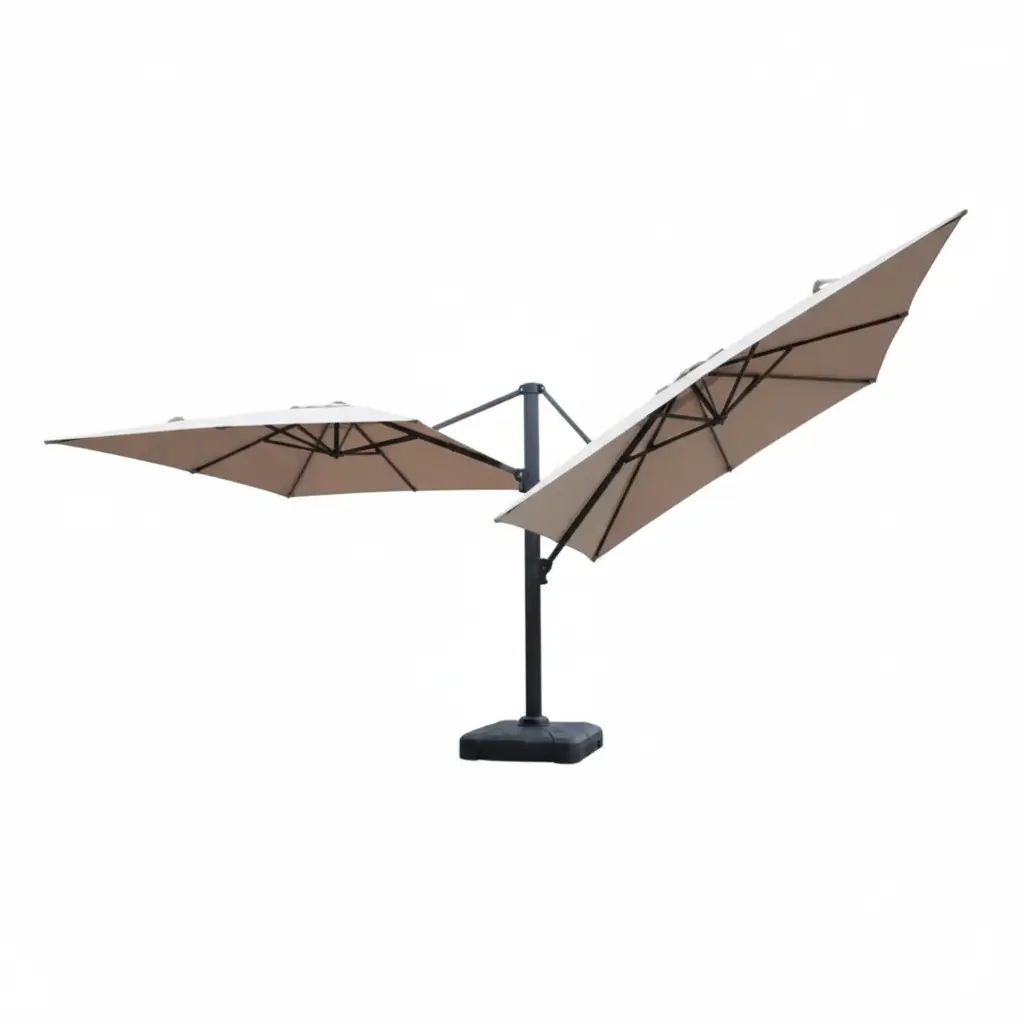
Our entire business model as a B2B Source Factory is built on a simple principle: “Optimized for Container Loading.” We don’t just manufacture products; we design them from the ground up to be packed and shipped with maximum efficiency. This directly attacks the logistics costs that eat into your margins.
Take our high-volume PTMU-010 Market Umbrella. It’s a price fighter designed for major retailers. We engineered its components and packaging to fit 2,750 pieces into a single 40HQ container. Loading this density drastically cuts the per-unit freight cost, giving bulk buyers a much lower final landed price. That’s a structural cost advantage you can’t get with smaller, inefficient orders.
Why Is the “Pre-Production Sample” (PPS) Critical for Success?
A pre-production sample is your final physical prototype. Approving it locks in the quality standard for materials and construction, preventing expensive errors before mass production begins.
Confirming Quality and Preventing Costly Errors
A pre-production sample is the final, physical quality benchmark before you commit to a full production run. It serves as a tangible contract between you and the factory, ensuring everyone agrees on what the finished product should look, feel, and function like. There’s no room for misinterpretation.
This step is your best defense against costly mistakes. It allows you to catch any potential issues with materials, construction, or color accuracy early on. Finding a problem at this stage prevents defects and delays that could jeopardize the entire order and your bottom line.
Once you approve the PPS, it becomes the “golden sample.” This exact unit is the standard against which all mass-produced umbrellas will be measured during final quality control inspections. It sets a clear, non-negotiable bar for quality.
Verifying Production with Our Refundable Sample Policy
We make this critical verification step straightforward. Our sample policy requires a fee of 2x the unit price to produce a dedicated sample for your evaluation. This covers the cost of interrupting production and using final materials for a single unit.
This fee is fully refundable when you place the official bulk order. This approach makes the verification step essentially risk-free, as the cost is credited back to you once we move forward together.
This process guarantees you can physically approve the exact umbrella you’ll be receiving in bulk. You can check everything from the finish of the anthracite powder-coated frame to the water resistance of the PA coated fabric before thousands of units are made.
What Are “Strike-Offs” and How Do They Test Color on Fabric Scraps?
A strike-off is a small, pre-production fabric sample printed with the final design. It’s a critical quality control step for physically approving color before a full manufacturing run.
The Purpose of a Pre-Production Fabric Sample
A strike-off is simply a small swatch of the actual production fabric, printed with your specific logo or pattern. Its job is to serve as a physical proof for approval before we start a large order. This step is non-negotiable for custom prints because it eliminates guesswork and prevents expensive mistakes, like a container of umbrellas showing up in the wrong shade of your corporate color.
Verifying Color Accuracy on Different Polyester Grades
Colors render differently depending on the fabric’s texture and weight. A Pantone color on a screen will not look the same as ink on polyester. That’s why we produce strike-offs on the exact material you’ve chosen for your order, whether it’s our standard 180g/m² polyester or a premium 250g/m² PA-coated option. This ensures your brand’s color is accurate and consistent on the final product, not just a digital mockup.

Understanding Lead Times: Why Does a Sample Take 7 Days vs. 35 Days for Bulk?
A sample is a quick, single-unit check to verify specs. Bulk production takes 35+ days because it requires large-scale material sourcing, production line scheduling, and packing thousands of units.
The Sample Phase: A Streamlined, Single-Unit Workflow
The 7-day timeline for a sample is possible because it’s an isolated task. We produce a single prototype to confirm that every specification—fabric, color, size, and mechanism—is correct before committing to a full run. This process intentionally skips the time-consuming steps of mass production. There’s no need to order tons of raw materials or schedule complex line changes, allowing for a fast and focused turnaround.
Bulk Production: Coordinating Materials for Container Maximization
Once you approve the sample, the clock for bulk production starts. This 35-day or longer timeline is driven by logistics at scale. First, we place large orders for raw materials like aluminum, steel, and polyester fabric. Then, we schedule production runs designed to maximize container space and minimize your per-unit freight cost. For a hot-seller like our PTMU-001 market umbrella, this means coordinating the manufacturing of over 2,260 units to perfectly fill a 40-foot high-cube container. This is a complex, sequential process—not a simple one-off task.
Digital Proofs: Is There a Free Alternative to Physical Sampling?
Yes, electronic proofs (PDFs) are a free alternative. They work for checking design layout but cannot accurately show final colors, fabric textures, or material finishes.
What Electronic Proofs Can Confirm for You
An electronic proof, or soft proof, is simply a PDF document that shows the layout and design of your project. It’s a standard step in the process. We use it to confirm the placement of your logo, the scale of a pattern, or the print layout on an umbrella canopy before any physical production begins.
This is the most common and cost-effective method for getting an initial design review and approval. It’s fast, free, and good enough for catching obvious layout mistakes early on.
Why a PDF Can’t Show Fabric Feel or Frame Finish
A digital screen is flat and emits light. It can’t simulate physical properties. For example, a PDF cannot show you the real-world difference between our standard 180g/m² polyester and the premium 250g/m² PA coated fabric we use on the Roma series. The weight, drape, and texture are completely lost on screen.
The same problem applies to frame finishes. The appearance of our ‘Anthracite Powder Coating’ on an aluminum frame has a specific texture and sheen. How it reflects light in person is very different from a flat gray color block you see in a PDF. For these critical details, a physical sample is the only way to be certain.
Can You Get Your Sample Costs Refunded on Bulk Orders?
Yes, most manufacturers credit sample costs towards a bulk order once an MOQ is met. We refund the sample fee by crediting it against your official purchase order.
How Sample Credits Typically Work in the Industry
Most suppliers will credit the sample fee against your bulk order invoice. This practice makes the sample effectively free if you proceed with production. This credit is almost always conditional on meeting a specific Minimum Order Quantity (MOQ). The fee usually becomes non-refundable if you approve a sample but later decide not to place the bulk order.
Linhai PATIOFURNITURES’s Direct Refund Policy
Our policy is direct. We charge a sample fee at twice (2x) the standard unit price, and it is fully refunded when you place your official bulk order. The refund is processed as a credit applied to your final bulk order invoice, reducing your total payment. The buyer covers the freight cost for shipping the sample.
Frequently Asked Questions
What is the typical Minimum Order Quantity (MOQ) for your umbrellas?
Our MOQ depends on the umbrella model. For high-volume models like our PTMU-010 steel market umbrella, we focus on maximizing container loads, which is ideal for large retailers. For more specialized or premium models, we offer flexibility to support smaller projects. Please inquire with your specific model of interest for an exact MOQ.
Why do you charge for samples?
We charge for samples to cover the actual costs of materials and the dedicated time of our technicians. A sample is a real, fully-produced unit, not a cheap replica. To support our partners, we charge a sample fee that is fully refundable when you place your bulk order, making the process risk-free for serious buyers. The buyer covers the freight costs.
How long does it take to receive a sample versus a bulk order?
A custom sample typically takes about 7-10 days to produce because it’s a single, focused task. A full bulk order takes around 35 days. The longer lead time for bulk orders accounts for sourcing raw materials in large quantities, scheduling the production line, manufacturing, and conducting quality control for the entire batch.
What are your standard payment terms for B2B orders?
Our standard payment terms are a 30% deposit via T/T (Telegraphic Transfer) to confirm the order and begin production. The remaining 70% balance is due upon presentation of the copy of the Bill of Lading (B/L) after the goods have shipped.
Final Thoughts
The real cost isn’t on the invoice; it’s the risk of an entire container failing quality control. Approving a physical sample is the only way to lock in standards, from the durability of our PA-coated fabric to the finish on an aluminum frame. This process protects your investment and builds the brand reputation that secures repeat business.
The logical next step is to verify these standards for yourself. Order a pre-production sample to test our materials and construction firsthand. Contact our team with your technical specifications to start your OEM project and get a formal quotation.



 English
  Spanish
  French
  German
  Portuguese