


Managing commercial outdoor spaces requires more than a glance at the weather app; it demands a data-driven approach to structural limits. When wind speeds climb, the risk of equipment tip-overs and mechanical failure shifts from a possibility to a certainty for site administrators. Establishing clear operational boundaries ensures that staff members act before conditions compromise safety and asset integrity.
This guide explores the engineering standards behind the 20mph (32km/h) universal safety cutoff and the technical requirements for temporary structures under OSHA 1926.1431. We cover staff training protocols for identifying visual stress markers, the mechanical role of tie-down straps with a 4,725 lbs breaking strength, and the reliability of MEMS-based automated sensors in protecting property during high-wind events.
Understanding “Temporary Structures”
Temporary structures are engineering assemblies designed for limited-duration use, typically governed by permits valid for up to 24 months. These installations must meet specific safety standards for wind resistance, load-bearing capacity, and site security, such as maintaining minimum fencing heights of 1.2 meters and resisting lateral forces of 90.7 kilograms.
Regulatory Definitions and Permit Durations
Permits for prefabricated units expire after a maximum of 24 months or 30 days following the final inspection. Site administrators may secure extensions in 180-day increments to align with shifting project timelines. Engineers verify that all structural designs meet BS6339 quality standards and the ABCB Temporary Structures Standard, which establishes mandatory criteria for fire resistance and emergency egress paths.
Engineering Specifications for Stability and Security
Standard safety fencing height starts at 1.2 meters (48 inches). These barriers must resist 90.7 kilograms (200 pounds) of lateral force from any direction to ensure site security. High-density polyethylene mesh grids used for perimeter control limit openings to a maximum of 50mm (2 inches). Structural flooring for temporary buildings often features a 30-inch high under-carriage, though flush-grade entry requires 30 inches of ground excavation. Signage stability relies on posts set 3 feet deep in concrete-filled foundations to withstand high-wind pressure.
The 20mph (32km/h) Operational Limit
The 20mph (32km/h) threshold is the primary safety limit where wind forces begin to compromise structural stability and operator safety. Regulations for 2026, including OSHA mandates and manufacturer specs, use this speed as the mandatory cutoff point to prevent equipment tip-overs, hazardous swaying, or fabric failure in commercial outdoor environments.
| Equipment Type | Wind Speed Limit | Safety Threshold Type |
|---|---|---|
| Aerial Lifts & Platforms | 20 mph (32 km/h) | OSHA Mandatory Assessment |
| Small Wind Turbines | 20 mph (8.9 m/s) | Peak Rated Output Stress |
| Tower Cranes | 38 mph (60 km/h) | Recommended Ops Limit |
Why 20mph Serves as the Universal Safety Cutoff
OSHA 1926.1431(k)(8)(i) requires a qualified person to assess operations whenever sustained or gust winds reach 20 mph. This specific velocity marks the transition where wind pressure on vertical surfaces begins to multiply rapidly. For temporary structures like canopies or signage, 32 km/h is often the point where lift forces exceed the downward force of standard base weights.
Safety protocols for 2026 emphasize this limit because gust-induced sway reaches hazardous acceleration levels. At 20 mph, elevated platforms often experience sways between 0.5 and 1 m/s². These movements can cause mechanical failure or tip-overs, making it the practical boundary for human safety in commercial settings.

Technical Stability and Wind Load Calculations
Engineering data from small wind turbines shows that peak rated output occurs at exactly 8.9 m/s, or 20 mph. This serves as the maximum design stress point before the system must engage curtailment or braking to protect the structure. For outdoor frames, this speed acts as the critical threshold where surface area drag significantly increases the risk of mechanical strain.
Dynamic wind load calculations per AS/NZS 1170 clarify that while equipment may have higher survival speeds, operational stability is only guaranteed up to the 20 mph mark. Professional tests confirm that fabric integrity and frame rigidity face their first significant failure risks at this speed. Site managers use this data to distinguish between “survival mode,” where equipment stays standing but unused, and “operational mode,” where work can safely continue.
Staff Training: Visual Cues for Closing
Staff training focuses on recognizing specific environmental markers and equipment signals that mandate closing outdoor furniture. By standardizing these visual cues, teams can respond quickly to wind shifts before conditions reach the 20mph limit. In 2026, many commercial sites integrate these observations with signaling hardware to ensure site-wide safety coordination.
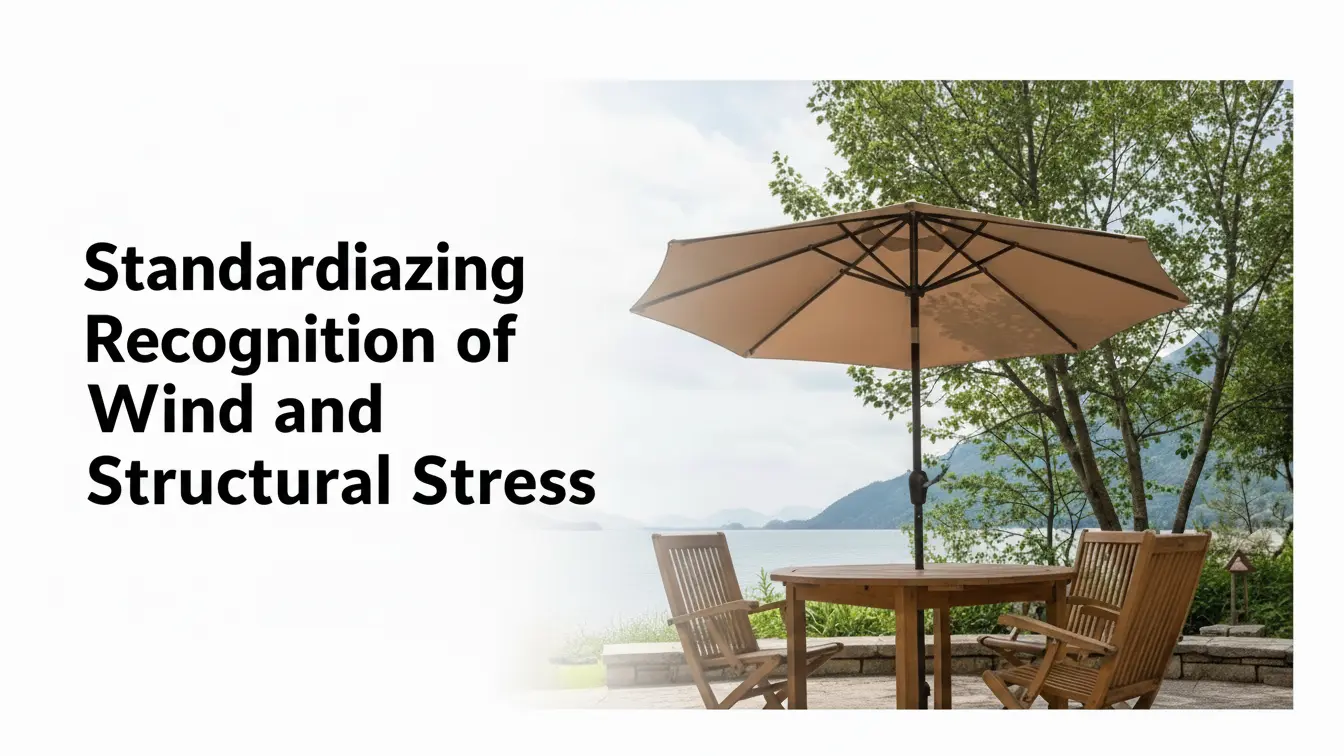
Standardizing Recognition of Wind and Structural Stress
Teams monitor fabric tension and frame vibration as primary indicators that wind resistance thresholds are reaching their limits. High-velocity gusts often cause visible structural stress before a failure occurs. By observing these movements, staff can identify the immediate need to secure canopies and umbrellas. Training protocols emphasize these physical signals to ensure a proactive response to changing weather patterns.
Staff use site-specific markers such as flag movement or nearby vegetation to gauge wind intensity when handheld sensors are not immediately available. These natural benchmarks provide a consistent reference point for assessing gust strength across different areas of the property. Implementing a color-coded status system further improves communication, allowing the entire team to understand the urgency of closing procedures. Final visual checkpoints verify that all pins and locks are fully engaged, preventing accidental deployment during high-wind events.
Deploying Signal Hardware for Large-Scale Coordination
Managers utilize RF-based cueing systems with a 300-foot (100-meter) range to coordinate teams across expansive resort pool decks. These systems operate on the 433.92MHz frequency, which prevents interference from local Wi-Fi networks and other common wireless signals. By using 256 possible channels, properties maintain signal clarity and prevent cross-talk between different departments or neighboring sites. This technical infrastructure ensures that closing commands reach every staff member simultaneously.
The hardware setup involves portable cue lights and compact transmitters powered by CR 2032 or CR123 batteries. Staff configure these units to trigger distinct audio alerts such as “Command” or “Announce” for specific closing sequences. The 7” x 4” x 3¼” cue lights feature adjustable volume and light settings to suit different environmental conditions. These tools integrate with existing intercom systems via 4-pin XLR jacks, allowing managers to overlay cue sounds onto standard voice communications for better site-wide coordination.
Scale Your Outdoor Brand with Factory-Direct Commercial Umbrellas

Overnight Protocol: Always Close and Strap
Staff must retract all canopies at the end of each shift and secure them with integrated tie-down straps. This protocol prevents the sail effect caused by nocturnal wind gusts, reduces mechanical stress on T6 aluminum frames, and protects fabric from friction damage, ensuring equipment remains compliant with EN581 durability standards through 2026.
| Protocol Action | Technical Impact | Compliance Standard |
|---|---|---|
| Canopy Retraction | Eliminates sail effect and vertical uplift forces. | EN581 Durability |
| Strap Tensioning | Stabilizes center of gravity and prevents fabric wear. | 20mph Stability |
| System Deactivation | Mitigates heat buildup in internal rib assemblies. | CE/UL Safety |
Risk Mitigation through Structural Retraction
Closing structures overnight serves as the primary defense against environmental damage. Retraction eliminates the sail effect, which prevents vertical uplift forces from dislodging weighted bases or fracturing pivot joints. By minimizing the surface area exposed to the elements, we reduce torque on internal rib assemblies during the unpredictable weather patterns forecasted for 2026. This practice also preserves the integrity of UV-resistant fabric by limiting contact with nocturnal debris and moisture collection. Regular adherence to these steps maintains alignment with standard insurance requirements for commercial outdoor space management.

Retention Strap Mechanics and Tensioning Standards
Applying high-tenacity Velcro or buckle straps prevents fabric billowing and internal friction wear during overnight wind events. Staff must secure the canopy tightly against the main mast to lower the center of gravity for the entire assembly, increasing mechanical stability. Before finalizing the strap tension, verify that all solar-powered LED components are deactivated to prevent potential heat buildup within the stored fabric layers. These mechanical standards keep the structure secure even when wind speeds exceed 20mph (32km/h), maintaining full compliance with EN581-3 stability requirements for closed positions.
Using the Tie-Down Strap (The Forgotten Step)
Tie-down straps provide the essential link between the frame and the ground, using galvanized steel strapping with a 4,725 lbs minimum breaking strength to counter wind lift. By maintaining a Working Load Limit (WLL) of one-third the breaking strength, these assemblies prevent structural failure when wind speeds exceed 20mph (32km/h).
Mechanical Role and Load Distribution
Mechanical strap systems manage upward lift and lateral shear forces that ballast alone cannot neutralize during severe weather. These assemblies distribute tension through the structural frame using ⅝-inch drop-forged closed eyes and thimbles, which protect the strapping from shearing against sharp metal edges. This configuration ensures the physical forces remain balanced across the entire chassis rather than concentrating on single points of failure.
Adhering to WSTDA standards requires maintaining an aggregate Working Load Limit (WLL) of at least 50% of the total structure weight. Professional installers align hardware with the physics of dynamic environmental loads to prevent frame distortion. This precision mitigates the risks of over-tensioning, which can compromise the integrity of both the anchor point and the structural member it intends to protect.
Hardware Standards and Installation Precision
Structural stability depends on Type 1, Class B flat steel strapping measuring 1¼” x 0.035″ per federal specification QQ-S-781. This material includes a 0.03 oz/sq ft zinc coating to provide necessary corrosion resistance in subterranean or exposed environments. The system utilizes ½-inch galvanized drop-forged turnbuckles equipped with jaw or eye ends. Hook ends are strictly prohibited because they cannot guarantee connection security under fluctuating wind pressures.
Ground anchors must consist of 6-inch diameter augers or arrowhead anchors driven at least 4 feet deep to maximize soil grip and pull-out resistance. Connecting these components to I-beams requires ⅝-inch bolts and fishplates. This setup maintains a specific bend radius for the strapping to ensure the assembly does not drop below its rated 4,725 lbs tensile strength during high-tension events.
Automated Sensors: Are They Reliable?
Modern automated sensors achieve high reliability through FMECA protocols and MEMS technology, often showing zero failures across millions of units. Their accuracy depends on differential signal processing to cancel environmental interference and high-precision components, such as IP67-rated connectors and resistors with 0.01% tolerance, ensuring stable performance in 2026 smart outdoor environments.
Component-Level Failure Analysis and Lifecycle Testing
Engineers apply Failure Mode, Effects, and Criticality Analysis (FMECA) to evaluate every sensor element, from signal processing to power system interfaces. This process identifies risks at the design stage to prevent hardware failure in the field. Micro-Electro-Mechanical Systems (MEMS) illustrate the success of these protocols, showing zero reported failures across four million parts delivered to demanding medical and industrial markets.
Closed-loop feedback architectures provide the sensitivity and repeatability required for detecting processes in unstable outdoor environments. Manufacturers use stability treatments like material aging and component screening to ensure hardware remains functional over its entire lifecycle. These protocols favor long-term performance consistency over temporary peak precision, which is vital for infrastructure intended to last for years.
Signal Processing and Environment-Resistant Hardware
Differential technology cancels out temperature shifts and power fluctuations to eliminate common mode errors. This ensures the system records real data instead of environmental noise. Furthermore, n-time sampling and multi-point measurement techniques lower random error by a factor of √n, significantly improving the precision of sensors used in induction synchronizers and magnetic gate systems.
The physical integrity of the sensor depends on high-precision components like RA73 Series resistors, which feature 0.01% tolerances and extremely low temperature coefficients. These specifications prevent measurement drift in fluctuating climates. For protection against the elements, IP67-rated fieldbus connectors provide a dust-tight and water-resistant seal, while AEC-Q200 compliant components ensure the system survives the mechanical and thermal stresses of 2026 outdoor environments.
Liability Management during Storms
Managing liability during storms requires site-specific vulnerability assessments and the integration of automated weather monitoring systems. By securing hazardous storage and maintaining compliance with local building codes, businesses reduce risks of operational failure, environmental discharge, and legal negligence while potentially qualifying for insurance premium credits.
Routine weather events generate nearly $500 billion in annual damage, while severe occurrences like hurricanes and tornadoes add billions more in localized losses. Organizations minimize these financial exposures by shifting from reactive responses to proactive risk management. Effective liability control centers on identifying specific infrastructure weaknesses before a storm makes landfall, ensuring that environmental safeguards and operational protocols remain intact under extreme stress.
Site-Specific Vulnerability Assessments
Generic preparedness plans often fail because they ignore the unique geographical and structural realities of a facility. Engineering teams use downscaled probability models to predict how flooding or storm surges will impact specific assets like storage tanks and erosion control systems. These evaluations pinpoint where infrastructure might fail, allowing operators to reinforce critical points and prevent the release of hazardous materials or pollutants during high-volume precipitation events.
Predicting failure points involves analyzing stormwater systems and sediment controls against historical and projected climate data. By identifying vulnerabilities in command centers or power supplies, facilities can elevate essential equipment above projected flood levels. This technical foresight helps prevent environmental permit violations and protects the organization against claims of negligence following a significant weather event.
Automated Monitoring and Regulatory Compliance
Technology removes the uncertainty of human judgment during rapidly evolving weather conditions. Modern systems track more than 25 weather variables through a network of 17,500 neighborhood-level sensors. Hyperlocal detection, supported by 18,000 lightning sensors, allows for immediate operational shutdown protocols. This precision ensures that facilities stop dangerous activities the moment a threat enters a predefined radius, protecting personnel and reducing the likelihood of workplace accidents.
Strict adherence to federal stormwater permits, floodplain ordinances, and industrial building codes forms the baseline of legal defense. Maintaining verified resilience enhancements often improves a facility’s risk profile in the eyes of underwriters. This high level of documented compliance and the use of automated monitoring can secure insurance premium credits, as it demonstrates a rigorous commitment to preventing operational disruptions and environmental discharge.
Winter Storage in High-Wind Areas
Winter storage in high-wind areas requires structural fortification through certified materials and deep anchoring. Systems rated for 80 to 160 MPH winds protect assets during 2026 seasonal transitions, while sloped roof designs manage snow loads up to 100 PSF to prevent frame collapse and structural fatigue.
Frame Composition and Wind Resistance Standards
Certified ASTM A500 galvanized steel and 2-inch square tube frames provide the necessary rigidity for wind ratings between 80 and 140 MPH. These heavy-duty materials resist bending and structural warping when subjected to consistent lateral pressure. By using structural grade steel instead of lower-quality imports, manufacturers ensure the frame maintains its shape during severe winter gusts.
Hurricane-rated sheds and premium commercial buildings achieve gust resistance up to 160 MPH through reinforced truss systems and diagonal bracing. These components stabilize the building against Exposure D wind conditions, which involve 3-second gusts in open terrain. Integrating these reinforcements allows the structure to distribute wind energy evenly across the entire frame rather than concentrating stress on a single corner or panel.
A continuous load path utilizes hurricane straps to transfer wind forces from the roof down through the frame to the foundation. This engineering strategy prevents roof uplift, a common failure point in open-sided carports. Securing every connection point creates a unified structure that remains anchored even when wind speeds exceed standard operational limits.
Snow Load Capacity and Foundation Anchoring
Structures in high-snow regions require ratings between 60 and 100 PSF to handle heavy accumulation. Round or peak roof styles facilitate automatic snow shedding, which reduces the total weight resting on the metal panels. This design priority prevents structural fatigue and minimizes the need for manual snow removal during peak winter months.
Reducing rib spacing to 4-ft intervals increases the weight-bearing capacity for northern climates. Closer spacing provides more frequent points of support for the roofing material, preventing the metal from bowing under the pressure of wet snow or ice. This configuration is standard for buildings in states where winter storms regularly deposit several feet of snow in a single event.
Anchoring protocols demand concrete footings installed below the local frost line to prevent ground heave and lateral shifting. Using galvanized steel brackets to secure the frame to these footings ensures the building stays level despite the freeze-thaw cycles of the soil. Proper anchoring provides the necessary resistance to both the downward force of snow and the upward lift of high-velocity winds.
Final Thoughts
Maintaining operational safety depends on strict adherence to wind thresholds and mechanical protocols. The 20mph limit serves as a non-negotiable boundary where structural physics begins to challenge material integrity. By combining technical standards like EN581 with disciplined staff training and overnight retraction, site managers eliminate the most common points of failure. This systematic approach transforms unpredictable weather risks into manageable safety routines.
Long-term success in outdoor space management relies on these daily habits. Using tie-down straps and verifying sensor health protects physical assets and reduces the legal risks associated with severe weather. As environmental conditions evolve, these rigorous standards ensure that temporary structures remain stable, reliable, and compliant for years to come.
Frequently Asked Questions
At what wind speed should I close a patio umbrella?
Close the canopy when wind speeds reach 15–20 mph (24–32 km/h). Heavy-duty commercial models might withstand higher gusts, but 25 mph (40 km/h) is the industry-standard limit for sustained winds to prevent frame inversion or structural failure.
Is it safe to leave umbrellas open overnight?
No. Operators should close all outdoor umbrellas overnight regardless of the forecast. Sudden wind shifts can topple open structures and cause property damage while the area is unattended, as these items are designed for sun protection rather than storm resistance.
How do I prevent an umbrella from spinning or lifting in the wind?
Secure the pole using a base that provides at least 75 pounds (34 kg) of anchoring resistance for a standard 7.5-foot umbrella. Using integrated tie-down straps and selecting vented canopies helps reduce the aerodynamic lift that leads to spinning.
Are automated wind sensors and auto-close mechanisms reliable?
These systems provide a helpful safety layer, but reliability varies by manufacturer. Some high-quality models include limited lifetime warranties, yet manual closure remains the most effective way to protect the equipment when wind speeds exceed 30 mph.




 English
  Spanish
  French
  German
  Portuguese