

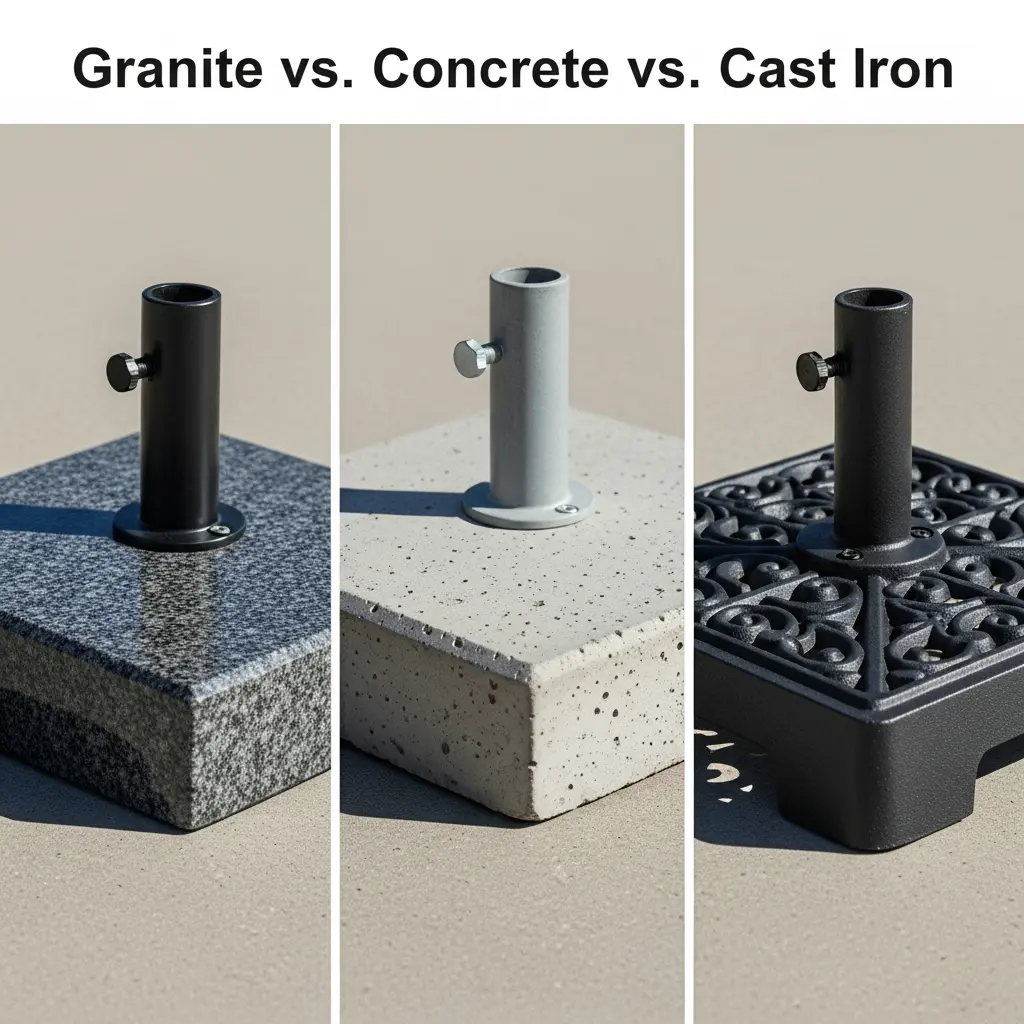
Choosing the right materials for an umbrella base directly impacts your damage-on-arrival rates and customer complaints. While a consumer might want the visual appeal of granite, an importer sees the risk of fractures in transit. Similarly, the classic look of cast iron can become a margin liability when rust issues lead to warranty claims.
This analysis benchmarks each option based on real-world commercial factors. We evaluate how modern surface treatments like Anthracite powder coating prevent corrosion and how compact, mail-order-safe packaging protects your investment, ensuring a lower landed cost per unit without sacrificing quality.
Granite Bases: Does the Natural Beauty Come at the Cost of Fragility?
Granite isn’t fragile. Its dense, crystalline structure resists scratches, heat, and compression. The main vulnerability is sharp, heavy impact—not everyday wear and tear.
Understanding Granite’s Natural Strength
The idea that granite is delicate is simply wrong. Its reputation for durability isn’t just marketing; it comes from its fundamental physical structure. This material is built to handle high stress, making it a reliable choice for outdoor use.
- Its dense, interlocked crystalline structure provides extremely high compressive strength, allowing it to support significant weight without issue.
- Granite ranks 6-7 on the Mohs Hardness Scale, which means it naturally resists scratches and abrasion from daily use.
- It shows excellent resistance to environmental factors like UV exposure and freeze-thaw cycles, so it won’t fade or degrade over time.
Key Vulnerabilities: Impact and Pre-Existing Flaws
While tough, granite isn’t indestructible. Damage almost always comes from specific, avoidable situations, not from inherent weakness. Understanding these two points is key.
- Impact Damage: The primary risk comes from dropping the base during setup or striking it with a heavy, sharp object. This can cause chips or fractures.
- Manufacturing Flaws: Low-quality processing matters. Improper cutting or polishing can introduce invisible micro-cracks that act as failure points under stress.
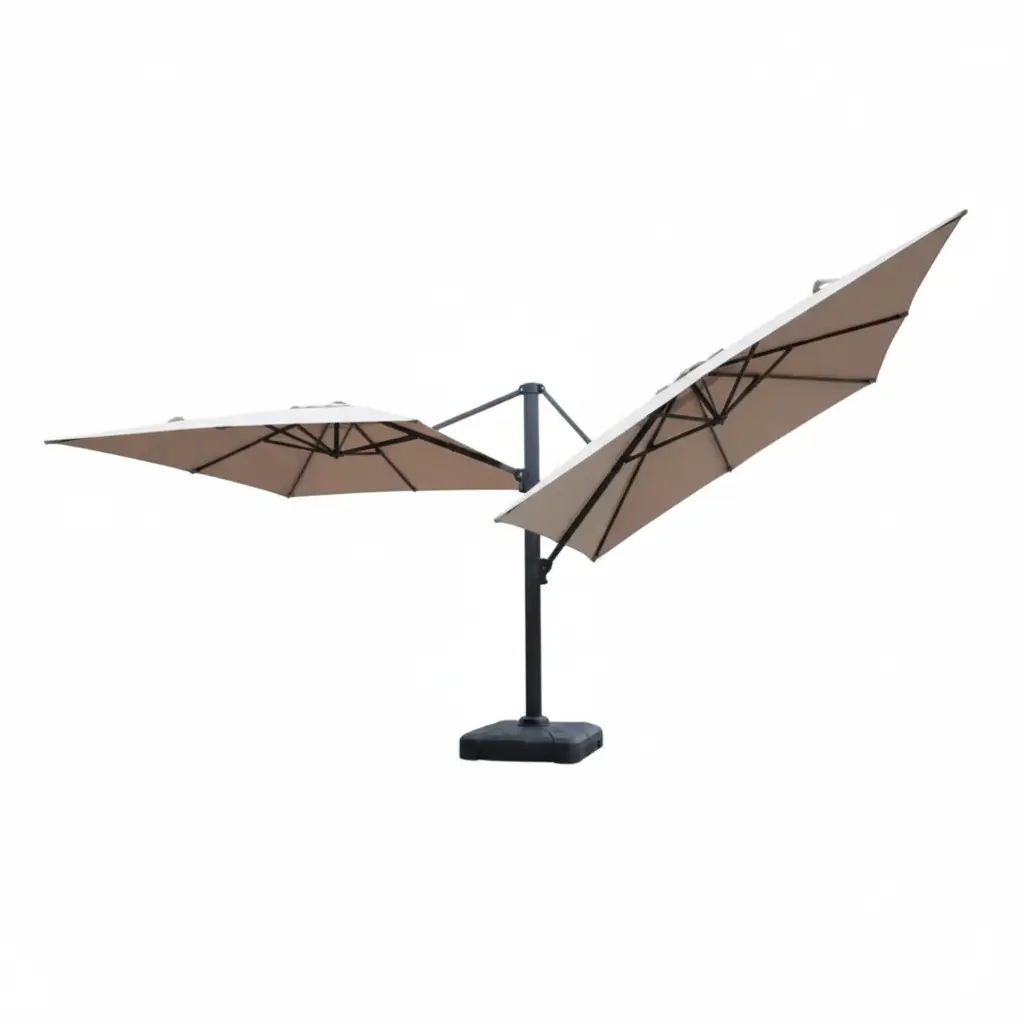
This is why quality sourcing is non-negotiable. The weight and stability that make granite the ideal anchor for heavy-duty cantilever models, like our Roma Series (PTZHU-020), depend entirely on a flawless, well-processed slab.
Why Are Concrete Bases Considered the Industrial Standard?
Concrete is the industrial standard for its durability in harsh conditions, high load-bearing capacity, and long-term cost savings. Its strength and low maintenance make it a reliable foundation.
Superior Structural Integrity for Heavy Loads
Concrete foundations provide the exceptional strength needed to support heavy industrial equipment and withstand constant high-traffic volumes. Its high load-bearing capacity isn’t just about raw strength; it’s about stability. A concrete base distributes the immense weight of machinery evenly across its entire surface. This prevents dangerous stress points from forming, which minimizes the risk of structural failure or ground settling over time.
Long-Term Durability and Financial Advantage
While the initial pour might seem costly, concrete delivers a better return over its lifespan. The material is naturally resistant to moisture, common industrial chemicals, and extreme temperature swings. This inherent toughness means it doesn’t need frequent repairs or replacement. For any industrial operation, this translates directly into less maintenance-related downtime and fewer surprise expenses, ensuring facilities stay operational and profitable.
Source Durable Commercial Umbrellas Factory-Direct

Cast Iron: Is the Classic Look Worth the Risk of Rust?
Cast iron’s classic appearance is worth the rust risk because the problem is highly preventable. Simple maintenance, like drying the base after rain, preserves its look and integrity.
Understanding How Rust Forms on Porous Iron
Rust is just a chemical reaction. Because cast iron is porous, its surface reacts with moisture and oxygen when they are left to sit for extended periods. The risk isn’t from a material flaw; it’s just how iron behaves in wet conditions. This means prevention is straightforward: keep the base dry and you stop rust before it starts.
A few basic habits are all it takes:
- Wipe the base completely dry with a towel after it rains. Do not let it air-dry.
- Make sure the base isn’t sitting in a puddle or low spot on the patio where water collects.
Powder Coating: The Modern Approach to Rust Prevention
For any metal prone to rust, the standard industrial solution is applying a protective finish. This seals the metal off from direct contact with the elements. We use this exact approach for our own equipment.
Our steel umbrella frames, for instance, are finished with an Anthracite powder coating. This process bakes a durable, polymer layer onto the steel, creating a physical barrier that prevents moisture from ever reaching the metal surface to start the rusting process.
Why Are Steel Plate Bases the Preferred Modern Commercial Choice?
Steel plate bases offer exceptional strength and load distribution at a much lower cost. Modern powder coating protects them from the elements, ensuring long-term performance without frequent replacement.
Exceptional Strength for High-Traffic Stability
Steel delivers the high tensile strength needed to handle significant stress from large, heavy umbrella canopies. This structural advantage ensures the base distributes weight uniformly across the ground. In a busy commercial setting, that even load distribution is what prevents an umbrella from tipping over if bumped or caught by wind.
How Anthracite Powder Coating Prevents Corrosion
Steel’s historical weakness is rust, but modern finishes solve that problem. Our steel components feature an Anthracite Powder Coating, a premium treatment that creates a durable, non-porous barrier against moisture and environmental wear. This protective coating is a standard feature for our long-lasting Market and Banana umbrella series, making them reliable for years of outdoor commercial use.
Resin vs. Plastic: Are These the Best Budget-Friendly Options?
For high-volume production, plastic is cheaper. For small, detailed runs, resin’s lower tooling costs can make it more economical, though it’s typically less durable.
Raw Material vs. Finished Product Costs
The cost calculation for these materials is fundamentally different. When you buy resin, you are primarily paying for the raw liquid material itself. The price of a finished plastic product, however, includes the raw plastic pellets plus the costs of processing, additives, equipment depreciation, and labor. This is why common commodity plastics like polypropylene (PP) or high-density polyethylene (HDPE) are usually cheaper by weight than their base resin counterparts.

How Production Volume Determines the Cheaper Option
The final price tag really depends on your order quantity. For high-volume manufacturing runs, injection-molded plastic becomes much more economical. Once the significant upfront investment in a steel mold is paid off, the per-unit cost drops dramatically. But for smaller or custom production runs, liquid resin molding is often more cost-effective. The molds are simpler, made from materials like silicone, and can be fabricated much faster, keeping tooling expenses low for limited quantities.
Surface Treatments: How Can You Prevent Rust Stains on Your Deck?
Prevent rust stains with protective pads under furniture legs and waterproof deck sealants. For steel furniture, a factory-applied powder coating is the most robust barrier against moisture.
Using Protective Barriers and Regular Maintenance
The easiest way to stop rust stains is to prevent direct contact between metal and your deck surface, especially when moisture is present. Simple physical barriers and basic upkeep are surprisingly effective.
- Place protective pads or rubber caps under all metal furniture legs. This creates a physical barrier that stops rust from transferring to the deck.
- Apply a quality waterproof sealant to wood decks. This prevents moisture from soaking into the wood, which accelerates the rusting process when metal is present.
- Don’t let metal furniture sit in one spot all season. Move it occasionally and check underneath for any early signs of rust, particularly after heavy rain.
The Role of Powder Coating on Steel Frames
While maintenance helps, the best defense is built into the product itself. Our steel-framed furniture is finished with a durable powder coating, typically in Anthracite or Black, which completely seals the metal from air and moisture.
This treatment is far more resilient than a simple layer of paint. It resists the chips, scuffs, and scratches that would otherwise expose the raw steel and lead to rust. Choosing furniture with a high-quality, factory-applied powder coat is the most important first step in keeping your deck surface clean and stain-free.
Why Are Rubber Feet Essential for Protecting Your Patio Floor?
Rubber feet create a protective, non-slip barrier between furniture and the patio floor. This prevents scratches and dents, distributes weight evenly, and stops dangerous sliding in wet conditions.
Preventing Scratches and Unwanted Movement
The most obvious job of a rubber foot is to act as a soft barrier. Heavy umbrella bases or furniture legs made of metal, concrete, or hard plastic will grind directly into your patio surface, causing permanent scratches and gouges. Rubber absorbs this contact, preventing the kind of damage that ruins the look and integrity of pavers, wood, or composite decking.
They also distribute the weight of the furniture more effectively. A heavy base concentrates its entire load onto a few small points, creating intense pressure that can wear down the floor finish or even crack tiles. Rubber feet spread that load across a slightly larger surface area, reducing the stress on any single spot.
A key function is providing a high-grip surface. Patios are often smooth and can become slippery when wet. Rubber’s natural tackiness keeps furniture from sliding around unexpectedly. This is especially important for large umbrellas that can act like a sail in the wind, posing a real safety risk if the base isn’t secure.

Improving Durability in Outdoor Conditions
Rubber is naturally water-resistant, which is critical for outdoor use. It prevents moisture from seeping up from a damp patio into the legs of metal or wood furniture. This simple buffer helps stop rust and wood rot from starting at the base, which is often the first point of failure for outdoor pieces.
Good quality rubber is also built to withstand the elements. Unlike cheap plastics that can become brittle and crack from UV exposure or temperature changes, rubber maintains its flexibility and integrity. It won’t degrade quickly from constant exposure to rain, sun, and fluctuating temperatures.
Finally, rubber feet reduce the constant wear from friction. Every time a chair or table is dragged even a few inches, it wears down both the furniture leg and the floor finish. By absorbing this friction, rubber extends the life of both the furniture and the patio surface, saving money on repairs and replacements down the line.
Shipping Durability Comparison: Which Material Is Least Likely to Break in Transit?
Materials like expanded polystyrene and corrugated cardboard offer the best protection. We use robust individual cartons and compact packing to ensure our umbrellas arrive safely while lowering your landed costs.
When you’re importing full containers, the packaging material is just as important as the product inside. Weak or inefficient packaging leads to damaged goods and higher freight costs per unit. The goal isn’t just to prevent breakage but to do it efficiently. The most durable materials provide structural integrity without wasting space.
| Material | Durability Rating | Best Use Case |
|---|---|---|
| Expanded Polystyrene (EPS) Foam | Very High | High-value electronics and fragile appliances. |
| Metal Containers | Very High | Liquids, hazardous materials, high-security cargo. |
| Corrugated Cardboard | High | General purpose shipping, e-commerce, retail goods. |
| Wooden Crates | High | Heavy or oversized items, international freight. |
| Bubble Wrap | Medium | Cushioning inside boxes, reducing damage for smaller items. |
Core Factors Defining Shipping Durability
A material’s ability to protect goods in transit comes down to a few fundamental properties. These factors determine whether a package can withstand the journey from the factory floor to a distribution center or retail store.
- Material Composition: The raw material dictates baseline performance. Metals and certain plastics offer superior protection against moisture and temperature shifts, which can compromise weaker materials like untreated paper.
- Load-Bearing Capacity: This is about structural integrity. Corrugated cardboard and foam are effective because they can support weight and absorb impacts, protecting the contents from being crushed or dropped.
- Environmental Resistance: A package must endure rough handling, humidity, and temperature swings without failing. Durable materials prevent delays and damage by holding up against these common transit stressors.
Our Packaging Strategy for Safe Transit
At Linhai PATIOFURNITURES, our packaging isn’t an afterthought. We design it to protect the product and maximize shipping efficiency for our B2B clients. It’s built to lower your landed cost per unit.
- Individual Export Cartons (1 PC/CTN): We pack every umbrella in its own dedicated export carton. This provides a crucial layer of protection and makes the unit ready for both retail shelves and individual mail-order fulfillment.
- Compact Packing for Container Maximization: Market umbrellas ship in compact boxes, typically around 140x15x15cm. This allows us to load a container tightly, minimizing movement and potential damage during ocean freight. A stable load is a safe load.
- Focus on Mail-Order Safety: We understand that many of our partners are e-commerce sellers on platforms like Amazon and Wayfair. Our packaging is designed to withstand the additional stress of the individual parcel delivery system, ensuring the end customer receives an undamaged product.
Frequently Asked Questions
Which is better for an umbrella base: granite or concrete?
Both granite and concrete are excellent choices, but they suit different needs. Concrete offers maximum stability against wind and is popular in commercial settings. Granite provides similar weight with a more sophisticated, polished look and is naturally resistant to scratches and stains. A key factor is climate, as water-filled concrete bases can crack in freezing weather, making granite a more durable option for regions with harsh winters.
How can I stop a cast iron base from rusting?
To prevent rust, you need to create a protective barrier against moisture. Effective methods include applying spray-on protectants, using paste wax, or coating the surface with specialized oils or dry-coating products. Storing the base in a dry, low-moisture area also significantly slows down the rusting process.
Are resin bases durable enough for commercial use?
Yes, modern resin bases are very durable. Industrial-grade resins like epoxy and polyurethane offer great strength, chemical resistance, and can bear heavy loads without cracking. Since resin does not rust, it is an ideal material for humid, coastal, or high-moisture environments.
What is the heaviest material for an umbrella base?
Granite and concrete are the heaviest materials, providing the best stability for large umbrellas in windy conditions. Solid granite bases can weigh 85 pounds or more. While they offer the most inherent weight, many heavy-duty plastic bases can be filled with sand or water to achieve comparable stability, offering easier portability when empty.
Final Thoughts
While generic bases lower your initial FOB cost, our standard Anthracite Powder Coating is essential to prevent rust claims and protect your brand’s reputation. Inventory that fails in the field erodes margin and customer trust—a far higher price to pay.
Don’t guess on quality—verify it. We recommend ordering a sample to inspect the finish and packaging firsthand. Contact our team to discuss your container loadout or OEM requirements.




 English
  Spanish
  French
  German
  Portuguese