
Custom sizing for umbrella poles is essential for projects involving non-standard furniture like bar-height tables or deep seating. Using a standard pole in these applications creates immediate stability issues and a poor user experience, leading to client complaints and safety liabilities that can jeopardize an entire contract.
Our manufacturing process solves this with CNC tube cutting, ensuring every component meets exact specifications for stable assembly. We analyze every order against our Grade 3 wind resistance standard and use a formal CAD verification process to confirm your design before any metal is cut.
What Is the “Tube Cutter” Advantage and How Does It Ensure Precise Heights?
CNC tube cutters achieve manufacturing tolerances as low as 0.1-0.2mm. This process guarantees every pole and frame component is cut to the exact height for stable, error-free assembly.
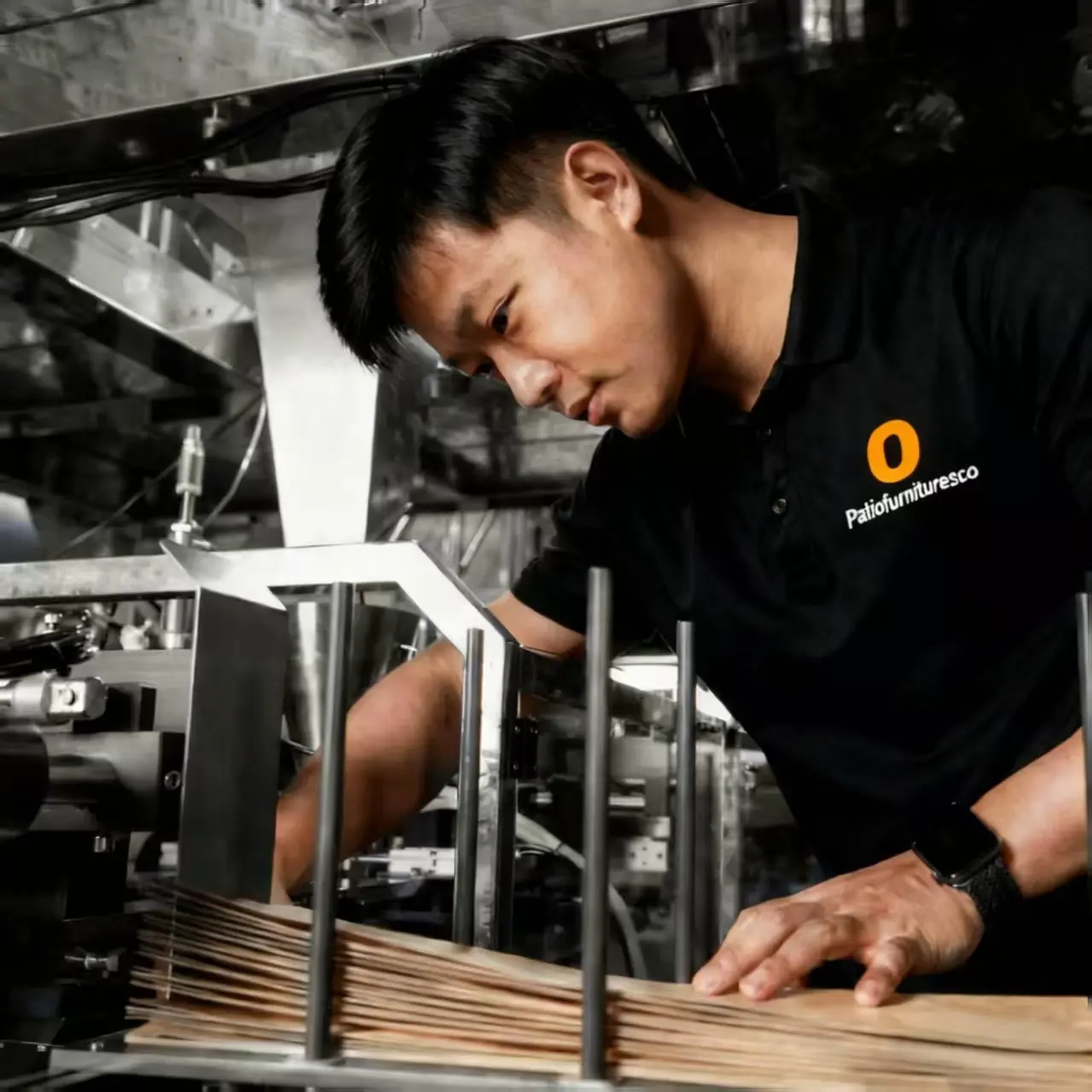
Manual cutting methods introduce human error, leading to inconsistent part heights, wobbly frames, and assembly problems. We eliminated these issues by automating our cutting process with CNC-controlled tube lasers. This technology ensures every component is a perfect replica of the last, which is fundamental to building a stable and reliable product.
| Manufacturing Capability | Resulting Advantage |
|---|---|
| Cutting Tolerance | Achieves precision as low as 0.1-0.2mm. |
| Edge Finish | Clean, smooth, and burr-free edges without secondary grinding. |
| Process Consolidation | Performs angle cuts, slots, and holes in a single automated step. |
CNC-Controlled Precision for Flawless Cuts
The core of the system is a computer-controlled laser that follows a programmed path without deviation. This removes the guesswork and slight variations inherent in manual methods. The result is a level of accuracy that is simply not achievable by hand.
- Extreme Accuracy: The laser achieves tolerances as fine as 0.1-0.2mm, ensuring every cut meets the exact design specification.
- Clean Edges: The process produces smooth, burr-free edges. This eliminates the need for secondary finishing, saving time and preventing potential assembly snags.
- Process Efficiency: The machine consolidates multiple operations like angle cutting and slotting into one automated step, increasing throughput and consistency.
Ensuring Component Compatibility for Poles and Frames
This manufacturing precision directly impacts the final product’s quality. For components like our 38mm aluminum and 34mm steel poles, consistent dimensions are not just a preference—they are a requirement for stability. When every part is cut to the exact same length, they fit together perfectly. This tight fit is critical for the structural integrity of the assembled umbrella, preventing leaning, instability, and premature wear on the joints.

Deep Seating: Do You Need Lower Poles for Lounge Furniture?
Yes, deep lounge furniture needs a lower frame. As seats get deeper for a relaxed posture, the entire structure is lowered so a user’s feet can rest on the ground.
The Relationship Between Seat Depth and Frame Height
The core principle here is ergonomics. Standard seating furniture has a seat height around 17-19 inches. This allows most adults to sit with their feet flat on the floor and their knees at a comfortable 90-degree angle. It works for task-oriented or upright posture.
Deep lounge seating breaks that rule on purpose. With seat depths of 23 inches or more, the goal is a relaxed, leaned-back posture. If you kept the standard 18-inch height, a user’s legs would dangle awkwardly. To fix this, the entire frame, including the legs or “poles,” must be lowered. This ensures the user remains stable and their feet can rest comfortably on the floor, preventing strain.
Custom Frame Engineering for Your Specifications
As a B2B manufacturer based in Linhai, we build site furnishings for OEM/ODM projects based on exact client blueprints. If your design specifies non-standard dimensions, like deep seating with a unique leg height, our process is built to handle it. We don’t guess.
Before any metal is cut, our team runs CAD verification on your designs. We use design analysis and simulation to confirm every dimension—from the seat depth to the pole height—matches your specs perfectly. This step catches any potential manufacturing or assembly issues before production starts, guaranteeing the final product is exactly what you ordered.
Boost Your ROI with Factory-Direct Umbrellas

Bar Tables: Why Are Higher Poles Essential for High-Top Seating?
Bar tables need higher umbrella poles for headroom and to keep the space open. A standard pole puts the canopy too low, blocking views and making it feel cramped.
Maintaining Headroom and Sightlines for Elevated Seating
Bar-height tables stand 40 to 42 inches high, putting guests well above standard dining height. Using a regular umbrella pole with this setup is a functional mistake. The canopy would sit too low, forcing guests to duck and creating a claustrophobic feel.
The main appeal of high-top seating is the open, social atmosphere and the “bird’s-eye view” it provides in commercial spaces. A correctly sized, taller pole ensures the umbrella canopy clears everyone’s head, whether seated or standing. This preserves clear sightlines and allows easy conversation, which is the entire point of installing this type of furniture.
Engineering Custom Pole Dimensions for Commercial Projects
As an OEM/ODM source factory, we frequently manufacture custom pole lengths for projects with non-standard furniture. For architects and designers specifying high-top tables, this isn’t an add-on; it’s a core requirement for an integrated shade solution.
We use precision tube cutters to produce poles to exact specifications, ensuring a proper fit for any commercial layout. Simply making a pole taller isn’t enough. Our engineering team verifies every custom configuration to ensure the increased height doesn’t compromise stability. We analyze the height-to-depth ratio and confirm the final product still meets EN581 safety standards before it leaves our facility.

Can We Manufacture Non-Standard Canopy Sizes (Like 2.5m)?
Yes, we make custom sizes. But a 2.5m canopy isn’t a custom project for us; it’s a standard, high-volume model built for cost-efficiency and maximum container loading.
Our OEM/ODM Process for Unique Dimensions
Our factory directly supports OEM/ODM projects for any truly unique dimensions your product line requires. If you need a size that isn’t in our core inventory, we can build it.
The process is straightforward. Our engineering team first verifies your technical specifications to ensure stability and manufacturability. We then provide a CAD drawing or design proof for your formal approval before any production begins.
The 2.5m Size: A Standard High-Volume Model
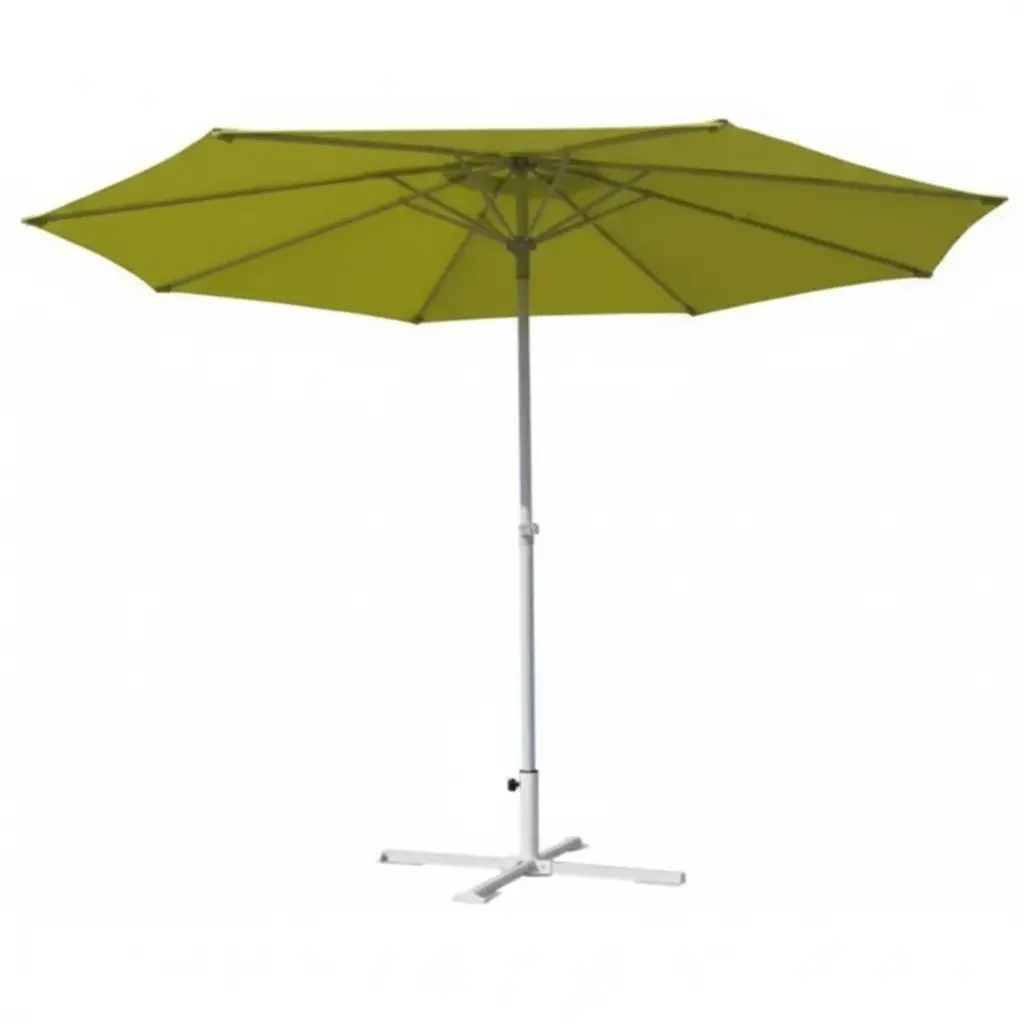
While we can produce custom sizes, the 2.5m canopy is one of our standard models. Specifically, this is our PTMU-010 market umbrella, built with a 34mm steel pole.
This model is one of our “Volume Kings.” We engineered it for the lowest possible price point and the highest container loading quantity—fitting around 2,750 units into a single 40HQ container. This makes it a perfect fit for clients like supermarket chains running seasonal promotions.
In-Ground Mounts: How Do We Adjust Pole Length to Account for Burial Depth?
You don’t adjust an existing pole. You calculate the total required length by adding the desired above-ground height to the necessary burial depth before you order.
The Core Calculation: Mounting Height + Burial Depth
The process is straightforward. The correct total pole length is determined by a simple formula: Total Pole Length = Desired Mounting Height + Required Burial Depth.
A common industry guideline is to bury a pole for 10% of its total length plus an extra 2 to 3 feet for security. For example, if you need a 24-foot mounting height, you would plan for a 4-foot burial depth. This means you need to order a 28-foot pole, not a 24-foot one.
How Soil and Climate Impact Required Depth
Burial depth is not a one-size-fits-all number. Site conditions directly influence how deep a pole must be set to remain stable. Two key factors always need to be considered.
- Soil Quality: Poor, soft, or sandy soils offer less resistance, so poles must be buried deeper to get a solid grip and prevent leaning over time.
- Frost Line: In cold climates, the ground freezes and thaws, which can push a pole right out of the ground. Poles must be buried below the local frost line to anchor them in stable soil that isn’t affected by this cycle.
What Is the Minimum Order Quantity (MOQ) for Custom Sizes? (It’s Lower Than You Think)
Minimum order quantity is tied directly to manufacturing setup. A completely new frame requires a full container, while adding a logo has flexible minimums with adjusted per-unit pricing.
How Manufacturing Setup Dictates Minimums
The main factor determining the MOQ is the cost and time needed to set up a production run for a custom item. If you need a non-standard frame dimension or a specific fabric color we don’t stock, it involves significant factory re-tooling. To make that effort worthwhile, the order needs to be large, often a full container load.
But customizations that rely on simple, repeatable processes don’t carry that same burden. These jobs have much lower entry points because the setup is minimal and doesn’t disrupt the main production line.
Our Approach for Custom Logo Printing
A perfect example is logo printing. We use silk screen printing to apply custom logos to products like our popular PTMU-001 market umbrellas. This process has a fixed setup cost for creating the screen with your design.
For smaller orders, we don’t turn you away. The price per unit simply increases to cover that one-time screen cost. This model makes custom branding a viable option for promotional and gift companies that need smaller batches for events or marketing campaigns.

The Engineering Limit: How Does Increasing Height Affect Stability?
Increasing an umbrella’s height raises its center of gravity, making it more vulnerable to wind. This stress on the pole and base defines our practical limit: a Grade 3 wind resistance rating.
Center of Gravity and Overturning Risk
The physics are straightforward. A taller umbrella has a higher center of gravity, which acts like a lever for wind. The same gust of wind exerts a much greater tipping force on a tall umbrella than a short one. The ratio of the umbrella’s height to its base width is the single most important factor in its ability to stay upright.
As height increases, bending stress gets concentrated on the lower part of the pole and its connection points to the base. These are the most common failure points. A taller pole is simply under more constant strain, making it much more susceptible to damage from lateral forces.
Our Practical Limit: The Grade 3 Wind Resistance Rating
Based on these principles, our umbrellas are engineered for a maximum wind resistance of Grade 3. This corresponds to a gentle breeze of about 12-19 km/h. This isn’t a random number; it’s a reliable stability benchmark for the entry-level and promotional-grade products we specialize in.
For user safety and to ensure the product lasts, the rule is simple: umbrellas must be closed when not in use or in any breezy conditions. Pushing the product beyond this Grade 3 limit risks damage and is not covered by our terms.
CAD Verification: How Do We Confirm Your Custom Specs Before Production?
We build a precise Computer-Aided Design (CAD) model of your order. Our engineers then analyze this digital blueprint to confirm all custom specs before production begins.
For any custom OEM or ODM project, getting the details right from the start is non-negotiable. Misinterpreting a blueprint or overlooking a design flaw leads to wasted materials and delayed shipments. To prevent this, we use a structured CAD verification process that locks in your exact specifications before a single machine is turned on.
Digital Model Analysis and Simulation
The first step is a purely digital review where our engineers translate your requirements into a production-ready CAD model. We use this model to run simulations and technical checks to catch potential problems early, when they are cheapest and easiest to fix.
- Geometry and Dimension Checks: We verify that every component’s geometry and measurements in the CAD file match your blueprints and technical drawings exactly. This ensures parts will have the correct final dimensions.
- Virtual Assembly Simulation: The model is digitally assembled to detect any interference issues. This process confirms that all custom parts will fit together correctly without clashing or requiring post-production adjustments.
- Design for Manufacturing (DFM) Analysis: We analyze the design to identify any features that could cause problems during production. This might include sharp angles that are difficult to mold or tolerances that are too tight for our equipment, allowing us to suggest modifications that improve efficiency and reduce costs.
Final Approval of Production-Ready Files
Once the internal engineering review is complete, we move to the final confirmation stage. This is where you give the official sign-off, locking in the design and authorizing us to begin mass production. This step ensures we are perfectly aligned on the final product.
- Issuing Final Drawings for Sign-Off: We provide you with detailed, production-ready drawings derived from the validated CAD model. Your approval on these documents serves as the final green light.
- Confirming Logo and Branding Details: For custom branding, this is where we confirm the exact placement, dimensions, and color codes for any silk screen logo printing, ensuring it matches your brand guidelines precisely.
- Creating a Documented Approval Record: Your final sign-off is documented and archived. This creates a clear record of the approved specifications, which is essential for quality assurance and full traceability throughout the production run.
Frequently Asked Questions
Can you manufacture umbrellas in custom sizes or heights?
Yes, as an OEM/ODM source factory, we can produce umbrellas to your exact specifications. This includes custom canopy diameters and pole heights tailored for different uses, such as taller poles for bar tables or shorter poles for deep-seating lounge furniture.
What is the wind resistance rating for your umbrellas?
Our standard umbrellas are designed for use in gentle breezes, up to Grade 3 winds (approximately 12-19 km/h). For safety, all umbrellas must be closed when not in use or in breezy conditions. Taller or larger custom umbrellas will require a heavier base to maintain stability.
What are my fabric and color options for a custom order?
Our standard fabric is 160g/m² or 180g/m² Polyester with a US Standard Grade 2.0-2.5 color fastness, ideal for seasonal promotional use. For better performance, we recommend stable colors like Beige or Light Green. An upgrade to Yarn-Dyed fabric is also available for improved color life and a longer warranty.
What are the payment terms for a factory-direct order?
Our standard payment policy is a T/T (Telegraphic Transfer) with a 30% deposit to confirm the order and the remaining 70% balance paid against the copy of the Bill of Lading (B/L) after shipment.
Final Thoughts
While manual cutting seems cheaper, our CAD-verified, CNC-cut frames eliminate wobbly products and assembly failures. This manufacturing precision protects your volume orders from costly returns. It ensures every unit you sell builds trust, not complaints.
The next step is to test our process with your design. Submit your technical drawings for a complimentary CAD verification. Our engineering team is ready to confirm your exact specifications and start your OEM/ODM project.


 English
  Spanish
  French
  German
  Portuguese