
Miscalculating umbrella clearance is a primary driver of customer returns and negative online reviews. The common “rib hit” problem, where a non-telescoping mast causes the frame to collide with the tabletop, directly erodes profit margins for high-volume importers and retailers.
This guide provides the critical measurements for promotional-grade umbrellas. We analyze the “closed rib height” of fixed-pole models against standard 30-inch tables, ensuring your container orders are specified correctly to prevent these costly and avoidable post-sale issues.
What Is the “Rib Hit” Problem and Why Does It Happen?
Rib Hit is when an umbrella’s ribs collide with the table during closing. It’s caused by non-telescoping poles on budget models that lack sufficient vertical clearance.
Defining ‘Rib Hit’: When Closed Umbrellas Collide with Tables
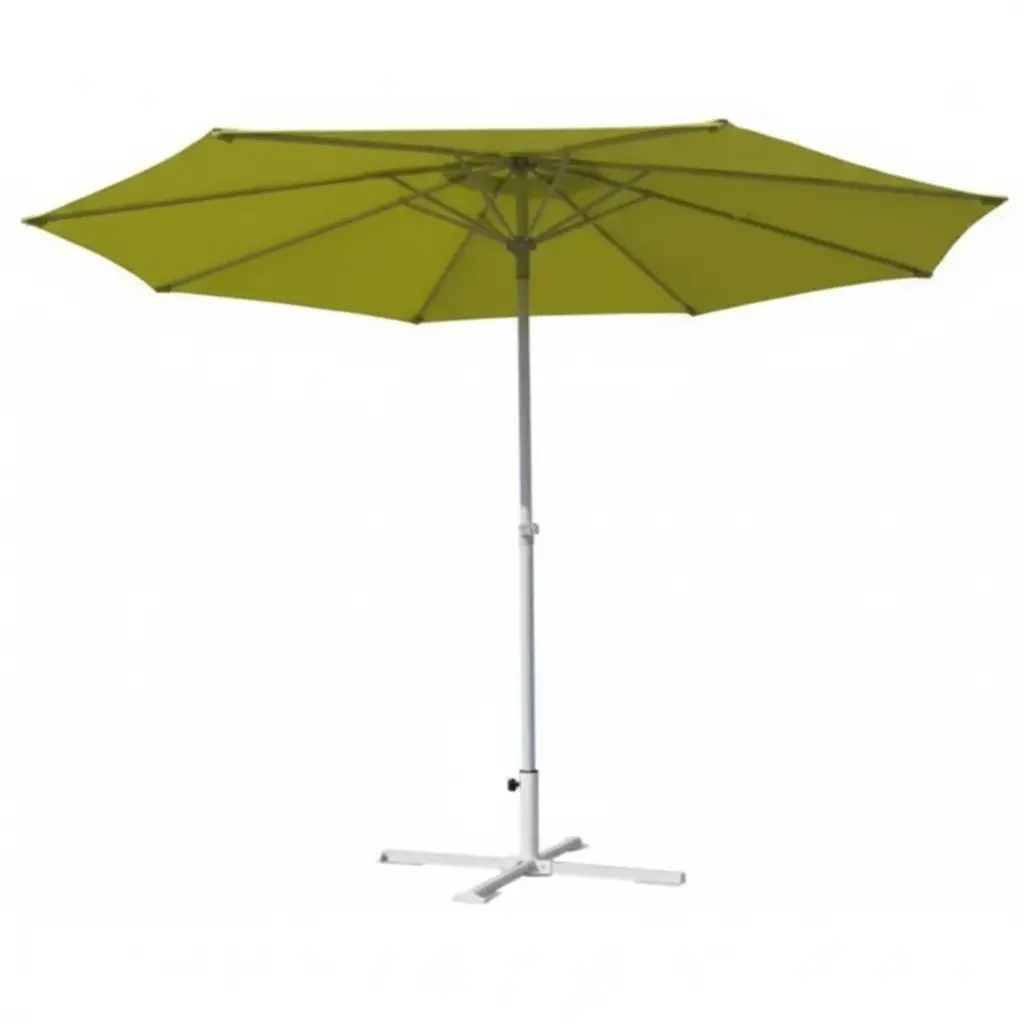
The “Rib Hit” problem is exactly what it sounds like: the umbrella’s metal support ribs hit the edge of the table when you try to close it. This happens when the lowest point of the folded canopy assembly hangs below the height of the tabletop.
Instead of a smooth closure, the ribs get stuck on the table, preventing the umbrella from fully collapsing. This is a frequent issue in patio setups and a common source of customer complaints if expectations aren’t managed properly.
Why Standard Pole Designs Are a Primary Cause
This isn’t a defect; it’s a design trade-off. The issue is almost exclusive to cost-effective market umbrellas with simple, fixed-height poles. These designs lack a telescoping mechanism that would lift the canopy upwards as it closes.
In “Promotional Grade” models like our PTMU-001 or PTMU-010, the entire value proposition is based on minimizing cost for high-volume orders. Adding a lifting or telescoping function increases complexity and price. The hub that holds the ribs simply slides down the pole, and on a standard 30-inch table, that’s often not high enough to provide clearance. This is an expected characteristic for entry-level, seasonal products where price is the main driver.

Table Height vs. Closed Rib Height: Will Your Umbrella Close Over the Table?
If the umbrella’s ‘closed rib height’ is less than your table’s height, the ribs will hit the tabletop. Always compare these two measurements to ensure a proper fit.
Understanding the ‘Rib Hit’ Problem
When you close a standard market umbrella, the ribs don’t just fold up; they collapse downwards and inwards toward the pole. If the tips of those collapsed ribs hang lower than your table’s surface, they physically hit the tabletop.
This collision stops the umbrella from shutting completely. It looks unprofessional and can easily damage the rib tips or scratch your table surface over time. It’s a simple mechanical issue that’s often overlooked during purchasing.
Measuring for Standard, Promotional-Grade Umbrellas
First, get the exact height of your patio table. Most are around 28-30 inches, but you need your specific number. Next, find the ‘closed rib height’ on the umbrella’s spec sheet. This is the clearance from the ground to the lowest point of the ribs when the unit is fully shut.
This is absolutely critical for budget-friendly models designed for high-volume orders, like our PTMU-010. These umbrellas are built for promotions and don’t include advanced features like telescoping poles that lift the canopy during closure. Verifying the clearance measurement is the only way to guarantee they will function correctly with your tables.
Source Custom Commercial Umbrellas Factory-Direct

The Telescoping Mast: How Does Auto-Lift Technology Solve Clearance Issues?
Auto-lift uses a telescoping mast that rises as you crank the umbrella closed. This dual action lifts the canopy ribs up and over the table, preventing damage.
The Dual-Action Mechanism: Rising Vertically While Closing
This technology uses a dual-purpose design. As you crank the handle to close the umbrella, an internal mechanism doesn’t just fold the ribs horizontally—it also forces the main mast to extend vertically. This simultaneous upward lift raises the entire hub assembly, ensuring the tips of the ribs rise high enough to clear the edge of a table.
Practical Application: Clearing Taller Dining and Bar Tables
The main benefit is solving the common “rib hit” problem, especially with today’s popular counter-height and bar-height patio sets. It lets you fully close the umbrella without its ribs crashing into the tabletop, which prevents damage to both the umbrella frame and the furniture. You can leave the umbrella right in its base or table stand during operation, with no need to move anything around.

Headroom Requirements: Why Do You Need at Least 7ft of Walkway Clearance?
Walkways require at least 7 feet of clearance (officially 6’8″) to meet safety standards like the ADA. This prevents head injuries and ensures safe passage in public settings.
The 80-Inch Rule: Meeting Safety and Accessibility Standards
The standard isn’t just a suggestion; it’s a hard rule set by multiple governing bodies. The Americans with Disabilities Act (ADA) mandates a minimum vertical clearance of 80 inches—or 6 feet 8 inches—for any circulation path. This applies to sidewalks, hallways, and any other public walkway.
The reason is simple: to prevent head injuries and guarantee safe passage for everyone, including taller individuals. Workplace safety regulations from OSHA and local building codes also enforce this 80-inch standard for walkways, stairways, and exit routes. Falling short of this height creates a direct liability risk.
How Umbrella Design Affects Walkway Space
The type of umbrella you choose directly impacts compliance. A traditional center pole umbrella, like our PTMU-001 market models, has a mast right in the middle. You have to place it carefully so the pole itself and the lowest edges of the open canopy don’t obstruct the path of travel.
Offset designs, such as a hanging “banana” umbrella like our PTZHU-003, move the support pole and base to the side. This is great for freeing up the space directly under the canopy for tables or foot traffic. But the core rule doesn’t change: the lowest hanging edge of that canopy must still be above the 80-inch clearance line over any part of the walkway.

Valance Drop: How Do You Ensure the Canopy Doesn’t Block the View?
A valance is the 8-10 inch fabric strip at the canopy edge. To keep your view clear when seated, make sure its bottom edge is above your eye level.
Understanding Valance Drop and Head Clearance
A valance is the decorative strip of fabric that hangs down from the main canopy edge, typically dropping about 8 to 10 inches. This measurement is not just for looks; it creates the true “head clearance.” Head clearance is the actual distance from the ground to the bottom edge of the valance.
An umbrella might have a high peak, but the valance determines the lowest point for both sightlines and walking clearance. It’s the most critical measurement for usability.
Assessing Sightlines for Seated Guests
Our umbrellas feature standard valance designs because they are built for promotional and seasonal use. They provide a classic look that works well for high-volume orders.
To make sure the view isn’t blocked across a table, your guests’ seated eye level should be below the bottom edge of the valance. You need to consider your table and chair height. For most standard dining sets, the view remains clear, but it’s a key factor to check if you plan to use lower lounge furniture.
Counter-Height vs. Bar-Height Tables: What Are the Specific Clearance Challenges?
Bar-height tables (40-42”) demand more vertical clearance for umbrellas and more space for seating than counter-height tables (34-36”), creating unique accessibility and safety challenges.
Key Differences in Required Space and Accessibility
The core issue comes down to dimensions. Bar-height setups consume more vertical and horizontal space, which directly impacts layout planning and user access. Here are the key measurements:
- Counter-Height Tables: Typically 34-36 inches tall, they pair with 24-26 inch stools. This leaves the standard 10-12 inches of leg room.
- Bar-Height Tables: At 40-42 inches tall, they need taller 28-30 inch stools and require more surrounding floor space for people to move comfortably.
- Accessibility: The extra height of bar seating creates a real barrier for children or anyone with mobility challenges. It’s a key consideration for public or family-oriented spaces.
Impact on Umbrella Choice and Placement
A tall bar-height table can easily cause a “rib hit” problem. The ribs of a standard market umbrella often can’t clear the tabletop when you try to close it, leading to damaged umbrellas or unusable setups.
The most direct solution is an offset hanging umbrella. A ‘Banana’ style model, like our PTZHU-003, places the pole and mechanism completely outside the table area. This design avoids any clearance conflict during opening or closing.
Keep in mind, promotional-grade hanging umbrellas are not built for rough weather. They are designed for low-wind conditions (≤ Grade 3) and must be closed when not in use to prevent damage. This is a critical point to communicate to the end-user.

Step-by-Step Guide: How Do You Correctly Measure Your Furniture Heights?
Use a metal tape measure for height, width, and depth. Compare these numbers to your doorways and hallways to confirm the piece fits before delivery.
Getting the measurements wrong is a costly mistake. A piece of furniture that can’t fit through the door is a logistical nightmare for you and your delivery team. Here’s how to get it right the first time.
| Step | Action Required | Why It Matters |
|---|---|---|
| 1. Measure the Furniture | Capture the absolute highest, widest, and deepest points. For a sofa, this includes the frame or back cushions—whichever is taller. | This gives you the true “clearance box” the item needs. A single protruding leg or armrest can stop a delivery cold. |
| 2. Measure Your Space | Record the height and width of every doorway, hallway, and stairwell on the delivery path. Account for doorstops or handrails. | The narrowest point is your bottleneck. The furniture must clear this point, sometimes by tilting it, to make it inside. |
Gathering Key Dimensions: Height, Width, and Depth
Before you check if a piece fits, you need its exact dimensions. Grab a metal tape measure for accuracy—fabric ones can stretch. Don’t eyeball it.
- Height: Measure from the floor to the absolute highest point. This could be the top of the back frame, a cushion, or a decorative element.
- Width: Measure across the front, from the furthest point on the left to the furthest point on the right. This is usually arm to arm on a sofa.
- Depth: Measure from the very front of the piece to the very back.
Verifying Fit: Comparing Measurements to Your Space
Once you have the furniture’s dimensions, map out its journey into the room. Measure the height and width of every doorway and tight corner it must pass through. Remember to account for things like radiators or low-hanging lights that reduce clearance.
To be sure, use painter’s tape to create an outline of the furniture’s footprint on the floor where it will go. You can also put tape on the wall to mark its height. This simple visualization quickly tells you if the piece will overwhelm the space or fit just right.
What Is “Pin Height” and How Does It Determine Where the Canopy Sits?
Pin height is the vertical position where a locking pin sets the canopy’s elevation. It defines the clearance underneath and impacts stability in breezy conditions.
Understanding the Pin-and-Hole Adjustment Mechanism
A pin height system is a straightforward mechanical lock. The main pole or frame legs have a series of pre-drilled holes at different intervals. You simply insert a metal pin through one of these holes to fix the canopy assembly at a specific height. It’s a common, reliable design for adjustable outdoor shade products like pop-up canopies and some market umbrellas.
Why Canopy Position Affects Wind Safety Limits
Changing the pin height gives you more or less clearance, but it does not change the product’s structural wind tolerance. All our umbrella models are designed for use in gentle breezes, with a maximum wind resistance of Grade 3 (12-19 km/h). For safety, umbrellas must be closed when not in use or in any breezy conditions, regardless of the pin height setting.
Frequently Asked Questions
What is the ideal height for a patio umbrella pole?
Patio umbrella poles typically range from 7 to 10 feet tall. For standard dining tables, an 8 to 9-foot pole works best because it provides enough clearance for guests while maintaining stability. Many modern umbrellas feature adjustable height mechanisms to better suit your space.
Will my umbrella hit the table when I close it?
This depends on the umbrella’s ‘closed clearance’ measurement versus your table’s height. You must check the manufacturer’s specifications. Square umbrellas often have less clearance than round ones when closed because their ribs extend further. Always compare your table height to the closed clearance dimension to ensure it will fit.
What is a telescoping mast and what does it do?
A telescoping mast is a pole that extends and retracts, allowing the umbrella to lift up as it closes. Its main advantage is that it can close over tables and chairs without hitting them, so you don’t have to move your furniture first. This feature is especially useful in commercial settings.
How much headroom do I need under a patio umbrella?
You should have at least 7 feet of clearance from the ground to the underside of the canopy. This allows most people to walk underneath without ducking. For dining areas, an umbrella with an 8-foot pole height usually provides the most comfortable balance of shade and headroom.
Final Thoughts
Low-cost umbrellas create high-risk inventory if clearance specs are ignored. Customer complaints about “rib hit” damage your brand and consume support resources. Matching the right product to the right table setting is how you protect your margins.
Verify these clearance measurements with your own furniture. Request a sample of our PTMU-010 or PTZHU-003 to test the fit and finish yourself. Our team is ready to prepare a quote for your high-volume or custom logo requirements.




 English
  Spanish
  French
  German
  Portuguese