

For B2B procurement officers and event planners, the challenge of sourcing budget fabrics often feels like a trade-off between immediate project costs and necessary performance. When high-volume branding is the priority and permanent installation isn’t the goal, polyester serves as the industry’s most versatile solution for short-term promotional needs and high-traffic event gear.
This guide explores the technical realities of polyester, analyzing everything from its $3 to $7 per yard price floor to the critical 300-hour UV rating that defines its outdoor lifespan. We will examine the functional differences between PU and PA waterproofing, the tactile benefits of spun polyester, and how to strategically select weights between 180gsm and 250gsm for beer gardens, festivals, and corporate giveaways.
Standard Polyester: 180gsm to 250gsm Specs
Standard polyester in the 180-250 GSM range serves as a versatile mid-to-heavyweight fabric. While 180-200 GSM options prioritize breathability and moisture management for active use, 250 GSM variants emphasize structural integrity, abrasion resistance, and longevity, withstanding up to 100+ wash cycles for high-traffic B2B applications.
Weight Classification and Material Properties
The weight of polyester fabric, measured in grams per square meter (GSM), serves as a primary indicator of its density and performance capabilities. Within the 180-200 GSM range, the material is classified as mid-weight, offering an optimal balance of durability and high breathability. These fabrics are engineered for fast-drying properties and agility, making them ideal for warm conditions and cardio-intensive activities. Conversely, the 250 GSM tier is a heavy-duty classification designed for superior opacity, firmer structural support, and enhanced tear strength to survive more abrasive environments.
Technically, these fabrics are typically standardized as 100% polyester, utilizing either virgin fibers or GRS-certified recycled PET. Most commercial-grade options feature a plain weave and maintain Oeko-Tex Standard 100 compliance to ensure the absence of harmful chemicals. The engineering logic centers on specific trade-offs: lower GSM tiers excel in airflow and moisture wicking, whereas the 250 GSM density provides the mass necessary for proprioceptive feedback in athletic wear and increased resistance to mechanical stress.

Durability Metrics and Commercial Applications
Durability metrics for the 180-250 GSM range are categorized by their ability to withstand industrial maintenance. A standard 180 GSM polyester fabric typically withstands 50 or more industrial wash cycles, while 250 GSM variants are rated for 80-100+ cycles when paired with reinforced seams and color-fast dyes. Most production runs are finished at an industrial width of 60 inches, which for the 180 GSM tier equates to approximately 6 ounces per square yard, establishing a reliable baseline for mass-market textile production.
In B2B applications, this weight range is positioned as a cost-effective solution for promotional and high-traffic gear. It is frequently utilized for festival tents, branding materials, and sports-related event apparel like leggings or vests where opacity and recovery are essential. For outdoor use, these polyester specs serve as a high-performance entry point, providing necessary UV resistance and color retention. This makes them a preferred alternative to premium solution-dyed acrylics in scenarios where durability must be balanced against budget constraints.
The Fading Reality: 300 Hours UV Protection
A 300-hour UV rating is the entry-level baseline for budget outdoor fabrics, typically providing enough resistance for a single summer season. While these fabrics initially offer UPF 40-50+ protection, they are prone to rapid color fading and significant structural failure, often losing over 80% of their tensile strength once the chemical inhibitors wear off.
| Fabric Specification | UV Rating (Hours) | Typical Degradation Outcome |
|---|---|---|
| Budget Polyester (300D) | 300 Hours | ~81% Loss in tear strength; rapid color fading. |
| Vinyl-Polyester Blend | 1,200 Hours | Moderate structural retention; designed for high-traffic. |
| Solution-Dyed Acrylic | 2,000+ Hours | Minimal fading; 5+ year outdoor lifecycle. |
Defining the 300-Hour UV Baseline
The 300-hour UV rating is determined through accelerated laboratory testing, using Xenon arc or QUV lamps to simulate intense solar radiation. In real-world applications, this baseline correlates to approximately one summer season of standard outdoor exposure. Budget-grade polyesters, typically ranging from 140 to 250gsm, reach a critical failure point at this interval where fiber breakdown and color change—measured on the Blue Wool Scale—become commercially unacceptable for consumer use.
While many of these fabrics boast initial UPF ratings of 40-50+, which effectively block 96-99% of radiation, this protection is often the result of topical chemical inhibitors rather than inherent fiber properties. Unlike solution-dyed alternatives where the pigment is integrated into the polymer melt, budget polyester relies on surface treatments that degrade rapidly. Once the 300-hour threshold is passed, the fabric’s ability to block UV rays and maintain its aesthetic integrity diminishes exponentially.

Tensile Strength Loss and Structural Degradation
Beyond aesthetic fading, the primary technical concern with 300-hour fabrics is the catastrophic loss of structural integrity. Research indicates that 300D polyester can experience an 81% loss in tear strength—dropping from an initial 334 lbs to just 64 lbs—after prolonged exposure. This degradation is often more severe in heavier deniers because the thicker yarns allow for deeper UV penetration, leading to an organic breakdown of the synthetic fibers from the inside out.
Industry safety standards, such as the FIBC requirements, mandate that fabrics retain at least 50% of their original tensile strength after 200 hours of QUV exposure. Many budget materials struggle to meet this threshold as they approach the 300-hour mark. Consequently, these materials are strictly recommended for short-term promotional items, such as event banners or low-cost residential umbrellas, rather than permanent outdoor installations where safety and long-term durability are required.
PU vs. PA Coatings: Waterproofing Differences
Polyurethane (PU) is the superior waterproofing agent, utilizing Hydrostatic Head (HH) ratings between 1,000mm and 10,000mm to block moisture, though it is prone to hydrolysis. PA (Polyacrylate) coatings are cheaper alternatives used for basic water resistance and stiffness but lack the deep waterproof barrier required for heavy-duty commercial shade.
The Science of PU: Hydrostatic Head and Hydrolysis Challenges
Waterproofing performance in technical fabrics is quantified by Hydrostatic Head (HH) testing, which measures the pressure of a vertical water column (in mm) that a material can withstand before penetration occurs. Polyurethane (PU) coatings are the industry standard for achieving these barriers, with common specifications ranging from 1,000mm for light rain to 10,000mm for heavy-duty applications. By applying a thin, non-porous film to the fabric substrate, PU creates a reliable shield against saturation.
Despite its waterproofing efficiency, PU is naturally hydrophilic, meaning it absorbs moisture slowly over time. This characteristic leads to hydrolysis—the chemical breakdown of the coating which results in stickiness, flaking, or peeling when the fabric is exposed to heat and moisture for extended periods. For high-humidity resort environments or tropical climates, polyether-based PU coatings are utilized as a technical upgrade, as they resist hydrolysis far more effectively than standard polyester-based PU formulations.
Comparing Performance: PA Substrates vs. PU Waterproofing Specs
In the budget umbrella market, specifications typically revolve around 75D or 150D Oxford Polyester. A standard 150D fabric with a 3,000mm PU coating provides a robust balance of cost and rain protection, suitable for most commercial applications. It is critical to distinguish between PA (Polyacrylate) coatings and PA (Polyamide) substrates. While Polyamide (Nylon) is an excellent base fabric, a Polyacrylate (PA) coating is primarily used for water repellency and fabric stability; it lacks the profound hydrostatic resistance required to meet the 3,000mm+ benchmarks achieved by PU.
For bulk procurement, such as event or festival orders of 500 units or more, the recommended durability threshold is a 3,000mm PU coating on ripstop nylon or 150D polyester. Heavier configurations, such as 380 g/m² polyamide treated with PU, offer the structural integrity needed for high-traffic environments. While budget-tier products often utilize 1,000mm PU on 75D 185T polyester for basic water resistance, professional-grade shade solutions require the superior chemical bonding and higher HH ratings that only advanced Polyurethane applications provide.
Premium Commercial Umbrellas: Factory Direct with 10-Unit MOQ

Best Use Cases: Events, Beer Gardens, Giveaways
Budget polyesters are the gold standard for high-volume promotional giveaways and short-term event shelters due to their low weight and high printability. For semi-permanent use in beer gardens or public festivals, 150D Oxford polyester or PVC-coated variations are required to provide 3000mm water resistance and critical fire-retardant certifications.
| Fabric Specification | Technical Rating | Recommended Use Case |
|---|---|---|
| 150D Oxford Polyester | PU 3000mm HH, UV-Treated | Pop-up Event Shelters & Branded Umbrellas |
| 990D PVC-Coated Polyester | 650 g/m², DIN 4102 B1/M2 | Commercial Beer Gardens & Public Festivals |
| 16 oz Laminated Vinyl | 1000 Denier, Ripstop | Heavy-Duty Rental Fleets & Multi-day Tents |
| Polyethylene (PE) Sheeting | ~240 g/m² Areal Weight | Short-term Domestic Use & Disposable Tents |
Promotional Giveaways and High-Volume Branded Events
Lightweight polyester fabrics, typically ranging from 180gsm to 240gsm, provide the optimal surface for high-resolution branding. These materials are highly receptive to dye-sublimation and screen printing, allowing for precise Pantone matching and the reproduction of complex logos that are essential for mobile marketing and corporate activations. Because these fabrics are significantly lighter than heavy-duty canvases, they drastically reduce shipping and logistics costs when distributing branded materials to international event sites or multiple domestic locations.
For “one-off” events or short-duration activations, the lower entry price of budget polyester outweighs the need for long-term UV durability. These fabrics enable promotional staff to rapidly assemble and teardown structures without the need for heavy machinery or specialized crews. The 150D Oxford tier, specifically when treated with a UV coating and PU 3000mm hydrostatic head, offers a sufficient balance of weather protection and portability for pop-up shelters that must withstand a few days of sun and intermittent rain.
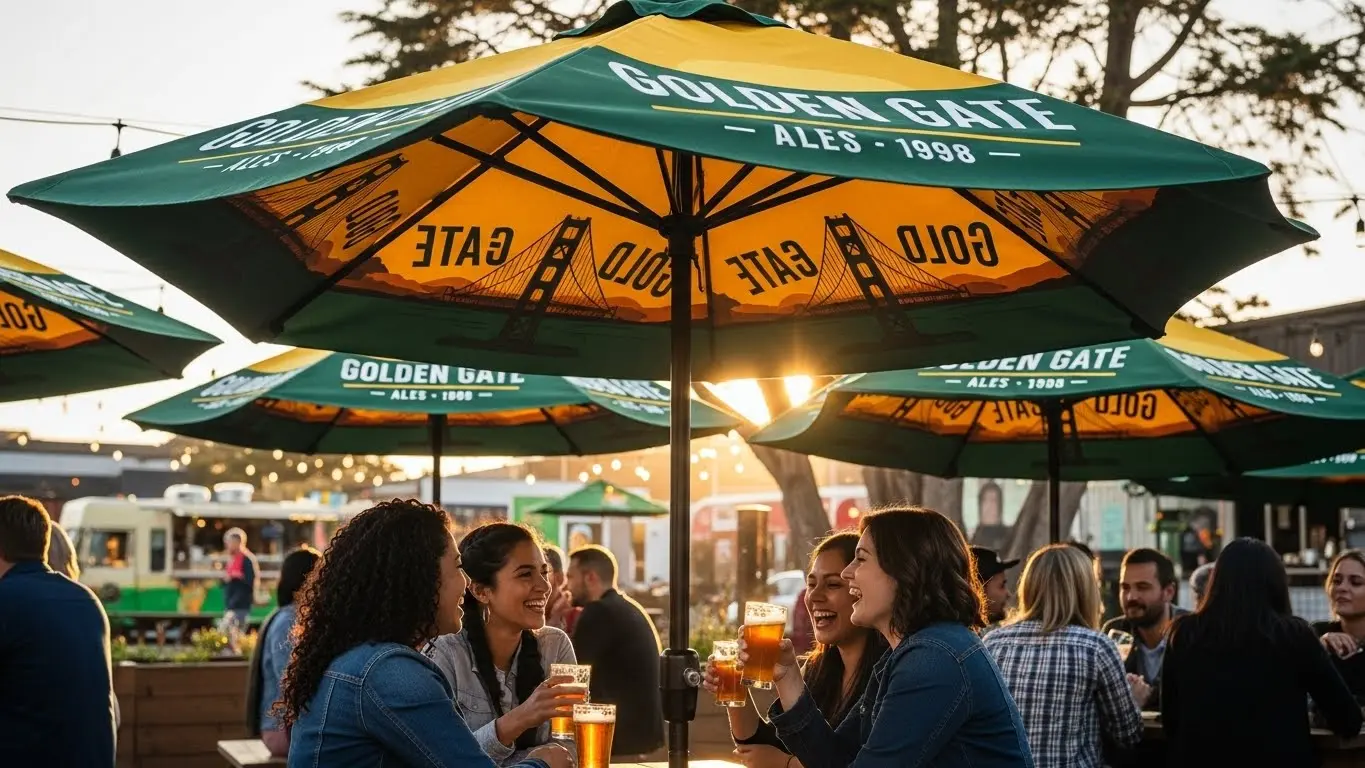
Technical Requirements for Beer Gardens and Commercial Tents
Commercial deployments in beer gardens and hospitality venues require a significant step up in technical specifications. To ensure guest comfort and safety in outdoor settings, 150D Oxford polyester must be PU-coated to achieve a minimum 3000mm hydrostatic head (HH). This rating ensures that the fabric remains waterproof even under the sustained pressure of heavy rain, a standard requirement for semi-permanent outdoor hospitality structures that are exposed to the elements for entire seasons.
For heavy-duty festival use and large-scale public gatherings, the industry standard shifts toward 990D PVC-coated polyester or 16 oz/yd² laminated vinyl. These high-denier materials are not only more resistant to abrasion and tearing in high-traffic areas but also meet critical safety certifications. Public venues often mandate fabrics rated to DIN 4102 B1/M2 or NFPA 701 fire-retardancy standards. While budget PE sheeting (around 240 g/m²) may suffice for short-term domestic parties, only these high-denier, fire-rated PVC composites provide the legal compliance and structural integrity required for professional rental fleets and public beer gardens.
“Spun Polyester”: The Soft-Touch Upgrade
Spun polyester is a high-performance budget fabric made from short staple fibers ring-spun into yarns to mimic the soft hand-feel of cotton. It bridges the gap between basic polyester and premium acrylic, offering 220–255 gsm weights, high wrinkle resistance, and commercial-grade durability for hospitality and event settings.
From Filament to Staple: Engineering the Cotton-Feel Texture
Spun polyester represents a significant material upgrade by utilizing 100% spun polyester staple fibers instead of the continuous smooth filaments found in cheaper synthetics. By engineering the fabric with ring-spun yarn constructions, such as 12/2 and 10/2 setups, manufacturers create a broken, textured surface that mimics the hand-feel of natural cotton. This process eliminates the “slick” or plastic-like texture common in entry-level umbrellas, providing a premium tactile experience for customer-facing environments.
Beyond the aesthetic and tactile benefits, the physical construction of spun polyester offers superior practical advantages for the event industry. The material is inherently wrinkle-resistant, ensuring that umbrella canopies remain presentable even after high-frequency folding or compressed storage. This makes it an ideal “natural” alternative for B2B buyers who require the sophisticated look of a cotton-blend fabric without sacrificing the low-maintenance benefits of synthetic textiles.

Hospitality-Grade Specs: Density, Weight, and Commercial Durability
For commercial applications, the technical specifications of spun polyester far exceed standard budget fabrics. Typical weights range from 6.5 oz/yd² (220 gsm) to 7.5 oz/yd² (255 gsm), providing a substantial, heavy-duty feel. These fabrics utilize high-density industrial weaves, often featuring 30 × 30 or 21 × 21 (ends × picks) constructions. This high density ensures exceptional tensile strength and abrasion resistance, making it suitable for high-traffic outdoor hospitality zones.
Durability is further enhanced through specialized engineering for commercial laundering. Spun polyester is built with soil-release properties and high fade resistance, allowing it to withstand repeated industrial cleaning cycles without losing its structural integrity. Interestingly, the same fiber technology is employed in the manufacturing of safety harnesses, filtration fabrics, and seat belts, underscoring the extreme mechanical robustness that this “soft-touch” fabric brings to outdoor shade solutions.
Why We Don’t Recommend Polyester for Resorts
Standard polyester is generally avoided for resorts due to its poor breathability in high-humidity environments and its tendency to retain heat, which affects guest comfort. While durable, it lacks the ‘soft-touch’ tactile quality of acrylics and often fails to meet the 1,000+ hour UV colorfastness requirements essential for constant tropical sun exposure.
Tactile Comfort and Breathability in Humid Climates
Polyester is inherently hydrophobic, which facilitates a quick drying time of 30-60 minutes. However, in a resort context, this characteristic results in a “plastic-like” feel that lacks the essential breathability of premium solution-dyed acrylics or luxury cotton-polyester blends. While hotel blends may utilize yarn counts like 60Sx60S or 80Sx80S for indoor comfort, standard outdoor polyester fails to provide the same tactile satisfaction.
Thermal dynamics present another significant hurdle for guest comfort in tropical climates. Polyester fibers exhibit high heat retention, absorbing and trapping solar energy more significantly than acrylic alternatives. This makes furniture surfaces uncomfortably hot for guests in direct sunlight, a critical failure for poolside and beachside hospitality applications where thermal regulation is paramount.
From an aesthetic standpoint, standard 180gsm-250gsm polyester often fails to meet the rigorous standards of high-end hospitality brands. These fabrics lack the heavy drape and luxury texture required for premium environments. To achieve a high-end look, designers typically move away from PET-based fabrics toward materials with superior depth and hand-feel.
UV Longevity and Maintenance Challenges vs. Contract Standards
Performance metrics for standard polyester reveal significant colorfastness limitations, typically offering only 300-500 hours of UV protection. In high-exposure resort zones like the Middle East or Asia-Pacific, this often leads to visible fading within a single season. This falls well short of the 1,000+ hour industry benchmark required for permanent outdoor contract installations.
Mechanical durability and abrasion resistance also vary significantly by fiber type. While polyester possesses high tear strength, standard PET fibers are prone to pilling in high-traffic areas. Technical alternatives like PCDT polyester or vinyl-coated yarns, such as those in the Phifertex® Resort Collection, are required to provide the elasticity and pilling resistance necessary for commercial upholstery and curtains.
Chemical sensitivity is a final concern, as frequent exposure to high concentrations of chlorine and sunscreen oils can degrade standard polyester coatings. Unlike marine-grade solution-dyed fabrics certified to ISO 9001:2008 or OEKO-TEX STANDARD 100, standard polyester lacks the long-term resilience needed to withstand the chemical stressors typical of luxury resort poolside environments.
Recycling Polyester: The Eco-Friendly Angle
Recycling polyester involves two primary routes: mechanical shredding for budget-friendly reuse and chemical depolymerization for high-performance applications. While mechanical methods are cost-effective, chemical recycling—such as methanolysis—breaks PET down to its molecular level, producing fibers indistinguishable from virgin material while reducing greenhouse gas emissions by 20–30%.
Mechanical vs. Chemical Recycling Pathways
Mechanical recycling represents the most established industrial pathway for transforming polyester waste into usable textile feedstock. This process involves cleaning post-consumer or post-industrial waste, followed by shredding in garneting machines. These machines utilize multiple cylinders equipped with pins and needles to tear the fabric into individual fibers before they are carded and respun into new yarns. While this method is highly cost-effective and energy-efficient, the physical tearing often leads to fiber shortening, which can impact the handle and strength of the final textile if not blended with virgin fibers.
Chemical recycling, or depolymerization, provides a more advanced alternative by breaking the polyester down to its molecular foundations. Techniques such as glycolysis, methanolysis, and enzymatic hydrolysis transform PET into basic monomers like BHET and ethylene glycol. A prominent example is Eastman’s Polyester Renewal Technology (PRT), which specifically employs methanolysis to “unzip” the polymers. This creates a feedstock that is molecularly identical to fossil-fuel-based virgin resin, allowing the material to be recycled indefinitely without the loss of quality associated with mechanical degradation.
For textiles that are heavily contaminated or mixed with other materials, such as those found in festival waste or composite outdoor gear, thermo-chemical routes like pyrolysis and gasification are utilized. Pyrolysis at temperatures around 520°C can process these materials into oils (60–70%), gases, and solids. The resulting oils are rich in aromatic compounds and can be refined through fractional distillation and catalytic reforming to be reintegrated into the chemical production cycle, ensuring that even complex waste streams avoid the landfill.
Technical Performance and Environmental Metrics
The shift toward recycled polyester (rPET) is driven by significant environmental advantages that are now quantifiable at the engineering level. Methanolysis-based chemical recycling processes, such as those used in PRT, have been shown to reduce greenhouse gas emissions by approximately 20–30% at the intermediate production stage compared to traditional virgin routes. These metrics allow manufacturers to provide concrete sustainability data for B2B applications, particularly in the contract shade and outdoor furniture markets where environmental impact is a key procurement factor.
Technical recovery parameters for legacy chemical systems also highlight the robustness of polyester recycling. For instance, alkaline hydrolysis processes operate at temperatures between 400–600°F (204–316°C) using a 50% NaOH solution to recover high-purity terephthalic acid and ethylene glycol. This level of chemical processing is capable of handling waste streams with as little as 30% polyester content, demonstrating that even composite materials can be returned to high-purity feedstock for new fiber production.
Performance consistency is where chemical recycling truly excels over mechanical methods for outdoor applications. While mechanical recycling is excellent for non-textile pathways—such as grinding PET-polyurethane waste to produce thermoformed insulation panels—it can struggle with the strict requirements of commercial-grade textiles. Chemically recycled PET, by contrast, maintains the consistent tear strength, colorfastness, and coating adhesion required for commercial umbrellas and shade structures, ensuring that “eco-friendly” does not mean a compromise in durability.
Pricing: The Lowest Entry Point
Polyester and basic cotton represent the absolute price floor for outdoor fabrics, with synthetic fibers costing between $3 and $7 per yard. These materials achieve low entry points by prioritizing high-volume production and minimal finishing over premium durability certifications or advanced weather-resistant coatings.
Material Composition and Cost Drivers
Synthetic-heavy compositions, specifically polyester ranging from $3 to $7 per yard, are the primary drivers of the industry’s lowest price points. These materials significantly undercut natural fibers by utilizing polymer-based production chains that are less susceptible to the price volatility of organic crops. By focusing on mass-produced synthetic filaments, manufacturers can achieve a price floor that makes outdoor textiles accessible for high-volume retail and promotional applications.
Budget-tier manufacturing strategies prioritize minimal dyeing and finishing to maintain cost-efficiency. Unlike premium contract-grade fabrics, which undergo extensive secondary processing for water repellency, stain resistance, or antimicrobial properties, entry-level fabrics often omit these expensive treatments. This lack of specialized coating reduces both chemical overhead and energy consumption during the curing process, allowing the final product to remain highly competitive in price-sensitive markets.
The global supply chain also plays a vital role in maintaining these entry-level benchmarks. High-volume manufacturing hubs, particularly in regions like Zhejiang, utilize extreme scalability and optimized logistics to drive down unit costs. These fabrics are engineered for high-churn sectors—such as festival tents, seasonal event drapery, and promotional giveaways—where the requirement for long-term UV resistance is secondary to immediate budgetary constraints.
Market Benchmarks and Specification Realities
Standard polyester blends for outdoor use typically range from £4 to £10 per yard, while basic cotton broadcloth serves as a functional floor at £3 to £8 per yard. For users requiring a balance between the affordability of synthetics and the breathability of natural fibers, cotton-polyester blends ($6 to $12 per yard) offer a mid-step solution. These blends leverage the strength of polyester while maintaining a textile hand-feel suitable for entry-level upholstery or casual outdoor accessories.
A significant trade-off in the budget tier is the absence of rigorous technical certifications. To minimize overhead, these fabric lines generally lack ISO or ASTM certifications for tensile strength, tear resistance, and colorfastness. Furthermore, premium environmental standards like OEKO-TEX or GOTS are typically excluded, as the certification and auditing processes add a price premium that would push the material beyond the entry-level threshold.
In the absence of high-end engineering metrics such as PSI tear strength or specific micron thickness ratings, budget fabrics are categorized by weight and general weave density. For both novice consumers and high-volume commercial buyers, these materials represent “functional basics.” While they lack the advanced weatherproofing of high-performance olefins or acrylics, they provide a necessary entry point for projects where upfront cost is the primary determining factor.
Final Thoughts
Standard polyester remains the indispensable “workhorse” of the promotional and event industries. While it lacks the decade-long endurance of premium solution-dyed acrylics, its versatility in weight classifications and superior receptive qualities for high-resolution branding make it the logical choice for high-volume deployments. Whether utilizing the soft-touch appeal of spun polyester for an upscale pop-up cafe or heavy-duty 150D Oxford variants for a weekend festival, this material delivers reliable weather resistance and visual impact at the industry’s most accessible price point.
Ultimately, the decision to specify polyester should be driven by the intended lifecycle and environmental demands of the project. For mobile marketing tours, seasonal hospitality activations, or large-scale branded giveaways where logistics and budget-efficiency are the primary KPIs, polyester provides an unbeatable return on investment. However, for permanent commercial installations or luxury resort environments where UV stability and thermal comfort are non-negotiable, these fabrics should be viewed as a tactical, short-term solution rather than a permanent architectural fixture.
Frequently Asked Questions
How long does polyester umbrella fabric typically last?
For budget-grade commercial and market umbrellas, standard polyester canopy fabric usually provides a service life of 1–2 years under regular outdoor use. This timeframe corresponds to approximately 300–500 hours of UV exposure before the material experiences noticeable fading or structural degradation.
What is the difference between standard polyester and spun polyester?
Standard polyester is made from smooth, continuous-filament PET yarn, resulting in a stronger, more uniform, and lustrous finish. In contrast, spun polyester is created by twisting short staple fibers into yarn, providing a softer, cotton-like feel (‘hand’), though it is generally less durable and slightly weaker than filament yarn for the same size.
Is polyester umbrella fabric waterproof?
Polyester is not inherently waterproof; it is naturally water-resistant but requires specialized coatings such as Polyurethane (PU) or PVC to achieve true waterproofing. The effectiveness is measured by Hydrostatic Head (HH) ratings, which typically range from 800mm to 10,000mm for coated outdoor fabrics.
Why does my polyester umbrella canopy turn white over time?
Whitening or ‘chalking’ occurs when the dyed surface layer of the fiber is destroyed, exposing the undyed, whitish core. The most common causes are the use of harsh chlorine bleach or strong detergents, extreme photo-degradation from UV exposure exceeding the fabric’s rating, or mechanical abrasion from heavy scrubbing and wind.
Can I use bleach to clean a polyester umbrella?
Most manufacturers, including Patiofurnituresco, recommend using only mild soap and water. While some standards allow for a highly diluted bleach solution (1 cup bleach per gallon of water) for mold, un-rinsed bleach or strong concentrations will weaken fibers and cause permanent discoloration and brittle texture.



 English
  Spanish
  French
  German
  Portuguese