


Underfunding a resort’s FF&E budget—typically 10-15% of the total project cost—is a common error that directly impacts revenue. Conversely, strategic allocation delivers quantifiable results, with some AEC firms achieving a 245% ROI by integrating financial planning and project systems. The verdict is clear: how you structure your budget determines long-term profitability.
This analysis provides an actionable framework for a “Mix & Match” strategy. We examine how to leverage objective standards like AIA MasterSpec and the NACC Certificate to qualify partners without sacrificing competitive bids, and present a data-backed splurge/save analysis for a 500-unit resort, drawing on real-world applications from projects like the Six Senses in Crans-Montana.
The All-or-Nothing Dilemma
Binary decision traps create project risk. Standards and certifications provide a middle ground, ensuring partner competence without over-specifying or accepting unknowns.
Binary Traps in Project Qualification
Engineers often face binary traps where the only options seem to be extremes. A classic example is qualifying subcontractors: either you accept unnamed installers with unverified skills, risking project failure, or you name a specific, pre-vetted firm, which kills competitive bidding and inflates costs. This isn’t just about budget; it’s about safety. The ASCE Code of Ethics puts public welfare first, a lesson learned from failures like the Hyatt Regency skywalk collapse, where unchecked changes led to over 100 fatalities.
Another trap is evaluating the “Do Nothing” baseline against a perfect-but-unaffordable solution. This forces a choice between inaction and over-engineering, ignoring practical solutions that fit within the project’s time and money constraints.

Mitigation Through Standards and Certification
The way out of this dilemma is to use established standards and third-party certifications. These tools create a clear, objective middle ground for risk management. They set a defined qualification threshold that any competent partner can meet, ensuring quality without destroying commercial viability.
- Industry Standards: AIA MasterSpec, for instance, defines an “experienced” installer as a firm that has successfully completed a minimum of five projects similar in nature and scope. This is a simple, effective benchmark.
- Third-Party Certifications: Credentials like the NACC Certificate for glaziers provide independent verification of a firm’s competence and compliance. This outsources the deep vetting process to a trusted authority.
Using these objective criteria allows you to specify a required level of competence, not a specific company. This maintains competitive bidding while ensuring that only qualified, low-risk partners make it to the shortlist.

Introducing the “Mix & Match” Philosophy
The “Mix & Match” philosophy intentionally blends diverse materials, styles, and technology to create cohesive environments. It unifies function and aesthetics through textures and site-specific elements.
Core Principle: Unifying Diverse Elements
The core idea is to intentionally combine different architectural elements, materials, and functions into a single, immersive environment without stylistic clashes. This approach balances practical needs, like optimal space utilization from site analysis, with a consistent aesthetic. Architects achieve this by repeating textures and using earth tones to tie everything together. You see this in details like custom furniture with curved lines that mirror wood paneling, or rough textures that align with raw stone surfaces to create total architectural continuity.
Application in Practice: Material and Technology Integration
In a real-world project, this isn’t just theory. The Six Senses resort in Crans-Montana is a prime example. The design integrates local materials to lower its carbon footprint and ground the building in Alpine authenticity, while using smart systems to manage the building efficiently.
- Material Blending: The swimming pool uses 14,000 suspended poplar strips combined with raw Blanc Carrara stone to create a cave-like atmosphere.
- Local Sourcing: The project specifies wood and stone from the local Valais region, rooting the design in its environment.
- Smart Technology: Automated room systems control temperature, lighting, and security, which saves energy while preserving the intended architectural aesthetic.
The 3 Tiers of Product: Good, Better, Best
Budgeting tiers move from simple historical data for novices to complex, activity-based forecasting for veterans, which optimizes revenue and cuts third-party commissions.
| Tier | Approach & Key Metrics | Best For |
|---|---|---|
| Good | Uses a simple “Last Year + X%” model (e.g., +5% for inflation). Relies on basic historical data like overall occupancy rates and Average Daily Rate (ADR). | Novice managers or smaller properties that need a quick, straightforward planning process without deep analysis. |
| Better | Incorporates granular forecasting with day-by-day revenue calendars and RevPAR projections. Gathers input from department heads (Rooms, F&B, Spa) to set segmented goals. | Experienced teams focused on optimizing for seasonal demand and avoiding over- or under-staffing during peak and slow periods. |
| Best | Applies advanced methods like zero-based or activity-based budgeting tied to market events and revenue drivers. Includes displacement analysis and a strategic goal to increase direct bookings by 5-10% YoY. | Veterans managing large-scale resorts (e.g., 500+ units) who prioritize long-term stability and profit maximization by cutting OTA commissions. |
The most effective hotel budgeting process starts with revenue targets, not cost-cutting. The preparatory phase kicks off around August, analyzing data to inform the formal budget season from October to December. This ensures planning is based on solid performance metrics rather than guesswork.
Budgets are built around two core cost categories. Fixed costs include staff salaries and utilities, which don’t change much month-to-month. Variable costs, like F&B inventory and guest amenities, are tied directly to occupancy. The best budgets also allocate contingency funds for unexpected maintenance and repairs.
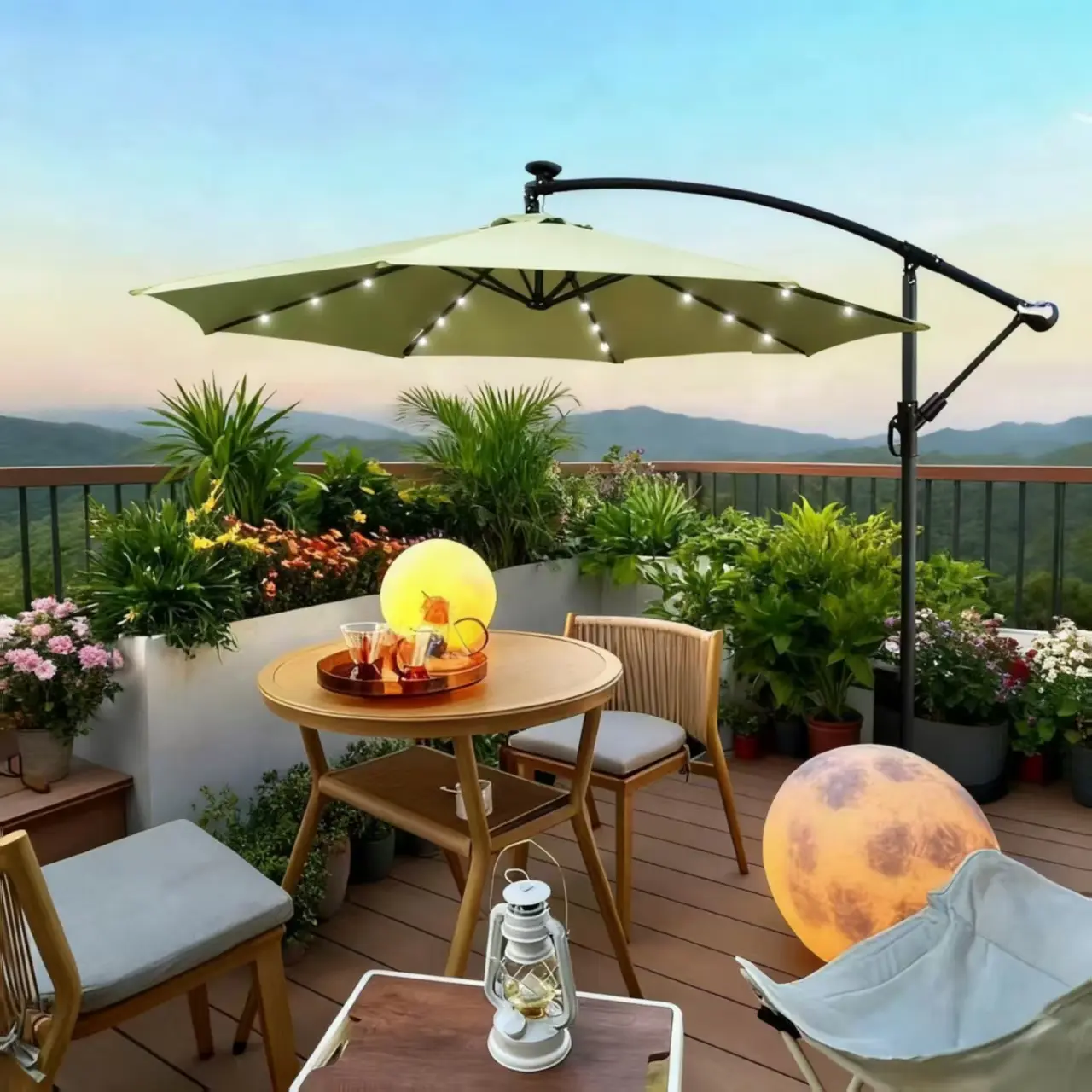
Your Direct Manufacturing Partner for Custom, Commercial-Grade Patio Umbrellas

The Core Recommendation: Where to Splurge, Where to Save
Splurge on core infrastructure like centralized HVAC and weather-resistant envelopes. Save on scalable structures like steel framing and standard finishes to control costs without sacrificing quality.
| Splurge: Core Infrastructure & Durable Envelopes | Save: Scalable Structures & Standardized Materials |
|---|---|
| Centralized Mechanical Systems: Invest in robust, central systems like natural gas-fired hydronic boilers, roof-mounted chillers, and DX cooling units for long-term reliability. | Efficient Superstructure: Use proven, cost-effective structural designs like a steel-framed superstructure with reinforced concrete footings for scalable strength. |
| Durable Building Envelope: Allocate budget for high-performance, corrosion-resistant materials like concrete tile roofs, copper gables, and EPDM membranes to withstand harsh weather. | Standardized Flooring: Employ economical, large-scale solutions like slab-on-grade floors and corrugated metal decking with a lightweight concrete topping. |
| Targeted High-Use Systems: Fund specialized systems where it counts, such as radiant floor heating for guestrooms, driveways, and roofs to ensure comfort and safety. | Cost-Effective Facades: Use standard, durable finishes like painted stucco, which offers a good balance of longevity and budget efficiency for large surface areas. |
| Compliance & Safety: Ensure all core materials meet ISO and CPSC safety standards, prioritizing weatherproof and corrosion-resistant features for longevity. | Site & Landscaping: Minimize ongoing maintenance costs with strategic site grading and native landscaping instead of expensive, high-upkeep alternatives. |
Sample Budget Allocation for a 500-Unit Resort
A 500-unit resort budget allocates 10-15% to FF&E and 10-15% for contingency, with construction at $300-$550/sq ft. A separate 10-25% FF&E reserve is critical.
| Cost Category | Standard Allocation / Metric |
|---|---|
| Construction Costs | $300–$550 per square foot |
| Furniture, Fixtures & Equipment (FF&E) | 10%–15% of total project budget |
| General Contingency | 10%–15% of total budget |
| FF&E Reserve Fund | 10%–25% of total FF&E cost |
| Attic Stock Provision | 2–4 extra units per high-use item |
| Annual Energy Costs | ~$2,080 per available room |
Primary Capital Expenditure Percentages
Construction is the financial heavyweight, but the 10-15% allocated to FF&E is where a resort’s guest experience is defined. Underfunding it is a common mistake. The general contingency isn’t optional slush; it’s a required buffer. For a project this large, you will use it to cover inevitable scope gaps, site issues, and change orders that weren’t on the original blueprints.
The budget doesn’t stop at opening day. The FF&E Reserve is a critical fund used immediately to cover items damaged during shipping and installation, and for early-life replacements. For a 500-unit property, having attic stock—a few extra chairs, lamps, or tables—is non-negotiable. It prevents you from taking a room offline for weeks while you wait for a single replacement. Finally, underestimating operational costs like energy is a rookie move. These ongoing expenses directly impact profitability long after the construction dust settles.
The Long-Term ROI of Strategic Allocation
Strategic allocation delivers significant returns. AEC firms see a 245% ROI with cloud tools, while integrated systems can boost profit margins by up to 31%.
Core Metrics for Measuring Strategic Returns
You can’t manage what you don’t measure. The financial impact of strategic allocation is tracked using a few key metrics to evaluate profitability and efficiency.
- Return on Investment (ROI): The primary metric, calculated as (Net Profit / Investment Cost) × 100. It measures direct profitability from an initiative.
- Internal Rate of Return (IRR): Used to analyze an investment’s viability and identify its break-even rate, which is critical for comparing long-term projects.
- Return on Assets (ROA): Measures how efficiently a company’s assets are being used to generate earnings.
Quantifiable Gains and Industry Benchmarks
The data shows clear financial benefits, especially in project-based industries. These aren’t theoretical gains; they’re documented results from companies that invest strategically.
- 245% ROI: AEC firms achieved this average return over three years by using cloud-based resource management tools to cut delays and improve utilization.
- 31% Higher Profit Margins: According to ACEC data, companies that integrate financial planning with their project systems report this significant margin increase.
- 15–30% Productivity Gains: Implementing engineered labor standards can yield these results, often with a short 3-6 month payback period.
Conclusion: Your Custom Quote
This quote is a strategic proposal designed to fit your CapEx cycle. It boosts key metrics like RevPAR and direct bookings in targeted segments like F&B and poolside.
A Strategic Proposal Aligned with Your Budgeting Cycle
We built this quote to fit directly into your annual capital expenditure (CapEx) plan. It recognizes that budgeting happens from August to December and allows for phased rollouts that match your renovation timelines and financial forecasts.
Think of this as a partnership. The investment is structured to support your goal of a 5-10% year-over-year uplift in key segments like F&B and MICE by creating more attractive, revenue-generating outdoor spaces. It also provides predictable value, so you can use a baseline model like “last year + 5%” for future maintenance planning.
Itemized Breakdown for Targeted Revenue Growth
The quote features a segmented breakdown by area—poolside, restaurant terrace, event spaces—to align with specific departmental budgets for Room Revenue, F&B, and Spa. This isn’t just a price list; it’s a tool for targeted investment.
Each line item justifies its cost by linking the upgrade directly to improving your key performance indicators, including Occupancy Rates, Average Daily Rate (ADR), and RevPAR. We’ve also included flexible options to support your need for contingency funds, ensuring the project can adapt to unforeseen repairs without derailing the budget.
Final Thoughts
Long-term value comes from over-investing in core infrastructure like HVAC and building envelopes. Saving on scalable structures and standardized finishes is how you fund these critical systems without breaking your budget.
Mandate third-party certifications and experience benchmarks in your next RFP. This pre-qualifies partners on competence, not just price, protecting your project from costly rework while keeping bids competitive.
Frequently Asked Questions
Should I buy a cantilever or market umbrella?
Buy a cantilever umbrella for larger areas needing unobstructed shade and adjustability (e.g., poolside or sectionals covering 10′+ diameters); buy a market umbrella for compact spaces, tables, or higher wind stability with central pole support.
Can I mix different umbrella styles on one patio?
Yes, but compatibility depends on technical requirements, not style. Each umbrella requires a base that matches its specific pole diameter (e.g., 1.5-2.5″ for market, 3-5″ for cantilever) and minimum weight capacity (e.g., 40 lbs for market, 220+ lbs for cantilever).
What is the best umbrella for a small patio?
For a small patio, the industry standard is a 6-8 ft diameter market umbrella with a 1.5-2.5″ pole, 7-10 ft height, and a minimum 20-40 lb base for stability.
How to choose the right patio umbrella?
Choose an umbrella by matching the canopy size to your table (it should be 2 feet wider on all sides), the pole diameter (1.5-2.5 inches) to your base or table hole, the height (7-10 feet) for proper clearance, and the base weight to the canopy size (e.g., 50-70 lbs for a 9-11 ft umbrella).




 English
  Spanish
  French
  German
  Portuguese