

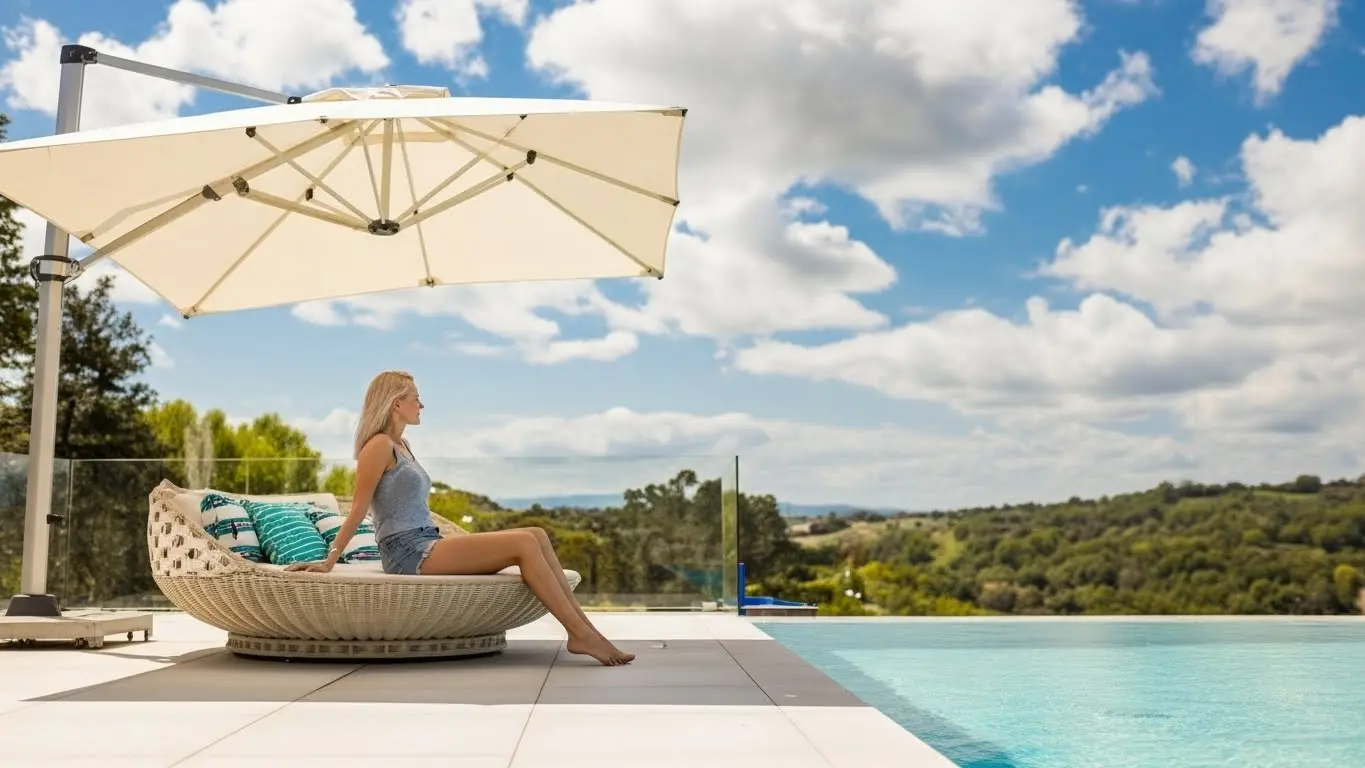
Choosing between a square or round patio umbrella can be tricky for homeowners trying to balance shade, style, and stability. Each shape changes how your patio looks and feels, influencing everything from wind resistance to coverage efficiency.
This guide breaks down key differences between square and round patio umbrellas, their benefits and design mistakes to avoid, plus essential maintenance tips—helping you pick an umbrella that fits your space and lasts for seasons to come.
Key Differences Between Square and Round Patio Umbrellas
Square patio umbrellas provide 27–30% more shade coverage than round umbrellas of the same size, making them ideal for structured patios. Round umbrellas offer better wind resistance and a timeless look that suits coastal or windy areas.
Choosing between a square or round patio umbrella often comes down to balancing shade efficiency, aesthetics, and environmental conditions. In our experience with commercial outdoor projects, each shape has specific strengths that make it better suited for certain layouts and climates.
Comparison of Shade Coverage and Physical Specifications
The following table shows performance differences between square and round patio umbrellas of similar diameters.
| Specification | Round Umbrella ⚪ | Square Umbrella ⬜ | Difference 💡 |
| Shade Coverage (11.5 ft) | 103.87 sq ft | 132.25 sq ft | ✅ +27–28% coverage |
| Shade Coverage (13 ft) | 132.73 sq ft | 169 sq ft | ✅ +27–30% coverage |
| Wind Resistance | ✅ Excellent aerodynamic profile | ⚠️ Moderate wind resistance (flat edges) | Round performs better in strong gusts |
| Average Price | 💲 Standard | 💲💲 15–25% higher | ⚠️ Higher cost for design efficiency |
Space Optimization and Aesthetic Considerations
Square umbrellas are highly space-efficient in structured patios. They fit neatly into corners or alongside rectangular dining tables without leaving unused areas. Round umbrellas, by contrast, may waste corner space in angular layouts.
- ✅ Square umbrellas maximize coverage in compact or modular arrangements.
- ✅ Round umbrellas blend naturally into curved seating plans and organic spaces.
- 💡 Square styles complement modern, geometric settings, while round ones maintain a soft, traditional look.
Operational Features and Maintenance
From a usability standpoint, square umbrellas often include advanced tilt and rotation systems, allowing precise sun tracking throughout the day. These mechanisms make them a strong choice for commercial or high-traffic environments.
- ✅ Square models typically include multi-angle tilt and orientation settings.
- ⚠️ Round umbrellas are lighter, easier to move, and simpler to maintain thanks to smaller canopy area.
- ❌ Square umbrellas require heavier bases and sturdier frames to counter wind load.
Cost-Effectiveness and Application Recommendations
Although square umbrellas have a higher purchase cost, they deliver long-term value when deployed in spaces where maximum shade and precise coverage matter—such as cafés, hotel courtyards, and resort pool decks.
- ✅ Square umbrellas yield a better ROI for large venues that demand durability and consistent aesthetics.
- ✅ Round umbrellas are more affordable and easy to replace, making them ideal for residential patios or windy coasts.
- 💡 The best choice depends on layout, climate, style, and budget priorities.
Common Misconceptions About Umbrella Shapes
Many buyers assume that a bigger diameter means more shade, but the geometry of the canopy makes a significant difference. A square umbrella of the same nominal size provides much higher shade coverage than a round one.
- ⚠️ Larger diameter ≠ more shade — squares offer 27–30% higher coverage.
- ✅ Modern square umbrellas with reinforced frames can remain stable even in moderate winds.
- 💡 A square umbrella can be used with a round table, though round versions pair more precisely with the table’s outline.
How to Choose the Right Shape for Your Outdoor Furniture
Choose the shape based on your patio’s layout, purpose, and style. Round shapes work well for smaller spaces and promote social interaction. Rectangular or square shapes maximize seating in larger, more formal areas, aligning with traditional design preferences.
When choosing between different furniture shapes, think about how you’ll use the space, how people will move around it, and how the design connects to your overall style. Each shape brings its own mix of functionality and aesthetic balance.
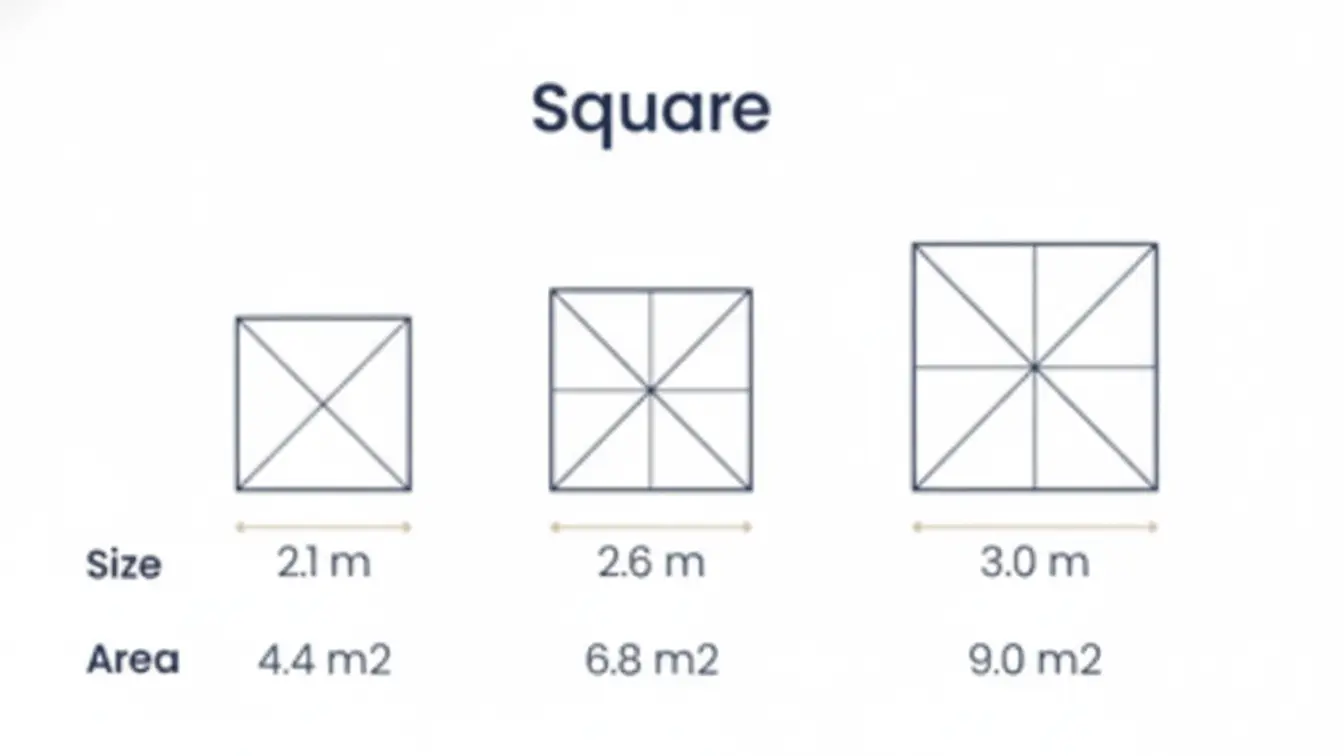
Shape Options: Round vs Rectangular/Square
- ✅ Round Shapes: Great for smaller patios or casual setups, these designs create a cozy feel and make conversation natural. Their curves soften modern spaces and improve movement around the table.
- ✅ Rectangular/Square Shapes: Perfect for larger decks or dining areas, offering stronger lines, efficient use of space, and more seating capacity. Best suited for formal layouts or traditional outdoor dining.
Key Comparison Between Furniture Shapes
| Criteria | 🔵 Round Shapes | 🟧 Rectangular/Square Shapes |
| Space Efficiency | ❌ Needs more perimeter space, lower seating density | ✅ Fits more seats along straight edges, space-efficient |
| Traffic Flow | ✅ No sharp corners, easy movement | ⚠️ Defined traffic lanes, may create corner obstructions |
| Aesthetic Appeal | ✅ Soft, contemporary look | ✅ Structured, classic appearance |
| Patio Size Fit | Best for patios under 200–380 sq ft | Ideal for 290–400+ sq ft areas |
Material and Regional Considerations
Patio dimensions and local design norms can determine whether round or rectangular furniture works best. In the East South Central U.S., where patios tend to be larger, rectangular dining sets dominate. In the West South Central region, smaller layouts make round tables more practical.
- ✅ Wood: Suitable for all shapes, providing timeless versatility and strength.
- ✅ Metal: Common in modern, rectangular frames emphasizing sleek geometry.
- ✅ Synthetic Wicker/Plastic: Works well with round pieces, adding lightweight flexibility and coastal charm.
Material selection should reflect both climate and usage intensity. A well-matched combination enhances comfort while optimizing space in regional outdoor setups.
Functionality and Market Trends
The shape of outdoor furniture greatly affects how people interact with it. Dining zones favor rectangles or ovals to expand seating and maintain social distance efficiently. Round tables, in contrast, enhance shared engagement and casual lounging.
- ✅ Dining Sets: Rectangular or oval, maximizing guest capacity and formality.
- ✅ Lounge Areas: Round or curved sectionals supporting relaxed, conversational layouts.
- 🚀 Market Trend: Growth in multifunctional modular rectangular units suitable for mixed-use patios.
- 💡 Accent Pieces: Small round tables remain a stylistic staple for any shape configuration.
Common Misconceptions About Shape Choices
Round tables often get labeled as the only solution for compact patios, but that’s not always true. Rectangular tables with smooth, rounded corners can save more space while maintaining safe circulation.
- ⚠️ Don’t rely on trends—match shape to layout and outdoor usage pattern.
- ✅ Focus on how people move, sit, and interact, not only what looks stylish.
- 💡 Plan dimensions in advance to balance comfort with function.
In our experience working with hospitality spaces and homeowners, optimizing shape choice leads to better traffic flow, visual harmony, and daily usability—whether choosing a square or round patio umbrella, dining set, or lounge configuration.
Benefits of Square Patio Umbrellas
Square patio umbrellas provide significantly more shade coverage than round umbrellas of similar size, maximizing usable outdoor space and fitting neatly into corners. They offer durable construction and modern aesthetics, making them valuable for various settings despite higher upfront costs and specific wind management needs.
Choosing between a square or round patio umbrella affects both the look and comfort of an outdoor area. Each shape performs differently in terms of shade coverage, layout efficiency, and long-term durability. For homeowners comparing square vs round patio umbrella options, understanding these core benefits helps balance beauty with practicality.
Shade Coverage and Space Efficiency
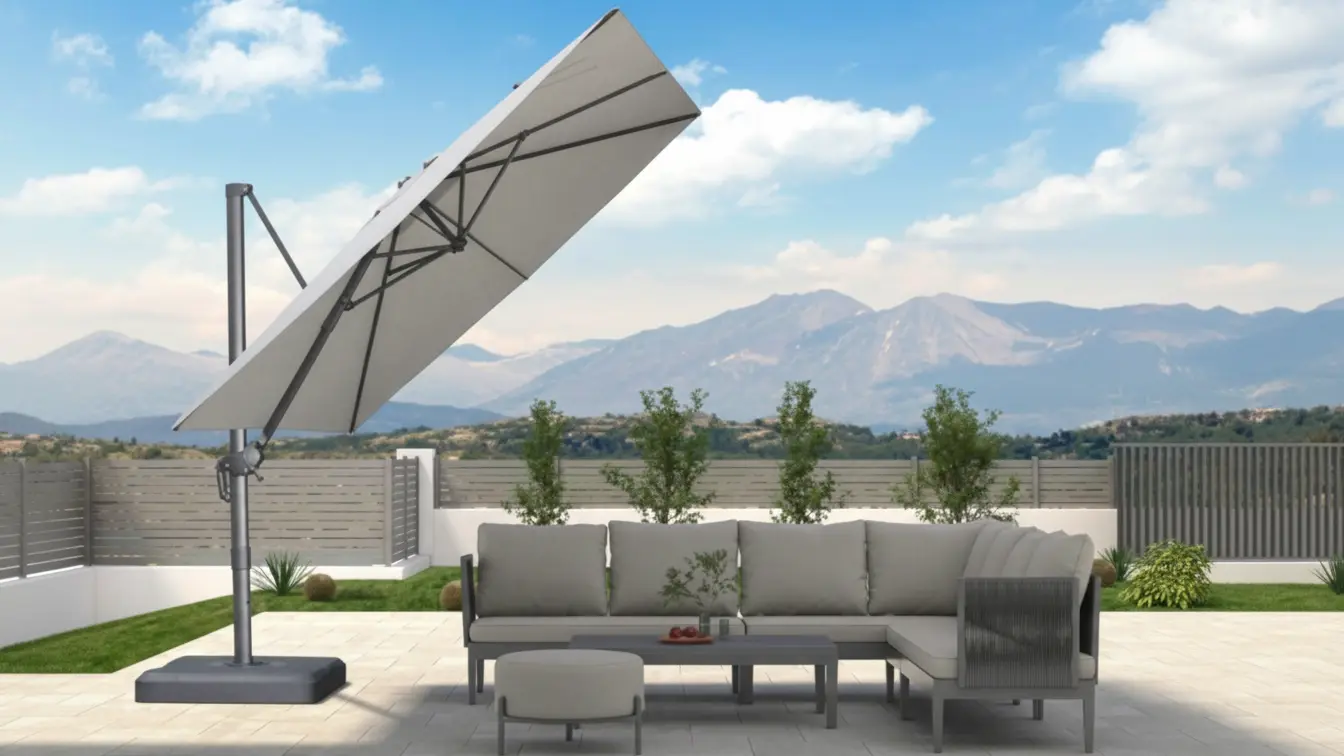
| Shape | Diameter / Size | Shade Area | Coverage Advantage |
| ⬛ Square Umbrella | 3 m | 9 m² | ✅ +40.6% more shade |
| ⚪ Round/Octagonal Umbrella | 3 m | 6.4 m² | ❌ Less total coverage |
- ✅ Eliminates wasted corner space and fits flush against walls, perfect for compact patios or restaurant seating.
- ✅ Can be placed side-by-side without gaps, ideal for commercial venues needing consistent shade.
- 💡 In our experience, this geometry makes layout planning much simpler for cafe terraces and pool decks.
Structural Features and Operational Considerations
Square umbrellas close closer to the ground. For instance, a 3.5 m model typically lowers to about 35 cm, making it easier to handle during storage or transport. This compact closure reduces strain on lifting and storage teams in commercial environments.
- ⚠️ Flat canopy surfaces catch more wind than round ones, so venting systems or wind flaps are essential for safety.
- ⚠️ Adequate clearance is needed to rotate and fold the canopy when furniture sits below the umbrella.
- 💡 Good practice: Leave at least 45–60 cm of vertical clearance to prevent damage when closing.
Cost and Durability Insights
Square umbrellas usually have higher upfront costs than round models, but they deliver better longevity when maintained correctly. The reinforced frame design supports commercial-grade use and resists shape fatigue under repeated open-close cycles.
- ✅ Extended durability often offsets the higher purchase cost over time.
- ✅ Improved shade coverage can lower the need for additional cooling systems during summer months.
- ❌ Round umbrellas remain more affordable for smaller patios or temporary setups that prioritize portability.
Design and Aesthetic Integration
Square umbrellas match structured, modern outdoor furniture arrangements. They blend easily with rectangular dining tables, sectional sofas, and clean architectural lines, adding a professional tone to patios and courtyards.
- ✅ Enhance property value and brand presentation with contemporary layouts.
- ⚪ Round umbrellas pair better with classic furniture and create central gathering points around circular tables.
- 💡 The right choice often depends on layout geometry and the user’s design intent—sleek and modern vs cozy and traditional.
Elevate Your Outdoor Spaces with Custom Commercial-Grade Umbrellas
Partner directly with Patiofurnituresco for durable, innovative shade solutions tailored to your brand and environment. Benefit from low MOQ, full OEM/ODM customization, and trusted global delivery to launch with confidence.

Benefits of Round Patio Umbrellas
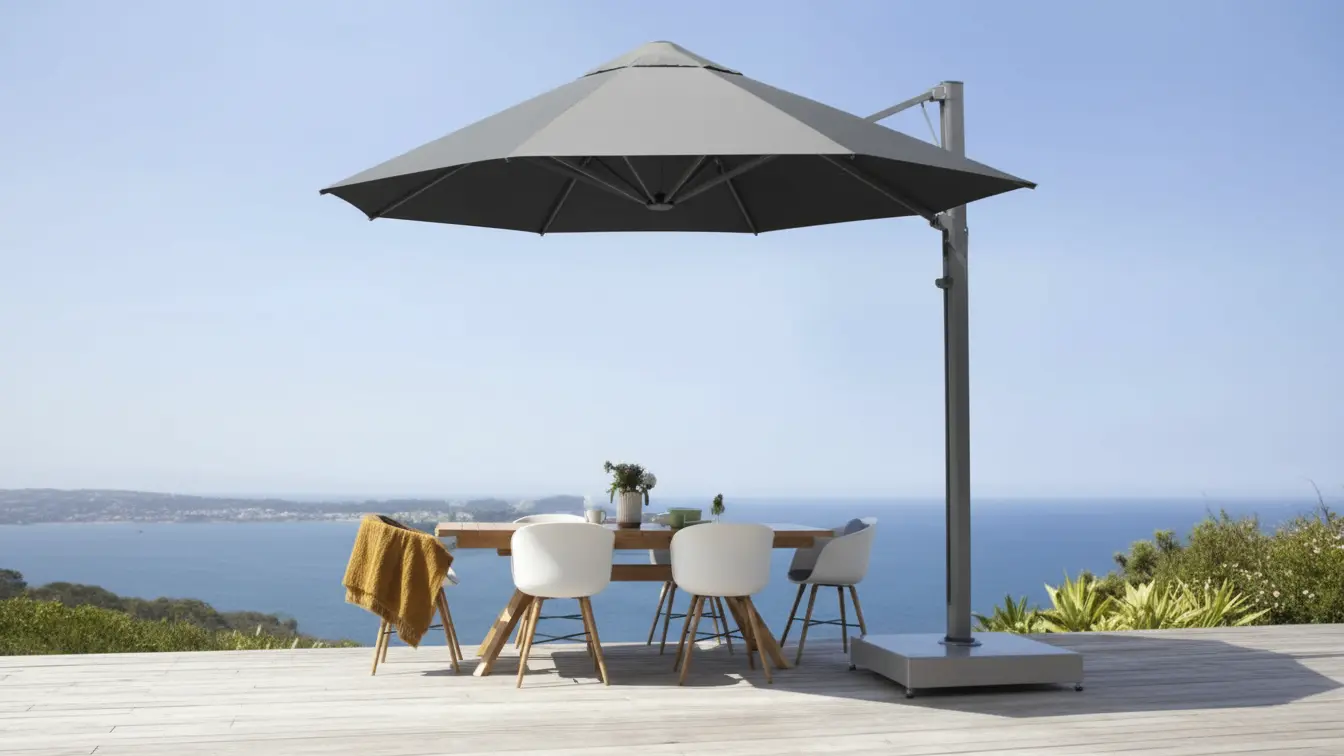
Round patio umbrellas offer better wind resistance, a classic and inviting design, and are easier to move compared with square umbrellas. Their aerodynamic shape reduces wind drag, enhancing stability, while their lighter weight improves portability and suits small to medium outdoor spaces.
Round patio umbrellas remain one of the most popular choices for cozy patios, decks, and café terraces. Their practical shape, easy handling, and balanced proportions make them suitable for both residential and light commercial use.
Wind Resistance and Stability
The aerodynamic curvature of round umbrellas allows wind to move smoothly around the canopy instead of directly hitting it. This reduces air resistance and prevents uplift forces that can make an umbrella tip over.
In windy or coastal environments, this shape performs far better than square canopies, which act like sails and create drag. Because of that, square umbrellas often require heavier bases and reinforced ribs to remain upright.
- ✅ Curved canopy reduces wind drag.
- ✅ Greater stability in gusty conditions.
- ❌ Square umbrellas need stronger frameworks and heavier bases.
Shade Coverage and Usage Flexibility
Round umbrellas typically provide about 30% less shade than square umbrellas of equal canopy dimensions. Yet, the trade-off often works in favor of ease and adaptability.
They are lighter and easier to reposition as the sun shifts. Users can tilt or move them for targeted shade throughout the day, instead of relying on a fixed position.
- ✅ Portable and easy to adjust for changing sunshine angles.
- ✅ Ideal for small patios, cafés, and garden corners.
- ⚠️ Offers slightly less static shade coverage than a square canopy.
Aesthetic Appeal and Social Ambiance
The soft circular shape of round umbrellas naturally complements wooden, wicker, or bohemian-inspired outdoor décor. Their gentle symmetry adds balance and warmth to visual arrangements.
When paired with round tables, they help define a cozy gathering area that encourages guests to face each other and socialize more comfortably. This creates a friendly and inviting atmosphere, perfect for outdoor dining or private lounging areas.
- ✅ Harmonious appearance with classic or natural furniture styles.
- ✅ Creates a defined and inviting conversation zone.
- 💡 Encourages a welcoming ambiance for gatherings.
Cost, Maintenance, and Practical Considerations
Round umbrellas often cost less initially because they require less fabric and have simpler frames. Their lighter weight also makes them easier to move, clean, and store during off-season months.
Proper maintenance involves keeping the canopy angled to prevent water from pooling during rain. They’re ideal for tighter spaces like balconies, small patios, or boutique café terraces.
- ✅ Lower initial price and material cost.
- ✅ Lightweight for seasonal handling and storage.
- ⚠️ Must be angled to avoid water pooling.
- 💡 Perfect for compact outdoor projects needing flexible shading and timeless design.
Common Design Mistakes with Patio Umbrellas
The most critical design mistakes with patio umbrellas center on quality compromise, poor logo placement, inadequate print durability, and misalignment between design and umbrella shape or size. These issues undermine brand visibility and product longevity, leading to costly impacts for business use.
Designing a patio umbrella that enhances brand visibility while standing up to outdoor conditions requires attention to both materials and design execution. In our experience, poor design decisions often lead to functional issues and a weakened brand presence. Below are the most common mistakes that businesses should avoid when developing their umbrellas.
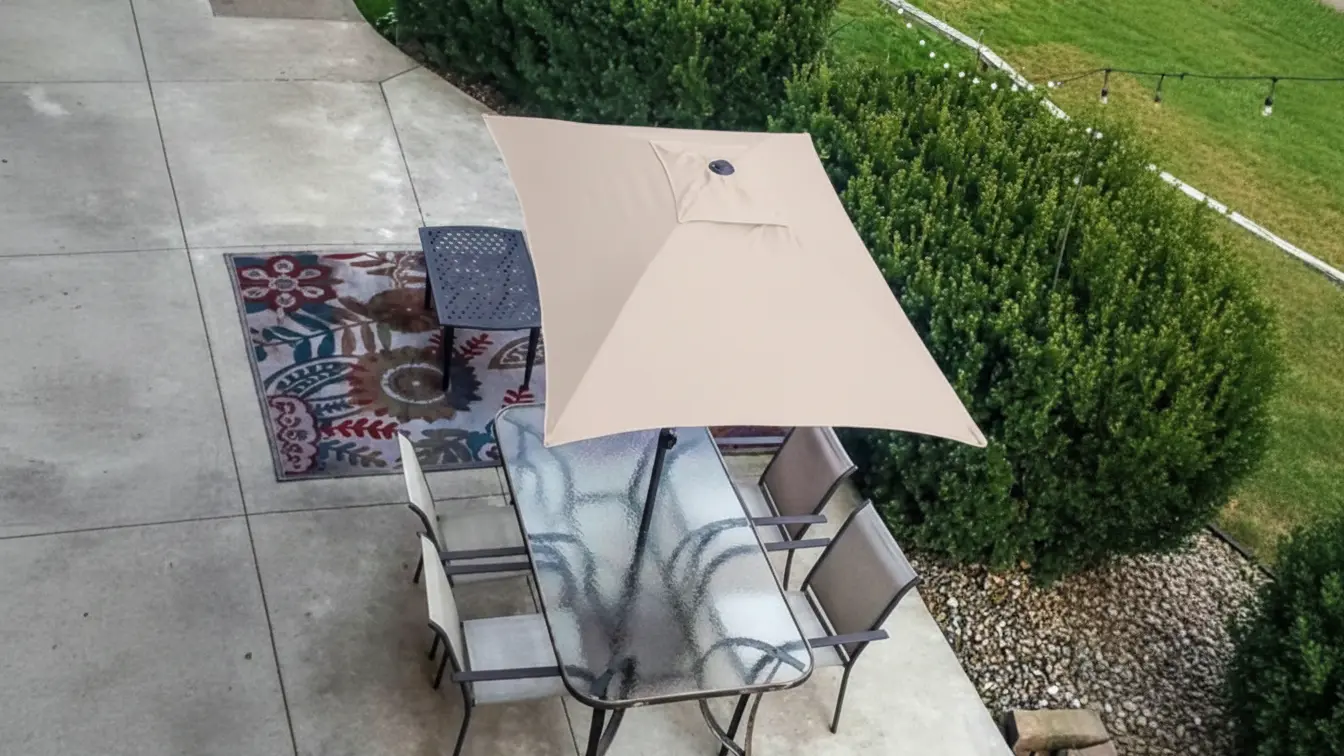
Low-Quality Materials and Their Impact
Cutting corners on materials might seem cost-effective at first, but it usually comes back to hurt the product lifespan. Cheap frames often rust, collapse, or snap under heavy wind or rain, affecting both safety and presentation.
- ⚠️ Low-grade frames rust or collapse under pressure from bad weather.
- ❌ Frequent replacements raise long-term costs and interrupt operations.
- ⚠️ Poor material quality damages brand perception and trust.
Investing in durable materials such as powder-coated aluminum or stainless steel ensures a more consistent look and performance, particularly for commercial or hospitality use.
Logo Placement and Branding Visibility
Brand visibility depends heavily on where the logo sits. Designers often place logos near the center hub, but this position hides the branding when the umbrella is opened.
- ❌ Logos near the center hub disappear once the canopy opens.
- ✅ Positioning logos along panel edges keeps them visible from all angles.
- 💡 Use consistent logo sizing across umbrellas for a clean, professional appearance.
In our production experience, clients who follow panel-edge placement guidelines achieve stronger brand recognition in both retail and hospitality setups.
Ensuring Print Durability Against Outdoor Elements
Umbrellas face constant exposure to sun, rain, and wind. Standard inks quickly fade or peel when exposed to UV rays, making the print look dated in a short time.
- ❌ Standard inks fade and peel under heavy outdoor exposure.
- ✅ UV-resistant inks and weatherproof coatings preserve color brightness longer.
- 💡 Working with experienced suppliers ensures better print adhesion and lasting finish.
At Patiofurnituresco, our OEM production integrates UV-stable inks that can maintain color integrity for more than 24 months, extending product display value for business clients.
Matching Design to Umbrella Shape and Size
The debate of square vs round patio umbrella matters not only for aesthetics but also for print layout. Designs that aren’t aligned to the canopy shape can distort logos or patterns once stitched and assembled.
- ⚠️ Designs optimized for round umbrellas appear skewed on square versions.
- 💡 Verify canopy dimensions, shape, and panel count before finalizing artwork.
- ✅ Use factory-provided templates to fit exact production specs.
Whether choosing square or round, aligning the artwork to the final shape prevents misprints and costly rework during manufacturing.
Functional Sizing and Base Selection
Even a well-designed canopy can fail if the sizing or base is off. A functional umbrella should extend roughly 2 feet past the table edge for complete coverage.
- ✅ Ensure the canopy extends 2 feet beyond the table edge on all sides.
- ⚠️ Under-sized umbrellas leave diners or guests exposed to sunlight.
- ❌ Lightweight or undersized bases increase the risk of wind tipping.
A durable base adds critical stability, especially for large square umbrellas that catch more wind due to their edge area.
Critical Perspective: Quality-Cost Tradeoffs
Saving on initial investment often leads to higher replacement costs down the line. Cheap frames and fabrics wear out early, forcing premature reorder cycles.
- ❌ Short-term savings from cheaper frames lead to repeated replacements.
- ✅ Investing in commercial-grade poles and thick fabric improves lifespan.
- ⚠️ Long-term expenses outweigh initial savings when durability is sacrificed.
In our 16 years of manufacturing experience, we’ve seen consistent ROI improvements—up to 40%—for clients who prioritize structural integrity over price in their umbrella programs.
Materials and Durability Factors
Patio durability depends critically on material selection. Natural stone pavers provide the longest lifespan (50–100+ years), concrete and brick pavers typically last 25–50 years, and porcelain pavers range from 20–50 years. Costs and maintenance vary significantly, with concrete being the most affordable but requiring sealing, while natural stone requires higher initial investment but minimal upkeep.
Material choice is the foundation of patio longevity. Each surface type responds differently to pressure, climate, and maintenance routines, influencing both cost and performance over time.
Material Types and Lifespan Comparison
Below is a comparison of popular patio materials considering average lifespan, pricing, and pressure resistance. These values help homeowners balance cost-efficiency with long-term reliability.
| Material | Lifespan | Cost (per sq ft) | Pressure Resistance |
| ✅ Natural Stone (granite, bluestone) | 50–100+ years | $12–20+ | 8,000 PSI |
| ✅ Concrete Pavers | 25–50 years | $4–10 | 2,500 PSI |
| ✅ Brick Pavers (clay) | 25–50 years | $6–12 | Moderate |
| ✅ Porcelain Pavers | 20–50 years | $15–20 | High |
| ✅ Poured Concrete | 25–50 years | $8–15 | 2,500 PSI |
Durability Factors and Maintenance Requirements
Durability is influenced by how each material reacts to stress, moisture, and time. Maintenance also varies by type, determining long-term costs and appearance.
- ✅ Natural stone offers strong resistance to weather and ground movement, needing only occasional cleaning.
- ⚠️ Concrete pavers need sealing every 2–3 years to preserve surface integrity.
- ✅ Brick pavers should be sealed every 3–5 years for color protection, though they can be sensitive to freeze-thaw cycles.
- ✅ Porcelain pavers resist UV, moisture, and chemical wear with almost no ongoing maintenance.
- ⚠️ Poured concrete requires resealing every 2–3 years to reduce cracking from temperature shifts.
Climate and Application Considerations
Climate plays a key role in determining which patio materials perform best. Usage intensity, such as heavy foot traffic or frequent wet exposure, also matters.
- ✅ Cold, freeze-thaw regions benefit from modular pavers that flex under stress, unlike poured concrete that might crack.
- 🏖️ High-traffic areas around pools or hotels suit porcelain or natural stone for their high resistance and elegant finish.
- 💡 Concrete offers good affordability, but harsh climates require extra maintenance to keep surfaces stable.
- ✅ For aesthetic retention, natural stone gains character over time, brick maintains warmth in tone, and porcelain preserves a like-new look indefinitely.
Common Misconceptions About Durability
Many homeowners assume concrete automatically means durability, but the reality is more nuanced. Different setups handle stress differently.
- ⚠️ Concrete looks solid but is not the strongest option; modular pavers can be up to four times more durable since they distribute stress evenly.
- ✅ A strong base and well-maintained joints are critical for every patio to prevent early wear or surface movement.
- 💡 Natural stone endures exceptional loads but needs precise installation skills to maintain evenness and avoid tripping hazards.
- ✅ Pavers simplify repairs since single pieces can be replaced without lifting the entire surface, unlike concrete slabs that need full repouring.
Maintenance Tips for Patio Umbrellas
Proper maintenance of patio umbrellas involves regular cleaning, inspecting and protecting frames, storing umbrellas correctly during off-season periods, and timely repair of any damage. Following these steps can extend the umbrella’s lifespan and keep it looking its best.
Even the most durable patio umbrella needs regular care to stay functional and attractive. In our experience working with contract-grade furniture, proactive maintenance can extend the umbrella’s life by several seasons and protect your outdoor investment.
Cleaning and Fabric Care
Umbrella fabrics are exposed to sun, rain, and airborne dust, so keeping them clean is essential to prevent fading and mildew. Regular cleaning also maintains the visual appeal of both square and round umbrellas used in busy patio areas.
- 🧼 Remove loose dirt with a soft brush regularly to avoid embedding particles in the weave.
- 💧 Clean the fabric using mild soap and lukewarm water, and avoid harsh chemicals that may damage coatings.
- 🌤️ Rinse thoroughly and allow the fabric to air dry completely before closing or storing to prevent mold growth.
Frame Maintenance and Material Considerations
Umbrella frames endure constant movement and exposure, so caring for the frame is just as important as cleaning the fabric. Different frame materials require specific attention to maintain their strength and appearance.
- ⚙️ Inspect aluminum or metal frames for rust or corrosion; clean and apply protective coatings if needed.
- 🌳 For wooden frames, treat with sealants or oils that preserve their natural finish and weather resistance.
- 🛠️ Lubricate moving parts such as hinges and cranks periodically to ensure smooth opening and closing.
Seasonal Storage and Off-Season Care
During harsh seasons or long periods of non-use, proper storage keeps umbrellas ready for the next sunny day. Whether you own a square market umbrella or a round cantilever model, careful handling during storage prevents costly damage.
- ☔ Close the umbrella fully and secure it to prevent damage from wind or movement.
- 🧥 Use protective covers to shield fabric and frames from dust, moisture, and UV exposure.
- 🏠 Store umbrellas in a dry, sheltered environment or indoors if possible, especially through winter or stormy weather.
Inspection and Repairs for Longevity
Routine inspections help identify small issues before they become major failures. This step not only saves replacement costs but also ensures consistent performance and safety for commercial and residential use alike.
- 🔍 Check for tears, loose stitching, or broken ribs in the canopy and repair them promptly.
- 🧩 Verify that poles and bases are stable and free of cracks or dents to maintain structural integrity.
- 🔧 Address mechanical issues such as stiff cranks or jammed joints early to prevent costly replacements later.
Whether you use a square or round patio umbrella, these simple maintenance habits will help preserve its form and function for years. In our professional manufacturing experience, consistent upkeep is the most effective way to ensure long-term value and reliable shade performance.
Frequently Asked Questions
Can I use a square umbrella with a round table?
You can use a square umbrella with a round table if your table has enough space for the canopy’s corners. The key is ensuring the umbrella’s diameter provides full coverage without hitting chairs or edges.
In our experience at Patiofurnituresco, square canopies often pair well with large round dining tables of 48–60 inches diameter, especially when the umbrella sits in a center hole or an offset base.
Do square umbrellas offer more shade?
Yes, a square patio umbrella generally provides more usable shade area than a round one of the same diameter. The square edges extend coverage into corners, blocking late afternoon rays more effectively.
For example, a 10 ft square canopy shades about 100 sq ft, while a round canopy of the same span covers roughly 78 sq ft. That’s a difference of nearly 28% in surface area.
Which shape is better for wind?
Round umbrellas handle wind slightly better because their aerodynamic shape deflects gusts evenly. Square or rectangular canopies catch wind on their flat sides, increasing lift on breezy days.
Patiofurnituresco recommends using a vented canopy and a weighted base of at least 50–80 lbs for square designs. For high‑wind coastal or rooftop projects, a round model is often more stable and durable.
Is a square cantilever umbrella stable?
Modern square cantilever umbrellas are stable when paired with a heavy cross base and proper anchoring. The key factors are base weight, materials, and the presence of a wind vent.
- ✅ Use at least 120 lbs of ballast for canopies 10 ft and larger.
- ✅ Choose powder‑coated aluminum or steel frames with reinforced ribs.
- ⚠️ Close the umbrella when wind speeds exceed 25 mph to prevent tipping.
Our contract‑grade cantilever models include reinforced joints and locking hubs that keep the square shape steady even in moderate wind conditions.
What size square umbrella for a 4‑person table?
For a standard four‑seat outdoor dining set, a 7–9 ft square umbrella is ideal. It covers the tabletop completely and provides walk‑around clearance for seated guests.
| 🪑 Table Size | ☂️ Recommended Square Umbrella | ✅ Coverage Area |
| 36–42 in round or square | 7 ft | ~49 sq ft |
| 48–54 in round or square | 9 ft | ~81 sq ft |
Remember to allow at least 2 ft of overhang beyond the tabletop edge on all sides for full shade comfort.
Final Thoughts
Choosing between a square and round patio umbrella depends on how your space functions and what kind of impression you want to create. Square designs deliver stronger shade coverage and structure for modern, organized layouts, while round umbrellas balance wind stability with a timeless, social feel. Factoring in material choices, durability, and proper maintenance further ensures that your setup remains both practical and visually consistent.
By aligning umbrella shape with your patio’s geometry and environmental conditions, you can achieve lasting comfort and design harmony. Working with an experienced outdoor furniture supplier can also streamline selection and customization, helping you avoid costly redesigns while maintaining aesthetic precision across residential or commercial spaces.




 English
  Spanish
  French
  German
  Portuguese