
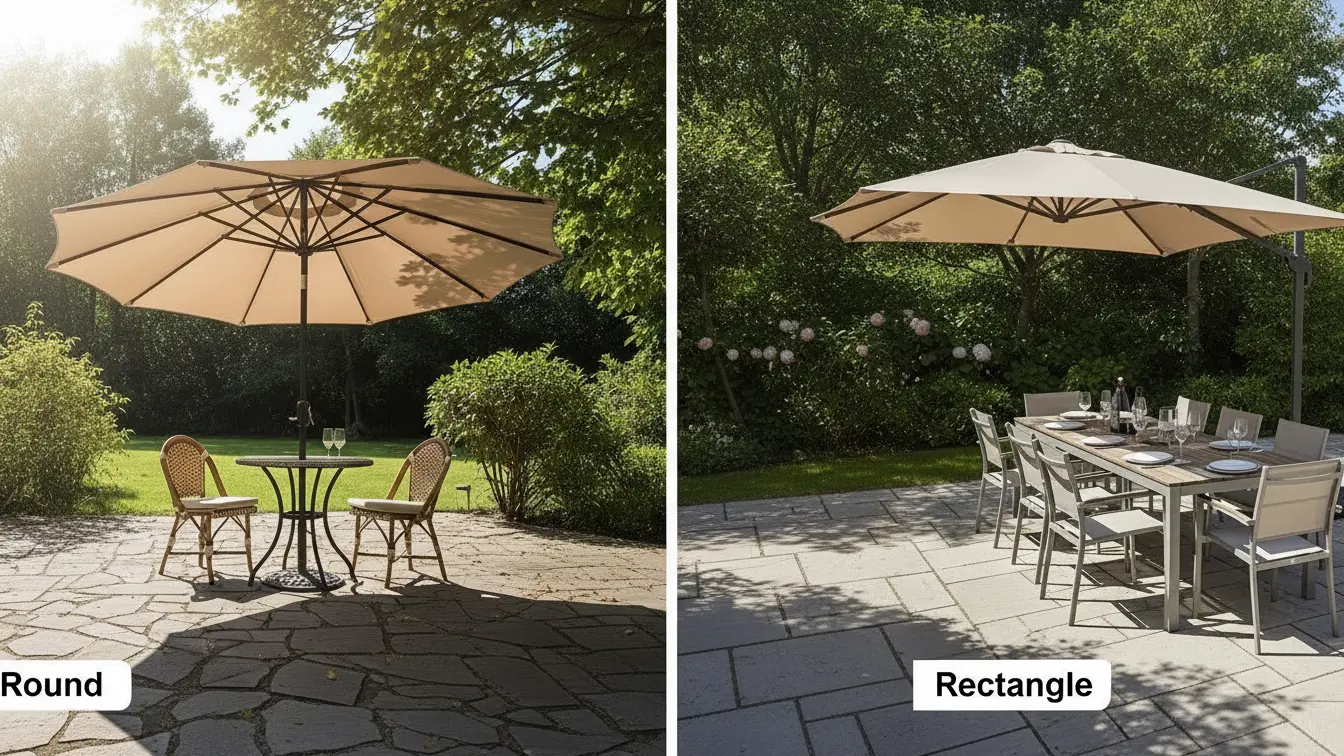
Applying correct Shape Logic is the only way to prevent sourcing errors that directly impact product returns and sales velocity. Sourcing square umbrellas for high-wind applications invites warranty claims, while stocking only round shapes fails to meet the demand for modern, space-efficient designs, leaving margin on the table.
This analysis benchmarks each design against the core Wind Resistance ≤ Grade 3 limit. We evaluate how geometry affects shade efficiency and container loading quantities, helping you select the most profitable models from our existing factory molds without incurring custom tooling fees.
Octagon (Round): Why Is This Shape the Aerodynamic Champion?
An octagon’s eight sides distribute wind pressure evenly, letting air flow smoothly around the canopy. This geometry reduces drag and makes it more stable than square shapes.
How Even Stress Distribution Reduces Wind Load
The octagonal profile is inherently more aerodynamic than a square. Its eight-sided structure allows wind to flow around the canopy with less resistance, which reduces the overall drag and turbulence that can cause an umbrella to lift or tip over.
Unlike a square umbrella that presents a flat, broad face to catch gusts, an octagon spreads the wind force more evenly across its surfaces. This distribution minimizes high-pressure stress points, creating a more stable and resilient structure in breezy conditions.
Practical Performance Limits: Wind Resistance ≤ Grade 3
While the octagonal design is aerodynamically superior, it’s important to understand the practical limits of our products. Our umbrellas are engineered for promotional and seasonal use and are rated for wind resistance up to Grade 3. This corresponds to a gentle breeze of approximately 12-19 km/h.
To ensure safety and the longevity of the product, all umbrellas must be closed when not in use or if weather conditions become breezy. This is a critical operational requirement for any buyer.
Square Umbrellas: Is This the Best Choice for Modern Architecture?
Yes. Their clean lines complement contemporary aesthetics, and their shape provides more efficient shade, fitting seamlessly into structured outdoor settings and maximizing usable space.
Geometric Alignment and Space Efficiency
The core appeal of a square umbrella in a modern setting is its shape. Contemporary architecture relies on sharp lines and defined angles, and a square canopy mirrors that aesthetic perfectly. It doesn’t clash with the building; it extends the design language into the outdoor space, creating a cohesive look for patios, courtyards, and commercial areas.
Functionally, the geometry is superior for shade. A square umbrella provides roughly 30% more shade than a round one of the same size. For architects and commercial planners, this means more effective sun protection with fewer units. The shape also fits flush against flat walls or into 90-degree corners, eliminating the awkward, unusable gaps that round umbrellas create. This maximizes coverage in structured environments like cafes or hotel terraces.
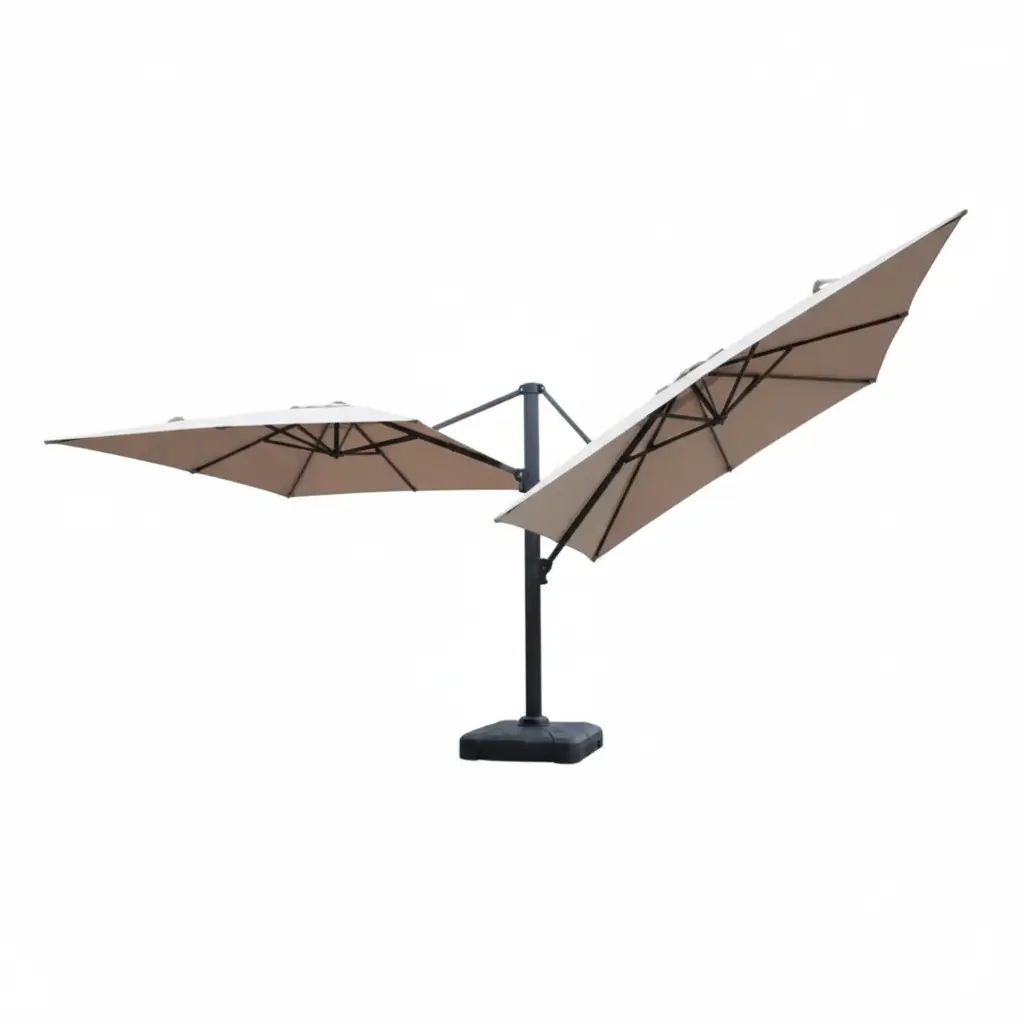
The Roma PTZHU-020: A 3x3M Aluminum Solution
Our PTZHU-020 model is a direct application of these principles. It features a 3x3M square canopy on a durable, rust-proof aluminum frame. The clean finish and strength of aluminum align well with the material palettes commonly used in modern design, like steel, glass, and concrete. It’s a practical and visually consistent choice.
To get the most out of this model’s superior frame, we advise pairing it with our upgraded Yarn-Dyed fabric. The standard polyester is fine for promotional use, but the Yarn-Dyed option provides better color longevity (a 3-6 month warranty) that matches the durability of the aluminum structure. This ensures the entire unit maintains its appearance for longer, protecting the client’s investment.
Source Durable, Custom Umbrellas Factory-Direct

Rectangle: How Do You Shade Long Dining Tables Effectively?
Shading long tables requires moving beyond a single, central umbrella. Offset ‘Roma’ or ‘Banana’ styles provide end-to-end coverage without a disruptive pole, maximizing shade and space.
The Coverage Gaps of Standard Umbrellas
A single round or square market umbrella just doesn’t work for a long rectangular table. It creates a circle of shade in the middle, but leaves guests at either end completely exposed to the sun.
The central pole is another major problem. It gets in the way of seating, blocks sightlines between guests, and makes it impossible to place larger serving dishes in the center of the table.
Offset Hanging Umbrellas for Full Coverage
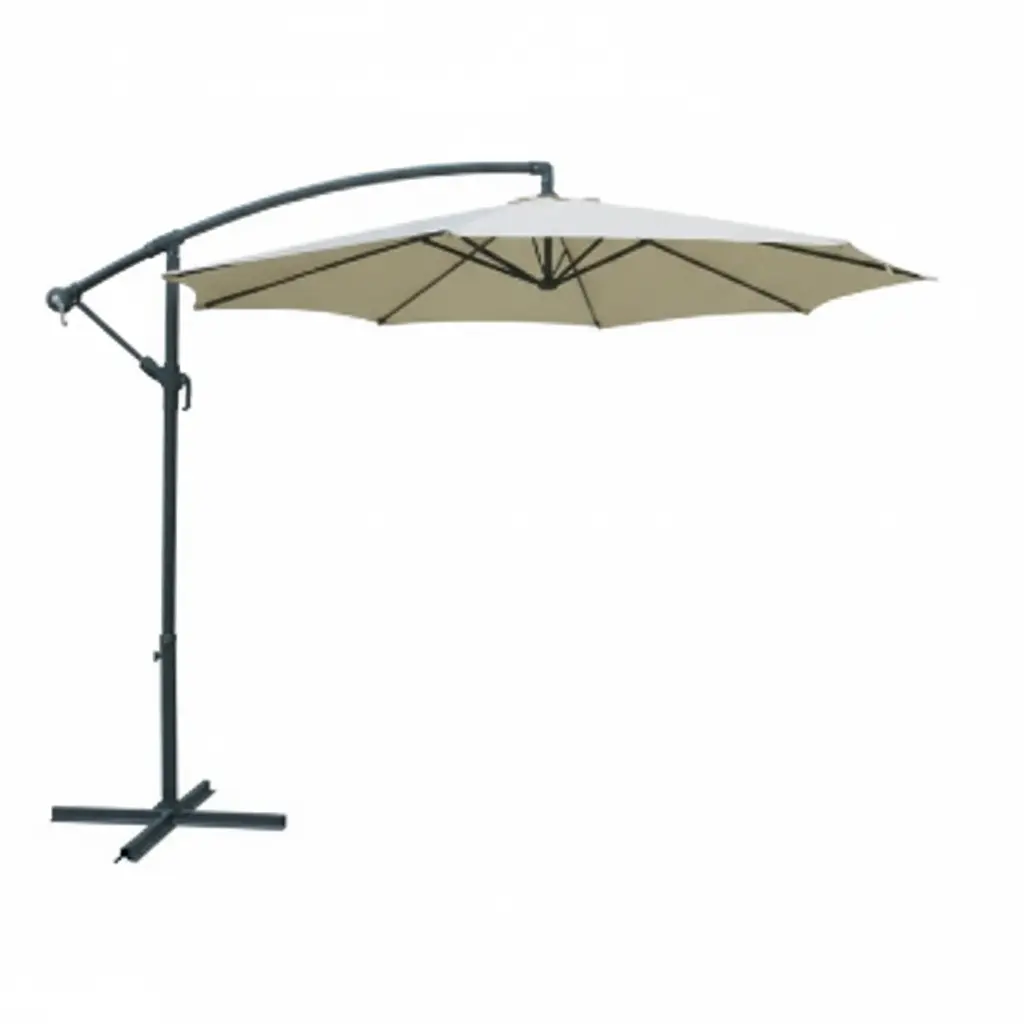
The practical solution is an offset hanging umbrella. Our ‘Banana’ (model PTZHU-003) and ‘Roma’ (model PTZHU-020) series use a side-post design that completely eliminates the central pole, freeing up the entire table surface.
The 3×3 meter square canopy on the Roma model is specifically sized to cover the full length of a standard rectangular dining set. For buyers looking for better durability, we recommend pairing the Roma’s aluminum frame with our Yarn-Dyed fabric upgrade. This extends the fabric warranty to 3-6 months, a solid selling point.

What Is “Ganging” and How Do You Connect Squares for Continuous Shade?
Ganging is placing umbrellas side-by-side for continuous shade. But, standard promotional umbrellas lack connecting hardware and are not built for the increased wind load.
Defining ‘Ganging’: The Concept of a Seamless Canopy
“Ganging” is simply the practice of lining up multiple square or rectangular umbrellas with their edges touching. The goal is to create a single, large canopy without gaps, which is useful for shading long tables or big patio areas.
Wind Resistance: A Key Limitation for Ganged Setups
Connecting multiple canopies creates a large “sail.” This dramatically increases the wind load on the entire structure. A single umbrella might handle a light breeze, but a combined surface area catches much more wind, creating a significant risk of damage.
Our umbrellas are engineered for standalone, promotional use with a wind resistance rating of Grade 3 or less. They do not include any connecting hardware for ganging. For safety, these units must be closed in breezy conditions, which makes any ganged arrangement impractical and unsafe.
Wind Drag Analysis: How Does Resistance Differ Between Shapes?
An umbrella’s shape is the main factor in its wind resistance. Rounder shapes have less drag than square ones. A lower drag coefficient means better stability in wind.
| Shape | Aerodynamic Profile | Wind Performance Analysis |
|---|---|---|
| Square | Flat surfaces with sharp corners. | Poor. The flat faces catch wind like a sail, and pressure concentrates at the corners, creating high stress points. |
| Round / Octagonal | Curved or multi-faceted profile that mimics a circle. | Good. Wind flows more smoothly around the canopy, dispersing the force instead of catching it. Distributes stress evenly. |
| Streamlined Airfoil | Teardrop or wing shape. | Excellent. The ideal aerodynamic shape, generating minimal drag. Used as a scientific baseline for comparison. |
How Drag Coefficient Varies by Geometry
The drag coefficient is a simple number that quantifies how easily an object moves through the air. A lower number means less resistance. An object’s shape is the most critical factor influencing this number. Research is pretty clear on this: a flat plate can generate up to 30 times more drag than a streamlined airfoil shape under the same conditions.
In architecture and structural design, square shapes are known for their stability against certain forces. But when it comes to wind, those sharp corners are a liability. Just rounding the corners on a square structure can reduce the mean drag by over 43%. This shows how small geometric changes create significant differences in wind performance.
Wind Performance Limits for Promotional-Grade Umbrellas
Let’s be direct about our product category. Our standard, promotional-grade umbrellas are engineered for cost-effectiveness and are rated for wind conditions up to Grade 3. This is a gentle breeze, around 12-19 km/h.
For safety and to prevent product damage, all umbrellas must be closed and secured when not in use or during any breezy conditions. This isn’t a suggestion; it’s a mandatory operating guideline to ensure the product functions as intended and avoids liability from misuse.
Aesthetic Matching: How Should Rooflines and Pool Decks Influence Your Choice?
Match the umbrella to the architecture. Modern homes with flat roofs and gray decks need a square umbrella. Traditional homes with gabled roofs and wood decks look better with an octagon.
Achieving Harmony with Materials and Color
The goal is to make the outdoor space look intentional, not like an afterthought. The materials used for pool decks and pavers should echo the home’s exterior. You want to create a visual connection between the house and the patio.
For traditional homes with classic roofing, warmer wood tones like Pecan or Mahogany work well. For modern homes with minimalist, flat rooflines, cooler tones like Slate Gray or other light finishes create a more cohesive, contemporary look.
Choosing Umbrella Colors for Durability and Style
Color choice directly impacts the product’s lifespan, especially for entry-level fabrics. For the most stable and long-lasting appearance, guide your customers toward lighter colors. Beige, Light Green, or Sky Blue show much less visible fading over a season.
Popular colors like Navy Blue and Grey are a different story. They are sensitive and more prone to fading. We classify these as using our ‘Promotional Grade’ fabric, making them best suited for seasonal special buys or branded events where longevity isn’t the primary concern. A simple way to tie the entire space together is to match the umbrella fabric to existing outdoor cushions or home trim.
Rib Length Physics: Why Are Square Umbrellas Taller When Closed?
A square umbrella’s corner ribs follow its diagonal, which is longer than its side. This simple geometry makes the umbrella taller and more slender when folded shut.
The Geometry of Diagonal vs. Straight Ribs
It’s a straightforward geometric principle. A square’s diagonal is always longer than its side-to-side width. The umbrella ribs that run from the corner to the center must follow this longer diagonal path. That length dictates the total height of the umbrella when it’s folded up, resulting in a taller profile compared to a round umbrella of the same width.
Practical Considerations for the 3x3M Roma Model
This isn’t just theory; it has real-world implications for logistics. Our 3x3M square ‘Roma’ model, the PTZHU-020, is a perfect example. Its taller closed profile is a critical specification for buyers planning for off-season storage or transport. It simply takes up more vertical space than a round model, a key detail for warehouse racking and container planning.
Factory Molds: What Shapes Can We Produce Without Custom Tooling?
We have existing molds for Market, Cantilever, and Roma umbrellas. This means faster production and no tooling costs for these proven, high-volume shapes.
The Difference Between Standard and Custom Molds
Standard molds are the tools we use for our established, high-volume umbrella designs. Using them is the fastest and most cost-effective way to get proven shapes into production, since the development work is already done.
Custom tooling, sometimes called ‘mold opening,’ is a separate OEM/ODM service. We provide this for clients who need a completely unique or proprietary umbrella structure. This process involves new development costs and longer lead times because we are creating a brand new mold from scratch.

Our Core Shapes from Existing Molds
You can order the following designs immediately without any extra tooling fees:
- Market Umbrellas (Models PTMU-001, PTMU-010): The classic octagon shape. These are our “volume kings,” designed for maximum container loading quantities, which lowers your per-unit shipping cost.
- Cantilever ‘Banana’ Umbrellas (Model PTZHU-003): A popular offset hanging design that offers great visual value for entry-level retail and e-commerce.
- Upgraded ‘Roma’ Umbrellas (Model PTZHU-020): A premium square cantilever umbrella built with a more robust aluminum frame. This shape is ideal for maximizing shade coverage over square or rectangular tables.
Frequently Asked Questions
Is a square or round umbrella better?
It depends on your needs. Square umbrellas offer 27-30% more shade coverage and fit modern spaces better. Round umbrellas provide superior wind resistance and a classic look. Choose square for maximum shade in structured areas; choose round for windy locations.
Which umbrella shape provides the most shade?
Square umbrellas provide the most shade. They offer approximately 27-30% more coverage than a round umbrella of the same size. Their shape delivers efficient, edge-to-edge coverage, which is ideal for square or rectangular tables.
What is the best umbrella for a rectangular table?
A rectangular umbrella is the best choice for a rectangular table. Its shape aligns perfectly with the table’s proportions, ensuring optimal and efficient shade coverage for everyone seated at long dining sets.
Are square umbrellas bad for wind?
Square umbrellas are more susceptible to wind than round ones because their sharp corners and flat sides catch the wind. While not inherently ‘bad,’ our promotional-grade umbrellas are rated for a Grade 3 gentle breeze at most and must be closed in windy conditions. For consistently windy regions, round umbrellas are the recommended choice.
Final Thoughts
The choice between round and square is a commercial decision, not just an aesthetic one. Selling a square umbrella into a windy region invites returns, while our Grade 3 wind rating is a hard specification that protects your margins. Matching the right shape and material to the right market is how you secure profitable, high-volume sales.
Don’t guess on the details—verify our engineering. We recommend starting with a sample of our 3x3M Roma (PTZHU-020) to assess its aluminum frame and yarn-dyed fabric options. Contact our team to get the full spec sheet and a quote for your next container load.




 English
  Spanish
  French
  German
  Portuguese