


When outfitting a commercial space, the price difference between a market umbrella and a cantilever model is hard to ignore. One costs around $100, while the other can easily exceed $340. The reason for this gap isn’t just size—it’s a fundamental difference in engineering and manufacturing complexity. A cantilever umbrella’s flexible, open-space design requires a completely different approach to stability and materials.
This article breaks down exactly why cantilevers cost more. We’ll compare the structural demands of each design, from the massive 400 lb base a cantilever needs to its complex 360° rotation systems. We will also look at how custom tooling and material choices impact the final price, giving you a clear framework for choosing the right umbrella based on your space, budget, and long-term needs.
Two Paths to Shade: Cantilever vs. Center-Pole
A center-pole umbrella uses a central mast for high wind stability with a smaller base, making it ideal for fixed locations like cafés. A cantilever umbrella uses an offset side-post, requiring a much heavier base (around 400 lbs) to provide unobstructed, rotating coverage over a larger, more versatile area.
Center-Pole: Stability Through Direct Support
The center-pole design places its mast directly under the canopy’s center. This creates a direct load path to the base, giving the structure high inherent stability in windy conditions. Commercial models typically use mast diameters of 1.5 to 2.5 inches (38–64 mm), while heavy-duty versions can feature 4-inch masts rated for winds up to 50 mph. This efficient structure requires significantly less base weight; some models supported by a table only need a 35 lb (≈16 kg) base for stabilization.
Cantilever: Flexibility Through Offset Engineering
A cantilever umbrella uses a side-post frame that keeps the area under the canopy completely open. This makes it a great choice for covering lounge sets or dining tables without a central obstruction. To safely counteract the overturning force from the offset load, this design requires larger masts of 3 to 5 inches (76–127 mm) and very heavy bases, often 400 lbs or more. Many cantilever models also include 360° rotation, allowing a single umbrella to shade multiple zones and effectively cover up to four times the area of a comparable fixed model.

The Anatomy of a Cantilever Umbrella: Deconstructing the Complexity
A cantilever umbrella’s anatomy is defined by an offset, side-mounted pole that suspends the canopy from a robust arm, eliminating central obstruction. This design requires a heavy, weighted base for counterbalance and incorporates complex mechanisms like 360° rotation and multi-axis tilt for versatile shade coverage.
Core Components and Functional Design
The defining feature of a cantilever umbrella is its offset, side-mounted pole. Instead of rising through the center of the canopy, the pole stands to the side and supports the shade from an articulating arm. This architecture completely clears the shaded area, making it ideal for covering large patio sets, poolside loungers, or conversation areas without a pole getting in the way. The entire structure relies on a heavy, weighted base to act as a critical counterbalance. This base must be substantial enough to offset the weight of the canopy and resist wind forces, ensuring the umbrella remains stable.
Beyond its basic structure, a cantilever umbrella includes advanced mechanical systems that allow for dynamic shade adjustment. Most models feature 360-degree rotation, which lets you swing the canopy to follow the sun’s path throughout the day without moving the heavy base. Many also offer multi-axis tilt functions, enabling you to angle the canopy not just front-to-back but also side-to-side, providing precise protection from low-angle sunlight in the morning or late afternoon.
| Feature | Cantilever Umbrella | Market Umbrella |
|---|---|---|
| Shade Coverage | Expansive, unobstructed area; can shade up to 4x more space via rotation. | Limited, static coverage zone centered directly around the pole. |
| Base & Stability | Requires a very heavy, weighted base to provide a critical counterbalance. | Uses a lighter base, often integrated with a table for added support. |
| Mechanical Complexity | Features multiple adjustment mechanisms like 360° rotation and multi-axis tilt. | Minimal moving parts, typically with a simple opening mechanism. |
Structural and Mechanical Distinctions
The engineering differences between cantilever and traditional market umbrellas create significant trade-offs in function and stability. Because a cantilever’s canopy can be rotated, it can effectively shade a much larger total area than a market umbrella of a similar size. The offset pole and large canopy create a sail-like effect, which requires a substantially heavier and more robust base to prevent tipping in the wind. A typical residential market umbrella with its base might weigh less than 100 pounds, but a cantilever system needs a much heavier foundation for safe operation.
This advanced functionality comes from more complex mechanics. Cantilever designs incorporate crank lifts, push-button tilt systems, and rotation joints built into the pole. While these features provide excellent versatility, they also introduce more moving parts that can wear over time and may require more maintenance compared to a market umbrella’s simple central pole and hub design. The market umbrella prioritizes structural simplicity and stability, making it a reliable choice for fixed locations like a dining table.
Unseen Expenses: Why Molds and Tooling Drive Up the Price
Manufacturing a cantilever umbrella requires a large upfront investment in custom molds, dies, and jigs to produce its heavy-duty base, reinforced frame, and complex moving parts. These high tooling costs must be spread across the production run, significantly raising the per-unit price compared to simpler center-pole umbrellas.
| Component / Feature | Cantilever Umbrella (Side-Post) | Market Umbrella (Center-Pole) |
|---|---|---|
| Tooling Investment | High (custom molds, dies, and assembly jigs required) | Low (often uses standardized parts and simpler tooling) |
| Base Weight | Requires a heavy counterweight base, often 400 lb or more | Relies on a lighter base, with the total weight often under 100 lb |
| Mechanical Complexity | High (e.g., 360° rotation, multi-axis tilt, sliding tracks) | Low (typically a simple crank or push-up mechanism) |
| Typical Price Range | $340 – $1,000+ | $100 – $300 |
The Initial Investment in Molds, Dies, and Jigs
Before a single cantilever umbrella can be produced, manufacturers must make a significant upfront investment in custom tooling. The offset design requires a massive counterweight base, which can weigh over 400 pounds, to keep it stable. Creating these bases requires large, specialized molds capable of shaping that much material consistently. In addition, the reinforced masts and booms strong enough to support the canopy from the side are formed using unique metal dies engineered specifically for that model’s structural profile.
This initial expense extends to the assembly process itself. Manufacturers build custom jigs and fixtures to hold components in precise alignment as the umbrella is put together. These tools are essential for ensuring that the complex mechanisms operate smoothly and reliably. All of these tooling costs must be paid before production starts, contributing to a higher per-unit cost once the umbrellas are ready for sale.
How Complex Parts Drive Higher Tooling Needs
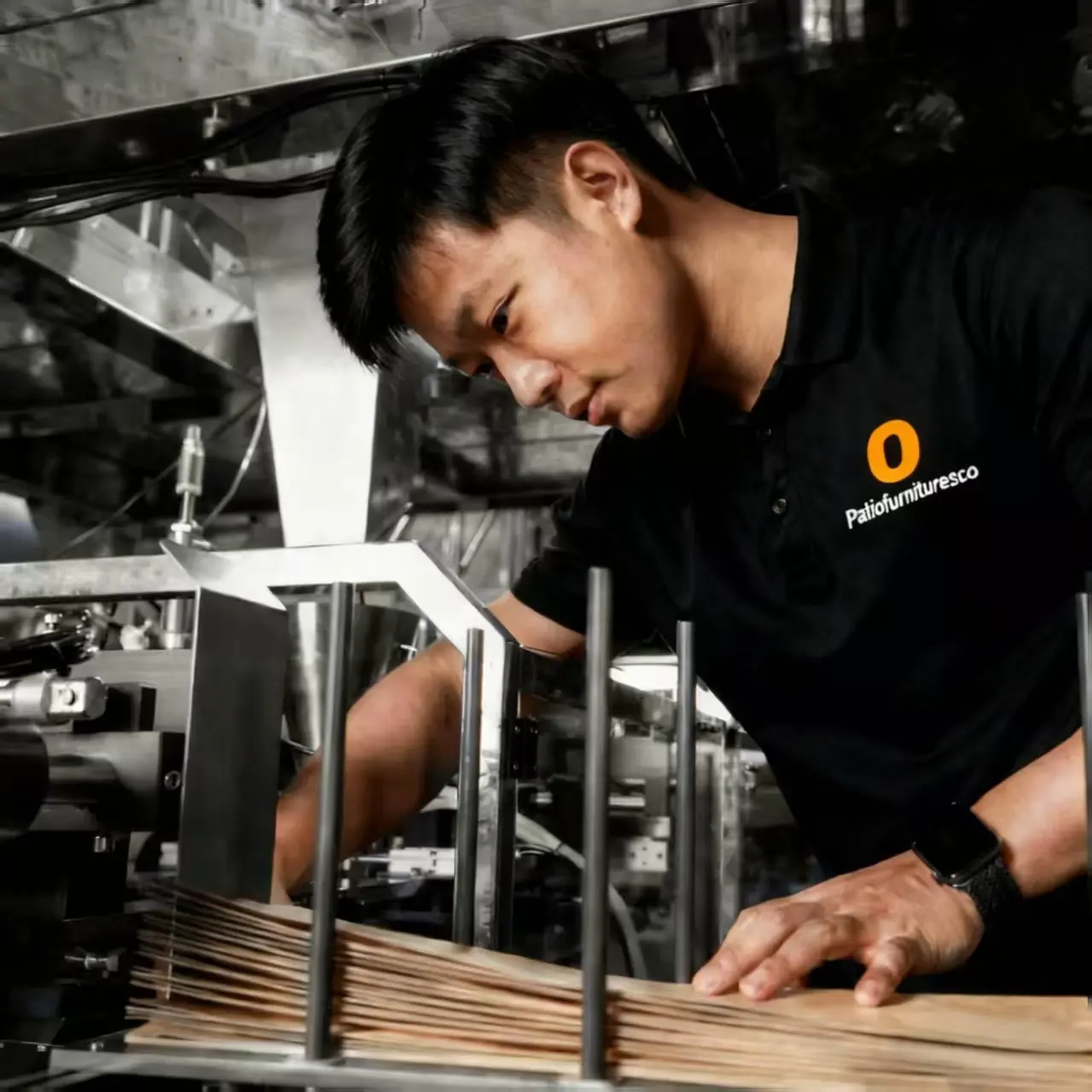
Advanced features like 360° rotating bases and multi-axis tilt systems are key advantages of cantilever umbrellas, but they also increase manufacturing complexity. These systems are not single components but assemblies of many smaller, high-tolerance parts. Each gear, lock, and slider needs its own custom mold or die to ensure it fits and functions correctly. A greater number of moving parts naturally leads to more intricate and expensive assembly tooling compared to a market umbrella’s simple crank or push-up system.
This direct link between mechanical complexity and tooling investment is a primary reason for the price difference. The costs to design, build, and maintain this specialized tooling are factored into the final price of the product. This helps explain why high-quality cantilever models typically start around $340 and can easily exceed $1,000, while market umbrellas offering similar fabric and canopy size often sell for $100 to $300.
Your Direct Source for Custom-Branded Commercial Umbrellas

Material Science: The Difference Between Good and Great
The primary material difference is structural. Cantilever umbrellas require reinforced aluminum frames and heavy bases to support their complex offset designs. Market umbrellas use simpler central poles for stability. Both often use fade-resistant polyester canopies, but the quality of the fabric finish dictates long-term durability.
Frame Construction and Stability Engineering
Cantilever umbrella frames are engineered to manage the leverage of an offset canopy. They use reinforced aluminum to create strong, arched, or jointed poles capable of supporting large canopies, often spanning 9 to 13 feet. This design demands a heavy, robust base to act as a counterbalance, ensuring the entire structure remains stable. In contrast, market umbrellas rely on a much simpler central pole design. This straightforward construction provides inherent stability, distributing weight evenly and allowing for more universal and easily replaceable parts.
Canopy Fabric and Weather Resistance
Both umbrella types typically use durable polyester canopies treated to be fade-resistant, water-repellent, and UV-blocking. The key difference in performance comes from their structural designs. The large surface area of a cantilever canopy exposes more material to the elements, so the quality of the fabric’s finish is crucial for preventing premature fading and wear. Market umbrellas often incorporate vented canopies, which allow wind to pass through. This feature reduces uplift pressure and works with the central pole to improve stability during windy conditions.

Choosing Your Umbrella: A Decision Framework
The choice between a cantilever and a market umbrella hinges on your space and budget. Cantilever umbrellas offer unobstructed coverage for large areas with multi-axis adjustments, while market umbrellas provide a cost-effective, stable solution for smaller patios or through-table applications.
Coverage and Functionality: Unobstructed vs. Centralized Shade
Cantilever umbrellas provide open, unobstructed shade because the pole is positioned off to the side. This makes them ideal for covering large, versatile spaces like sectional sofas, poolside lounge areas, or outdoor kitchens where a central pole would get in the way. In contrast, market umbrellas work best in more defined areas, such as compact balconies or centered perfectly through a dining table with a built-in hole.
The adjustment features also differ significantly. Many cantilever models offer advanced functionality, including multi-axis tilt and 360° rotation. These features allow you to track the sun and adjust the shade throughout the day without moving the heavy base. Market umbrellas typically have a simpler mechanism, offering either a basic push-button or crank tilt, while some entry-level models have a fixed pole with no tilt at all.
Structure, Stability, and Cost
Structural design directly influences stability and cost. Cantilever umbrellas support a large canopy—often 9 to 13 feet in diameter—on an offset arm, which requires a substantial base filled with heavy ballast to prevent tipping. This complex engineering and the need for more materials make them the more expensive option.
A market umbrella’s central pole transfers wind forces directly into the ground, a mechanically simpler and more stable design, especially in breezy conditions. Their straightforward construction requires less material and simpler hardware, making them a more budget-friendly choice. The mechanical complexity of cantilever systems, from tilt joints to rotation mechanisms, adds to their cost and maintenance needs compared to the streamlined build of a typical market umbrella.

The Bottom Line: When is a Cantilever Worth the Investment?
A cantilever umbrella is worth the investment in commercial spaces where unobstructed coverage is critical for function and guest experience, like poolsides or dining areas. While the initial cost is higher ($340+ vs. $100+ for market umbrellas), its superior flexibility and space optimization justify the price for high-traffic venues.
Ideal Scenarios for Unobstructed Space
Cantilever umbrellas are most effective in commercial settings where a central pole would obstruct foot traffic or furniture layouts. For lounge settings and dining areas, the side-pole design clears valuable space, allowing for more flexible arrangements and easier guest movement. This design is also highly practical for dynamic venues like hotel poolsides. The ability to rotate and tilt the canopy provides adjustable shade throughout the day, catering to guests in high-traffic environments without needing to move the base.
Cost, Stability, and Longevity Breakdown
The initial investment for a commercial-grade cantilever umbrella typically starts at $340 and can exceed $1,000, a noticeable increase from the $100 to $300 price range for a quality market umbrella. This cost difference is driven by the engineering required for stability. The offset pole creates leverage that must be counteracted by a substantial base, usually weighing 220 pounds or more, which adds to the total cost and logistical considerations.
While the upfront cost is higher, premium cantilever models offer a longer operational life of 7 to 15 years or more. In comparison, many mid-range market umbrellas last between 3 and 7 years. For businesses focused on long-term value, the extended durability of a cantilever can lead to a lower per-year cost, justifying the initial expense for a high-use asset.
Final Thoughts
The higher price of a cantilever umbrella directly reflects its advanced engineering. The offset design demands heavy-duty materials, a massive counterweight base, and complex tooling for its rotating and tilting mechanisms. A market umbrella, with its simple center-pole structure, is far easier and cheaper to manufacture. This fundamental difference in design explains the cost gap between the two styles.
Your choice really comes down to how you plan to use your outdoor space. If you need to shade a large, open area like a patio sofa or poolside lounge and want the flexibility to adjust coverage as the sun moves, a cantilever is a smart investment. For shading a fixed spot, like a dining set with a hole for a pole, the straightforward stability and lower cost of a market umbrella make it a practical and reliable option.
Frequently Asked Questions
Why are Cantilever umbrellas significantly more expensive than Market umbrellas?
Cantilever umbrellas cost more because their offset design requires heavier materials, reinforced arms, and much larger bases to safely support the canopy as a “lever” extending from the side post, which is more complex and expensive to engineer than a simple center pole.
Each rotation, tilt, and locking joint adds precision hardware and custom tooling, so manufacturers incur higher upfront mold and jig costs and more labor per unit than with standardized market umbrellas.
When you spread these structural and tooling costs over a smaller production volume, the per‑umbrella price ends up significantly higher than for mass‑market center‑pole models.
Are Cantilever umbrellas stable enough for commercial use?
Yes, commercial‑grade cantilever umbrellas are engineered to be stable when paired with the correct base weight and installed on level, solid surfaces in accordance with the manufacturer’s wind guidelines.
Their heavy bases, thicker masts, and reinforced ribs are designed to counteract the extra leverage created by the side‑mounted canopy, but they should still be closed in strong winds and secured overnight just like high‑quality market umbrellas.
In hotel pools, cafes, and resorts that follow these basic operating practices, cantilevers routinely deliver years of safe, reliable service.
What happens if the crank mechanism breaks?
If the crank or tilt mechanism fails, the umbrella usually just loses its ability to open, close, or rotate smoothly, but the frame does not suddenly collapse if the canopy is kept closed.
On better commercial models, components such as crank handles, gear boxes, cables, and tilt joints are modular, so a technician can often replace just the failed part instead of the entire umbrella.
The recommended practice is to stop using the mechanism immediately, secure the canopy in the closed position, and arrange service or parts replacement rather than forcing the system and causing further damage.
Which type is better for a hotel poolside: Market or Cantilever?
For most hotel poolside layouts with chaise lounges and side tables, cantilever umbrellas are usually the better choice because the side post keeps the pole out of the way while the canopy can rotate and tilt to follow the sun over multiple seating positions.
A single commercial cantilever can often shade two loungers or a small group area that would otherwise require several fixed center‑pole umbrellas, improving guest comfort and circulation space around the pool.
Traditional market umbrellas still work well for fixed dining tables with center holes or very windy perimeter zones, but for premium poolside experience and layout flexibility, cantilevers generally deliver more usable shade per footprint.



 English
  Spanish
  French
  German
  Portuguese